A decade is a short span in watchmaking, but Czapek & Cie has used it well.
When the name returned at SalonQP in London in 2015 with the Quai des Bergues, it carried the weight of a 19th-century Geneva story and the uncertainty of a modern start-up.
Ten years on, Czapek has built a distinct place in contemporary haute horlogerie, with 10 calibres across five collections and a character shaped as much by independence as by craft.
At a glance
- Czapek & Cie is marking a decade since its modern return, which began with the Quai des Bergues in 2015.
- The brand now spans 10 calibres across five collections, with a design language that mixes classical watchmaking with a more experimental edge.
- Its rise has been shaped by equity crowdfunding, direct online sales, limited production and unusual levels of client personalisation.
From François Czapek to a modern Geneva name
The Czapek story begins well before its 21st-century revival.
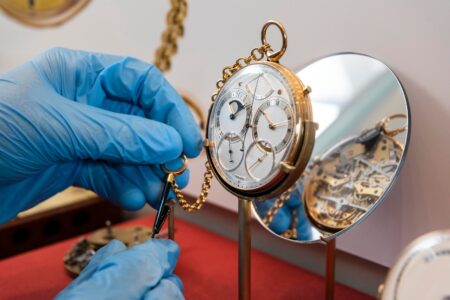
François Czapek was born František Čapek in Bohemia in 1811, trained as a watchmaker in Poland and arrived in Geneva in 1832 as a young refugee.
He later partnered with fellow émigré Antoni Patek before opening an atelier under his own name in 1845.
His work earned a clientele that included the French imperial court and members of Europe’s elite, placing Czapek within the high craft culture that helped define Geneva watchmaking in the 19th century.
After his retirement in the mid-1860s, however, the name gradually slipped from view.
The modern company began taking shape after the rights to the Czapek name were acquired in 2012, with Harry Guhl, Xavier de Roquemaurel and watchmaker Sébastien Follonier working to bring it back as a contemporary haute horlogerie maison rather than a museum exercise.
The Quai des Bergues set the modern tone
Czapek’s first modern watch, the Quai des Bergues, arrived in 2015 with a clear message.
Rather than chase attention with an extravagant high complication, the brand chose a more restrained opening statement that placed proportion, finishing and personality ahead of spectacle.
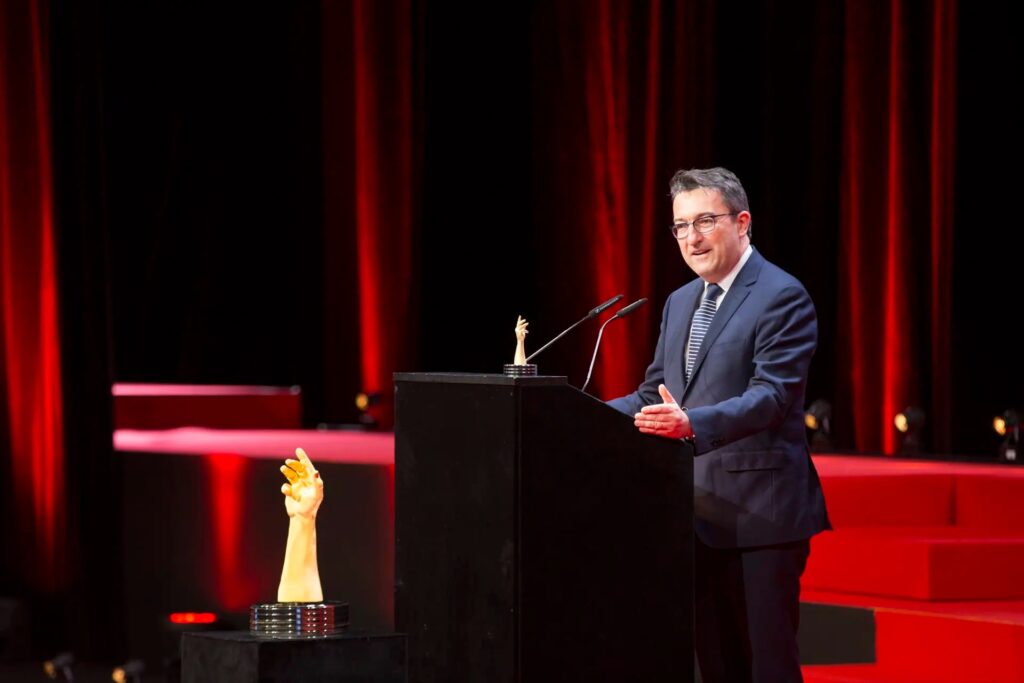
That decision quickly gained credibility when the model won the Public Prize at the Grand Prix d’Horlogerie de Genève in 2016.
It also established a pattern that still defines Czapek today.
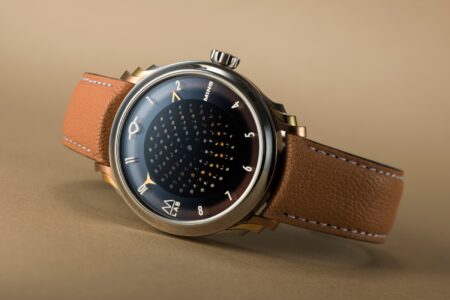
The watches draw on historical ideas without simply replaying the past, and they carry a deliberate tension between symmetry and disruption, elegance and oddity, familiarity and surprise.
That tension is important because it prevents the brand from feeling like a heritage label trapped by its own archive.
Czapek has also embraced a collaborative approach to watchmaking, leaning on specialist partners whose skills support the wider project.
In an era when many high-end brands emphasise vertical integration, Czapek’s method keeps alive the old Geneva tradition of établissage, where a watch is the result of coordinated craft rather than one closed industrial system.
An independent business model with real risk
The company’s personality isn’t limited to its dials, cases and movements.
Its business decisions have been just as unconventional.
Instead of accepting the kind of financial backing that can come with creative pressure, the founders turned to equity crowdfunding, an unusually open approach in the luxury watch world.
That decision helped shape the brand’s idea of community, with collectors treated less like distant customers and more like participants in the company’s development.
Czapek’s early commercial path was far from smooth.
At Baselworld in 2016, enthusiasm from retailers didn’t immediately translate into the sales momentum a young brand needed.
The response was bold for haute horlogerie at the time, with Czapek moving directly into online sales.
The gamble worked, and the brand exceeded its target for the year.
By the end of 2018, Czapek had reached profitability for the first time, and in 2019 it opened its first flagship boutique in Geneva, close to the site of François Czapek’s former 19th-century atelier.
Small scale, personal choices and a recognisable hand
Czapek’s current identity rests on scale as much as style.
Production remains limited, and aesthetic variations of a given model are often treated as limited editions.
That approach gives the watches a sharper sense of occasion without relying on manufactured scarcity alone.
Clients can also personalise their watches by combining different dial colours, markers, hands and straps, a level of choice still relatively uncommon in high-end watchmaking.
Just as importantly, each watch is assembled from start to finish by a single watchmaker.
That detail matters because it changes the relationship between maker, object and owner, giving the finished piece a more direct human continuity.
Across its 10 calibres and five collections, Czapek has built a language that’s recognisable without becoming rigid.
The best modern independents tend to have that quality, where a watch is identifiable not through one repeated gimmick but through a set of recurring instincts.
For Czapek, those instincts include asymmetry used with discipline, a taste for texture and colour, and a willingness to let classical watchmaking breathe in a less predictable frame.
The result is a brand that appeals to collectors who care about craft but don’t want their watches to feel overly obedient.
Czapek’s second act is compelling because it hasn’t followed the usual script for reviving an old name.
Instead of leaning too heavily on nostalgia, it has treated history as a starting point and independence as a working method, which may be why its first decade feels less like a comeback than the beginning of a much longer conversation.