Worn & Wound’s acquisition of Lorier is one of the more consequential business moves the microbrand watch scene has seen in years.
It brings together an influential watch media name and one of the independent category’s most recognisable brands, while keeping Lorier’s founding creative voice inside the company.
For collectors who care about small-brand watches, this isn’t just a change of ownership. It’s a test case for how an enthusiast-led watch label can grow without sanding away the character that made it matter.

At a glance
- Worn & Wound has acquired Lorier, the independent watch brand founded by Lauren and Lorenzo Ortega.
- The Ortegas remain partial owners, with Lorenzo continuing as Creative Director to guide Lorier’s design identity.
- Financial terms haven’t been shared, and the deal’s long-term impact will be judged by future watches, communication and customer experience.
Lorier keeps its founding creative hand
The most important detail is that this isn’t a simple founder exit.
Lauren and Lorenzo Ortega, who built Lorier into one of the most followed names in accessible independent watchmaking, are staying connected to the business as partial owners.
Lorenzo will also continue as Creative Director, which matters because Lorier’s appeal has always been unusually tied to taste, proportion and restraint.

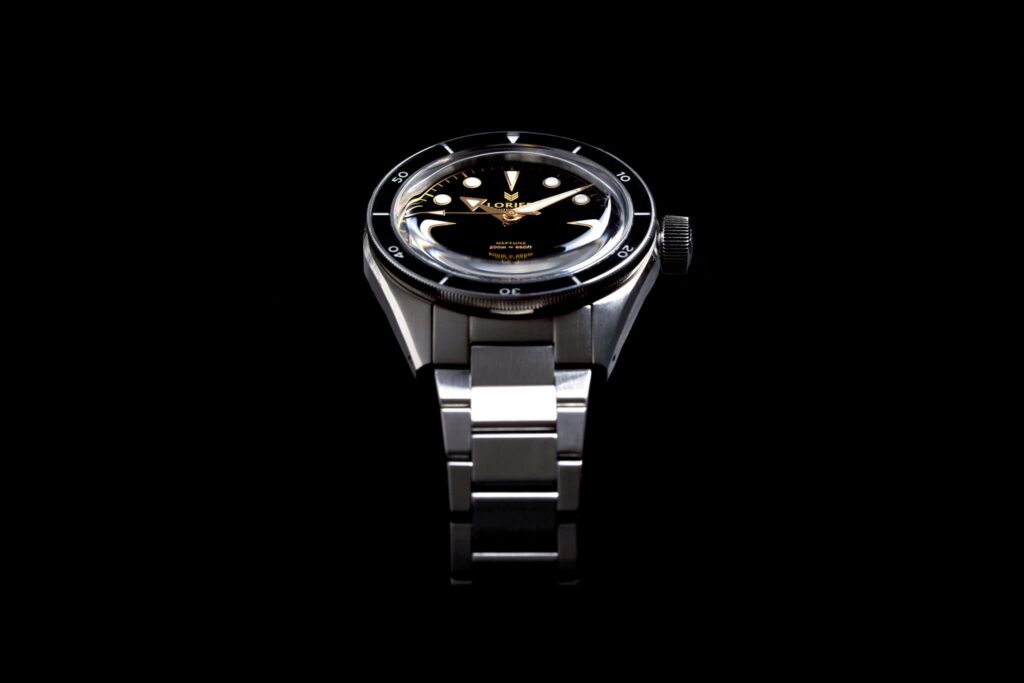
The brand made its name with vintage-informed tool watches that didn’t feel like anonymous nostalgia exercises.
Models such as the Neptune dive watch and Falcon field watch helped establish Lorier’s language of compact dimensions, clean dials and approachable pricing.
That design consistency is a large part of why the brand developed a loyal audience rather than just a customer list.

Why Worn & Wound is an unusual buyer
Worn & Wound has spent years as a prominent editorial and enthusiast platform in the watch world, particularly around independent and accessible mechanical watches.
Moving from covering the category to owning a brand inside it is a meaningful strategic shift.
It’s also not a random one.

Lorier and Worn & Wound occupy overlapping cultural territory, with both speaking to collectors who care about design detail, value, community and the energy outside the traditional luxury establishment.
For Lorier, a larger operational partner could relieve some of the pressure that often limits small watch brands.
Product development, logistics, customer support, fulfilment and communications can quickly become overwhelming when a founding team is trying to do everything at once.

If the new structure lets Lorenzo focus more deeply on the watches while the business side gains more support, Lorier could become more consistent without necessarily becoming less personal.
The question of independence and trust
Acquisitions in watchmaking often make collectors nervous, especially when the brand being acquired is valued for its founder-led identity.
The concern is simple. Will future Lorier watches still feel like Lorier?

The current arrangement appears designed to answer that concern directly, with the founding team still financially and creatively involved.
Even so, titles and ownership stakes only matter if they translate into real decision-making power.
Collectors will be watching the next releases closely, not for corporate language, but for case proportions, dial choices, movement decisions, pricing and the small visual cues that define the brand.

There is also a media ethics dimension that can’t be ignored.
Worn & Wound’s ownership of Lorier creates a clear need for careful disclosure whenever the brand is discussed within its own editorial ecosystem.
That doesn’t make the deal unworkable, but transparency will be essential if the broader watch community is going to trust the arrangement.

What changes for Lorier collectors now
For the moment, there’s no sign of an immediate disruption to Lorier’s lineup or community presence.
The more meaningful changes, if they arrive, are likely to show up over time through release cadence, customer service, stock management and the polish of the buying experience.
A stronger operational backbone could help Lorier avoid the familiar microbrand trap of intense demand colliding with limited capacity.

That would be a welcome development if it preserves the brand’s design discipline rather than pushing it toward bigger, louder or less focused watches.
The deal is notable because it suggests a new possible path for successful microbrands that reach a growth ceiling but don’t want to lose their identity through a conventional sale.
Whether it becomes a model for others will depend on execution.

Lorier has earned its following by making watches that feel considered, wearable and sincere. If Worn & Wound can help the brand scale while protecting that sensibility, this could become one of the rare watch industry acquisitions that enthusiasts look back on as a constructive turning point.