Rolex may be the most recognisable name in Swiss watchmaking, but its ownership is far less familiar than its crown logo.
The company isn’t controlled by a luxury conglomerate, a stock market listing or a billionaire family office. It belongs entirely to the Hans Wilsdorf Foundation, a Geneva charitable foundation whose quiet structure has shaped Rolex for more than six decades.
At a glance
- Rolex is 100% owned by the Hans Wilsdorf Foundation, a private charitable foundation in Geneva.
- The foundation was established in 1945 by Rolex founder Hans Wilsdorf and became the owner of Rolex after his death in 1960.
- Its structure gives Rolex unusual independence, with profits ultimately tied to philanthropic, social, cultural and humanitarian activity.
How Rolex ended up inside a foundation
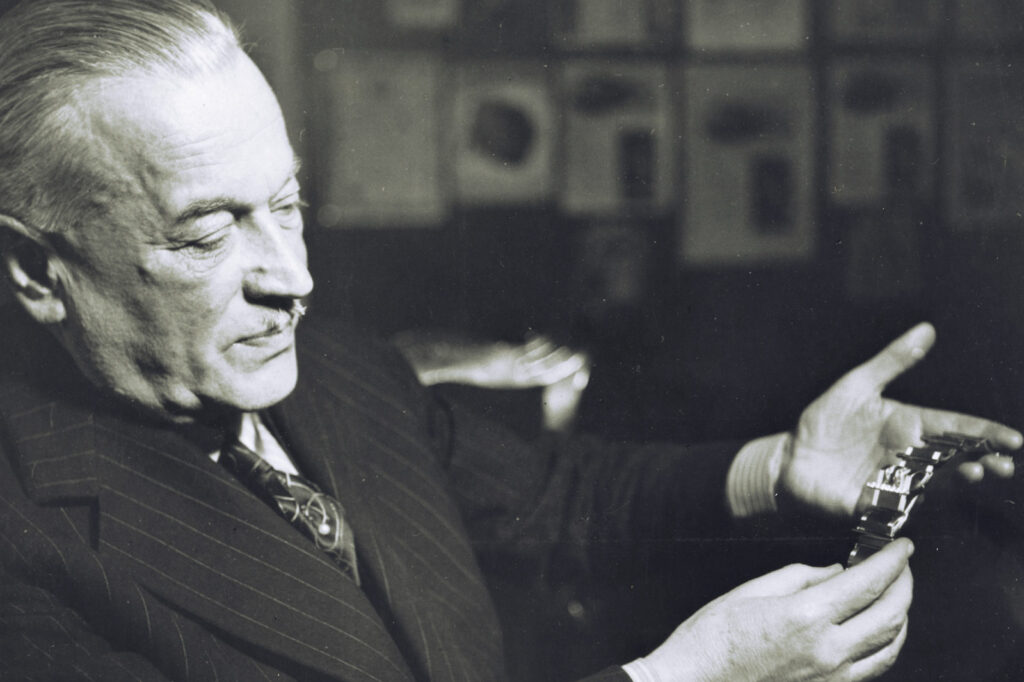
Hans Wilsdorf founded the foundation on 1 August 1945, one year after the death of his wife, Florence.
The decision was both personal and practical, creating a lasting institution in her memory while giving Wilsdorf a way to secure the future of the company he had built.
When Wilsdorf died in 1960, his shares and assets passed to the foundation.
That transfer made the Hans Wilsdorf Foundation the sole owner of Rolex, placing one of the world’s most powerful watchmakers inside a charitable structure rather than a conventional corporate ownership model.

The foundation is also known in French as the Fondation Hans Wilsdorf, reflecting its Geneva base and Swiss legal identity.
A small Geneva institution with an immense asset
The scale of the Hans Wilsdorf Foundation can be difficult to reconcile with its understated public profile.
It is widely regarded as one of the wealthiest charitable foundations in Geneva, and possibly among the most heavily capitalised private foundations in Europe, because its principal asset is full ownership of Rolex.
Rolex itself is private and unlisted, so there is no public market valuation for the company or the foundation’s holding.
Even so, estimates often place Rolex annual revenue around CHF 10 billion to CHF 11 billion, and applying conventional business multiples would put the value of the foundation’s Rolex holding in the tens of billions of Swiss francs.
The foundation’s operating model is unusually lean.
It has been described as having only a small permanent staff and a board of eight, with no need for the fundraising machinery common to many charitable organisations.
That’s because Rolex ownership supplies the foundation with substantial financial resources, removing the need to solicit donations from the public.
The Wilsdorf family connection today
Although Hans Wilsdorf had no direct descendants, the wider family link has remained part of the foundation’s governance.
A member of the extended Wilsdorf family has held a place on the board since Wilsdorf’s death in 1960.
The family connection is not the same as a conventional family ownership stake in Rolex.
The foundation owns the company, and the family presence is part of the governance structure rather than a route to ordinary shareholder income.
One current family representative connected with the foundation is Anita Kübel, a descendant through Wilsdorf’s sister Anna’s family line.
That continuity matters because it keeps a personal thread running through an institution that otherwise operates with remarkable discretion.
What this ownership model means for Rolex
Rolex’s ownership explains a great deal about the brand’s behaviour.
Without external shareholders demanding quarterly performance, the company can make decisions on a longer horizon than many publicly traded luxury groups.
That independence fits the way Rolex presents itself in the market.
The brand rarely rushes, communicates sparingly and tends to evolve its watches through careful refinement rather than dramatic reinvention.
The structure also reinforces the separation between Rolex and the usual luxury-industry playbook.
It is not a trophy asset inside a conglomerate, nor is it a public company exposed to daily market sentiment.
At the same time, the foundation’s charitable purpose gives the ownership story a civic dimension.
Its work has been associated with humanitarian, social, cultural and local projects, particularly within the Geneva context.
For collectors, the foundation is part of the Rolex mystique, but it’s more than trivia.
It helps explain why the company can remain intensely private while operating at a scale few watchmakers can approach.
Rolex’s watches may be seen on wrists everywhere, but the institution behind the crown remains deliberately quiet.
That contrast is central to the brand’s power, and it begins with Hans Wilsdorf’s decision to place his life’s work in the hands of a foundation rather than the market.