Long before Jack Heuer became inseparable from the Carrera, the Monaco and the golden age of racing chronographs, he helped solve a very different kind of timing problem.
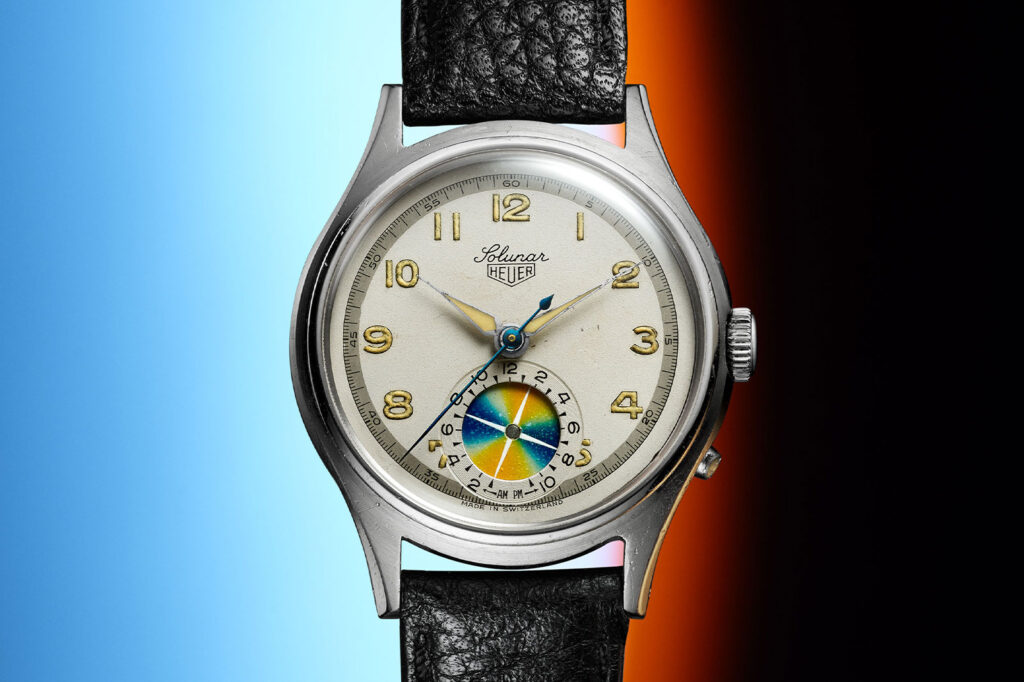
The Heuer Solunar was a tide and outdoor watch born from an American retailer’s request, a family business challenge and the unlikely intervention of a school physics teacher.
It remains one of the more charming corners of Heuer history because it shows the company before motorsport became its defining language.
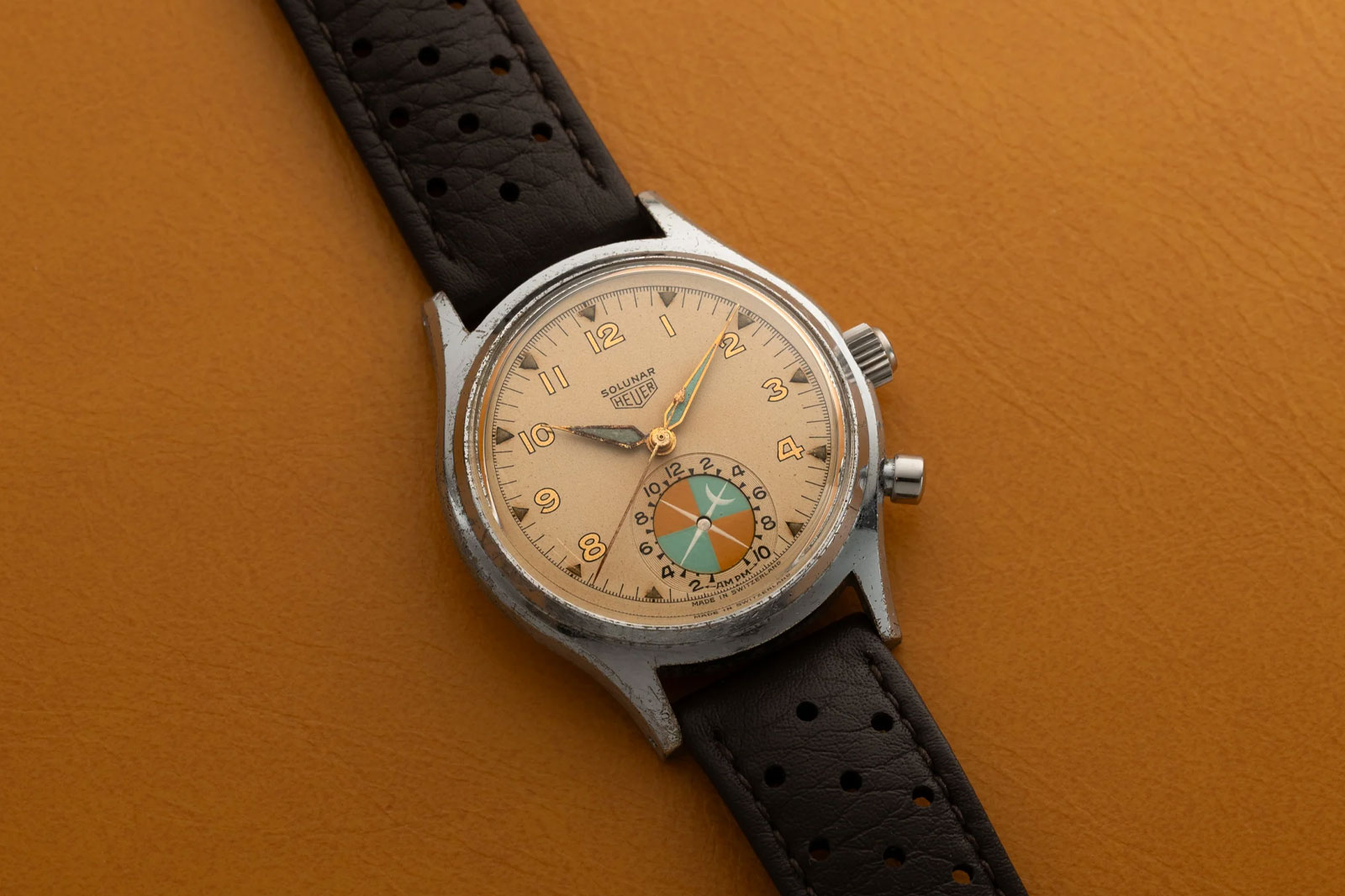
At a glance
- The Heuer Solunar launched in 1949 after a young Jack Heuer helped develop a wristwatch display for tide-related outdoor timing.
- Its key feature was a rotating coloured disc under a six o’clock aperture, designed to translate solunar tables into a glanceable wrist format.
- Vintage examples are rare, with prices typically starting around £4,000 and top-condition dealer pieces often above £6,000.
A teenage solution for Abercrombie & Fitch
The story begins in 1947, when Charles-Edouard Heuer received a request from Walter Haynes, then president of Abercrombie & Fitch.
Haynes wanted a wristwatch that could help display tide timing for the kind of outdoorsmen who bought their gear from the New York outfitter.
At the time, Abercrombie & Fitch wasn’t a mall-era clothing giant but a serious supplier to explorers, anglers, hunters and travellers.
Its clientele included names such as Charles Lindbergh, Ernest Hemingway and Theodore Roosevelt, which makes the idea of a practical tide watch feel less like a novelty and more like a properly targeted instrument.
Charles-Edouard Heuer understood chronographs, but tides were not his natural territory.
Jack Heuer, then only 15, brought the question to his physics teacher, Dr Heinz Schilt, who worked through the gear ratios and mechanical calculations needed to make the concept function inside a wristwatch.
The result was the Solunar, introduced in 1949 and now regarded as Jack Heuer’s first documented contribution to the family company.
How the Solunar translated tables to the wrist
The Solunar wasn’t a conventional tide-prediction watch in the nautical-table sense.
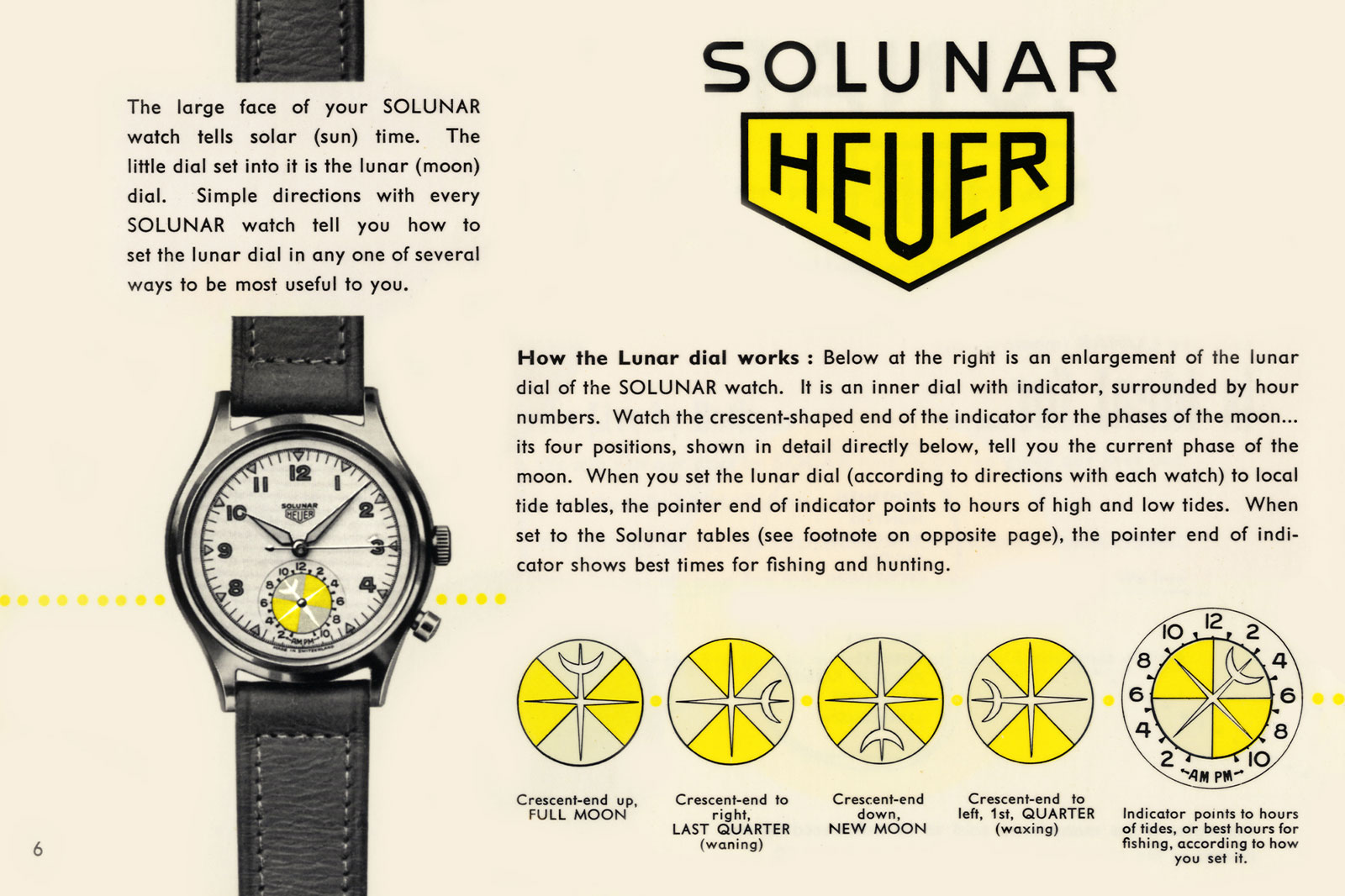
Its logic came from the solunar theory developed by American outdoorsman John Alden Knight in the 1920s, which connected feeding activity in fish and game to the relative positions of the sun and moon.
Knight later published extensive written Solunar Tables for hunters and anglers.
Heuer’s achievement was to compress that information into something that could be worn and read quickly, using a rotating coloured disc visible through an aperture at six o’clock.
The wearer would set and interpret the display in relation to a local coastline, turning a printed reference into a practical wrist instrument.
That instinct feels very Heuer, even if the subject matter is far from a racing pit wall.
The company’s later fame came from dashboard timers, rally clocks and chronographs, but the Solunar shows the same underlying discipline in a different environment.
From Solunar to Seafarer
The Solunar did not remain an isolated experiment.

In the early 1950s, Heuer developed the idea into the Seafarer for the American market, while the Mareographe name was used in Europe.
This next step added a chronograph and pushed the watch toward the world of sailing.
The Seafarer could display two high tides and two low tides on its sub-dials, while its 30-minute counter was divided into five-minute segments for timing regatta starts.
That was not ornamentation dressed up as utility.
It was a genuinely sport-specific feature at a time when Heuer was still building its reputation around instruments that solved practical timing needs.
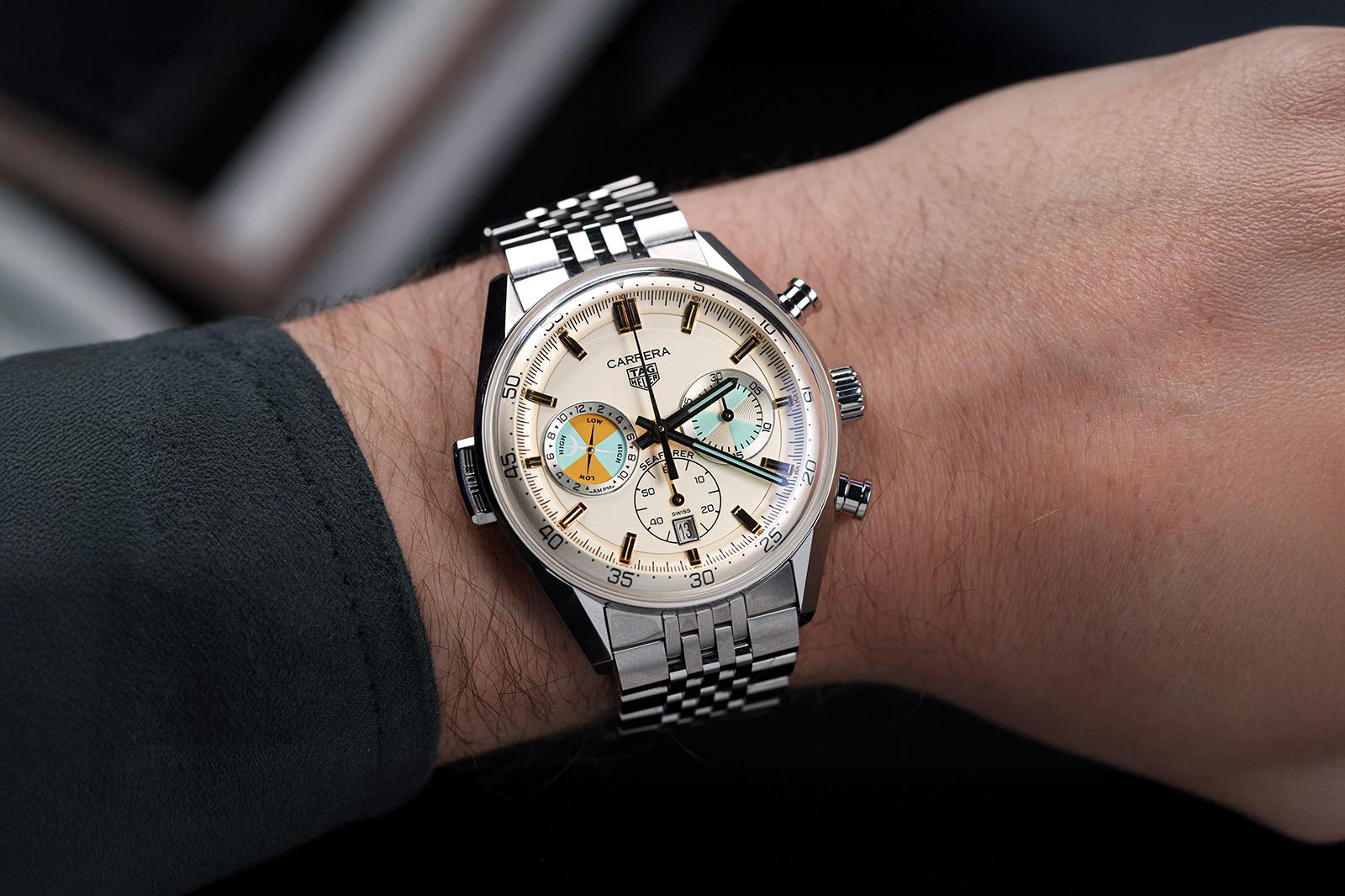
Decades later, TAG Heuer returned to the idea with the Carrera Seafarer made with Hodinkee in 2024, limited to 968 pieces in a nod to the 1968 reference 2446C.
In 2026, the Seafarer joined the Carrera range as a non-limited model, with the tide indicator at nine o’clock and a teal finish named for Intrepid, the America’s Cup winner of 1967 and 1970.
Details & Specifications
| Brand | Heuer |
|---|---|
| Model | Solunar |
| Introduced | 1949 |
| Original client | Abercrombie & Fitch |
| Primary function | Solunar and tide-related outdoor timing display |
| Display | Rotating coloured disc visible through an aperture at six o’clock |
| Key contributor | Jack Heuer, with calculations by Dr Heinz Schilt |
| Later development | Heuer Seafarer in the US and Mareographe in Europe |
| Vintage pricing | From around £4,000, with strong dealer examples often above £6,000 |
Collectability outside the racing lane
The Solunar sits slightly apart from the Heuer watches that dominate auction catalogues and collector conversations.
It doesn’t have the immediate visual shorthand of a Carrera or the pop-cultural magnetism of a Monaco, which is part of its appeal.
Clean examples are not common, and there are no confirmed production figures to give the market a neat number to rally around.
For collectors, condition matters heavily, as does clarity around which Solunar is being discussed.
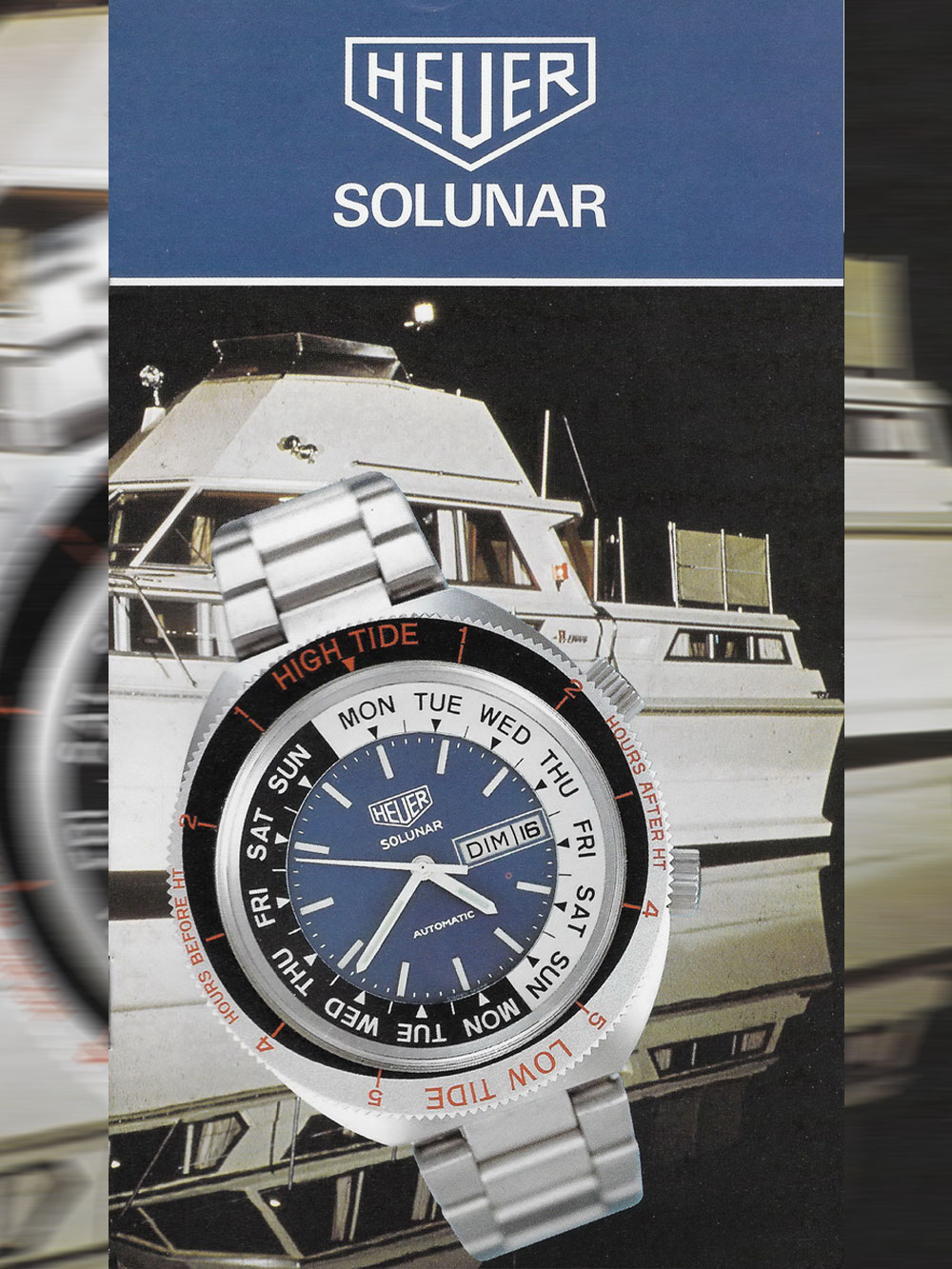
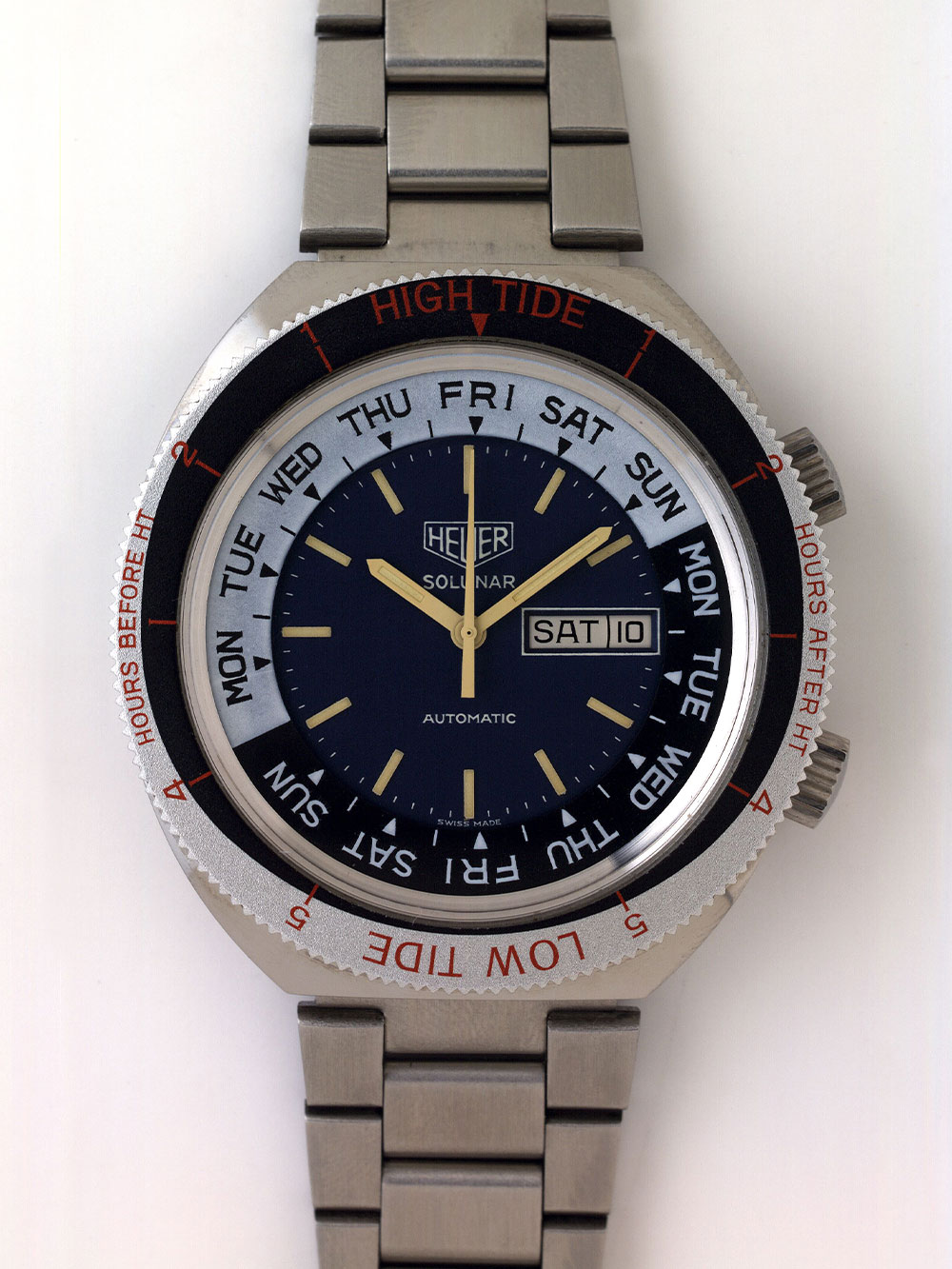
Heuer revived the Solunar name in the 1970s for an automatic day-date with a revolving tide bezel, reference 279.603, and that later model appears more frequently than the original 1949 watch.
Those 1970s examples can be found from roughly £3,000, while the earlier Solunar generally begins closer to £4,000 and climbs for sharper pieces.
The first Solunar is ultimately a watch for the collector who enjoys the less obvious chapters of a famous name.
It matters because it captures Heuer before the brand’s identity narrowed around speed, when the family business was still willing to tackle any timing puzzle that seemed worth solving.
Almost eight decades on, the Solunar feels less like a footnote than an origin story hiding in plain sight.