A serious golf trip to New Zealand is rarely just a string of tee times.
The country’s best courses have a way of shifting attention away from the number on a scorecard and toward the larger demands of the round. Wind, scale, restraint and the simple act of looking up all become part of the game.
For golfers used to measuring a day by yardage and handicap, New Zealand has a different lesson in mind.
At a glance
- New Zealand’s leading golf itineraries combine destination courses across coastal, lakeside and alpine terrain.
- Wind, elevation and dramatic landforms often shape the round as much as course strategy or distance.
- Courses such as Te Arai Links, The Kinloch Club, Cape Kidnappers and Jack’s Point appeal to golfers who value experience as much as scoring.
New Zealand golf is played with the landscape
The striking thing about golf in New Zealand is how quickly the landscape becomes an active participant.
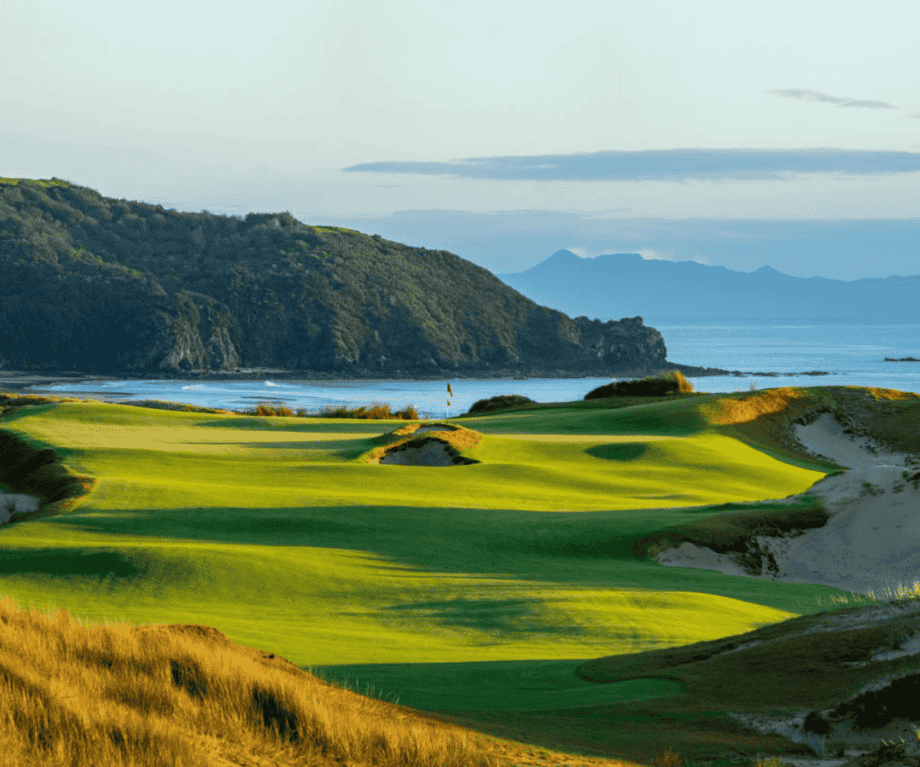
On coastal holes, club selection can feel less like a calculation and more like a negotiation with the weather. A yardage book still matters, but the wind often has the louder voice.
That’s especially true when a course sits exposed to the Pacific, where the same hole can ask two different questions from one afternoon to the next.
There’s also a psychological shift that happens over several rounds. Players begin to ask less about precise numbers and more about what the land is doing around them.
That’s when the trip starts to make sense.
Te Arai Links gives golfers two distinct coastal tests
North of Auckland, Te Arai Links offers one of the clearest examples of how varied New Zealand golf can be without changing address.
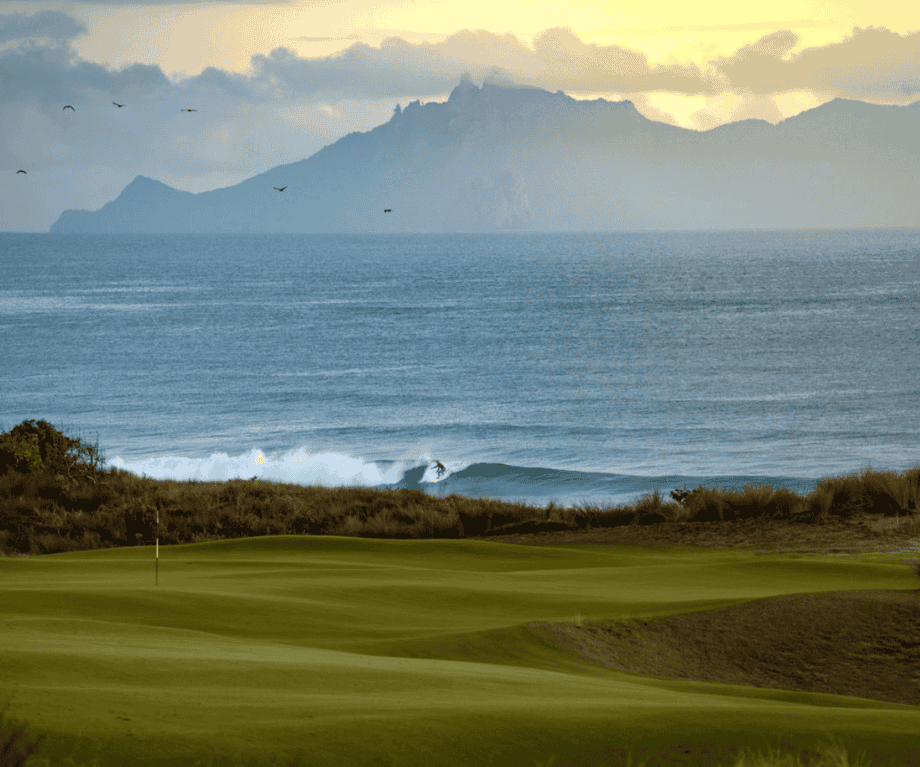
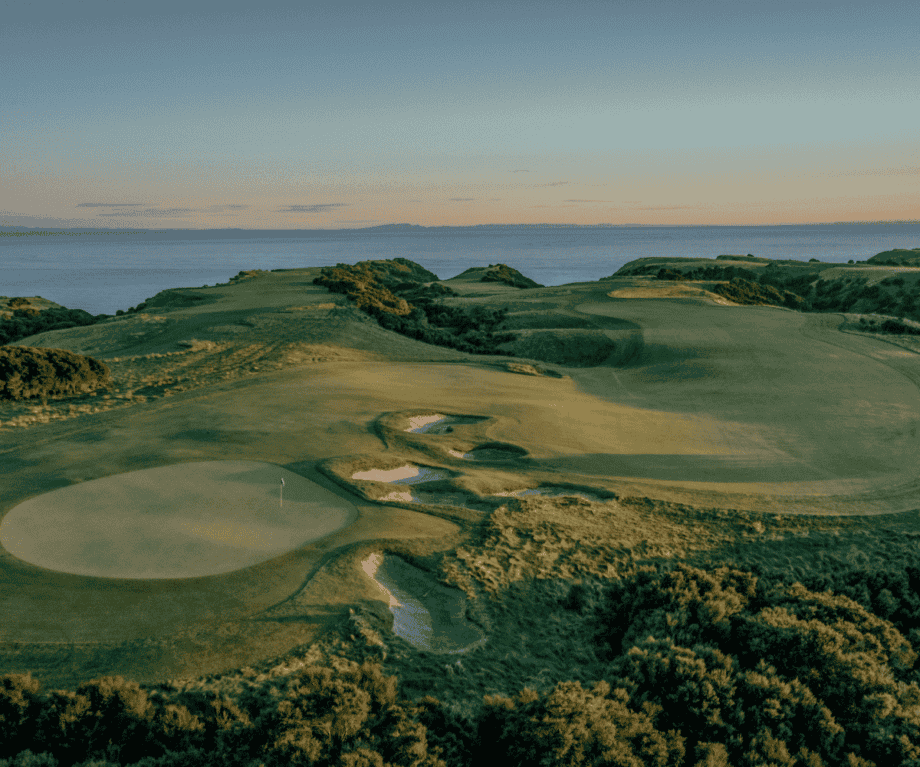
The South Course, designed by Bill Coore and Ben Crenshaw, is the more immediately generous of the pair. It offers Pacific Ocean views on sixteen of its eighteen holes, with enough width from the tee to let a wide range of players settle into the round.
The North Course, designed by Tom Doak a year later, takes a different route.
Only about a third of its holes directly meet the ocean, while much of the course moves inland through former pine country reworked into dunes. It has a more elusive character, and regular players often consider it several shots tougher than the South.
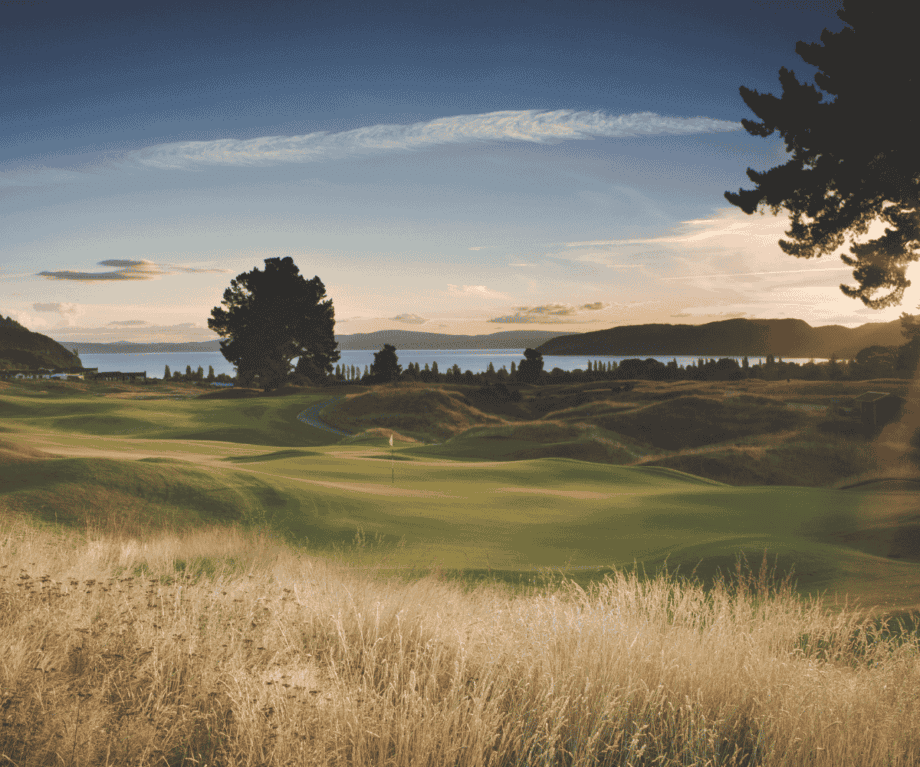
Together, the two courses make Te Arai feel less like a single stop and more like a compact study in modern links architecture.
Kinloch and Cape Kidnappers reward nerve as much as technique
At The Kinloch Club on the northern shores of Lake Taupō, the challenge becomes more architectural and exacting.
Jack Nicklaus’s only Signature design in New Zealand is a par-72 course that stretches to 7,365 yards from the back tees. With close to 172 bunkers, it doesn’t need theatrics to make a player think carefully.
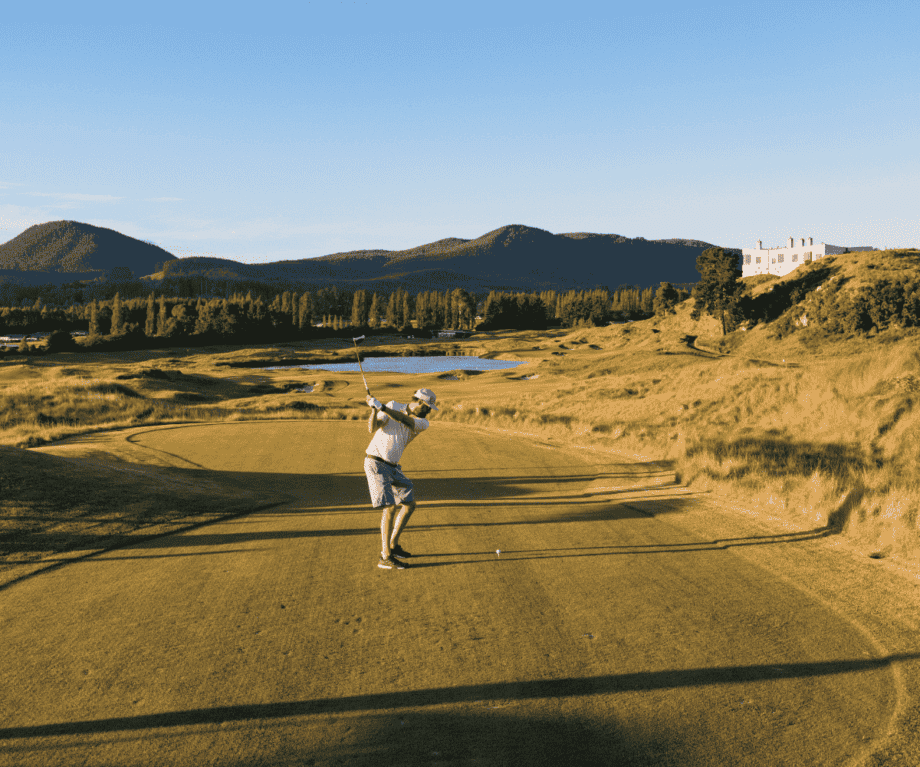
The par-5 16th is often the hole that lingers longest in conversation.
Its second shot can be played in several ways, and the right answer depends as much on appetite for risk as on technical ability. It’s the kind of hole that reveals how honestly someone is assessing their game that day.
Cape Kidnappers brings an entirely different kind of drama.

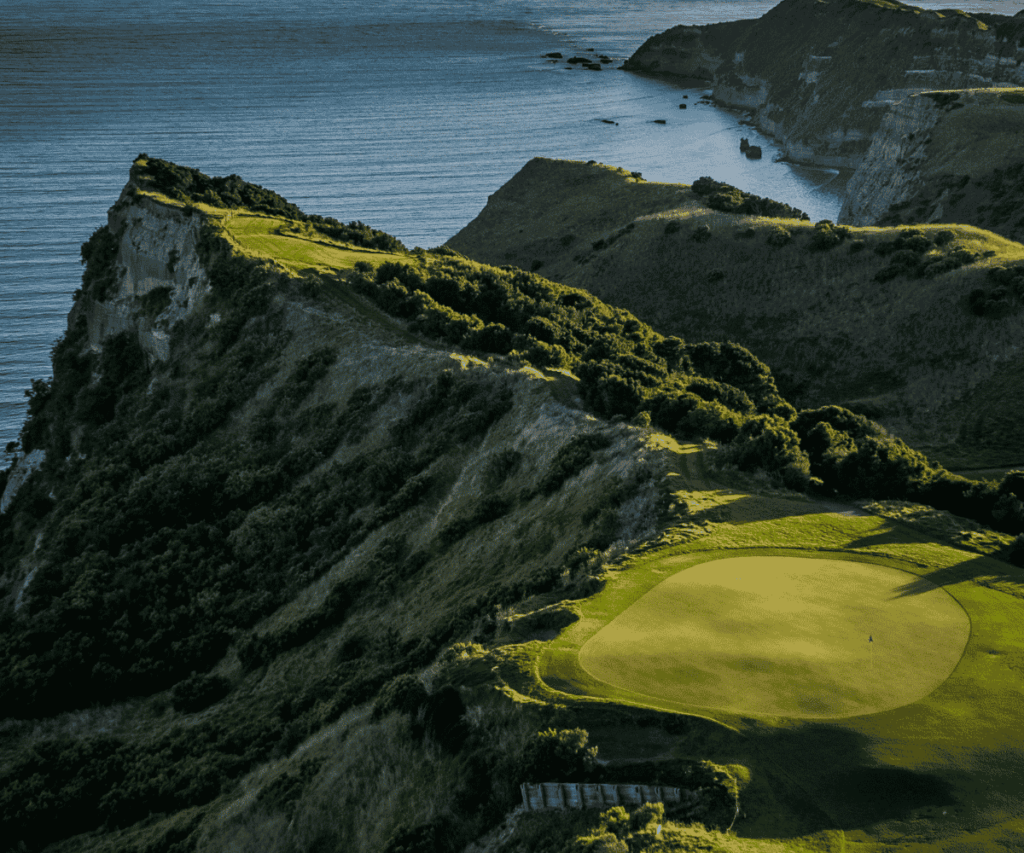
Tom Doak’s first New Zealand course sits on a 6,000-acre working sheep station above Hawke’s Bay, where fairways run along ridgelines around 400 feet above the water. The setting is spectacular, but the course is far more than a postcard.
The 15th is the hole most golfers remember.
This par 5 drops to a fairway only 40 yards wide, squeezed between a cliff edge and a ravine. It’s a hole that makes self-preservation feel like sound strategy.
Jack’s Point turns the round into an alpine walk
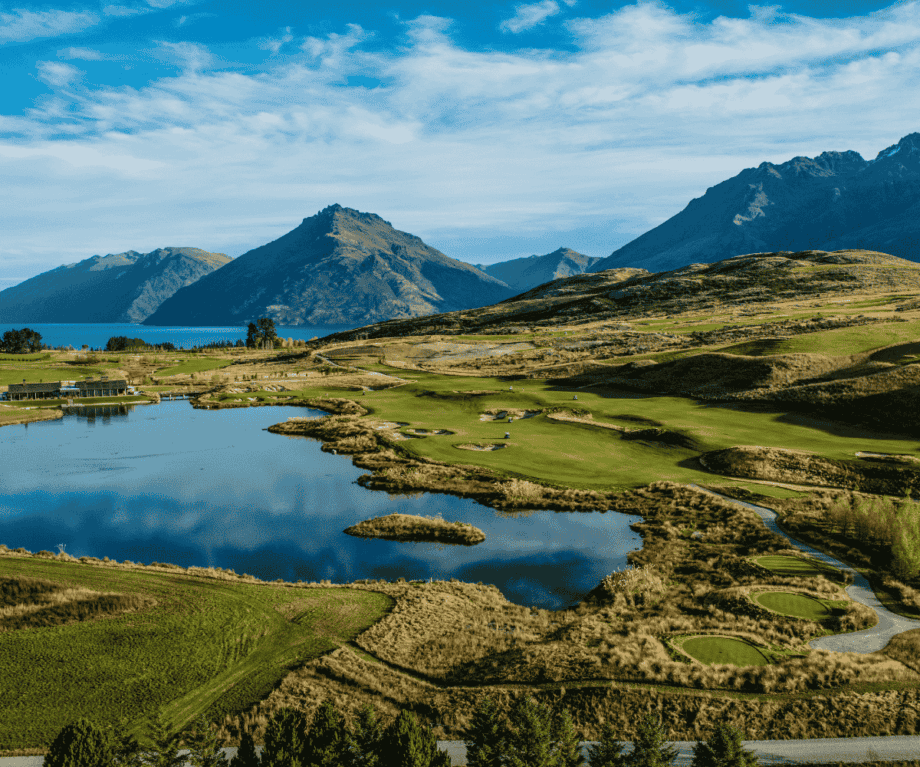
In Queenstown, Jack’s Point changes the mood again.
Set beneath the Remarkables and beside Lake Wakatipu, John Darby’s design was created with minimal disturbance to the existing landscape. The result is a course that feels unusually settled in its surroundings.
From the championship tees, Jack’s Point plays to 6,986 yards, but its impact isn’t measured by length alone.
The par-3 7th, played from an elevated position toward the water, is one of those holes that stops a group before anyone reaches for a club. It’s photographed almost instinctively, which says something about the balance between golf and place here.
That balance is central to the appeal of New Zealand as a golf destination.
The best rounds are not always the lowest ones. They’re the rounds where the weather, the scenery, the company and the clubhouse conversation become part of the memory.
New Zealand asks golfers to bring their game, but it also asks them to loosen their grip on it. For the right traveller, that’s precisely the point.