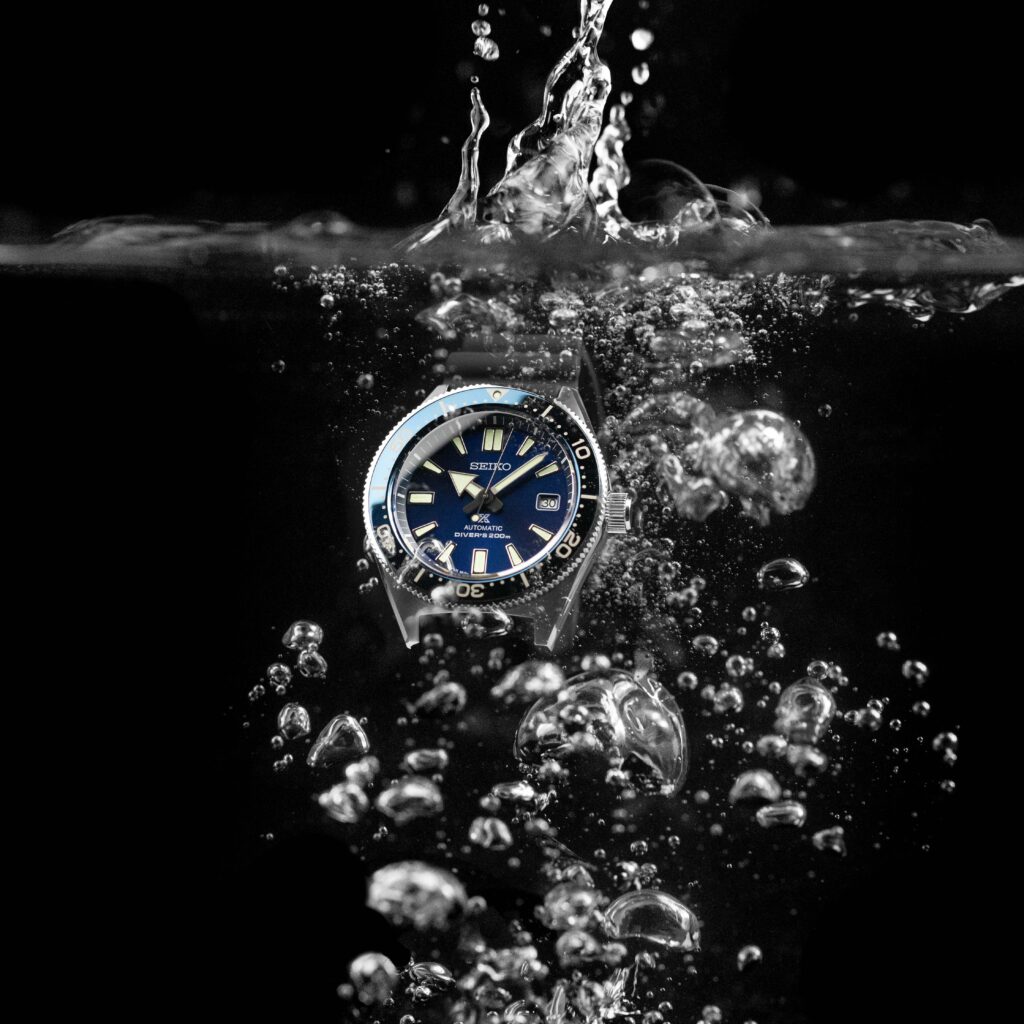
A water-resistant watch is not automatically a swimming watch, and the number on the dial or caseback is often less straightforward than it looks. Ratings such as 30m, 50m, 100m and 200m describe pressure resistance under controlled test conditions, not a promise that the watch can safely be taken to that exact depth in real-world use.
That distinction matters because water damage remains one of the most avoidable ways to ruin a watch. A fogged crystal, corroded movement or compromised dial can often be traced back to a simple misunderstanding: “30 metres” sounds like plenty for a pool, but in watch terms it is usually closer to splash protection than swimming security.
Metres on the Dial Are About Pressure, Not Depth
Modern watchmaking generally uses the language of water resistance rather than waterproofing. That is not just legal caution; it is a more accurate description of how watches behave. Under enough pressure, or with a compromised gasket, any case can let water in.
Water-resistance testing is typically performed in controlled conditions, where pressure is applied steadily and the watch is not being moved through water. Real life is less tidy. Swimming, diving into a pool, moving your arm underwater or exposing a watch to a forceful shower can create dynamic pressure spikes that exceed what the rating might imply at a glance.
As a practical rule, 30m or 3 bar should be treated as protection against rain and light splashes, not swimming. A 50m or 5 bar watch can usually handle a gentle swim, but it is not the right choice for diving or repeated impact with water. A 100m or 10 bar rating is the sensible daily-wear threshold for swimming and snorkelling. At 200m and above, you are entering proper dive-watch territory, assuming the watch is in good condition and the crown is properly secured.
ISO 22810 Versus ISO 6425: The Difference Between Water-Resistant and Diver’s
Not every water-resistance claim is tested to the same standard. Many everyday watches are built around ISO 22810, the general standard covering water resistance for normal use, including exposure to water in daily life and, depending on the rating, swimming or light snorkelling.
Dive watches carrying the “Diver’s” designation are held to the tougher ISO 6425 standard. This is a more demanding certification intended for professional diving instruments. Watches are tested beyond their stated rating, with checks that can include thermal shock, saltwater resistance and strap security. The key practical takeaway is simple: a watch marked as a diver’s watch has passed a more rigorous set of requirements than a general water-resistant model.
That is why serious aquatic watches tend to pair higher ratings with purpose-built hardware: robust cases, legible dials, secure bezels and screw-down crowns. Models such as the Oris Aquis Date at 300m, the Tudor Pelagos at 500m with a helium escape valve, and certain TAG Heuer Aquaracer chronographs rated to 500m show how modern dive watches combine everyday wearability with genuine underwater engineering.
The Crown Is the Weak Point You Control
The crown is one of the most important barriers between water and the movement. On many watches rated to 100m or more, a screw-down crown adds a mechanical seal by threading into the crown tube and compressing internal rubber gaskets. If it is not fully screwed down, the stated water resistance can be effectively meaningless.
This is one of the most common causes of water ingress: the wearer sets the time, forgets to secure the crown, and then exposes the watch to rain, a sink or a pool. The check should become automatic. Before getting near water, make sure the crown is seated finger-tight against the case. It should be secure, but not forced.
Chronograph pushers and crowns should also be left alone when the watch is wet unless the watch is specifically designed for underwater operation. Opening or moving external controls can disturb seals at exactly the wrong moment.
Water Resistance Is a Service Item
A water-resistance rating is not permanent. The protection depends on small gaskets and O-rings that age, dry out, flatten or crack over time. Heat, sweat, salt, chlorine, cosmetics and suncream can all accelerate deterioration. Even a watch that has spent years in a drawer may have brittle seals by the time it returns to the wrist.
For a watch that regularly sees water, periodic pressure testing is the smart habit. A professional check every 12 to 24 months is a relatively small expense compared with the cost of repairing a water-damaged movement. After swimming in the sea, rinse the watch with fresh, lukewarm water to remove salt and sand, both of which can attack gaskets and external components.
Steam is especially risky. Hot showers, saunas and humid environments can challenge seals in ways that cold-water depth ratings do not fully communicate. Heat causes materials to expand, and steam can work its way past ageing gaskets. If you want your watch to stay dry inside, the shower is not the place to test it.
The Strap Matters Too
The watch head may be water resistant, but the strap still needs to suit the environment. Rubber is the obvious choice for frequent swimming, especially specialist compounds designed to resist salt and chemicals. Bracelet-equipped dive watches are also natural water companions, provided the bracelet and clasp are cleaned after exposure to seawater or chlorine.
Leather is usually best kept away from regular soaking, though some water-resistant leather straps are treated specifically to tolerate submersion and drying better than conventional calfskin. For most owners, the simplest approach is to match the strap to the day: rubber, textile or bracelet for the water; leather for dry wear.
The safest way to think about water resistance is conservatively. Read the rating as a capability under specific conditions, maintain the seals, check the crown and do not assume that a number in metres tells the whole story. A 100m watch in good condition can be a dependable daily companion around water; a neglected 300m diver with tired gaskets may be living on borrowed time.