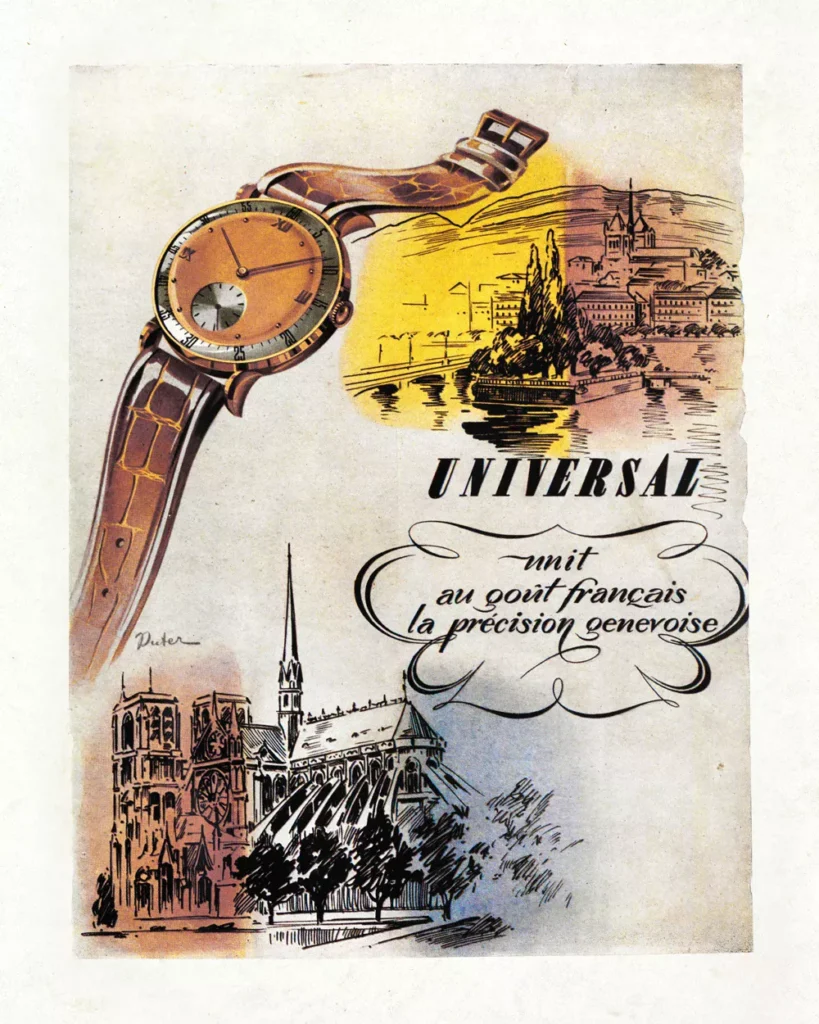
The Universal Genève Polerouter is back, and its return is one of the more consequential revivals in the modern watch landscape.
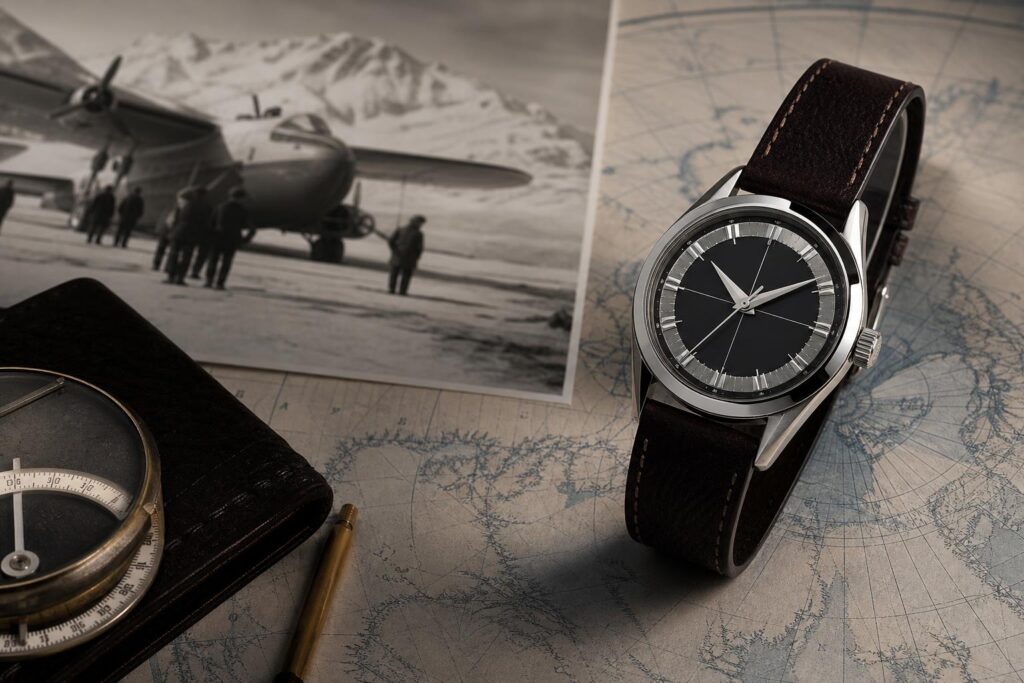
Rather than reissue a single nostalgic reference, Universal Genève has rebuilt the Polerouter as a full collection, with 37 mm and 39 mm cases, steel and rose gold options, leather or bracelet configurations, hardstone dials and diamond-set variants.
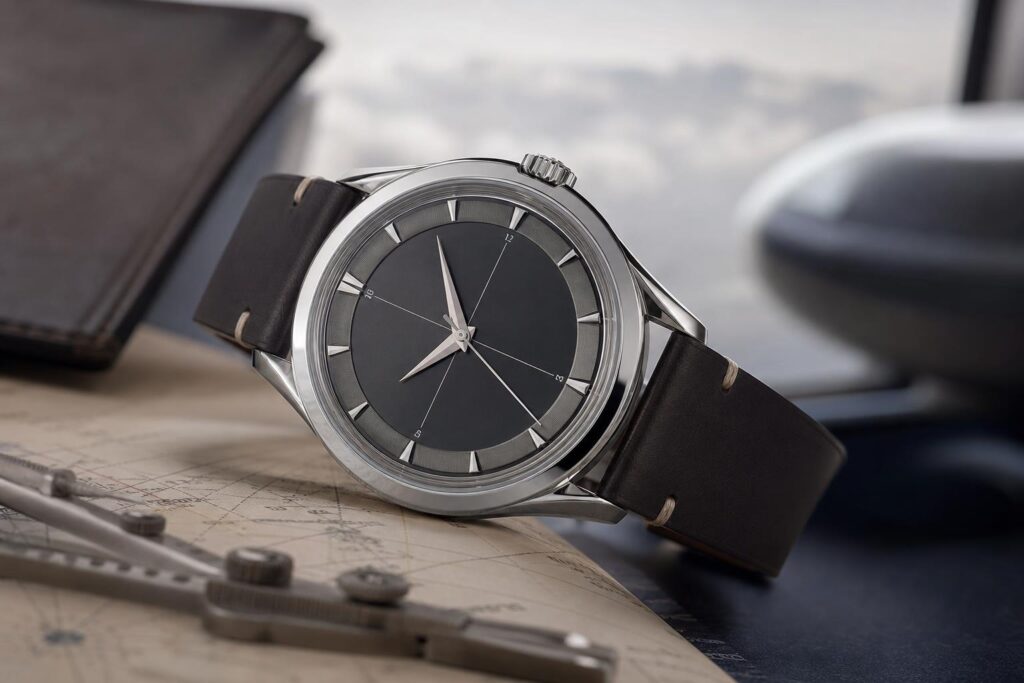
The Polerouter’s Polar-Route Origin Story
The Polerouter’s reputation rests on more than mid-century good looks.
Its story begins in 1954, when Scandinavian Airlines opened a shorter transpolar route between Europe and North America and needed a dependable wristwatch for cockpit use.
Universal Genève turned to a very young Gérald Genta, who created a watch that balanced clarity, anti-magnetic practicality and elegant restraint.
The early design was defined by a clean dial, dauphine hands, central seconds, curved surfaces and a distinctive textured ring at the edge of the dial.
That combination gave the original Polerouter an unusually strong identity without leaning on oversized cases, decorative excess or complicated displays.
A Familiar Dial Language, Reworked for Today
The new Polerouter keeps the key visual signatures intact: crosshair dial, dauphine-style hands, a slim case profile, bombé lugs and the prominent inner tension ring.
Universal Genève has not treated those elements timidly, however.
The textured ring is more pronounced, the hour markers have greater visual weight, the crown is chunkier, and the hands now carry lume with softly rounded tips.
The lugs retain their sculptural character, though their upper surfaces are cleaner and flatter than on many vintage examples.
It is recognisably a Polerouter, but not a museum-piece recreation.
Steel, Rose Gold, Hardstone and Diamonds
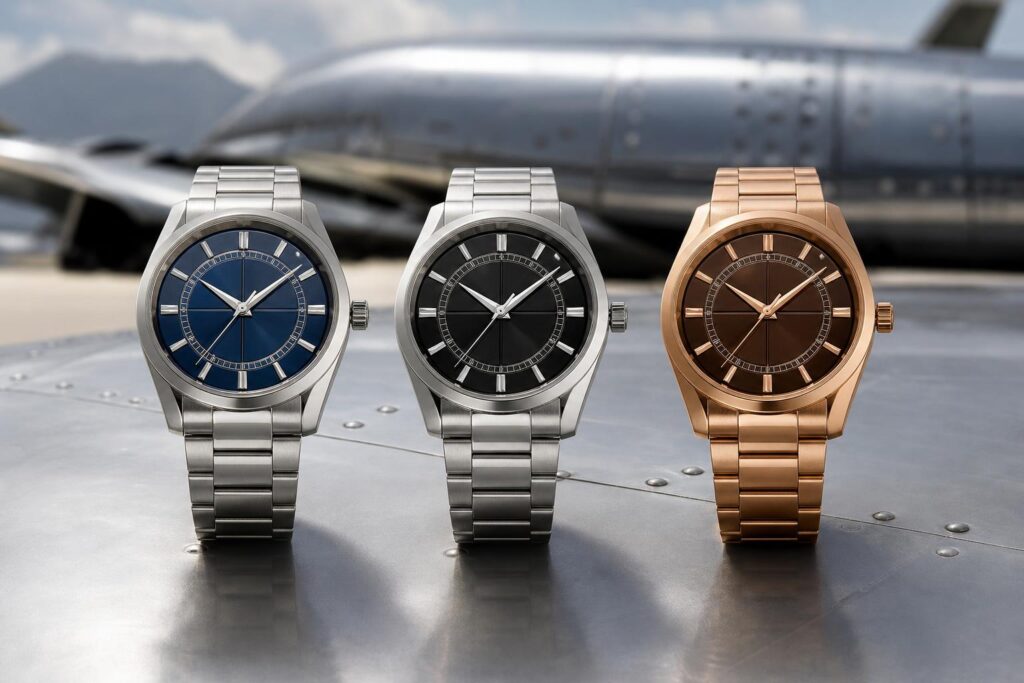
The 39 mm line begins with more straightforward “Prêt-à-Porter” models, including stainless steel versions with blue or black dials and a rose gold model with a brown dial.
Universal Genève then expands the personality of the watch with “Capsule” hardstone models, including bullseye, lapis lazuli and tiger’s eye executions.
For smaller wrists, the 37 mm options include a classic steel model, rose gold references and more jewellery-led pieces with diamond-set bezels and cases.
The most ornate versions move the Polerouter far from its airline-instrument roots, but they also reflect how the modern brand wants the collection to work across dress, collector and jewellery-watch categories.
The bracelet has also been modernised, with easier adjustment and changing than the vintage Gay Frères-style architecture that collectors associate with older Universal Genève watches.
The New Calibre UG-110
The most important mechanical decision is the use of the Universal Genève Manufacture Calibre UG-110 across both 37 mm and 39 mm Polerouter models.
That matters because the Polerouter’s historical identity is closely tied to automatic winding innovation, especially the micro-rotor movements introduced by Universal Genève in the late 1950s.
The UG-110 keeps that spirit but interprets it in a contemporary way.
Its rotor is larger than a traditional micro-rotor, closer in effect to a three-quarter rotor, giving the movement more winding mass while preserving a relatively slim architecture.
The calibre measures 32 mm in diameter and sits just under 4 mm thick, which helps maintain the thin-wearing character expected from a Polerouter.
Visually, the movement leans into mid-century Universal Genève cues through its bridge architecture while using modern construction and finishing standards.
Pricing Moves the Polerouter Upmarket
The reborn Polerouter is no longer priced like a practical pilot’s watch, and that will be the central debate around the collection.
The most restrained steel references in 37 mm and 39 mm on leather straps are priced at CHF 14,000, with bracelet versions adding CHF 2,000.
At the upper end, a rose gold, diamond-set model with a berry-toned dial reaches CHF 40,320.
Those numbers place the Polerouter in a very different competitive field from its historical ancestors, but they also signal that Universal Genève is treating the watch as a serious high-end relaunch rather than a casual heritage exercise.
The strongest versions are likely to be the cleaner steel models, where the Genta-era proportions, crosshair dial and slim automatic movement feel most coherent.
The hardstone and diamond references will appeal to buyers who want the Polerouter name with more visual drama, though purists may find them less persuasive.
As a return, the new Universal Genève Polerouter succeeds because it understands the original’s design grammar; as a purchase, it asks collectors to accept that this former aviation tool has been repositioned as a luxury object for a new era.