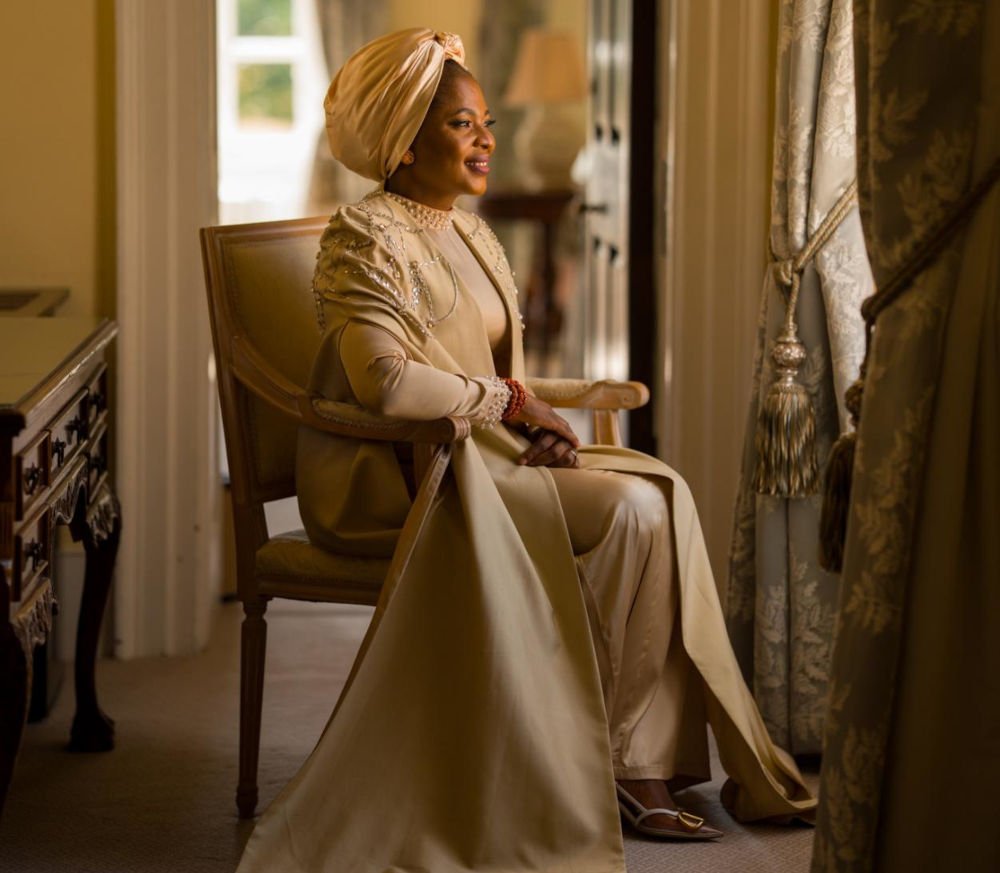
SELHAYA has made a pointed statement about its ambitions with the appointment of Queen Temitope Enitan-Ogunwusi as its first official royal patron.
The announcement followed the London silk house’s inaugural Royal Cultural Salon at Mansion House, where the Nigerian queen appeared as guest of honour on 27 June 2026.
For a young maison working in ceremonial silk, private commissions and textile art, the appointment places heritage and cultural diplomacy at the centre of its identity.

At a glance
- SELHAYA has appointed Queen Temitope Enitan-Ogunwusi as its first official royal patron.
- The queen wore a gold silk design from the house’s Royal Collection and received a framed silk artwork created for the occasion.
- The role links the London-based silk house with Nigerian royal heritage, craftsmanship, women’s initiatives and community-focused philanthropy.
A royal appointment shaped by Yoruba heritage
Queen Temitope is the wife of Oba Adeyeye Enitan Ogunwusi, the Ooni of Ife, one of Nigeria’s most significant traditional rulers.
Her association with Ile-Ife gives the appointment cultural weight beyond a conventional fashion endorsement.
Ile-Ife holds deep importance in Yoruba history, and that context gives SELHAYA a more layered connection to African royal tradition and ceremonial dress.

At the event, Queen Temitope wore The Coronation, a gold silk piece from SELHAYA’s Royal Collection finished with crystal and pearl detailing.
The design was created for the occasion and fits neatly with the house’s focus on garments made for ceremony rather than ordinary seasonal turnover.
Accepting the role, the queen said, “True luxury is not measured by what we wear, but by the legacy we weave.”
It’s a fitting line for a company trying to frame silk not only as a material, but as a vehicle for memory, identity and status.
Silk, art and ceremony at Mansion House
The Royal Cultural Salon took place at Mansion House, the official residence of the Lord Mayor of London.
The setting gave the evening a civic grandeur that suited SELHAYA’s mix of fashion presentation, textile art and cultural conversation.
Guests came from fashion, art, philanthropy, culture and business, reflecting the salon’s aim to move beyond a runway-style showcase.
Alongside wearable silk pieces, the house presented framed textile artworks and hosted discussion around craftsmanship, identity and heritage.
One of the key objects of the evening was The Sovereign Jewel, a framed work made from gold taffeta silk and embroidered with more than 800 crystals.
SELHAYA presented the artwork to Queen Temitope as a commemorative gift marking her new association with the house.
The gesture underlined an important part of the brand’s direction, where silk can become a collectible artwork, a private commission or a ceremonial gift.
SELHAYA’s founders are building more than a fashion label
SELHAYA was founded in London by Aisha Hossain and Sajjad Choudhury.
Hossain, a former senior UK government policy adviser, leads the company’s creative and cultural direction, including collections, publications and salons.
Choudhury brings experience in product development, technology and business strategy, overseeing operations, partnerships, digital direction and growth.
Their model is deliberately focused, with work spanning ceremonial garments, private commissions, framed textiles, publications and cultural events.
That makes the queen’s patronage especially relevant, because SELHAYA is positioning itself around meaning and context as much as design.
The appointment is expected to support initiatives connected to craftsmanship, women, heritage and community development.
Those themes sit close to Queen Temitope’s existing public work through Hopes Alive Initiative for Africa, which supports women, children, community empowerment and social development.
What the patronage means for the silk house
For SELHAYA, the appointment gives its early cultural programme a clearer international dimension.
The house is British-based, but its first royal patron connects it to Nigerian royal identity and the wider role of ceremonial clothing across cultures.
For Queen Temitope, the role offers a fashion and culture platform through which to continue work around heritage, women’s leadership and philanthropy.
The success of the partnership will depend on how it develops beyond the formal announcement, but the initial outline is compelling.
SELHAYA is presenting silk as an object of craft, symbolism and exchange, while Queen Temitope brings a living royal context to that vision.
In a luxury market often crowded with surface-level collaborations, this one stands out for trying to build a bridge between London design, Nigerian heritage and the enduring language of ceremonial textiles.