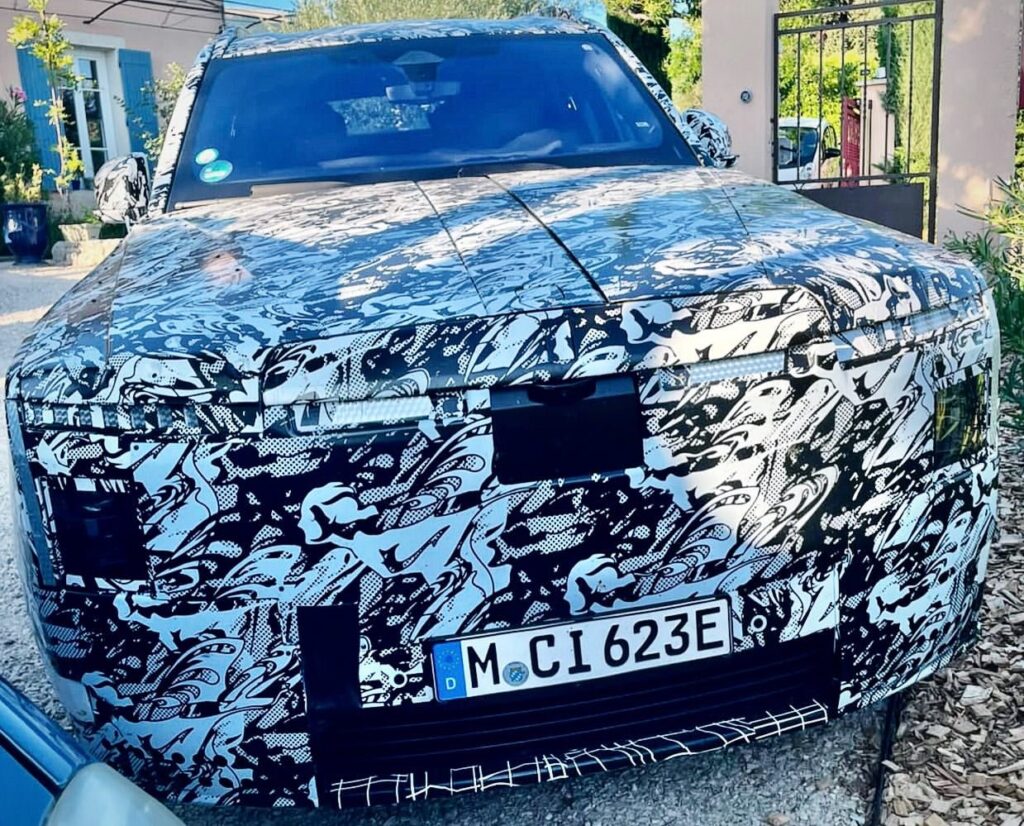
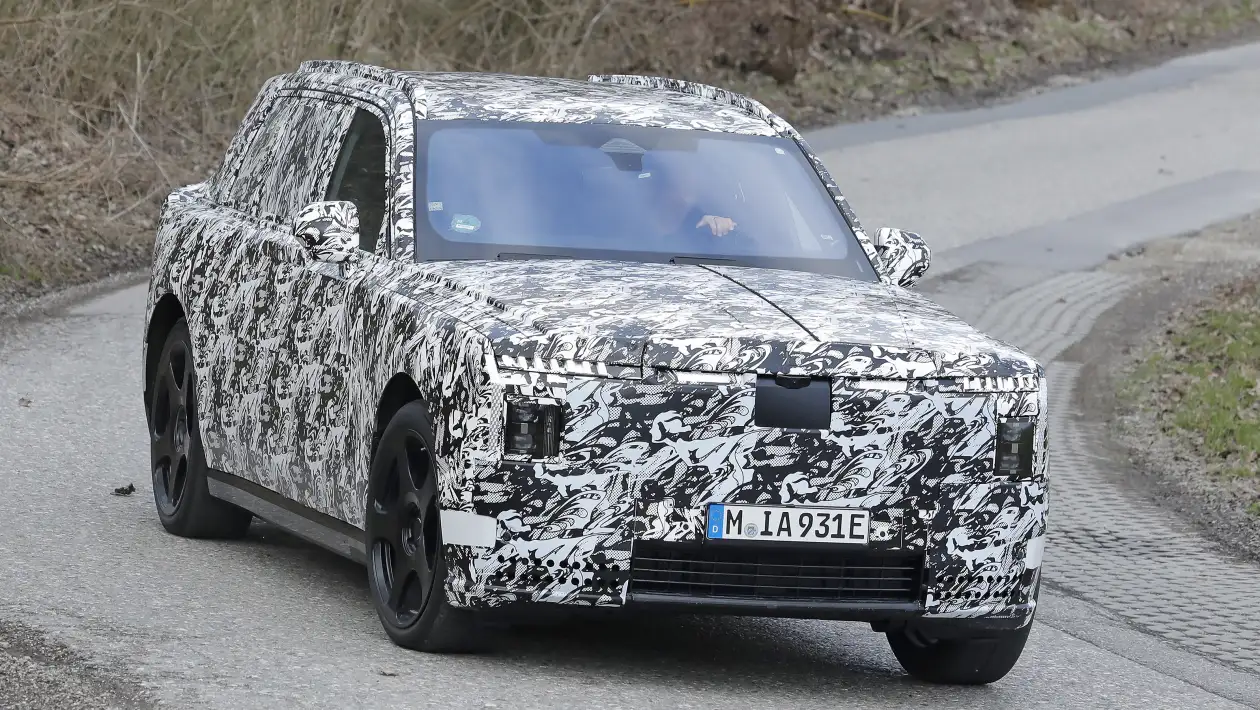
Rolls-Royce’s next electric chapter is starting to take shape, and the latest prototype gives away just enough to make it interesting.
The camouflaged SUV arrives at a moment when Bentley is pushing hard into ultra-luxury EVs with the Torcal, setting up a natural rivalry between two very different interpretations of electric prestige.
What stands out here isn’t performance theatre, but the way Rolls-Royce appears to be rethinking the front end of an electric luxury car.
At a glance
- Rolls-Royce’s upcoming electric SUV has been seen in prototype form with heavy camouflage.
- The test car shows a split-opening bonnet and a front radar sensor, while the Spirit of Ecstasy is not visible.
- Early expectations point to more than 500 hp and a driving range of roughly 300 to 400 miles.
A split bonnet changes the usual Rolls-Royce script
The most distinctive detail is the bonnet, which appears to open in two sections divided cleanly down the centre.
That’s an unusual treatment for a modern luxury SUV, and it immediately suggests Rolls-Royce is doing more than simply adapting existing EV packaging.
With no V12 sitting beneath the bonnet, the front compartment could become useful space rather than mechanical theatre.
A dedicated area for charging cables would be the pragmatic answer, though a tailored luggage compartment would feel more in step with the brand’s approach to convenience and ceremony.
The missing Spirit of Ecstasy is also notable, though it doesn’t necessarily mean much at prototype stage.
Rolls-Royce has long used a retractable mascot, so it may simply be concealed on this development car.
The front end hints at a more technical Rolls-Royce
A visible radar sensor sits at the front of the prototype, pointing to the expected suite of driver-assistance systems.
That kind of hardware is now routine in high-end EVs, but on a Rolls-Royce it has to disappear into the wider experience rather than dominate it.
The brand’s challenge will be making advanced assistance feel calm, discreet and chauffeur-grade, not intrusive.
That balance matters because Rolls-Royce buyers tend to value effortlessness over visible technology.
Power and range expectations
Technical information is still limited, but the electric SUV is expected to use a dual-motor layout producing more than 500 hp.
Estimated range is believed to sit between 300 and 400 miles, which would put usability ahead of headline-chasing numbers.
That positioning would make sense for Rolls-Royce.
The brand doesn’t need to win a drag race as much as it needs to deliver silence, smoothness and a convincing sense of reserve.
Bentley Torcal gives the segment a benchmark
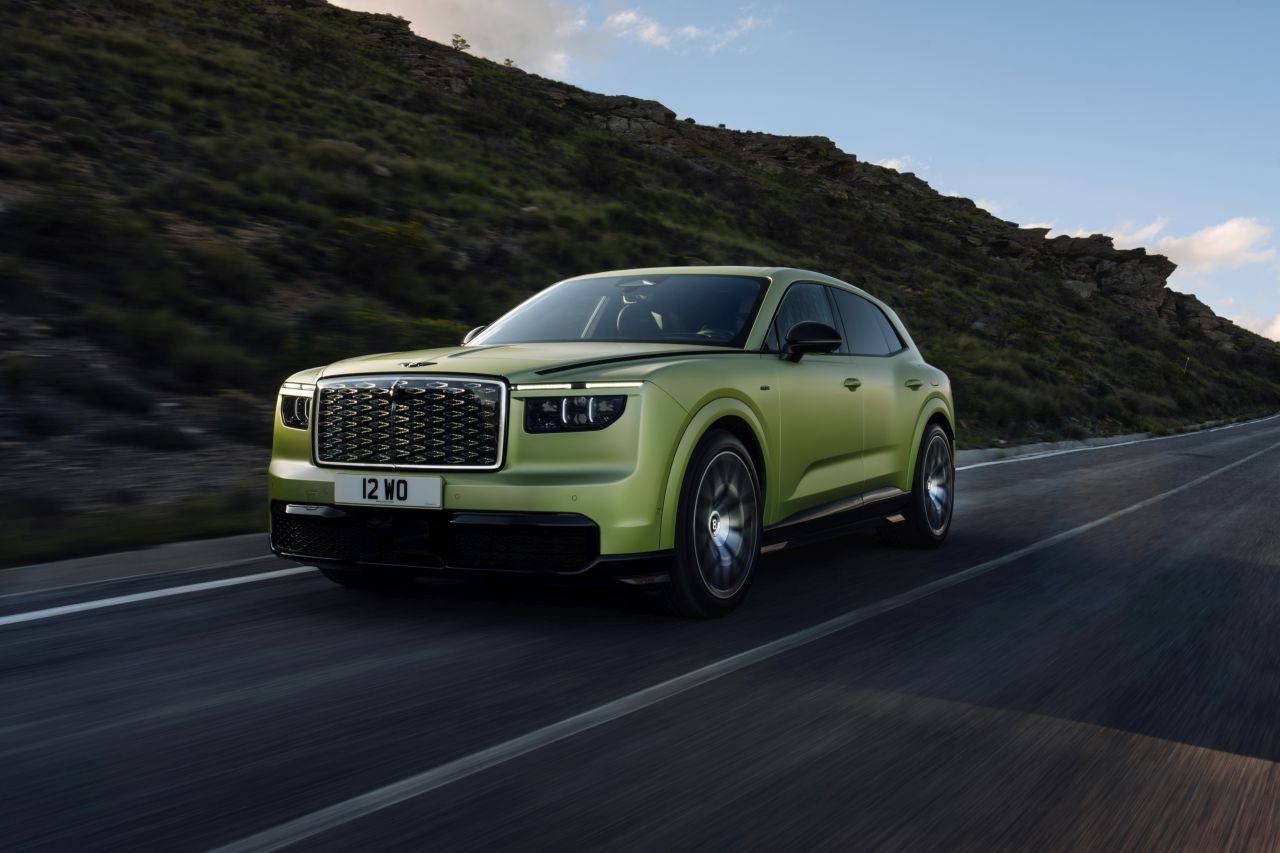
The timing is difficult to ignore, with Bentley’s all-electric Torcal now part of the conversation.
The base Torcal is quoted at 810 hp and 881 lb-ft of torque, with 0 to 60 mph arriving in 3.3 seconds and a top speed of 155 mph.
Those figures frame Bentley’s EV as a performance-led luxury SUV, while Rolls-Royce appears likely to lean into a quieter, more rarefied interpretation of electric travel.
For buyers cross-shopping at this level, the distinction may come down less to raw output and more to personality.
Details & Specifications
| Brand | Rolls-Royce |
|---|---|
| Model | Upcoming electric SUV |
| Powertrain | All-electric |
| Expected layout | Dual-motor setup |
| Expected output | More than 500 hp |
| Expected range | Approximately 300 to 400 miles |
| Notable prototype detail | Split-opening bonnet |
| Driver-assistance hardware | Front radar sensor visible |
Rolls-Royce’s electric SUV is still wearing heavy disguise, but the visible details already suggest a car shaped around ritual, packaging and quiet authority rather than spectacle alone.
If the production model keeps that split bonnet idea and uses its EV architecture with genuine imagination, it could become one of the more intriguing luxury electric SUVs to watch.