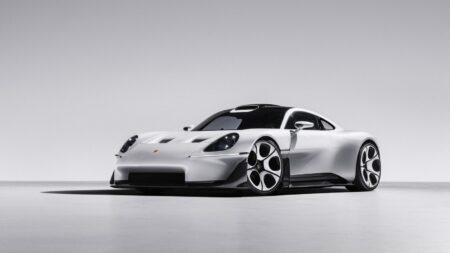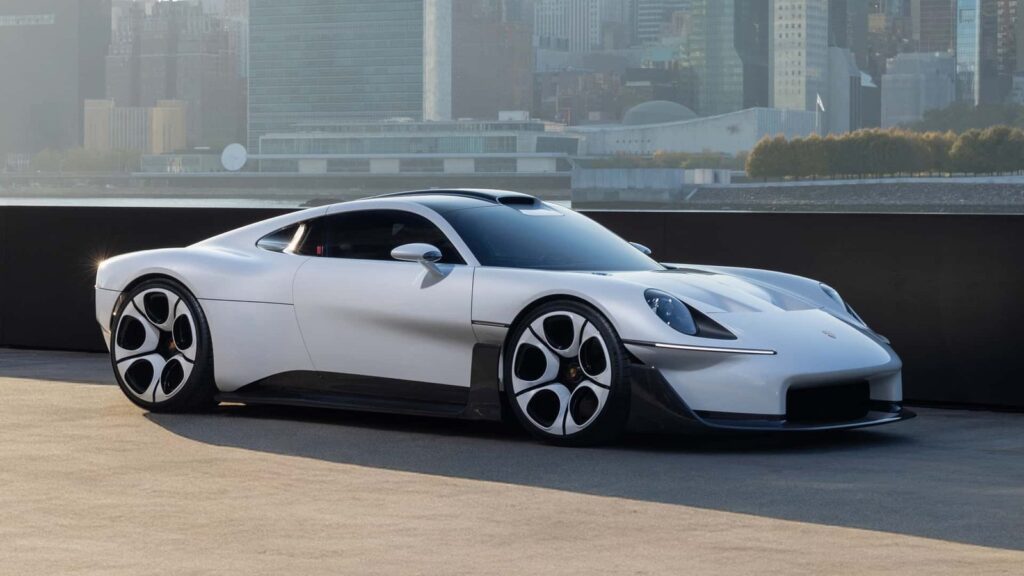
Porsche’s electric ambitions are still moving, but the Mission S won’t be part of that push in fully battery-powered form.
The recently revealed mid-engine supercar platform is being positioned around combustion and hybrid possibilities rather than a pure EV setup.
For buyers who still see sound, response and mechanical involvement as central to the supercar experience, that decision says plenty about where Porsche thinks this corner of the market stands.
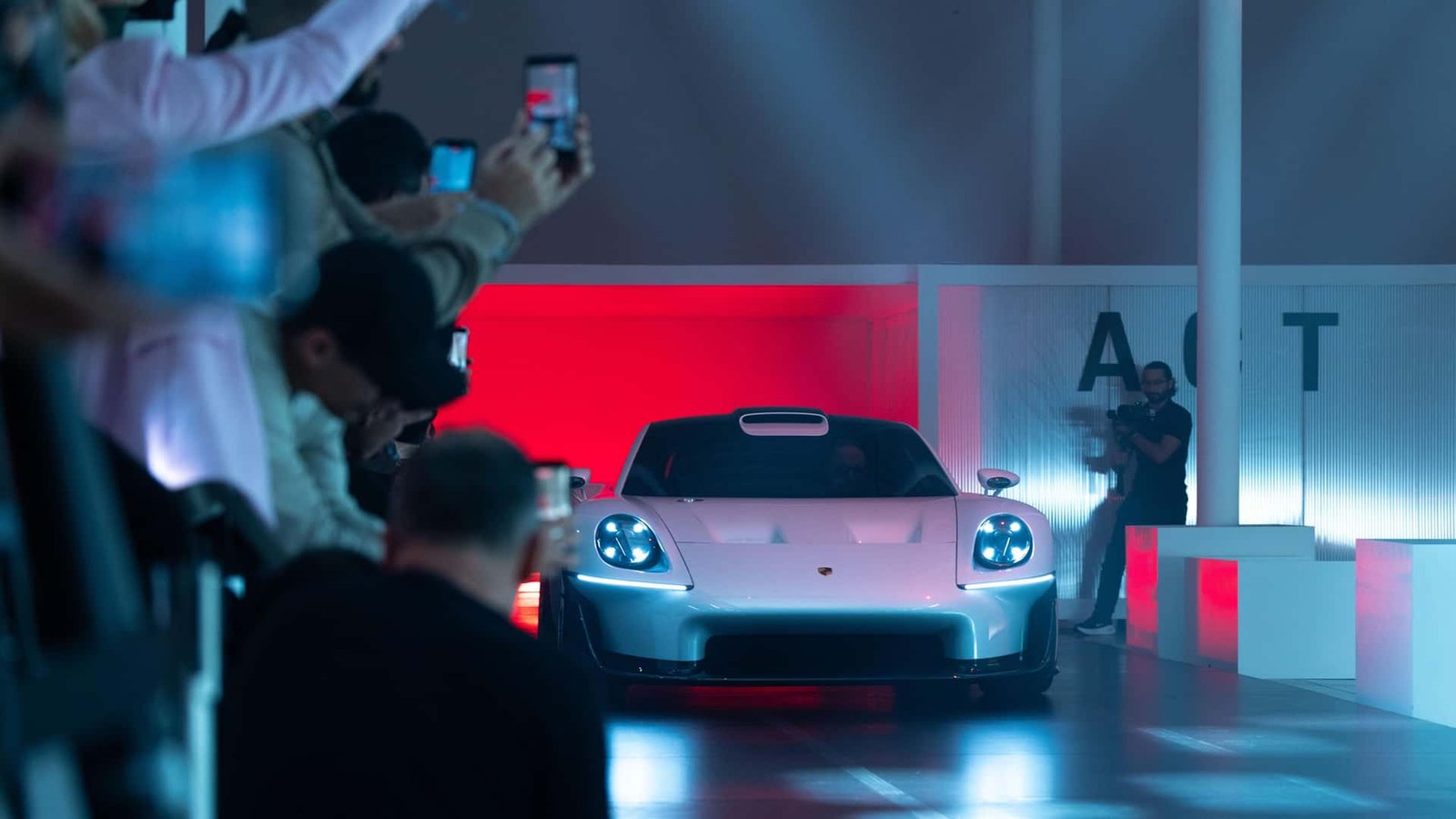
At a glance
- Porsche has ruled out a fully electric version of the Mission S mid-engine supercar platform.
- The platform is understood to support combustion and hybrid powertrains, with possible manual and PDK-style automatic transmission choices.
- Porsche’s stated reasoning is that it doesn’t see sufficient demand for a battery-electric model in this segment.
A combustion-first call for the Mission S
Porsche has made clear that the Mission S platform won’t produce a BEV variant.
Speaking about the new mid-engine supercar platform, Porsche CEO Michael Leiters said, “There won’t be a BEV on that platform because there is no demand, in this segment, for an EV there.”
That’s a notable position from a brand that continues to invest heavily in electric vehicle technology.
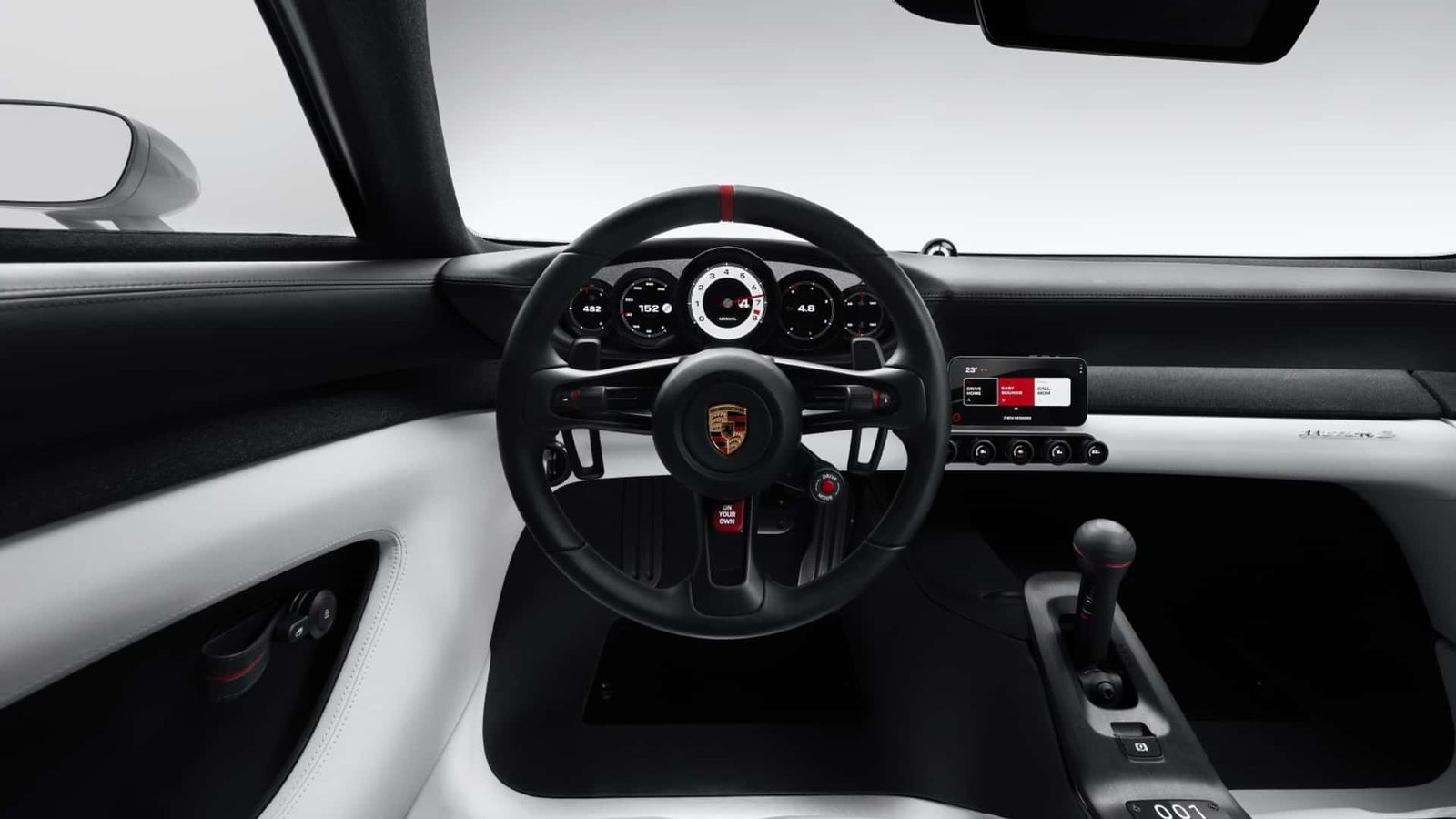
It also underlines the difference between building electric cars because the technology matters and deciding whether that technology belongs in every performance niche.
What Porsche thinks supercar buyers still want
The reasoning appears to be less about rejecting EV performance and more about judging what customers expect from this kind of car.
In a mid-engine supercar, Porsche seems to believe buyers still place a high value on combustion-engine character, including sound, throttle response and the more analogue feel associated with traditional performance hardware.
Saying there is “no demand” doesn’t necessarily mean no one would buy an electric Porsche supercar.
It suggests Porsche doesn’t currently see enough interest to justify engineering a full EV version on this platform.
A flexible platform without a full EV path
The Mission S architecture is not being presented as a single-powertrain idea.
Leiters has previously said the platform can accommodate combustion and hybrid powertrains, which leaves room for electrification without abandoning the engine entirely.
There is also the possibility of customers choosing between a traditional manual gearbox and a PDK-style automatic transmission.
If that makes production, it would give the Mission S a broader spread of personalities than many modern supercars, from a more involved driver’s setup to a quicker-shifting dual-clutch-style configuration.
Details & Specifications
| Brand | Porsche |
|---|---|
| Model | Mission S |
| Layout | Mid-engine supercar platform |
| Fully electric version | Ruled out for this platform |
| Supported powertrains | Combustion and hybrid powertrains |
| Transmission possibilities | Traditional manual or PDK-style automatic |
For now, the Mission S looks set to become a statement about selective electrification rather than an all-electric flagship.
Porsche may be investing in EVs, but with this platform, it appears to be saving the most visceral parts of the supercar formula for combustion and hybrid power.