Porsche’s next halo car has appeared ahead of schedule.
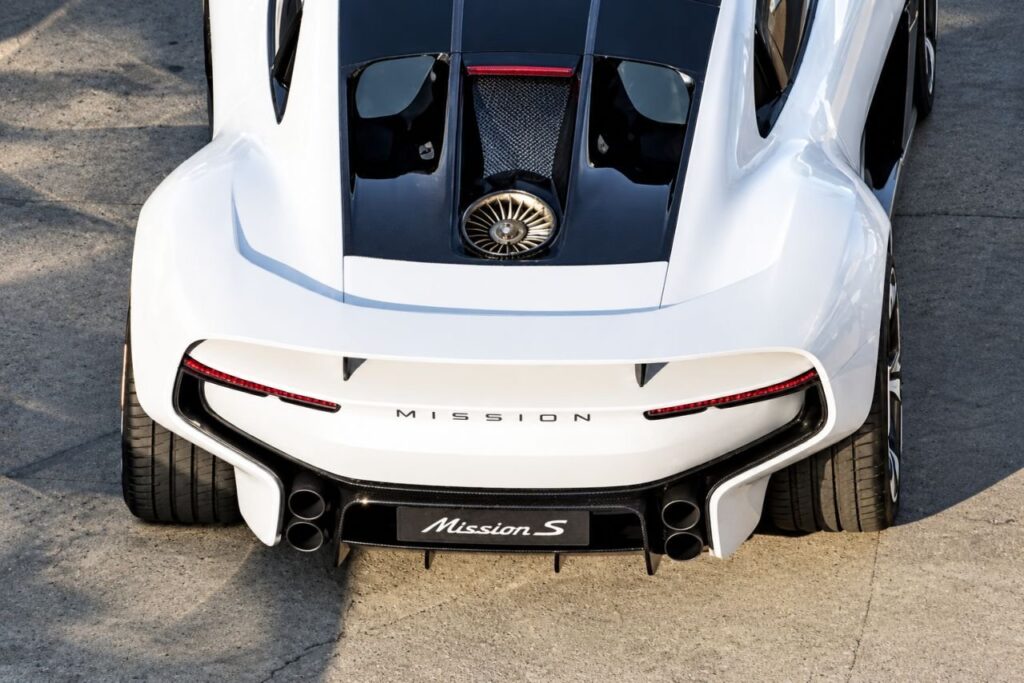
An image shared on social media by @jonnylieberman and @dougswheels shows the rear of the Porsche Mission S concept before its official reveal, giving an early look at a car expected to preview the brand’s next flagship supercar.
For Porsche, that territory carries real weight, because the Mission S is being positioned as a spiritual follow-up to the Carrera GT and 918 Spyder.
At a glance
- A leaked image has revealed the rear of the Porsche Mission S concept ahead of its official unveiling later today.
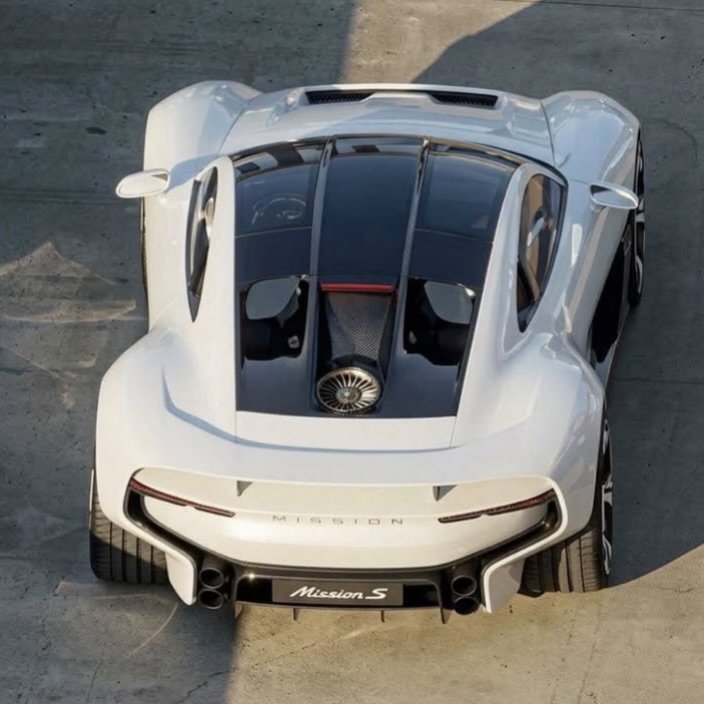
- The concept shows a muscular rear profile with glass roof panels, wide vented fenders, slim LED taillights and vertically stacked quad exhausts.
- Rumours circulating around the car point to a new flat-8 engine, an 8,000 rpm rev limit and a Carrera GT-inspired gauge cluster.
A new Porsche halo car appears early
The Mission S name immediately places this concept in a rare part of the Porsche catalogue.
Porsche does not replace cars such as the Carrera GT or 918 Spyder lightly, and even a concept linked to that lineage will be read closely by collectors and performance-car followers.
The first leaked view is not a full reveal, but it says enough to suggest Porsche is building around drama, mechanical theatre and a strong visual connection to its racing past.
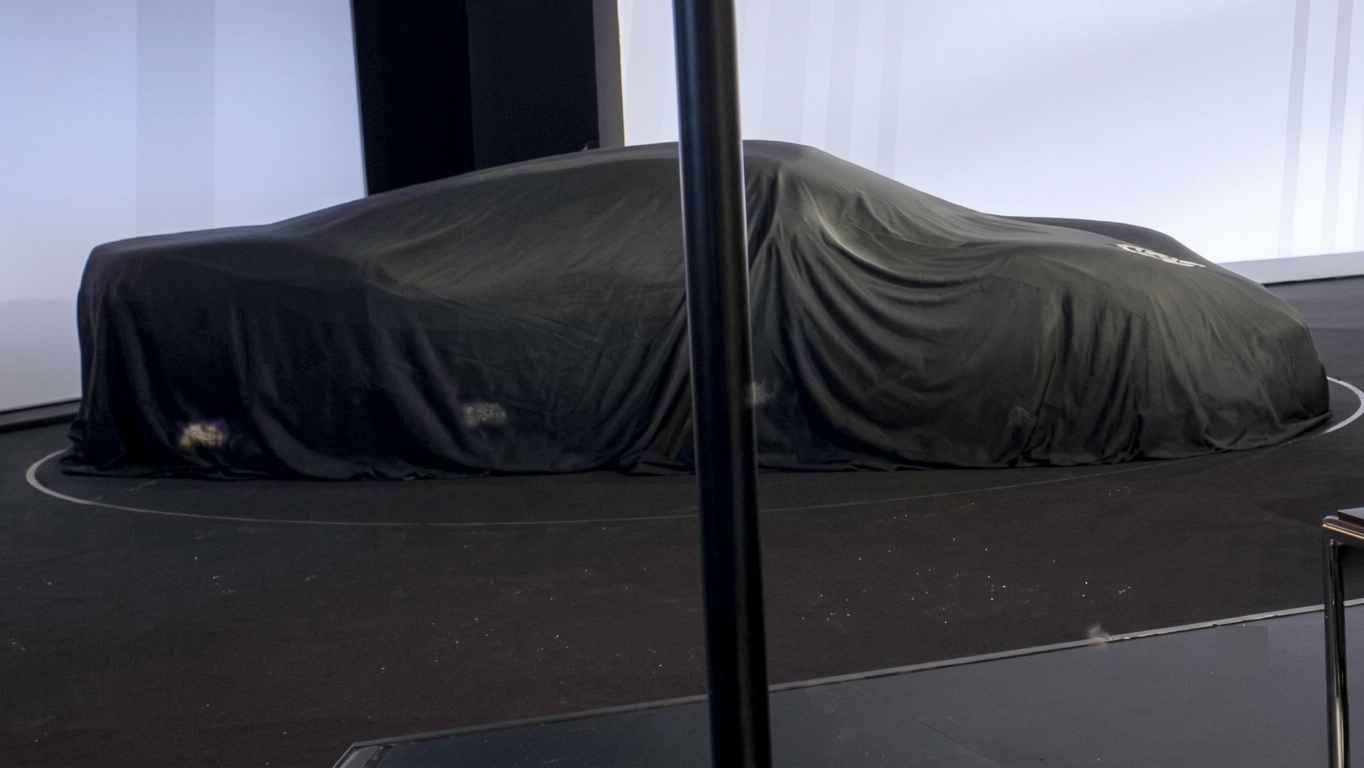
The concept is expected to be officially unveiled later today, so the early image functions more as a first glimpse than a complete technical story.
Glass roof panels and 917-style theatre
The image shows the Mission S from a high rear angle, where the car looks broad, low and heavily planted over its rear axle.
The roof features glass panels that recall the Bugatti Chiron’s distinctive overhead treatment, while the engine cover appears to include a top-mounted fan reminiscent of the Porsche 917.
That detail matters because Porsche’s best halo cars tend to blend advanced engineering with a visible sense of occasion.
The Carrera GT had its V10 soundtrack and manual gearbox, while the 918 Spyder brought hybrid performance into the hypercar conversation.
From this single view, the Mission S appears to be chasing a similarly expressive identity rather than a quiet, anonymous form of speed.
Layered rear design and stacked exhausts
The rear fascia is one of the clearest parts of the leaked image, and it carries several recognisable Porsche cues without simply recycling an existing shape.
Slim LED taillights sit within a layered rear section, while an integrated spoiler gives the tail a clean but purposeful finish.
The wide fenders include side vents, and the side window graphic remains recognisably Porsche even with the more exotic proportions.
The most striking detail may be the exhaust layout.
The Mission S appears to use quad exhaust outlets arranged vertically in two stacked pairs, a choice that gives the rear end a more technical and motorsport-adjacent character than a conventional horizontal layout.
Flat-eight rumours and Carrera GT references
The most intriguing claims around the Mission S are mechanical, though they remain unconfirmed until Porsche presents the car officially.
Rumours attributed to the social media posts circulating with the leak suggest the concept will use an all-new flat-8 engine that revs to 8,000 rpm.
If accurate, that would mark a striking direction for Porsche’s next flagship, especially at a time when many top-tier performance cars are defined by electrification and complex hybrid systems.
The same rumours also point to a Carrera GT-inspired gauge cluster and at least three driving modes named Normal, Sport and Track.
Those details, if they carry through to the concept, would underline the car’s intended connection to Porsche’s analogue supercar heritage while leaving room for a modern execution.
For now, the Mission S remains a concept seen from one leaked angle, but the combination of 917 references, Carrera GT echoes and a possible new flat-8 makes it one of Porsche’s most interesting upcoming reveals.
The official debut should clarify whether this is simply a dramatic design study or the first real signal of Porsche’s next great road-going flagship.