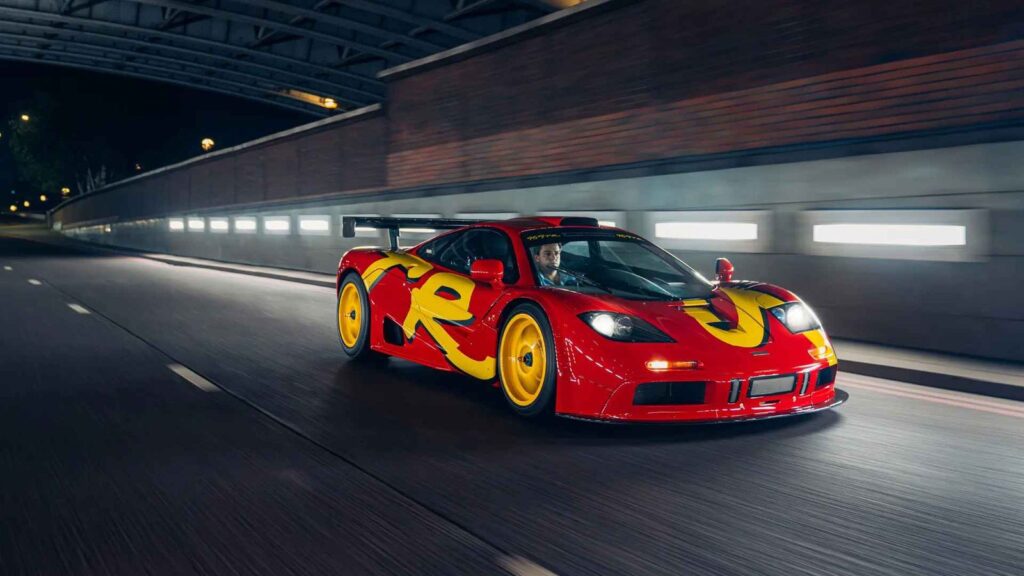
Even in the rarefied world of McLaren F1s, chassis 10R stands apart.
The short-tail F1 GTR prototype is heading to RM Sotheby’s Monterey sale with an estimate of $35 million, bringing one of the most visually distinctive competition McLarens into public view.
Its scarlet-and-yellow factory livery, its link to Pink Floyd drummer Nick Mason and its McLaren road conversion all give this car a profile far beyond the usual collector-grade supercar.
At a glance
- McLaren F1 GTR chassis 10R is set for RM Sotheby’s Monterey sale with a $35 million estimate.
- The car is one of two short-tail F1 GTR prototypes and wears a unique scarlet-and-yellow factory livery.
- Retained by McLaren before being sold to Nick Mason in 1999, it was later converted for road use by McLaren.
A short-tail prototype with an unmistakable livery
Chassis 10R is described as one of only two short-tail F1 GTR prototypes, placing it in a particularly narrow corner of McLaren history.
It is also one of nine cars built to 1996 race specification, a configuration often regarded as among the most desirable within the F1 GTR family.
What makes 10R instantly recognisable, though, is the way it looks.
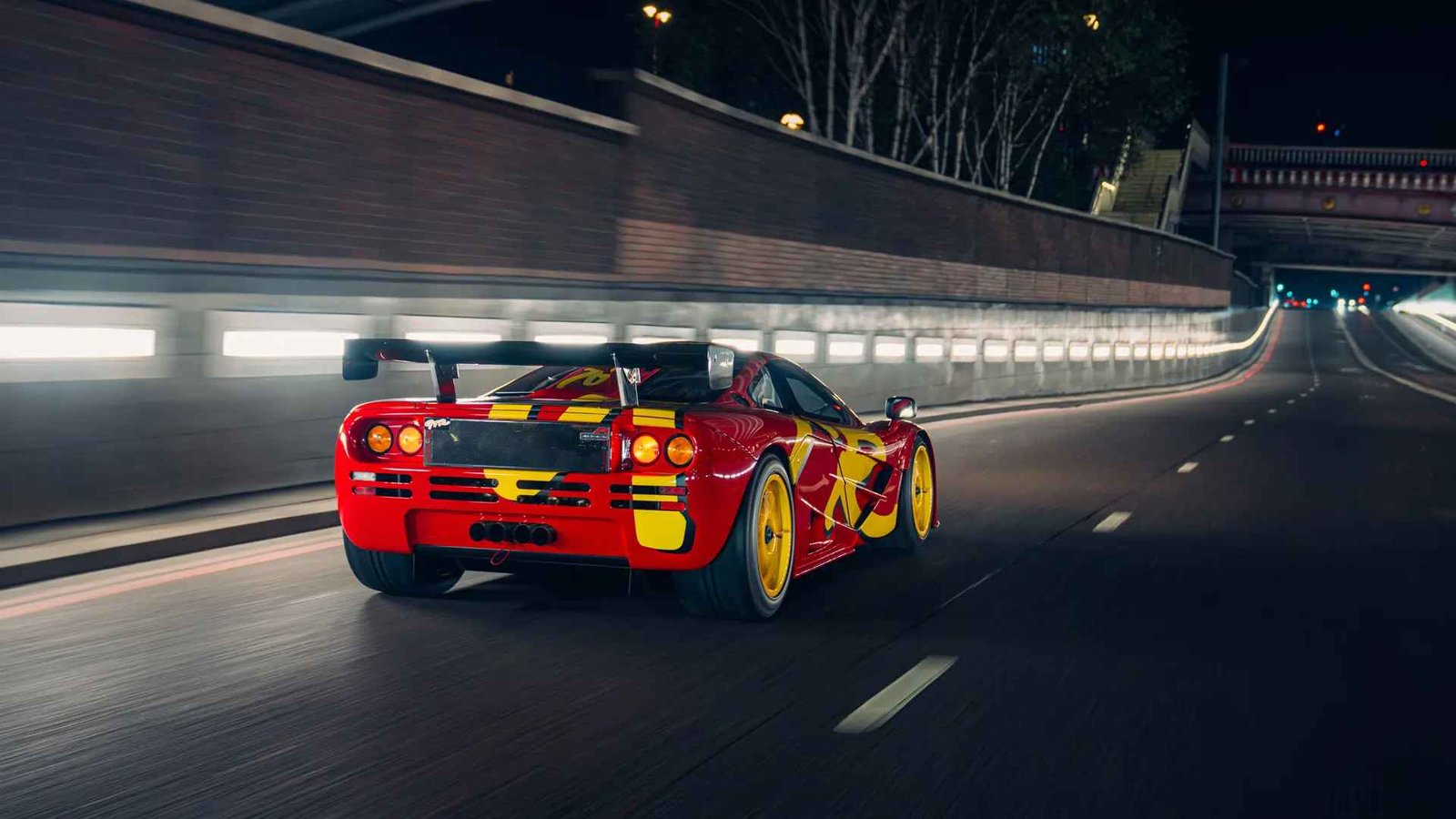
The car wears a bold factory finish in scarlet and yellow, with a graphic treatment inspired by 1990s pop art.
No other F1 GTR carries quite the same visual identity, and that matters in a collecting market where provenance, specification and immediate recognisability all carry weight.
From McLaren ownership to Nick Mason’s collection
Before entering private hands, chassis 10R was kept by McLaren, adding another layer of interest to its early life.

In 1999, the car was sold to Nick Mason, the Pink Floyd drummer whose car collection is well known among enthusiasts.
It has remained a prized part of that collection since then, which gives the upcoming Monterey appearance the feel of a genuinely notable market moment rather than a routine consigning.
Cars of this calibre tend to move quietly, if they move at all.

Why the road conversion matters
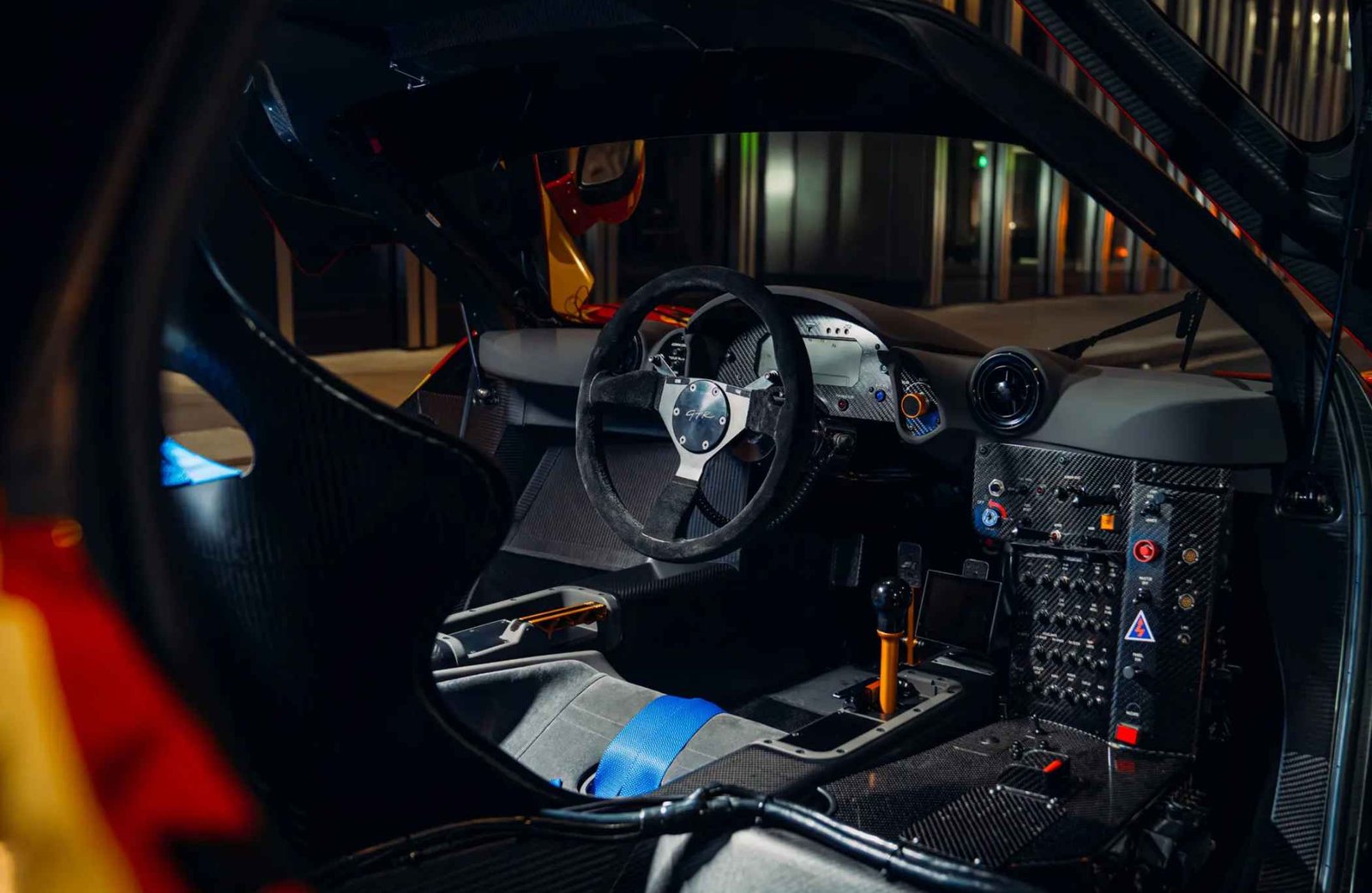
The F1 GTR was born for racing, which is why McLaren’s later conversion of chassis 10R for road use is such an important detail.
It gives the car a rare dual identity, with competition origins and road usability both tied directly to McLaren’s own work.
That factory involvement is crucial, especially with a car as significant as the F1 GTR, where authenticity and documented history are central to desirability.

For a collector, 10R is not simply a display-grade competition car with famous ownership.
It is a McLaren-maintained piece of the F1 story that combines prototype status, a singular livery and a road conversion few race cars can claim.
Details & Specifications
| Brand | McLaren |
|---|---|
| Model | F1 GTR |
| Chassis | 10R |
| Configuration | Short-tail prototype |
| Specification | 1996 race specification |
| Production context | One of two short-tail F1 GTR prototypes and one of nine 1996 race-specification cars |
| Livery | Unique factory scarlet-and-yellow finish inspired by 1990s pop art |
| Notable ownership | Retained by McLaren, sold to Nick Mason in 1999 |
| Conversion | Converted for road use by McLaren |
| Auction house | RM Sotheby’s |
| Sale | Monterey |
| Estimate | $35 million |
At $35 million, chassis 10R is aimed squarely at collectors who understand that the best McLaren F1s are judged by more than rarity alone.
This one brings the right mix of factory history, prototype significance, visual impact and cultural provenance, which is exactly why its Monterey appearance will be watched so closely.