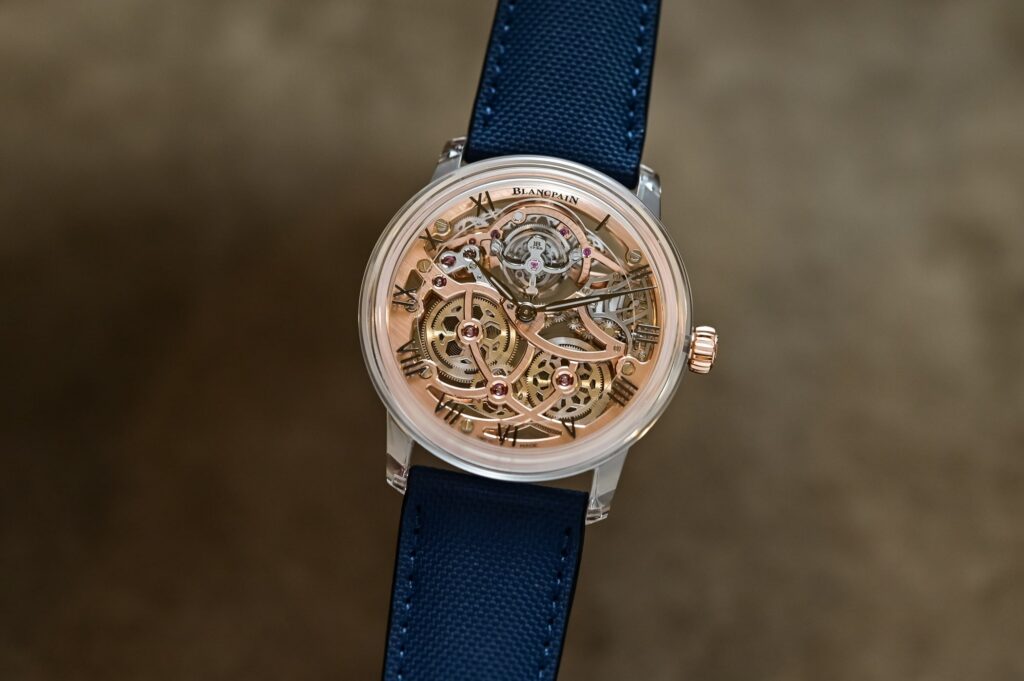
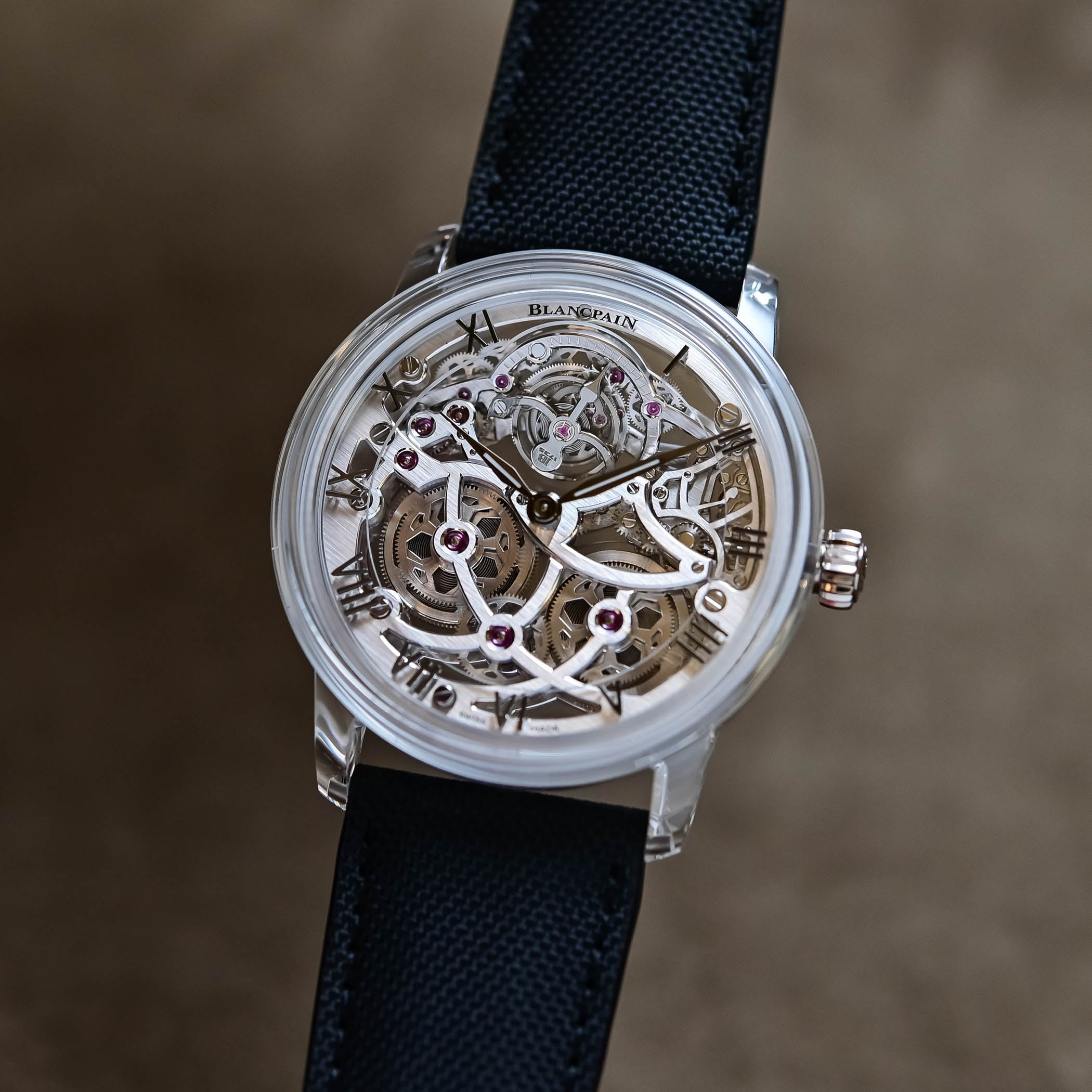
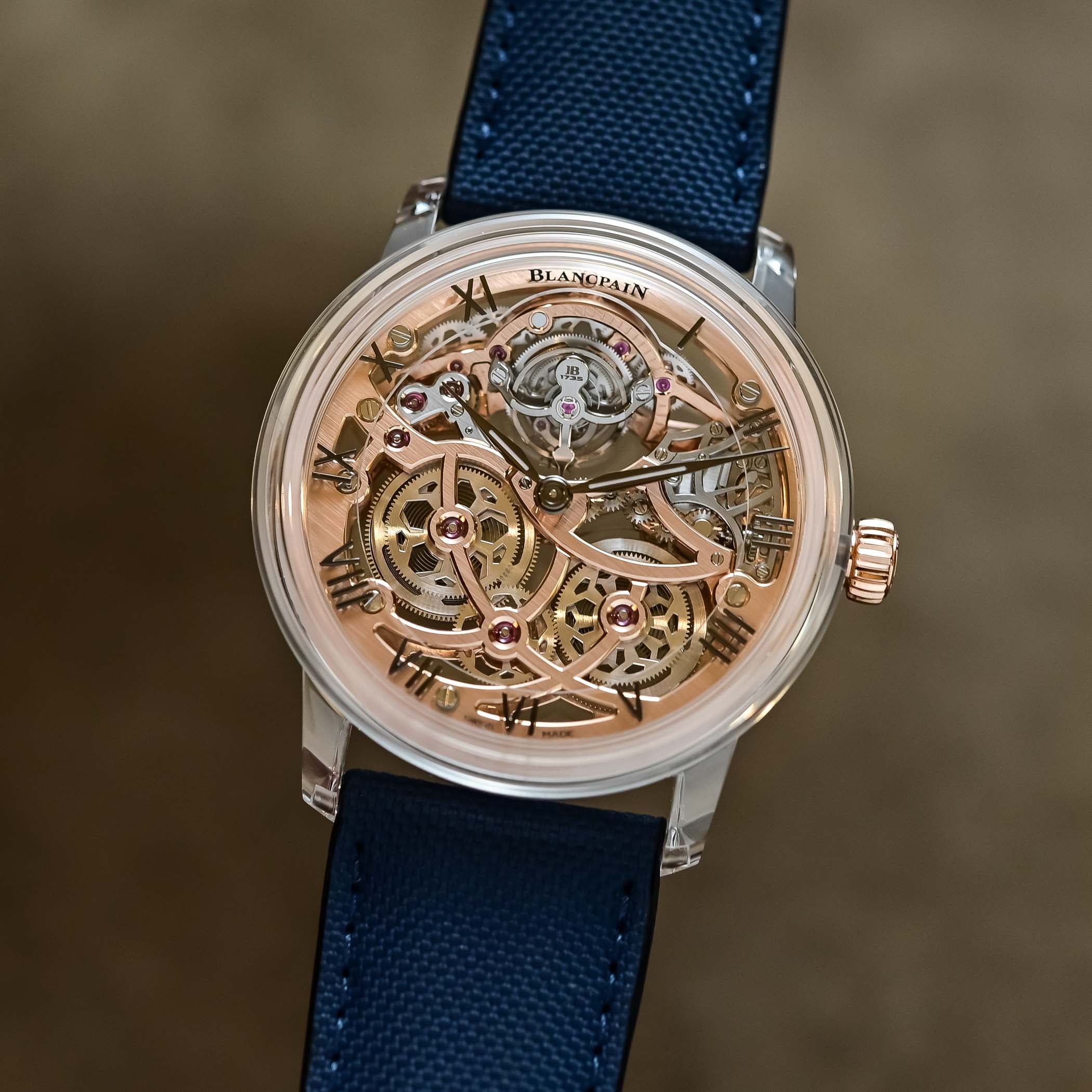
Blancpain has returned to one of its signature high-watchmaking territories with the Carrousel Incliné, a transparent-cased watch built around a newly developed inclined flying carrousel.
The idea is both technical and visual, using a 30-degree regulator architecture to pursue rate stability while putting the movement almost entirely on display.
It’s a specialised piece, but an important one for collectors who follow Blancpain’s long-running work with the carrousel rather than the more familiar tourbillon.
At a glance
- Blancpain has introduced the Carrousel Incliné with a 30-degree inclined flying carrousel.
- The hand-wound calibre 222ISQ offers a 100-hour power reserve and is housed in Blancpain’s first complete sapphire crystal case.
- The watch is priced at CHF 380,000 and each example is accompanied by an individual performance certificate.
A sapphire case built around visibility
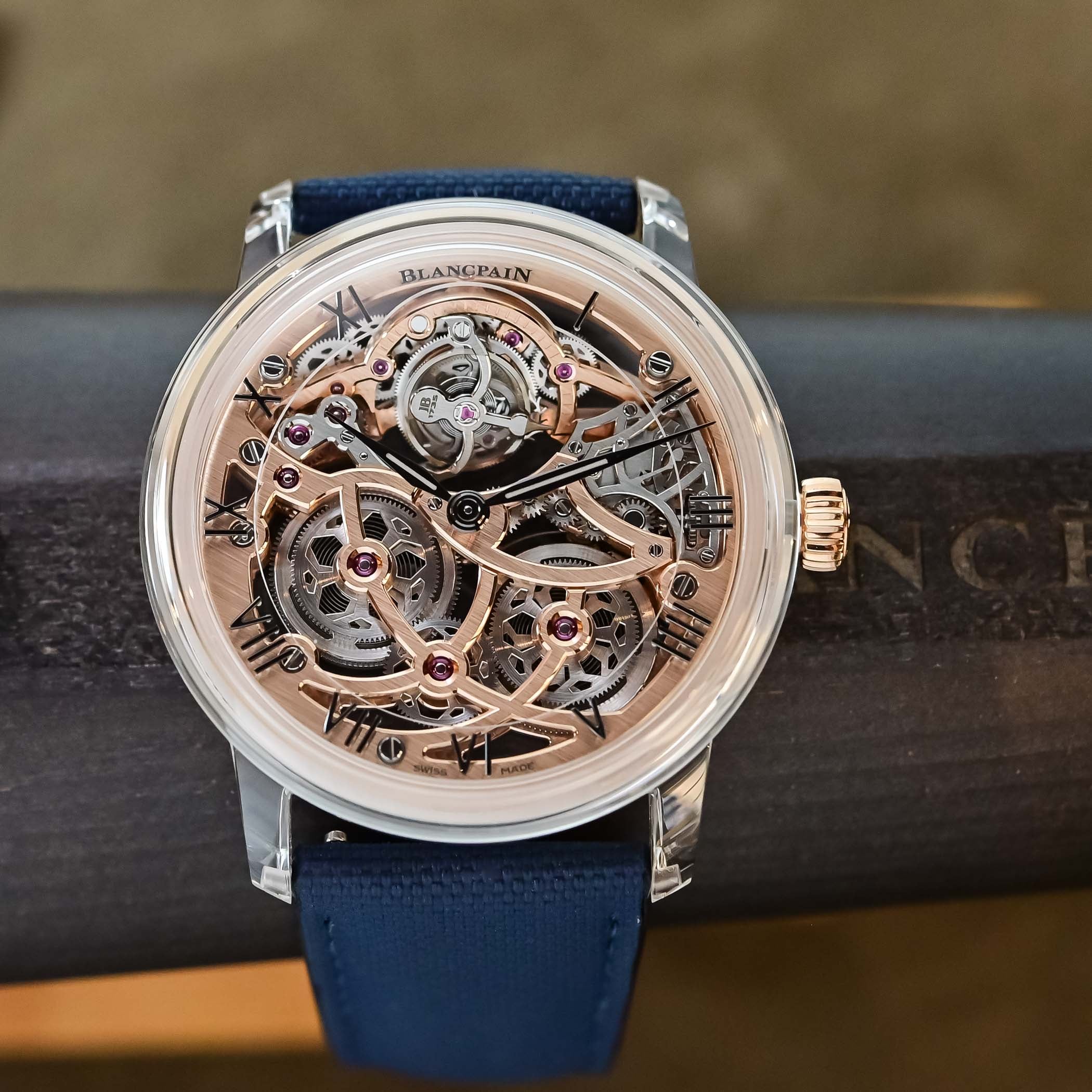
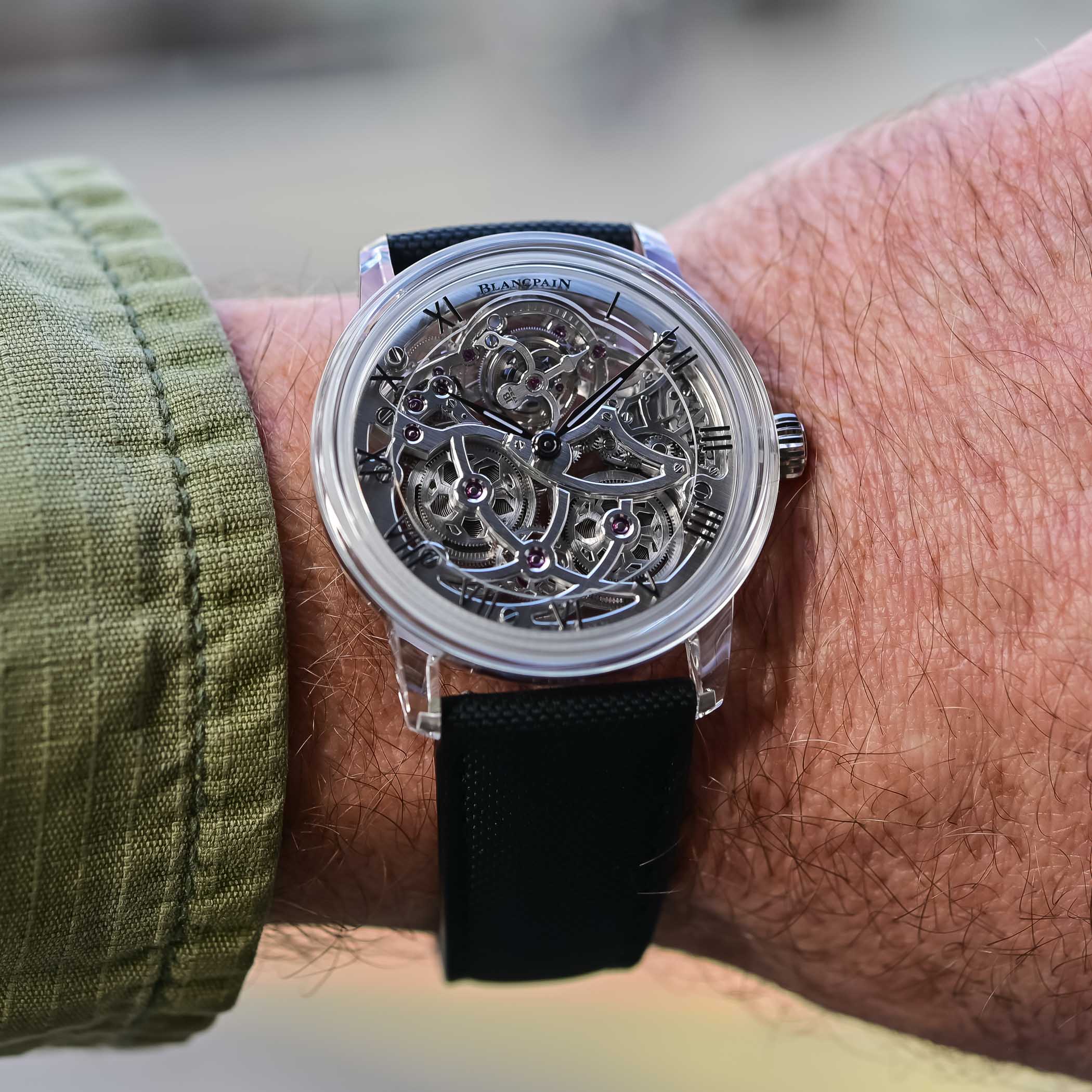
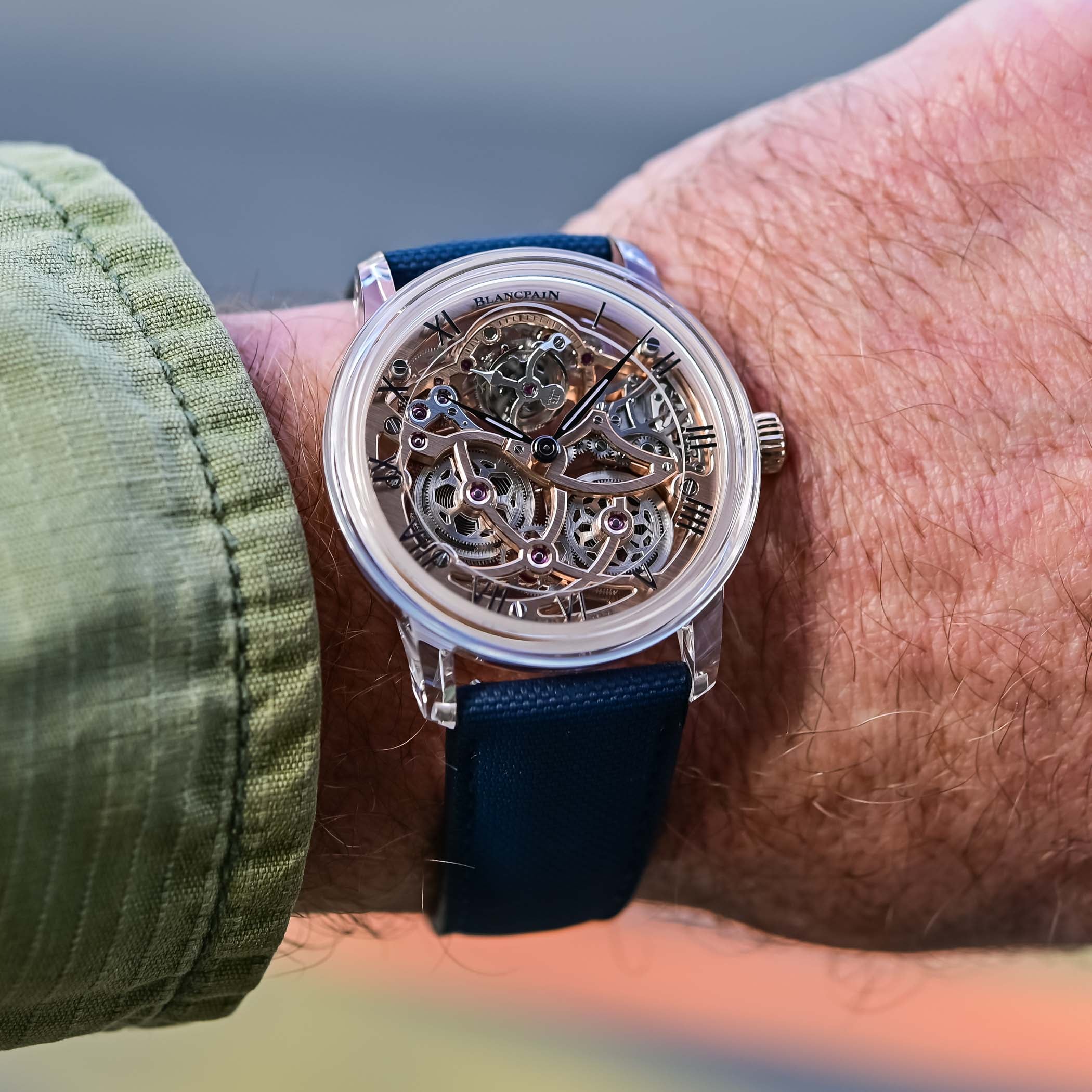
The Carrousel Incliné marks the first time Blancpain has used sapphire crystal for a complete case construction.
The case measures 40.3mm in diameter and 11.3mm thick, with an integrated architecture that treats the middle and back as one component, while the bezel and crystal form another.
The result is less about transparency as decoration and more about making the calibre the watch’s central subject.
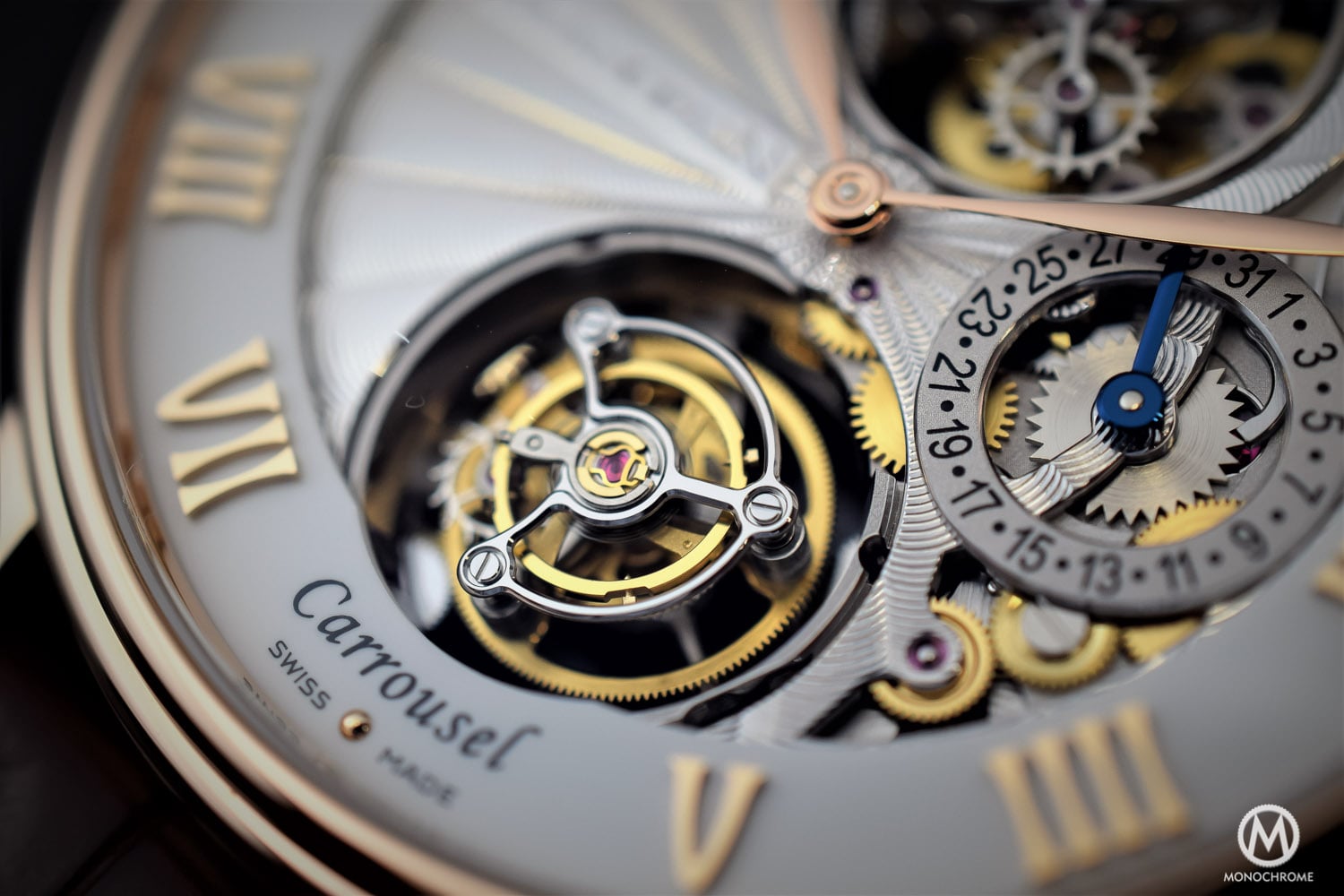
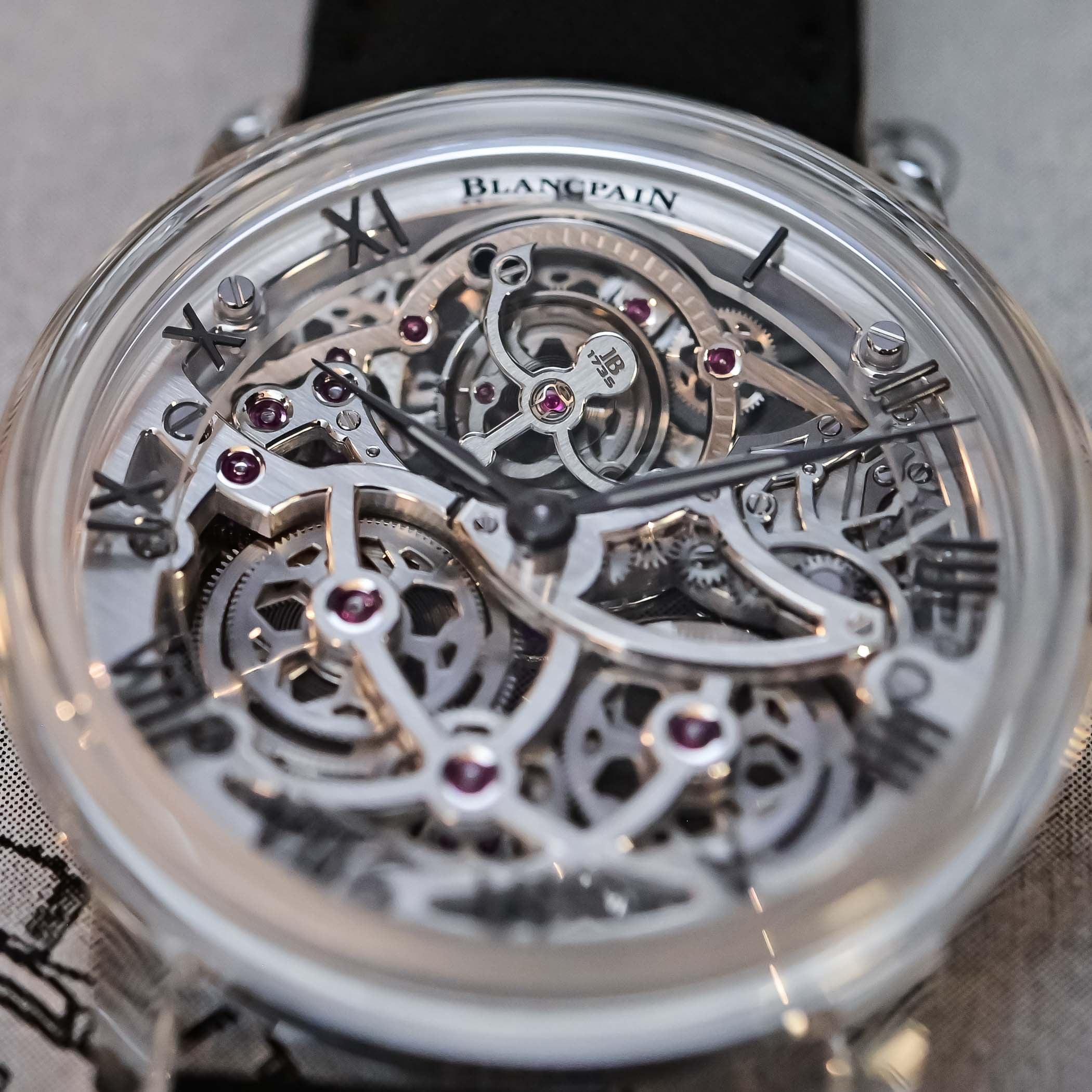
The dial follows the same logic, using sapphire to reveal the skeletonised movement components beneath it.
Gold Roman appliques sit around the periphery, while luminescent hands handle the hours and minutes.
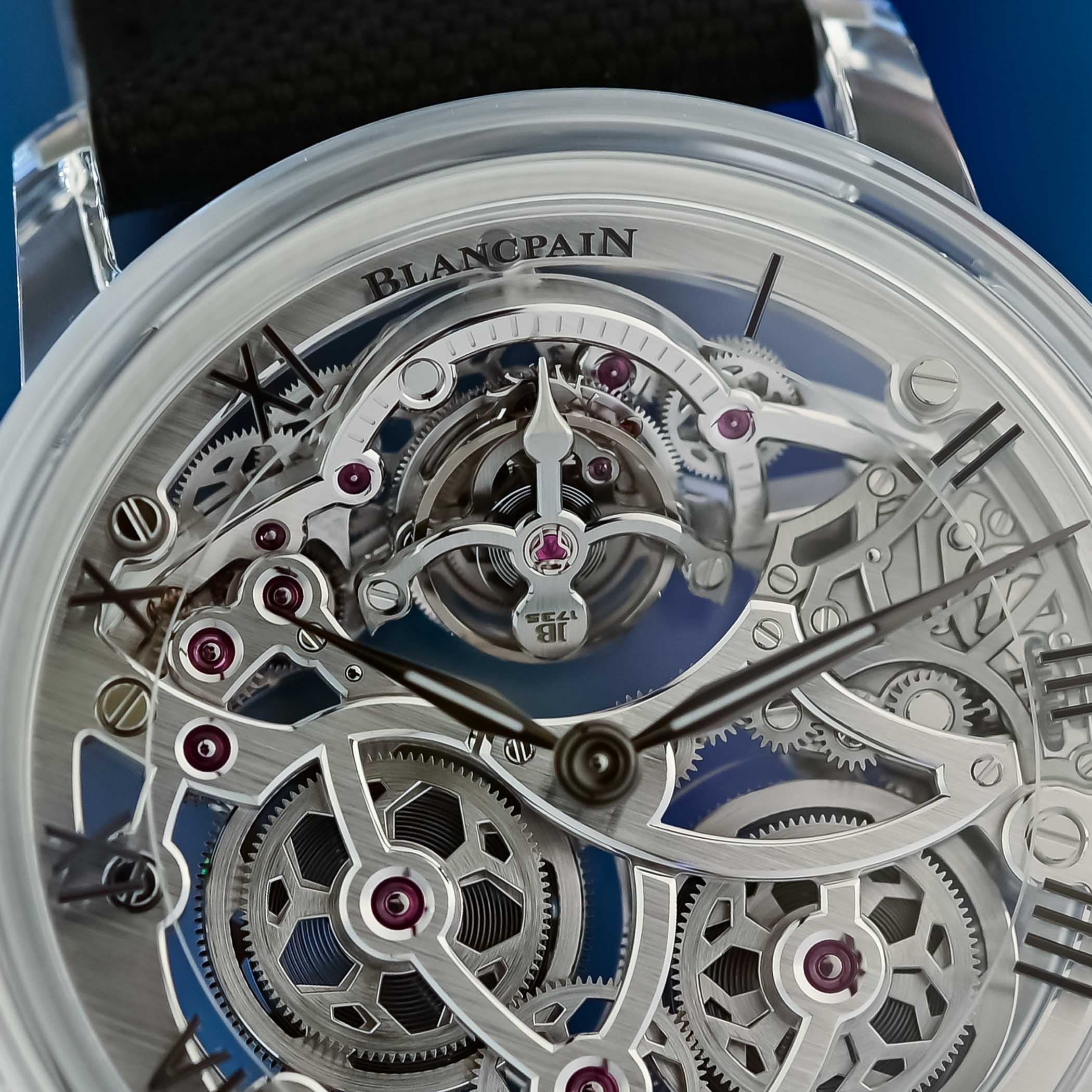
The carrousel itself also becomes part of the display, carrying a beak-shaped running seconds indicator as the regulator completes its rotation.
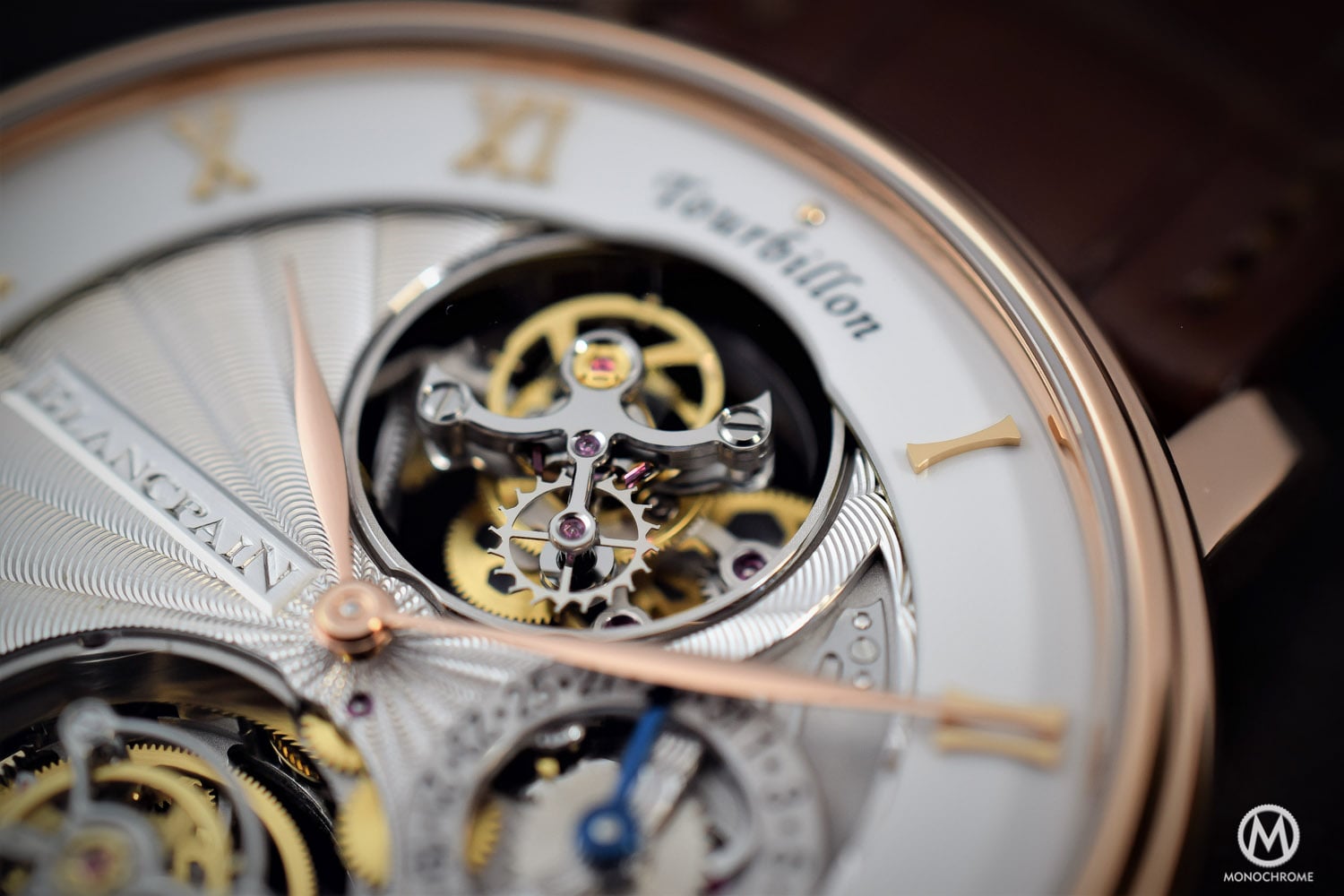
Two visible skeletonised mainspring barrels add another functional cue, while the reverse side includes an E/F indication on the barrel supplying the going train.
The 30-degree carrousel and Blancpain’s chosen path
The carrousel and the tourbillon share a broad purpose, which is to reduce the rate effects created by gravity as the regulating organ changes position.
The construction is different.
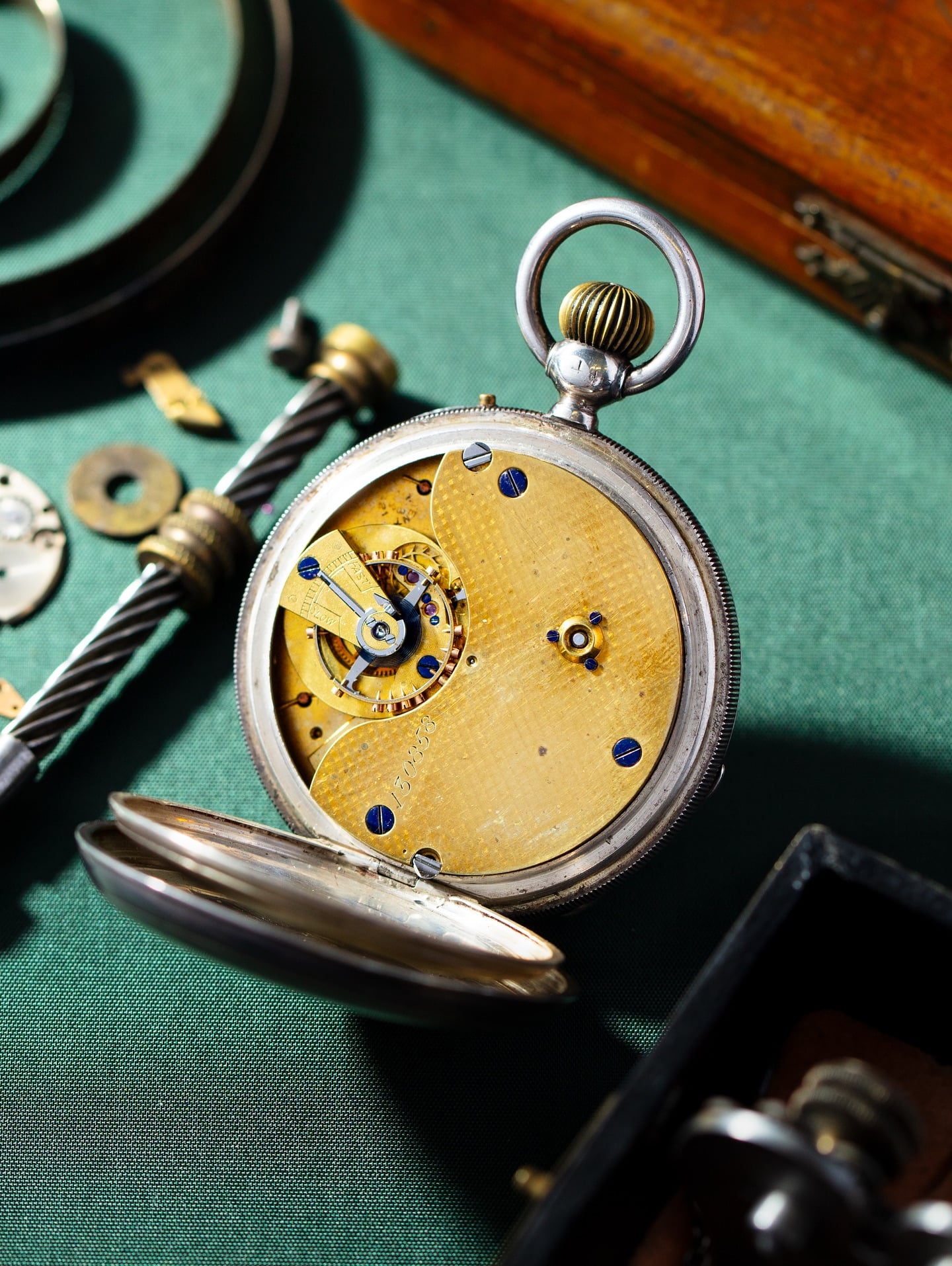
A tourbillon uses a fixed wheel that both drives the cage rotation and interacts with the escapement, while a carrousel uses two separate gear trains, one for the escapement and another for the rotating cage.
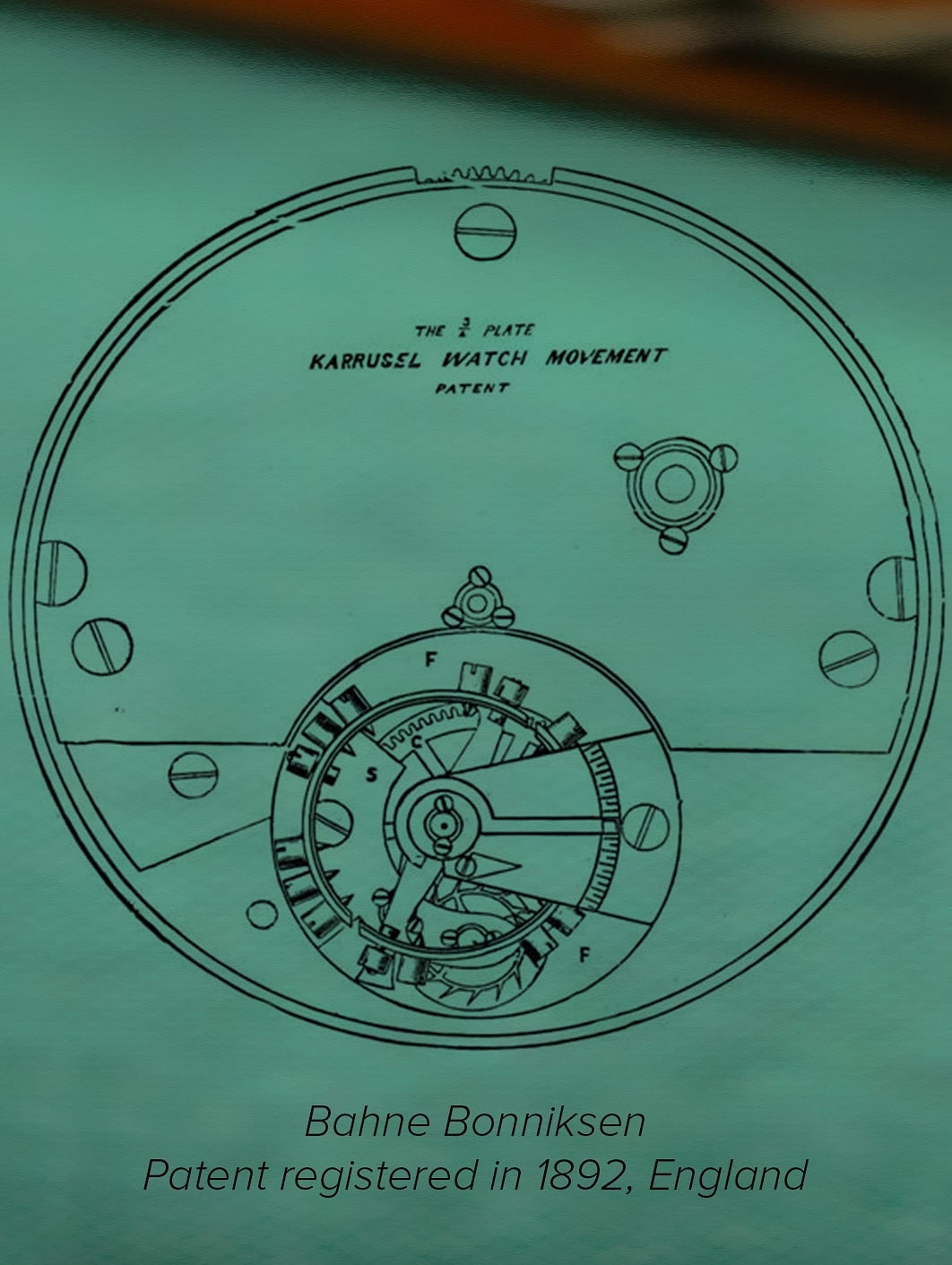
The carrousel was developed by Bahne Bonniksen, a British watchmaker of Danish origin, who patented the system in 1892.
It later became associated with precision pocket watches made in Britain around the turn of the 20th century.
For Blancpain, the complication has become a house specialty in modern wristwatch form.
The manufacture introduced the flying one-minute carrousel to the wrist in 2008 with the Carrousel Volant Une Minute, then continued the theme through pieces including the Villeret Carrousel Phases de Lune and the Villeret Tourbillon Carrousel of 2013.
The Carrousel Incliné narrows that focus to the carrousel itself, placing its geometry and performance at the centre of the watch.
Calibre 222ISQ and the search for steadier rate
The new hand-wound calibre 222ISQ was developed over four years.
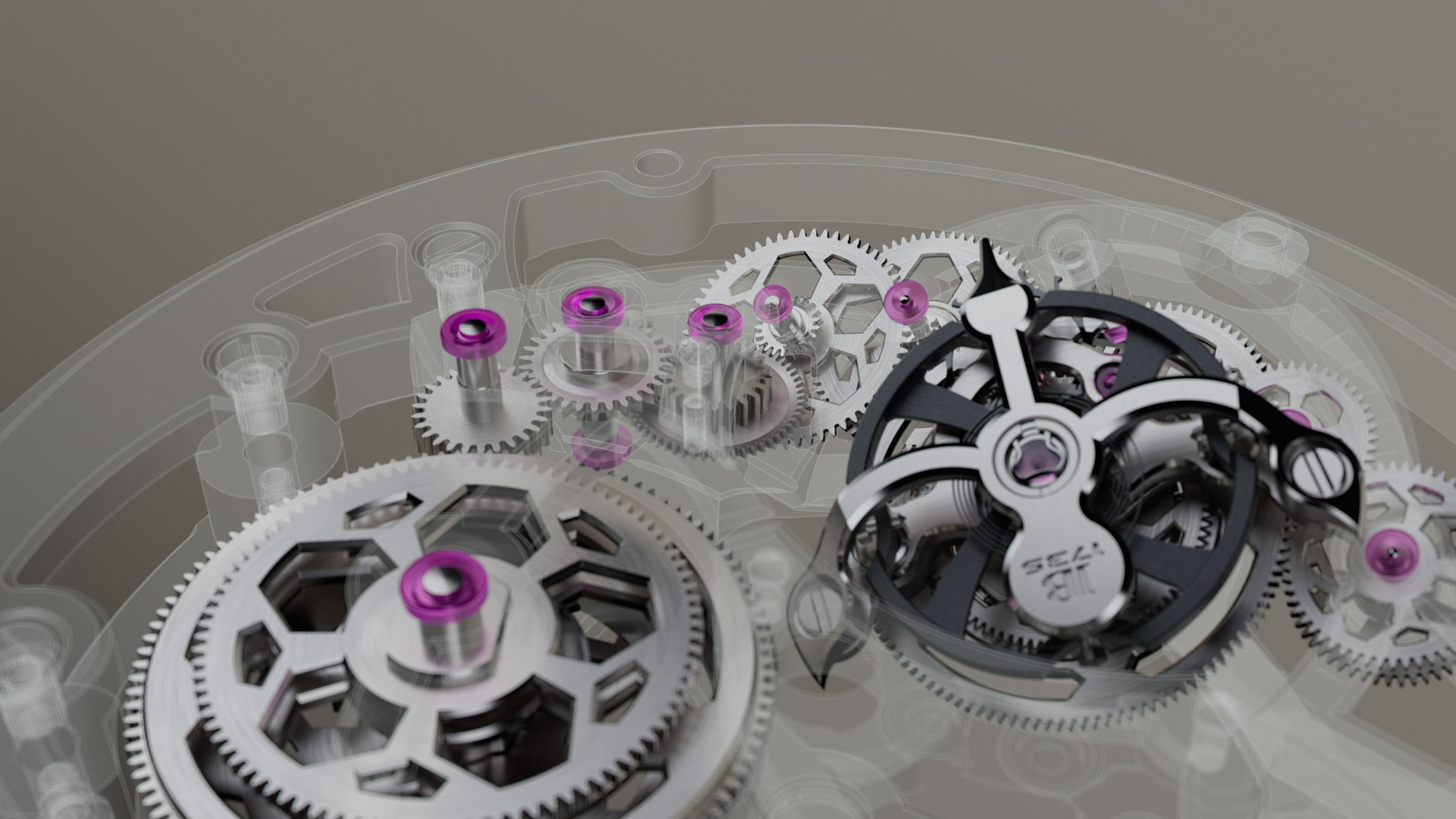
Its defining feature is a flying carrousel inclined at 30 degrees, intended to reduce positional rate differences as the regulating organ continuously changes orientation.
Blancpain tested inclinations from 0 to 35 degrees in five-degree increments, studying rate, amplitude and variation across four vertical and two horizontal positions.
The brand says the 30-degree configuration proved the most effective.
The carrousel completes one rotation per minute and runs at 28,800 vibrations per hour.
Its balance measures 8mm in diameter and uses a silicon hairspring.
Blancpain has also reduced the mass of the rotating assembly, with the cage described as 8.5 percent lighter than the previous construction and its rotational inertia reduced by 30 percent.
The inclined architecture required a transition from the movement’s horizontal plane to the angled regulator.
Blancpain describes this as a two-stage geometry, moving first through 22 degrees and then through a further eight degrees to reach the full 30-degree inclination.
The 9mm cage is supported by a double ball-bearing system, for which a patent application has been filed.
Power comes from two mainspring barrels connected in series, giving the movement a 100-hour power reserve.
The calibre contains 224 components and 37 jewels.
Gold architecture and hand finishing
The movement is offered in two finishes, either rhodium-plated 5N gold or 5N red gold.
Both use 18-carat gold parts, with the bridges and mainplate deliberately exposed through the transparent dial and case.
Blancpain says each movement receives around 210 hours of hand finishing.
More than 60 dedicated tools are used, and the calibre includes 253 sharp inward angles.
The anglage is performed on both sides of the bridges, with 30-degree bevels on the upper surfaces and 45-degree bevels on the lower ones.
Watchmakers use burins and abrasives to shape and polish the edges, with gentian stems used for the final polishing stages.
The mainplate and barrel bridge alone require between 55 and 60 hours of work, according to Blancpain.
Perlage and straight-grained satin finishes add contrast across the remaining surfaces.
Details & Specifications
| Brand | Blancpain |
|---|---|
| Model | Carrousel Incliné |
| Case size | 40.3mm diameter, 11.3mm thick |
| Case material | Sapphire crystal |
| Dial | Sapphire with gold Roman appliques |
| Movement | Hand-wound calibre 222ISQ |
| Complication | 30-degree inclined flying carrousel with running seconds indicator |
| Frequency | 28,800 vibrations per hour |
| Power reserve | 100 hours |
| Movement dimensions | 35.2mm diameter, 5.3mm thick, 6.98mm maximum height at the cage |
| Components | 224 components, 37 jewels |
| Finishing options | Rhodium-plated 5N gold or 5N red gold |
| Strap | Glazed blue-grey leather strap |
| Clasp | Gold folding clasp with safety system |
| Performance certificate | Individual certificate with stated rate tolerance of -0/+2 seconds per day |
| Price | CHF 380,000 |
The Carrousel Incliné is not a broad-market complication dressed up for attention.
It’s a watch for collectors interested in Blancpain’s specific contribution to rotating regulators, and in the way modern materials, chronometric testing and traditional hand finishing can be made to serve one very particular idea.