MB&F has always treated watchmaking less like a product line and more like a body of work.
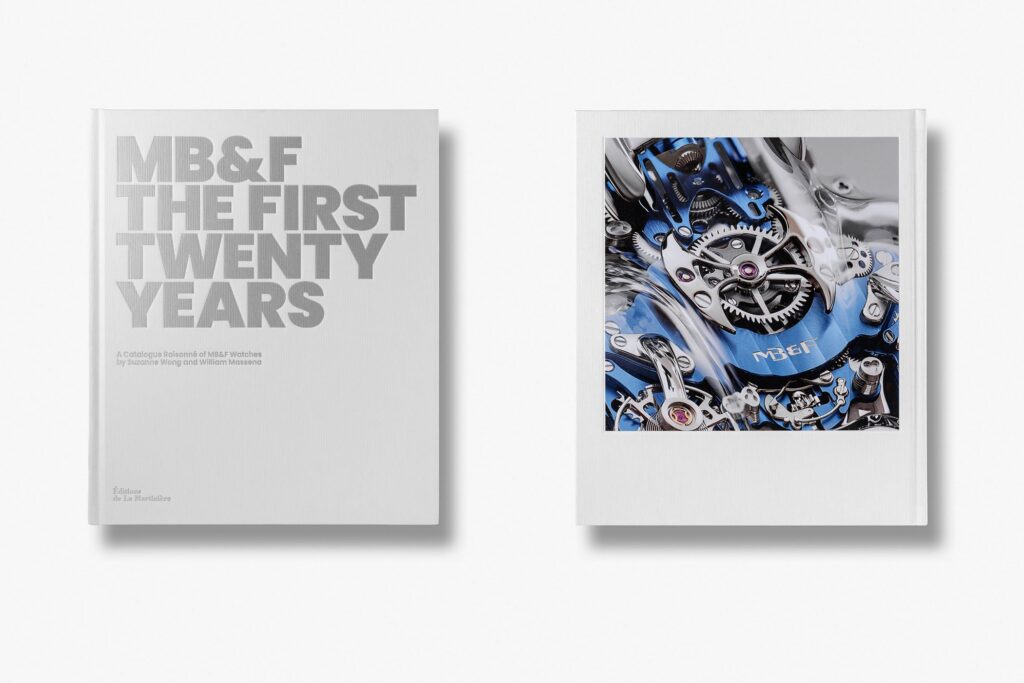
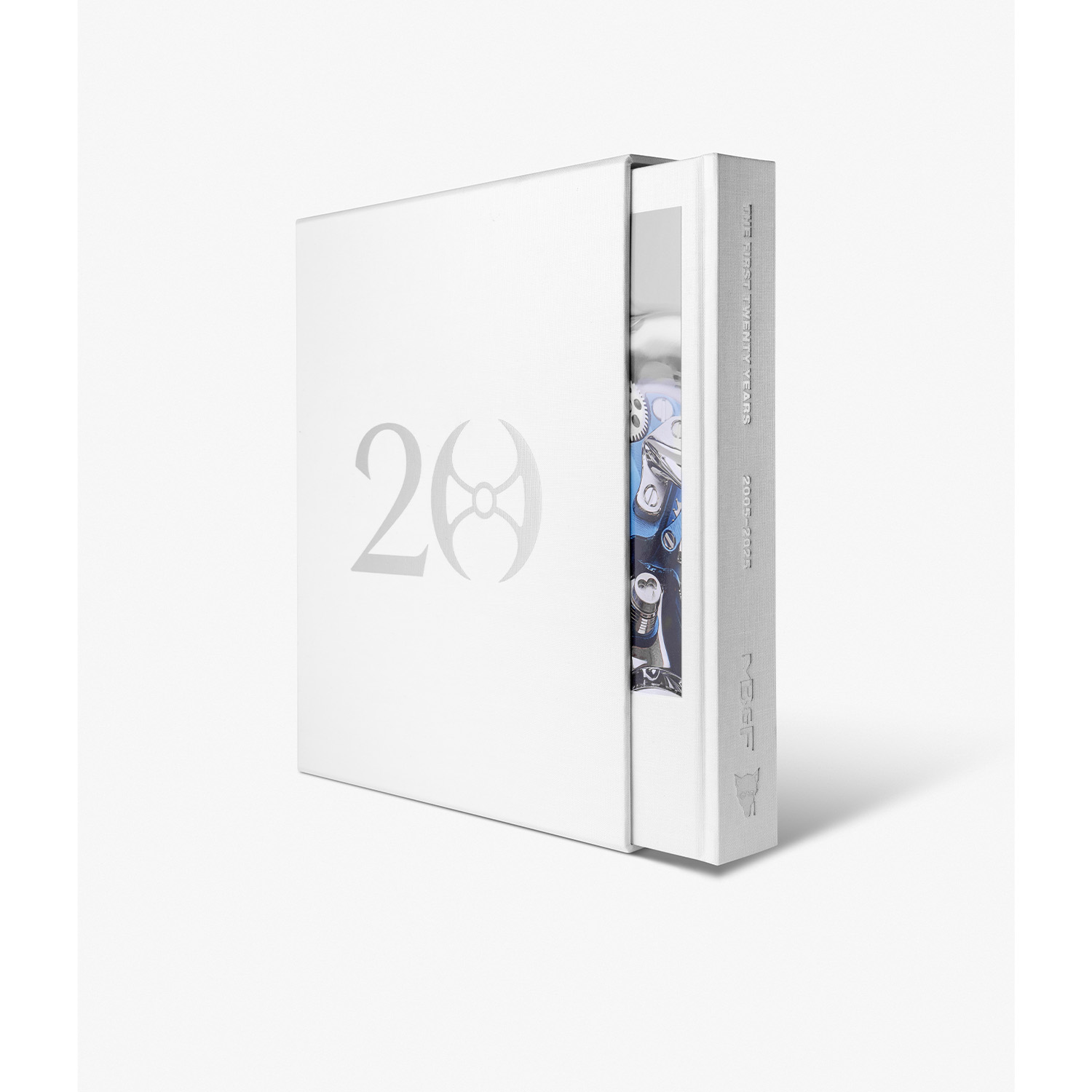
That approach now has a suitably serious record, with the release of MB&F: The First Twenty Years, an updated catalogue raisonné covering the independent brand’s watches from 2005 to 2025.
For collectors, it’s more than a handsome anniversary object. It’s a rare attempt by a contemporary watchmaker to document production history, variations and quantities with the kind of clarity usually reserved for art scholarship.
At a glance
- MB&F has released The First Twenty Years, an updated catalogue raisonné documenting its watches from 2005 to 2025.
- The 384-page English-language book covers 230 product variations with close to 500 photographs and illustrations.
- Published by Les Éditions de La Martinière, it is limited to a first run of 2,000 copies and priced at CHF 185 plus VAT and shipping.
A collector’s record, not just an anniversary book
The original edition, MB&F: The First Fifteen Years, appeared in 2021 as a comprehensive annotated listing of the brand’s known works up to that point.
The new edition expands that scope by five years, bringing the story through MB&F’s 20th anniversary year and turning the project into a fuller archive of one of independent watchmaking’s most distinctive modern names.
Maximilian Büsser has explained that the idea began with a customer who owned an LM2 in red gold and asked how many had been made.
When Büsser found that the watch was one of 31 pieces, the customer was surprised because it hadn’t been sold as a limited edition.
That exchange gets to the heart of why this book matters. MB&F’s output is small, varied and often fragmented across calibres, cases, dials and collaborative editions, which makes transparent documentation especially valuable.
As Büsser has put it, MB&F crafted about 5,000 pieces over its first 20 years, spread across 22 calibres and many variations.
What the updated volume documents
MB&F: The First Twenty Years is written by Suzanne Wong and William Massena, continuing the authorship of the earlier edition.
The book now runs to 384 pages, up from 312 pages, and is presented in English.
It records every MB&F wristwatch produced from 2005 to 2025, including prototypes and pieces that were not officially announced before.
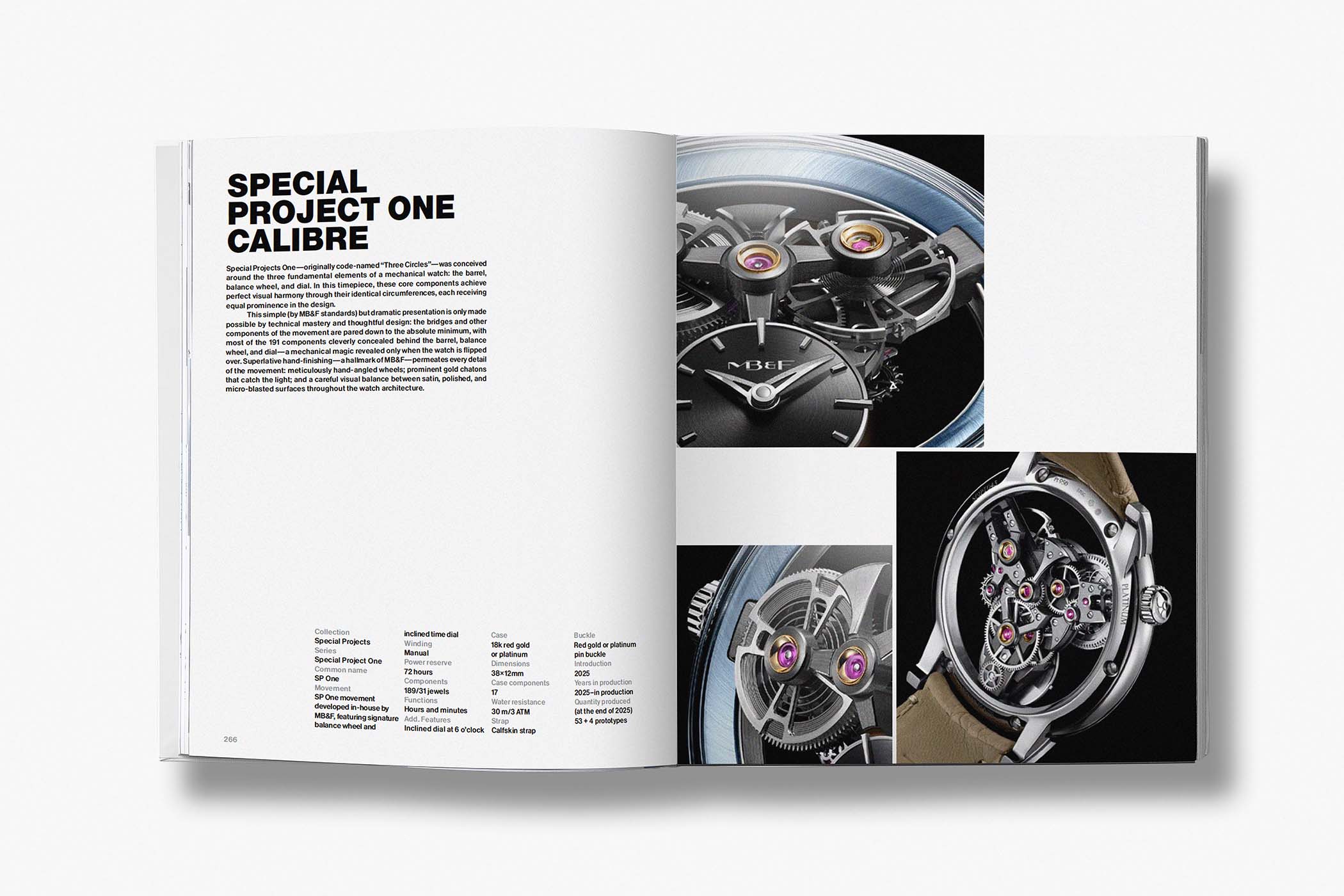
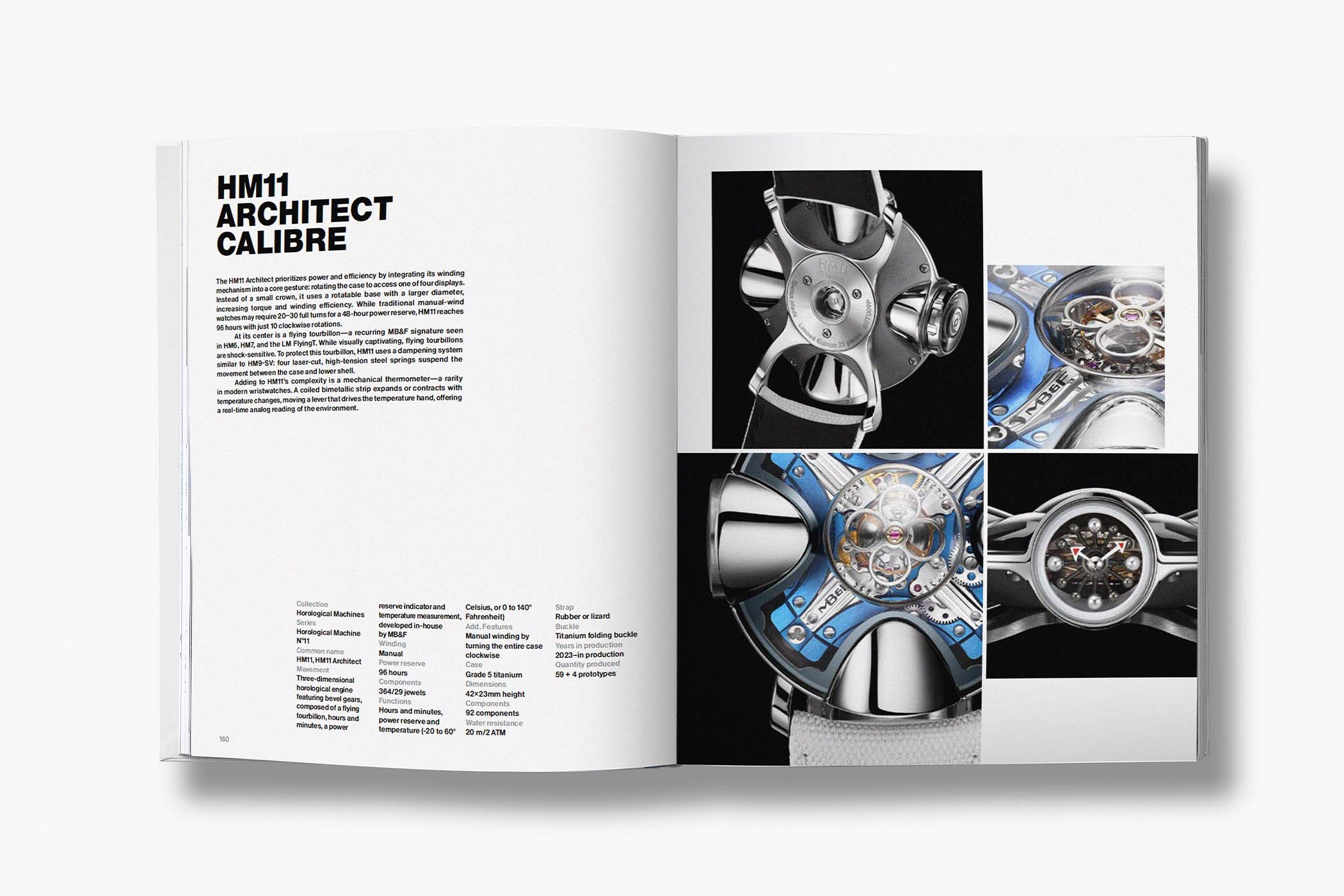
The documentation covers model names, reference numbers, materials, years in production and exact quantities produced.
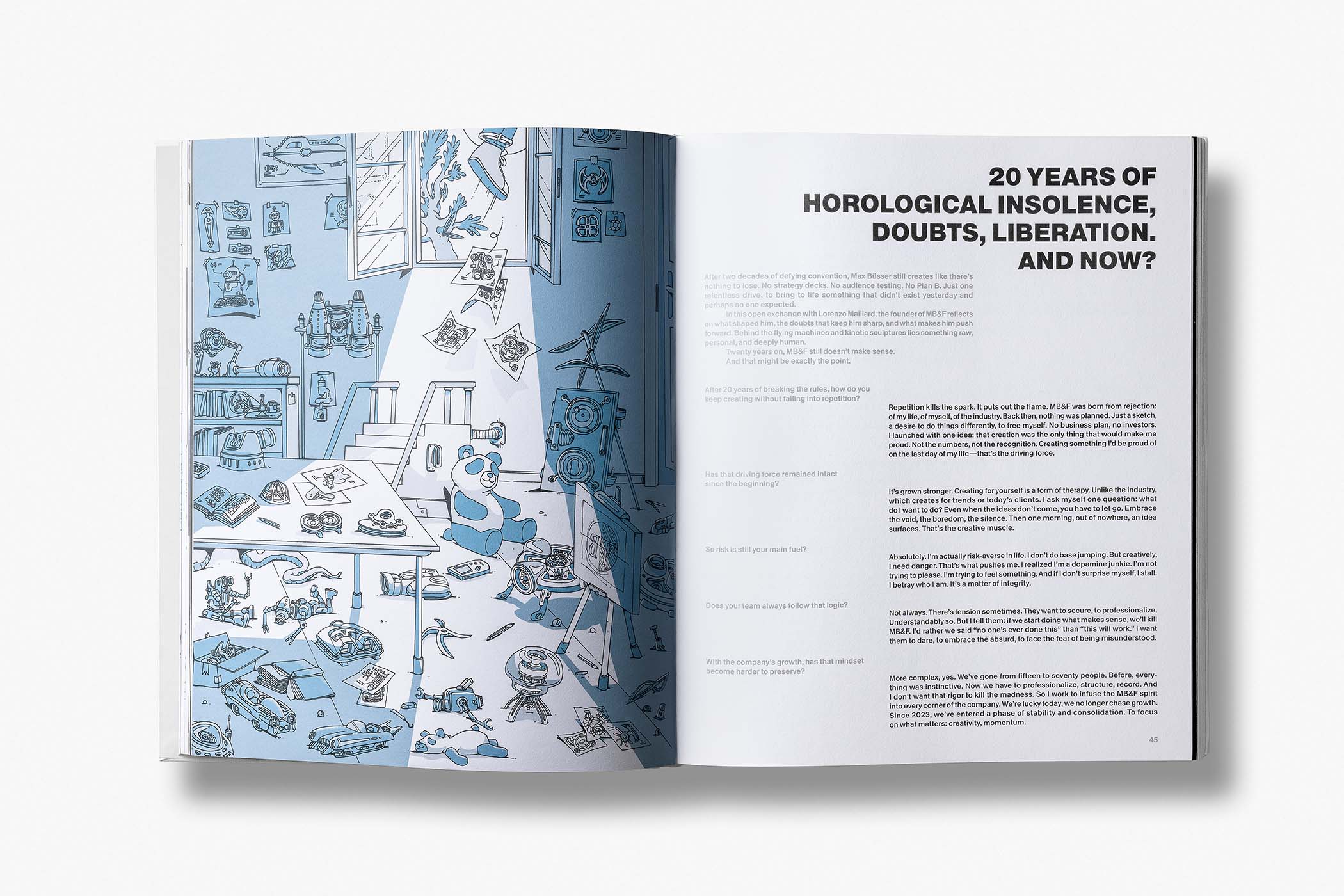
The book opens with nearly 50 pages on MB&F’s history, including Wong’s overview of the first 15 years, an interview with Maximilian Büsser by Lorenzo Maillard and a new section on the developments of the last five years.
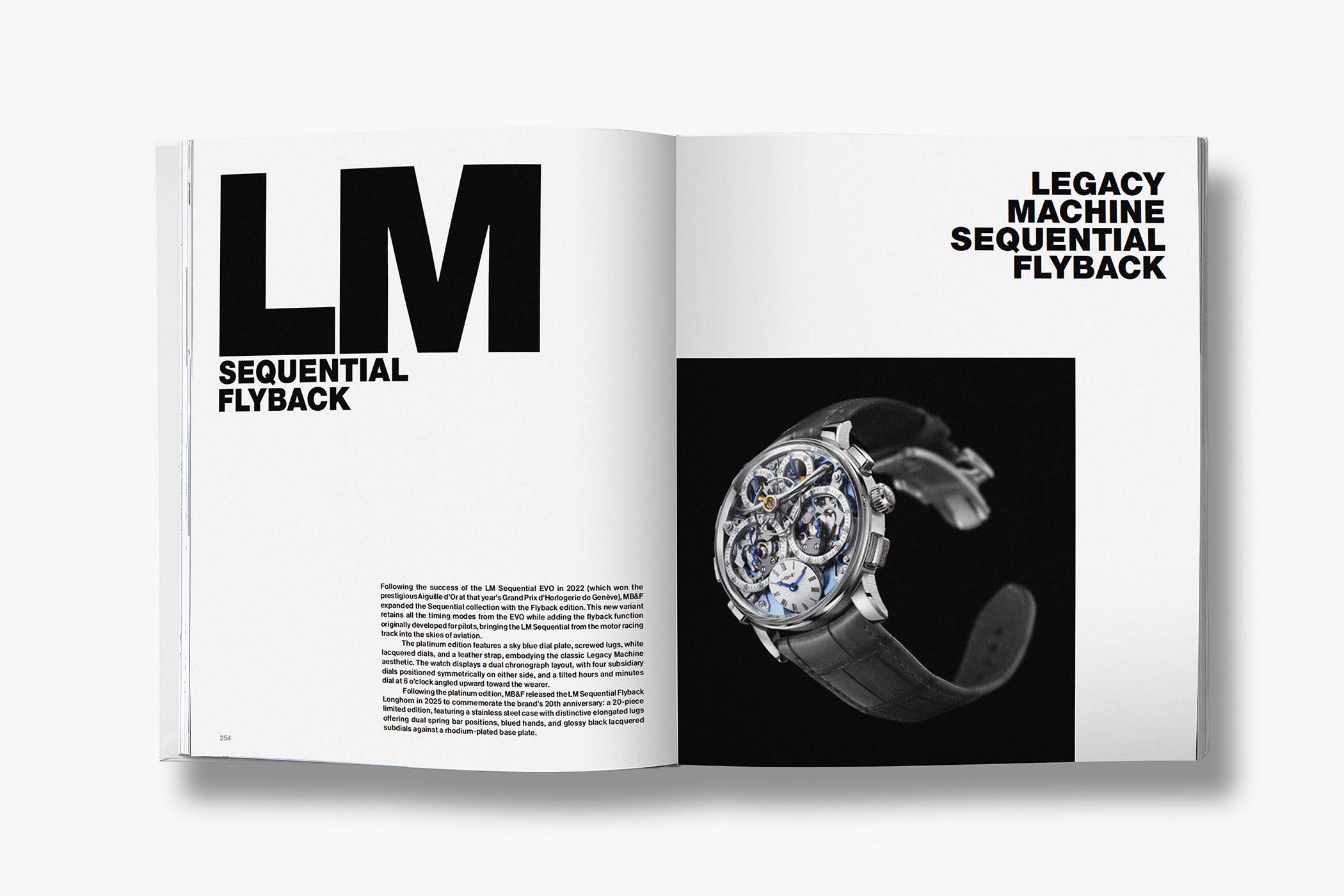
The main catalogue is organised across the brand’s major creative families, including Horological Machines, Legacy Machines, Special Projects, Performance Art pieces and Co-Creations.
Massena researched and documented those sections in close work with the MB&F team.
The value of awkward details
The most interesting archives are rarely the ones that only flatter their subject.
MB&F’s updated catalogue includes unusual pieces from 2009 and 2010, when the brand designed several unique watches that were sold without press releases or public fanfare.
That detail stands out because MB&F is known for not accepting bespoke timepiece requests, making these watches exceptions rather than part of a regular custom programme.
For collectors, this kind of information can be more useful than another beauty shot. It clarifies what was made, when it was made and how it fits into the wider history of the marque.
Publication details and availability
| Title | MB&F: The First Twenty Years |
|---|---|
| Subject | MB&F wristwatches produced from 2005 to 2025 |
| Authors | Suzanne Wong and William Massena |
| Publisher | Les Éditions de La Martinière |
| Language | English |
| Length | 384 pages |
| Documented variations | 230 product variations |
| Visual material | Close to 500 photographs and illustrations |
| First run | 2,000 copies |
| Distribution | Exclusively by MB&F |
| Price | CHF 185 plus VAT and shipping |
For a brand whose watches often exist in tiny numbers and multiple configurations, the updated catalogue raisonné is a useful corrective to rumour, memory and auction-room shorthand.
It should appeal most directly to MB&F collectors, but its wider importance lies in the standard it sets for independent watchmaking. A young maison with a complex creative history has chosen to document the work plainly, and that kind of transparency is still far too uncommon.