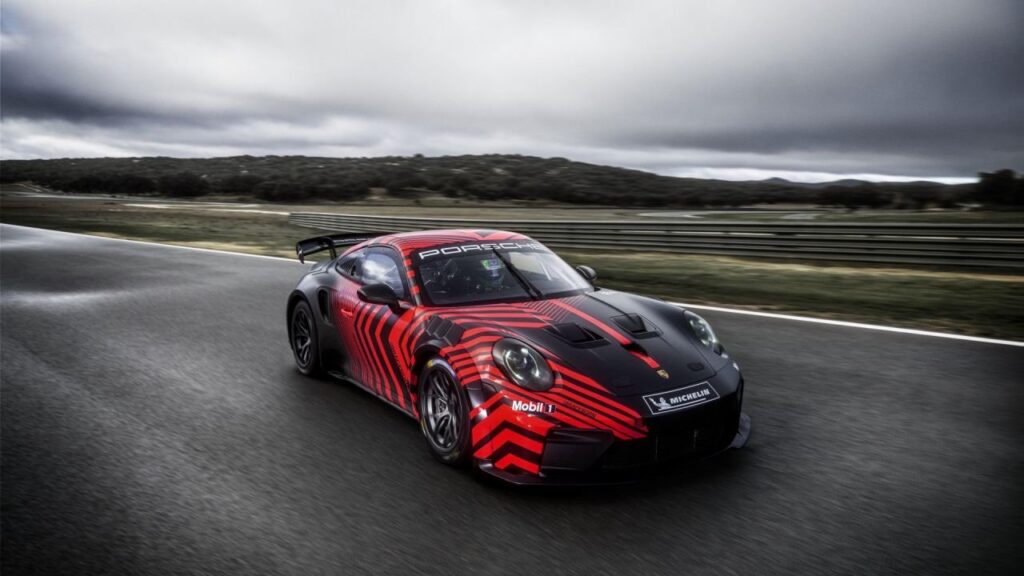
Porsche has built much of its modern performance reputation on making cars feel planted at speed, but a newly published patent suggests a more unusual route to faster cornering.
The filing describes large movable fins that act less like conventional wings and more like rudders, turning into the airflow to help push the car through a bend.
It’s the kind of idea that sounds more like racing experimentation than road-car hardware, which is exactly why it’s interesting.
At a glance
- Porsche has patented a system using movable fins to create extra lateral force during cornering.
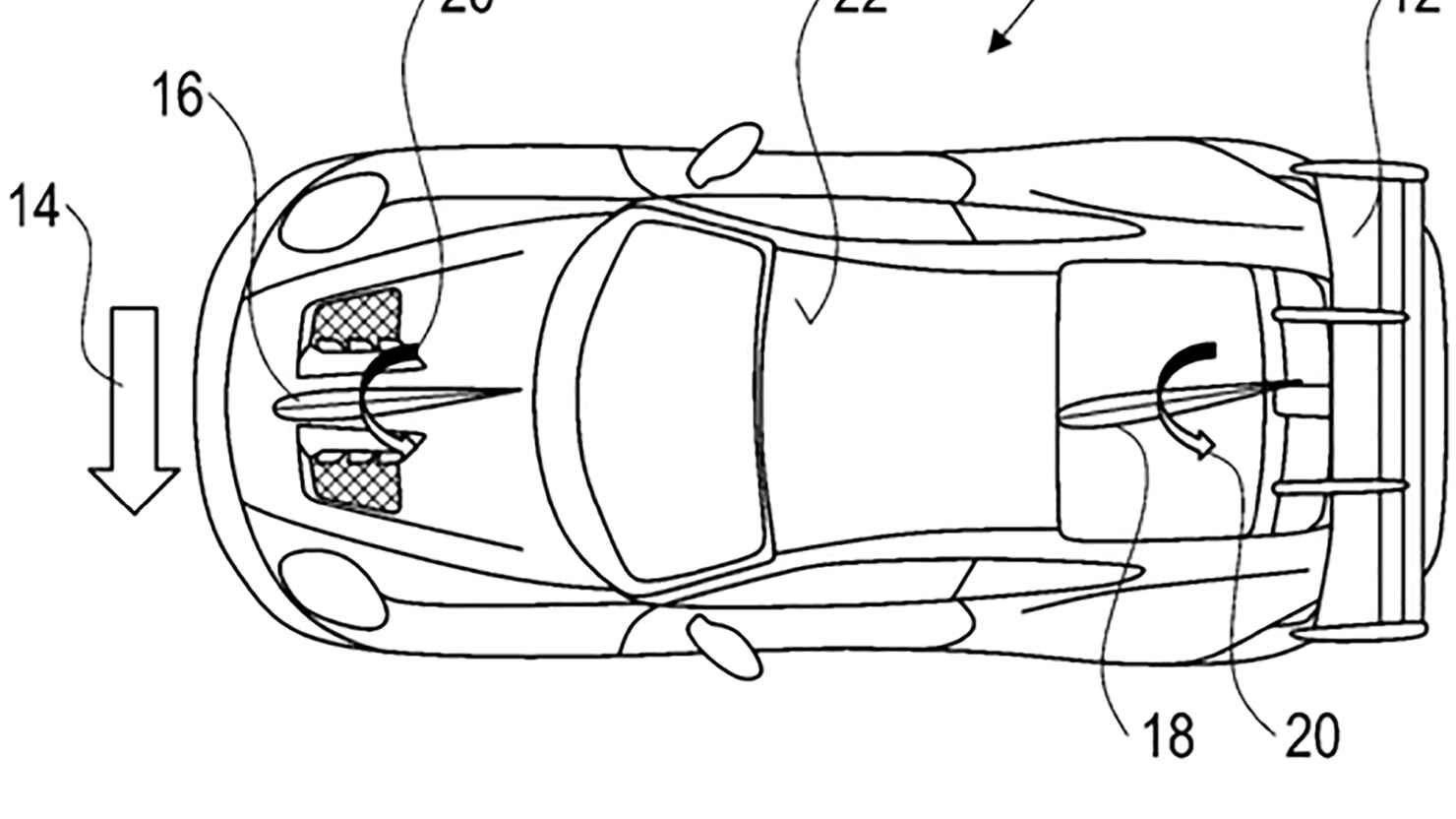
- The drawings show one fin on the front bonnet and another near the rear window area to help balance the car.
- The concept could improve high-speed cornering and stability, though production use remains unconfirmed.
How Porsche’s movable fins would work
The patent drawings show two rudder-like aerodynamic elements, with one positioned on the front bonnet and the other mounted toward the rear of the car around the rear window area.
When the vehicle enters a corner, the fins would turn to meet the airflow at an angle.
Rather than simply pressing the car downward, the system is intended to generate lateral force that helps push the vehicle into the bend.
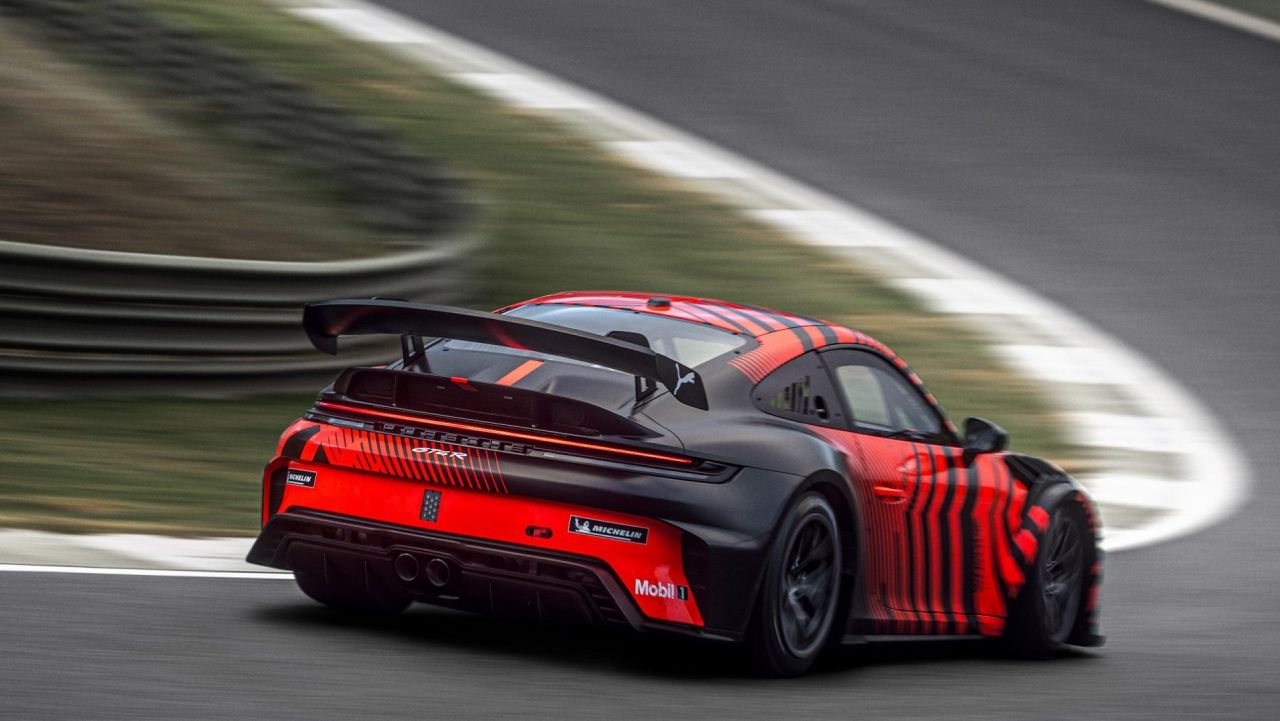
That distinction matters, because most high-performance aerodynamic systems are focused on vertical load, using splitters, wings, diffusers and active flaps to increase tyre grip by pressing the car harder into the road.
Porsche’s filing points to a different approach, using airflow to assist the car sideways as it corners.
The tyre-load problem behind the idea
The patent addresses a familiar challenge in modern performance-car engineering.
As tyres, suspension and active aero have advanced, simply adding more downforce isn’t always the cleanest answer.
The filing notes the issue of modern performance tyres approaching the limits of the aerodynamic load they can handle.
In that context, creating lateral force directly could offer another path to increasing cornering performance without relying entirely on additional vertical load.
The placement of the fins at both ends of the car is also significant.
By using a front and rear element, Porsche’s system is intended to help counter body roll and keep the car balanced, rather than applying aerodynamic assistance at only one point on the body.
The stability questions are just as important
The concept also brings obvious engineering complications.
Large exposed fins that can catch air in a corner could also catch air when the driver doesn’t want them to.
At high speeds, crosswinds may cause the fins to behave like sails, which could affect straight-line stability.
That would be a serious problem on any fast road car, and especially on the kind of Porsche that might benefit from a system designed to work at high speed.
The patent indicates Porsche sees potential for improving high-speed cornering and stability beyond conventional electronic stability control.
Still, turning that idea into a production-ready system would require careful control logic, packaging and fail-safe behaviour, none of which has been confirmed for a road car.
A patent that fits Porsche’s experimental side
Porsche is no stranger to active aerodynamic thinking, but this patent stands out because it moves the conversation away from the usual pursuit of more downforce.
It suggests a future in which performance cars may use airflow not only to press themselves into the asphalt, but to help shape their path through a corner.
Whether the technology reaches a production model is unknown, and patents often protect ideas that never leave the development stage.
Even so, the filing gives a useful glimpse at how far engineers may be willing to go as conventional aero and tyre performance move closer to their practical limits.