Luxury is no longer judged only by what can be seen or touched.
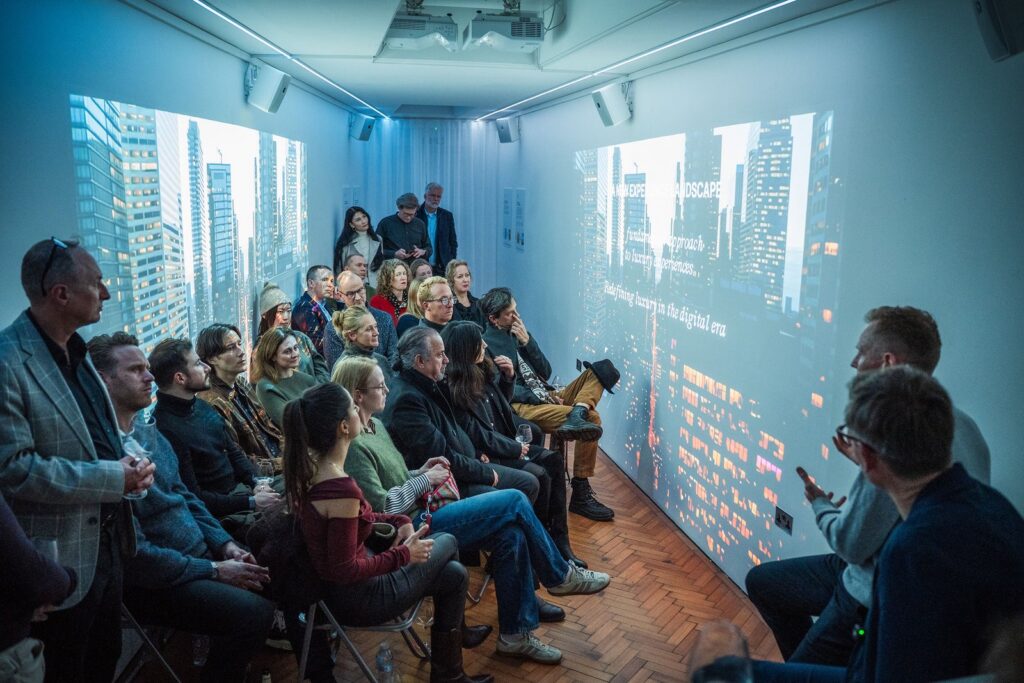
At The Sensory Lab, Sensory Experiences brought that idea into focus with “Sensory Futures with David Leary,” an event centred on how digital craft, sensory design and emerging technologies can shape more responsive luxury experiences.
The conversation looked at design that can influence mood, sharpen a moment and support different states of mind, rather than simply decorate a product or space.
At a glance
- Sensory Experiences hosted “Sensory Futures with David Leary” at The Sensory Lab.
- The event explored digital craft, sensory design and emerging technologies in emotionally intelligent luxury.
- Leary’s work on Bentley’s Torcal electric vehicle programme was presented as a key creative context.
A conversation about adaptive luxury
The core theme was how luxury can become more adaptive, moving beyond fixed aesthetic codes toward experiences that respond to the person in front of them.
That makes sensory design particularly relevant now, as brands look for ways to create environments, products and services that feel more personal without becoming intrusive.
For Sensory Experiences, the discussion sits within a longer practice of multi-sensory design, an approach the company says it has applied commercially since 2007.
Its work is described as neuroscience-led, integrating multiple senses to create experiences that are deeper, more memorable and more emotionally resonant.
David Leary and the Torcal context
David Leary’s perspective came through his work in creative user experience design.
While serving as Head of Creative User Experience Design, he was credited by the event with taking Bentley’s first electric vehicle, the Torcal, from initial vision through to launch.
That background gives the subject a useful automotive edge, because the car cabin has become one of the most demanding arenas for digital and sensory experience.
In a modern luxury vehicle, light, sound, interface behaviour, material feel and spatial atmosphere all have to work together without overwhelming the driver or passengers.
The event used that kind of challenge as a route into a broader question for luxury brands.
How can technology feel crafted rather than imposed?
The role of digital craft
Digital craft is often treated as a contradiction, but it’s becoming central to how luxury communicates refinement.
The discussion at The Sensory Lab placed it alongside sensory design and emerging technologies, suggesting that the most compelling future experiences may be built from both code and physical sensation.
That could mean a more nuanced relationship between interface, ambience and emotion, where technology supports a mood instead of demanding attention.
It also points to a shift in what luxury audiences may expect from premium environments, whether in mobility, hospitality, retail or private spaces.
A long-running sensory practice
Sensory Experiences has built its identity around the commercial application of multi-sensory design.
Its stated approach combines neuroscience with creative experience design, using multiple senses as the foundation for more memorable encounters.
That framing matters because sensory luxury is easy to reduce to atmosphere alone.
Handled with discipline, it becomes a tool for shaping behaviour, memory and emotional connection.
Filming and editing for the event coverage were credited to Mykhailo Chuliba.
For more on the studio behind the event, Sensory Experiences can be found at moresensoryexperiences.co.uk.
“Sensory Futures with David Leary” ultimately presented luxury as something increasingly behavioural and experiential, where the finest details may be measured not just by how they look, but by how they make a moment feel.