New Zealand’s food identity has never been easy to reduce to a single dish, technique or tradition.
That has often been treated as a weakness, especially beside countries with centuries-old culinary reputations, but the arrival of Michelin in New Zealand suggests something more interesting.
The country’s dining scene is being recognised not because it fits a familiar fine-dining template, but because it doesn’t need to.
At a glance
- Michelin’s first New Zealand guide recognised more than 100 restaurants, including 14 one-star venues and a two-star rating for Essence in Queenstown.
- Tala in Auckland became the first Samoan restaurant in the world to receive a Michelin star.
- The moment puts fresh international attention on a dining culture shaped by Māori foodways, Pacific heritage, Asian influence, European settlement and a deep connection to land and sea.
The inaugural New Zealand selection gives the country a formal place on one of gastronomy’s most influential maps.
There are 14 restaurants with one star, while Essence in Queenstown stands apart with two stars, making it the highest-rated restaurant in the country’s first Michelin chapter.
More than 100 restaurants appear in the guide altogether, a broad sweep that reflects how much has been happening beyond the obvious postcard scenery.
A dining culture that resists one definition
Ask what New Zealand food is and the most honest answer is that it’s layered.
Māori relationships with the land, sea, season and gathering remain the deepest foundation, informing a way of thinking about food that long predates restaurant culture.
European settlers added their own habits and agricultural traditions, while later Pacific and Asian communities changed the country’s tastes in ways that now feel inseparable from modern New Zealand life.
The result isn’t a single national cuisine in the French or Japanese sense.
It’s a table that reflects who has lived here, what grows here and how closely daily life sits beside the coast, the mountains, the vineyards and the farms.
Tala brings Samoan cooking into the Michelin conversation
One of the most significant moments belongs to Tala in Auckland, which became the first Samoan restaurant anywhere in the world to receive a Michelin star.
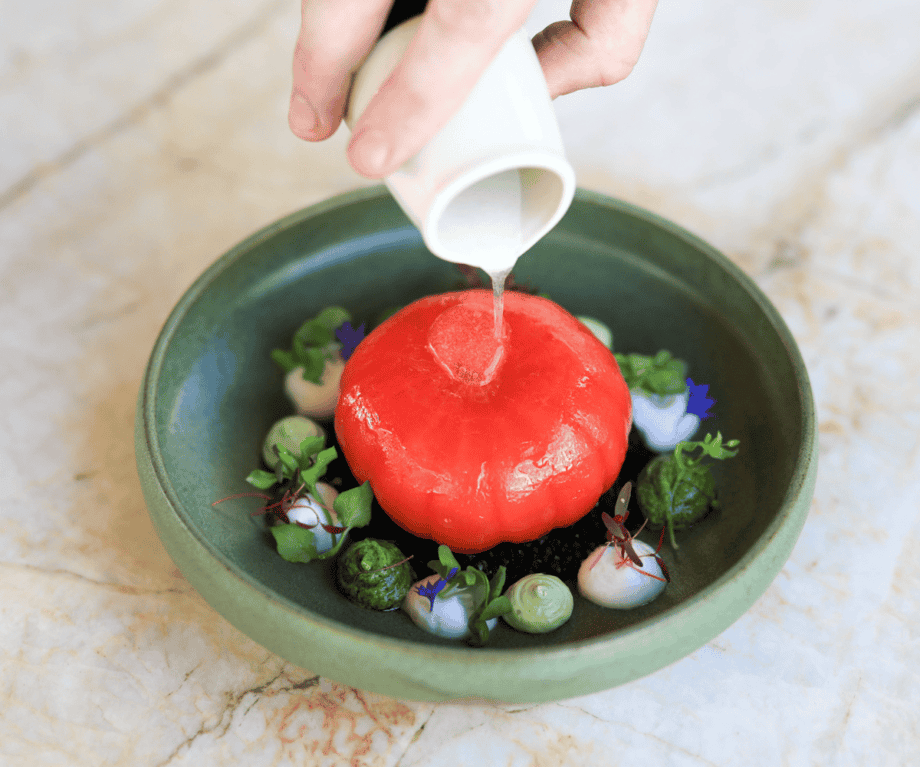
Chef Henry Onesemo described the recognition as proof that Samoa deserves a place on the international culinary stage, and the importance of that achievement reaches beyond one dining room.
It signals that Pacific food can be celebrated at the highest level without being softened, translated or made to look like someone else’s idea of fine dining.
In a New Zealand context, that matters deeply.
Pacific culture is not an accessory to the country’s food story, but one of its defining voices, particularly in Auckland, where communities from across the region have helped shape the city’s energy and appetite.
Essence and the power of eating in place
Essence in Queenstown offers another view of why New Zealand dining is resonating now.
Set on a hillside above Lake Wakatipu, the restaurant is led by chef Paul Froggatt and works with a tasting menu that follows the season rather than a rigid format.
That kind of cooking lands differently in Queenstown, where the surrounding landscape isn’t scenery in the background but part of the experience before the first course arrives.
A meal above the lake after time in Central Otago carries the memory of the place into the dining room.
The same is true elsewhere in the country, whether it’s seafood in Marlborough after time on the Sounds, lunch on Waiheke after walking through vineyards, or oysters from Bluff with a clear sense of why they taste unlike oysters from anywhere else.
Michelin recognition without imitation
The most compelling thing about New Zealand’s Michelin moment is that the country’s best restaurants aren’t being rewarded for pretending to be Paris, Tokyo or Copenhagen.
They’re being noticed for cooking from where they are.
That may mean native ingredients returning to menus after a long absence, producers stepping into the story of a meal, or chefs building dishes around the realities of a harvest, a coastline or a fishing season.
For travellers, this is where New Zealand becomes especially rewarding.
The restaurant is rarely isolated from the day around it, and the strongest meals often seem to gather up the vineyard, the road, the weather and the water before handing them back at the table.
Michelin will almost certainly bring more food-focused visitors to New Zealand, but the greater shift is cultural.
The country’s chefs, growers, producers and front-of-house teams now have a global spotlight for something they’ve been refining for years.
New Zealand food doesn’t need a tidy definition to be worth travelling for.
Its strength is that it changes with the island, the season, the community and the view from the table.