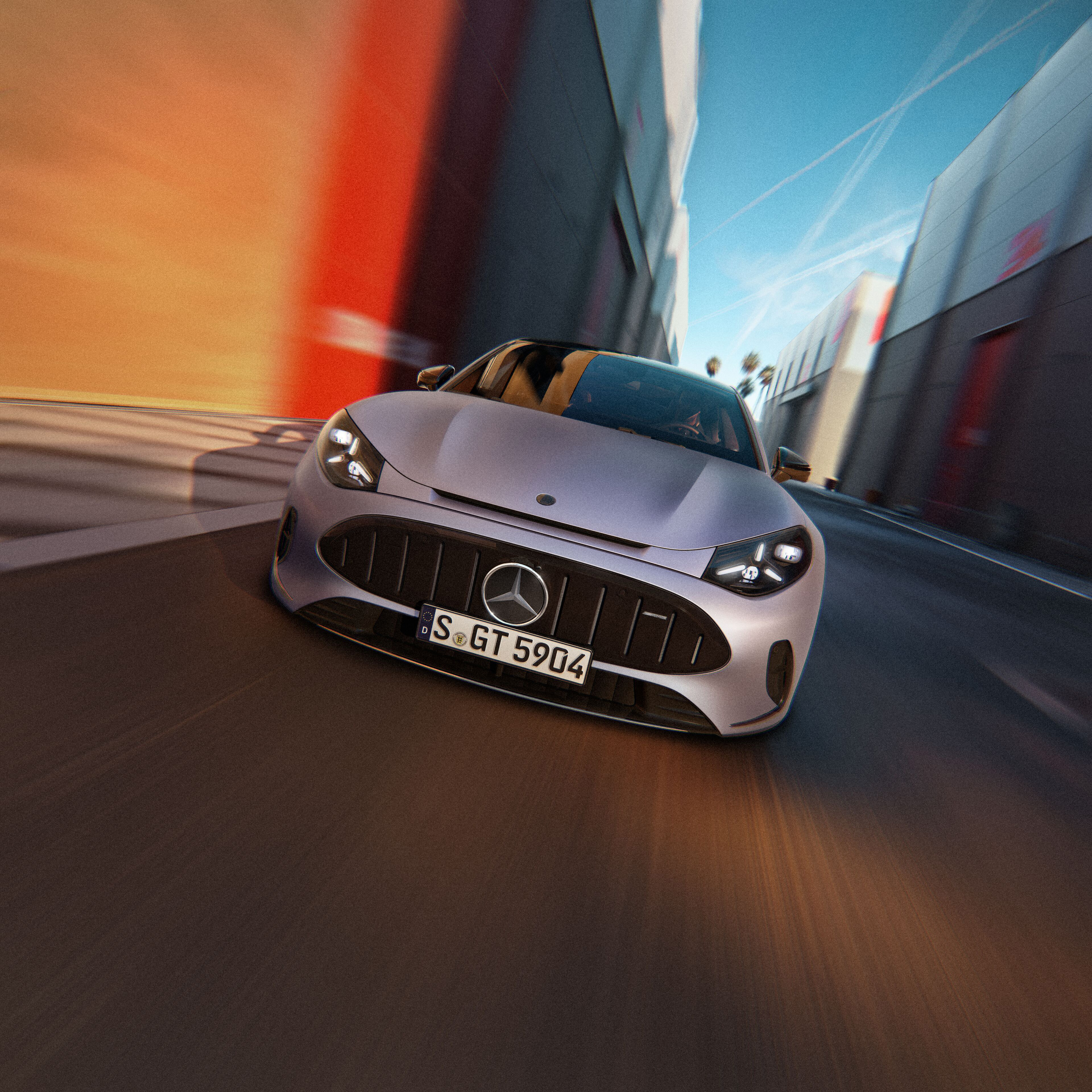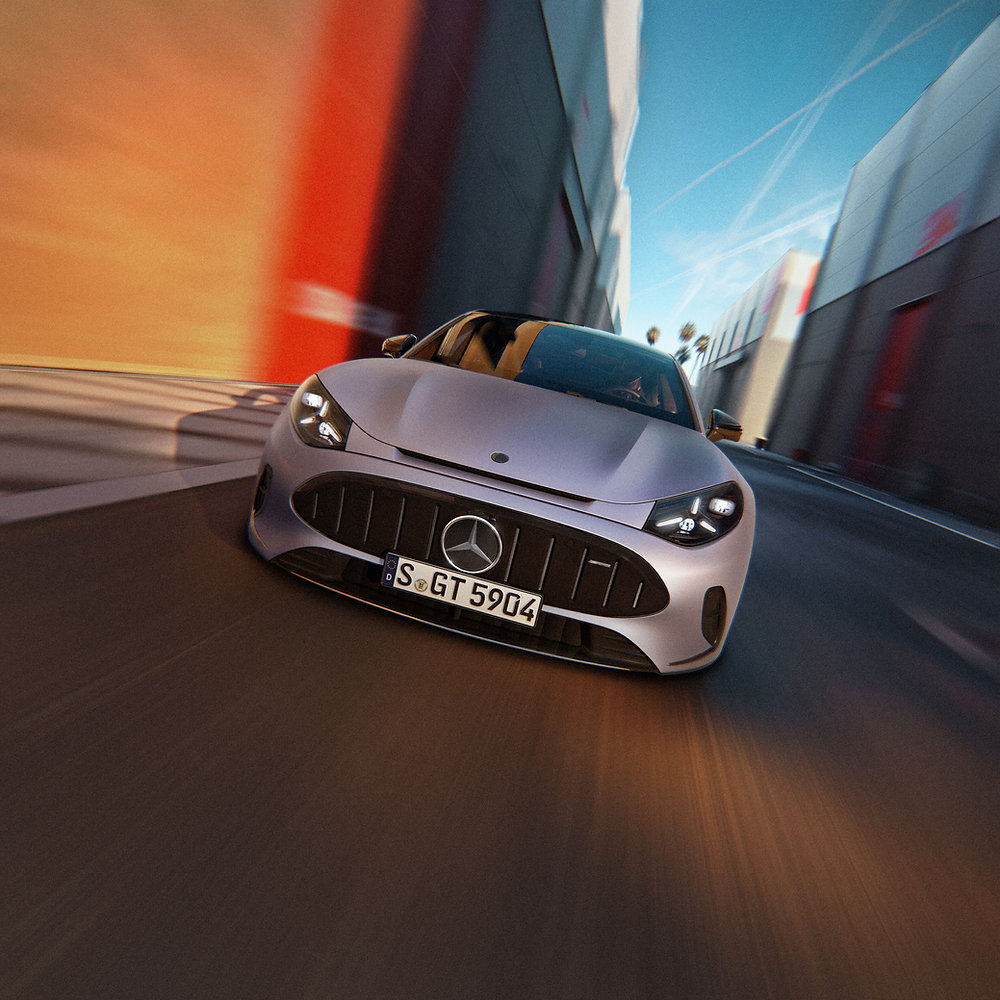
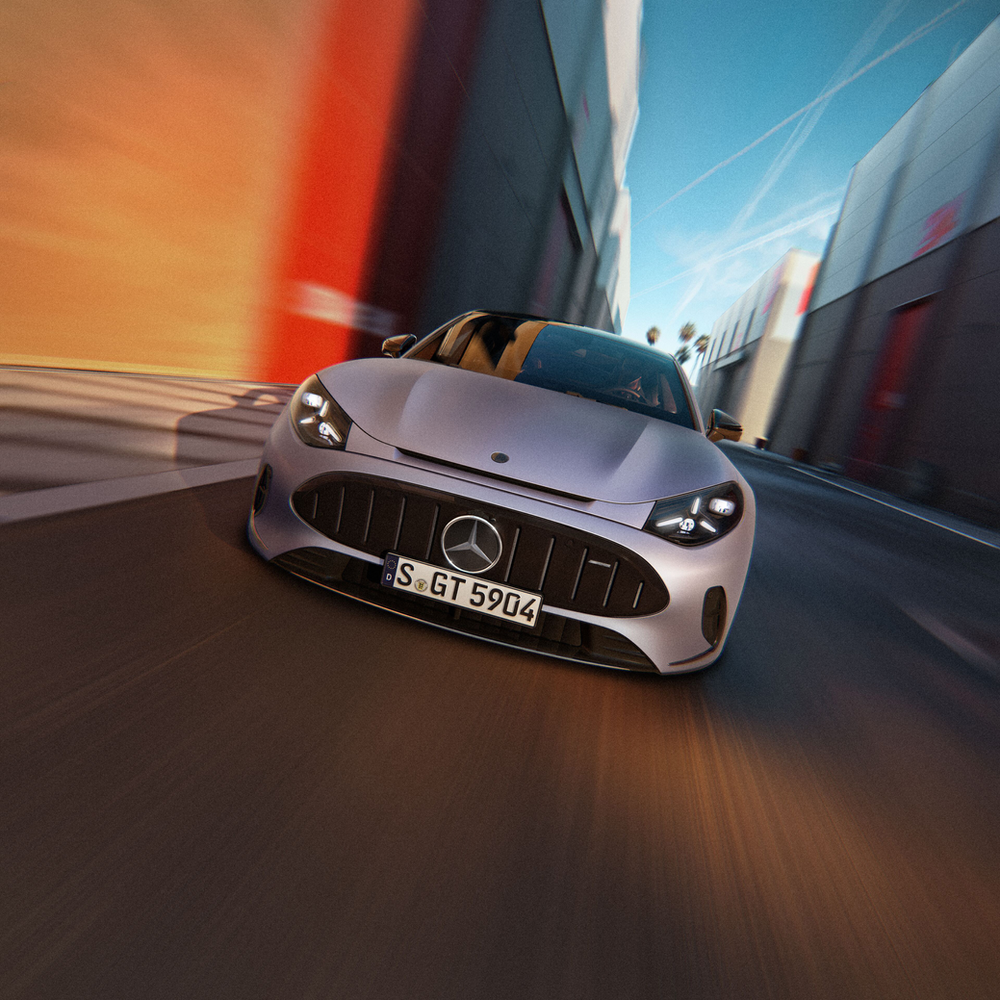
Mercedes-AMG is giving its GT 4-Door Coupé family a new point of entry, but this is hardly a softened version of the idea.
The GT 53 4-Door Coupé arrives as a dual-motor electric fastback with serious performance numbers, long-distance capability and a distinctly AMG approach to driver engagement.
It’s aimed at the buyer who wants the daily usability of a four-door grand tourer without giving up the immediacy, body control and theatre expected from Affalterbach.
At a glance
- Mercedes-AMG has added the GT 53 4-Door Coupé as the new entry point to the latest GT 4-Door family.
- The dual-motor electric drivetrain delivers up to 400 kW, 544 hp and 800 Nm, with 0 to 100 km/h in 3.5 seconds.
- An 800-volt, 106 kWh usable battery enables a claimed range of more than 800 km and DC charging at up to 600 kW.
An electric AMG built for distance and pace
The GT 53 4-Door Coupé uses two permanently excited synchronous electric motors, one at each axle, giving it all-wheel-drive traction and a combined peak output of 400 kW.
Torque stands at 800 Nm, while continuous output is listed at 270 kW, or 367 hp.
AMG quotes 3.5 seconds for the 0 to 100 km/h sprint, which places the GT 53 firmly in high-performance territory rather than merely quick electric saloon territory.

The standard top speed is electronically limited to 230 km/h, with the optional AMG Driver’s Package raising that figure to 250 km/h.
The rear electric drive unit is central to the car’s character, with a two-speed transmission designed to balance launch performance and motorway efficiency.
First gear uses a short 11 to 1 ratio for strong take-off and urban response, while second gear uses a 5 to 1 ratio for higher-speed power delivery, range and refinement.

The front motor works as a boost unit and can be engaged through a Disconnect Unit when extra power or traction is required.
Under lighter loads, the front motor can be disengaged and held stationary, reducing drag and helping efficiency.
The 800-volt battery is the technical centrepiece
The GT 53’s long-range credentials rest on a 106 kWh usable high-voltage battery using an 800-volt electrical architecture.

Mercedes-AMG claims a range of more than 800 kilometres, with combined energy consumption rated at 18.5 to 15.6 kWh per 100 km and combined CO₂ emissions of 0 g/km.
The battery uses 2,660 cylindrical cells arranged across 18 modules, with each cell measuring 105 mm high and 26 mm in diameter.
The tall, narrow cell format is designed to shorten the path from the cell core to the outer surface, improving heat transfer under high load.

AMG also uses laser-welded aluminium cell housings, a full-tab cell design, an NCMA cathode and a silicon-containing anode chemistry.
The company lists energy density at more than 298 Wh/kg, which helps explain how the car combines a large battery with performance-oriented charging and discharge capability.
Direct cooling is one of the most interesting parts of the system.

An electrically non-conductive oil flows around each individual cell, allowing more consistent thermal control than a conventional indirect cooling arrangement.
Charging performance is suitably ambitious, with up to 600 kW possible at compatible 800-volt DC stations.
In ideal conditions, AMG says more than 534 kilometres of range can be added in 10 minutes.

The system can also switch to 400-volt charging where 800-volt infrastructure isn’t available, a practical detail for longer journeys beyond the most advanced charging corridors.
Cooling, chassis control and engineered sound
Thermal management is handled by what AMG calls the Central Coolant Hub, a compact unit integrating elements such as pumps, sensors and valves.
Its role is to distribute cooling where it’s needed, from the battery to the electric drive units and related power electronics.

That matters because electric performance cars can be defined as much by repeatability as by headline acceleration.
When the battery is already in its preferred temperature range, the system can redirect cooling capacity to other components rather than wasting effort on unnecessary conditioning.
The chassis uses AMG RIDE CONTROL suspension with air springs and adaptive damping, a setup chosen to give the GT 53 both long-distance composure and sharper responses when the road opens up.

It’s a familiar AMG brief, but the electric drivetrain changes the texture of the experience.
To retain a more mechanical sense of occasion, the AMGFORCE Sport+ programme introduces simulated gear changes, brief traction interruptions and a sound profile shaped around AMG’s 3.0-litre inline six-cylinder engine from the former Mercedes-AMG E 53 Coupé.
AMG recorded that engine from 16 microphone positions inside and outside the car, with more than 100 measurements taken on a rolling road.

The result is not simply a synthetic tone layered over acceleration, but an attempt to map load changes, shifts and throttle behaviour to a recognisable AMG six-cylinder character.
Drivers can also use the steering-wheel paddles for manual gear-change sensations when AMGFORCE Sport+ is active.
Details & Specifications
| Brand | Mercedes-AMG |
|---|---|
| Model | GT 53 4-Door Coupé |
| Powertrain | Dual-motor electric all-wheel drive |
| Peak output | 400 kW, 544 hp |
| Continuous output | 270 kW, 367 hp |
| Maximum torque | 800 Nm |
| Acceleration | 0 to 100 km/h in 3.5 seconds |
| Top speed | 230 km/h, or 250 km/h with optional AMG Driver’s Package |
| Battery | 106 kWh usable capacity, 800-volt architecture |
| Battery cells | 2,660 cylindrical cells in 18 modules |
| Claimed range | More than 800 km |
| DC charging | Up to 600 kW at compatible 800-volt stations |
| Rapid charging claim | More than 534 km of range in 10 minutes |
| Combined energy consumption | 18.5 to 15.6 kWh/100 km |
| Combined CO₂ emissions | 0 g/km |
| Rear transmission | Two-speed transmission with 11 to 1 first gear and 5 to 1 second gear |
| Suspension | AMG RIDE CONTROL with air springs and adaptive damping |
| Driving programme | AMGFORCE Sport+ with AMG six-cylinder sound profile |
The GT 53 4-Door Coupé is a revealing car for AMG because it shows how the brand is translating its fast, usable and expressive grand touring formula into an electric format.

It isn’t trying to be quiet background transport, and that may be exactly the point for buyers who still want their electric performance car to feel deliberately engineered rather than merely rapid.