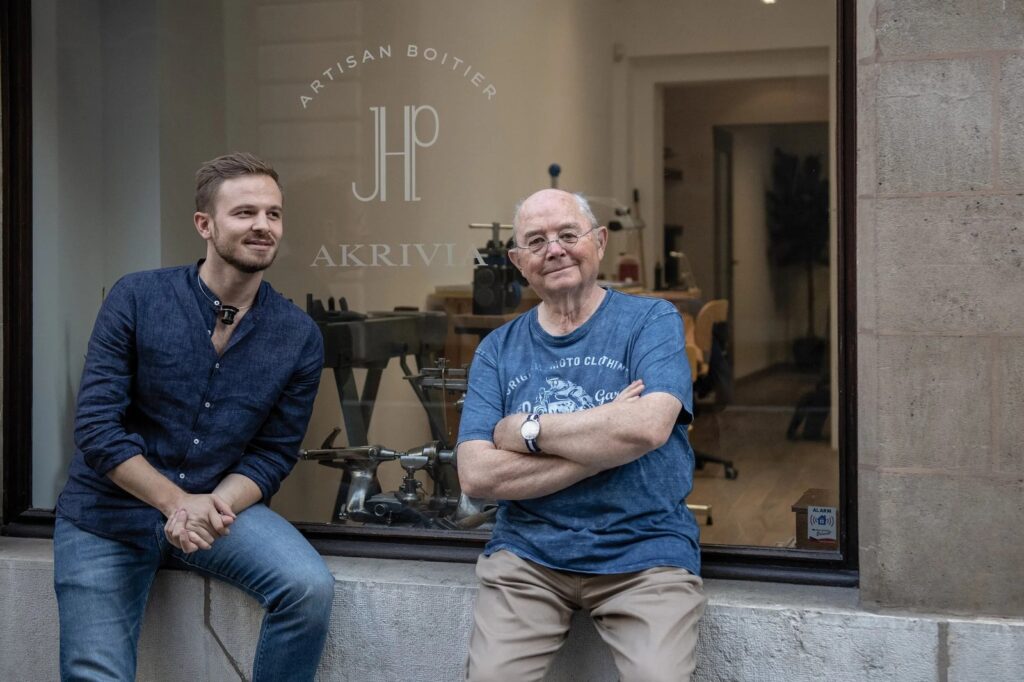
Jean-Pierre Hagmann occupied a rare position in watchmaking.
He wasn’t a movement designer or a dial maker, yet some of Switzerland’s most powerful brands treated his hands as irreplaceable.
His craft was casemaking, the architectural discipline that gives a watch its form, its feel and, in the case of a minute repeater, much of its voice.
At a glance
- Jean-Pierre Hagmann became one of the most respected casemakers in Swiss watchmaking, with his JHP hallmark appearing on highly collectible watches.
- His work was especially important to minute repeaters, where case material, wall thickness and construction can transform the sound.
- Hagmann made about 1,500 repeater cases during his career and later joined AkriviA to pass on his skills to a new generation.
The case as the watch’s voice
Casemaking is often discussed after movements, complications and dials, but Hagmann’s career is a reminder that the case is not a container.
It’s the element that binds the watch together, governs how it sits on the wrist and can determine whether a complicated mechanism performs as intended.
That mattered most with minute repeaters.
A repeater can sound bright and resonant before casing, then lose its character once enclosed in the wrong metal or geometry.
Hagmann understood that smaller, lighter cases helped maximise volume, while gold, particularly rose gold, often carried sound more effectively than platinum.
He also favoured tight tolerances around the movement and a domed crystal, creating an acoustic environment where the chimes could travel with clarity.
His contribution wasn’t only refinement.
Hagmann developed the recessed track for the repeater slide on the side of the case, a detail that later became widely adopted because it solved both a functional and aesthetic problem with unusual elegance.
From Geneva workshops to the JHP hallmark
Hagmann began his casemaking career in 1968 after early experience at Ponti Gennari, Gay Frères and through the restoration of vintage motorcycles.
He learned casemaking at Gustave Brera and then developed his authority at Jean-Pierre Ecoffey, where he managed the case department for 12 years.
A short spell at Stern Création followed, but the decisive move came in 1984 when he opened his own Geneva workshop.
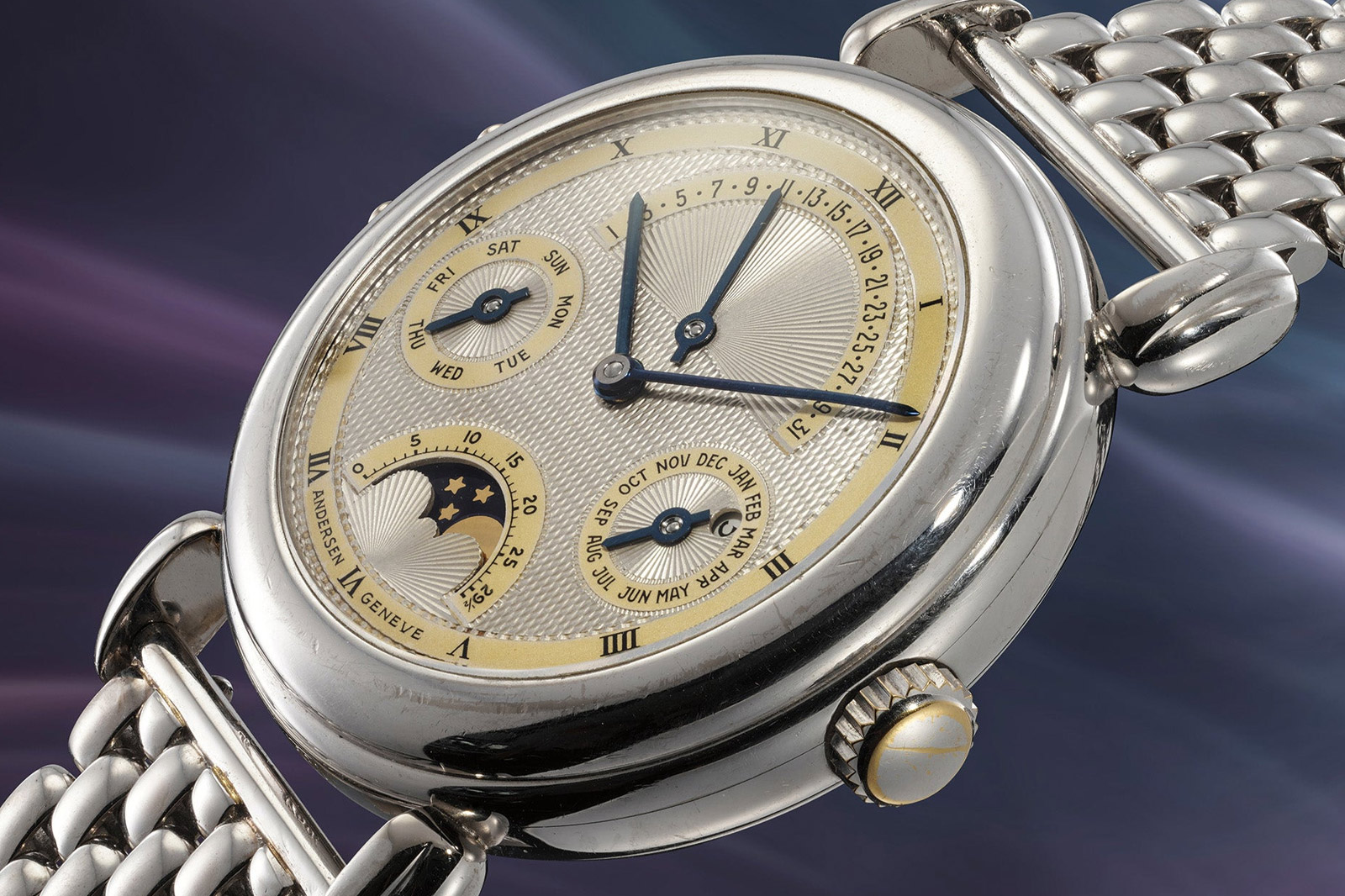
His first client was Svend Andersen of Andersen Genève, and the work involved minute repeaters from the start.
That combination of independence, difficulty and trust would define much of Hagmann’s career.
The JHP hallmark became a quiet signifier for collectors who understood what they were looking at.
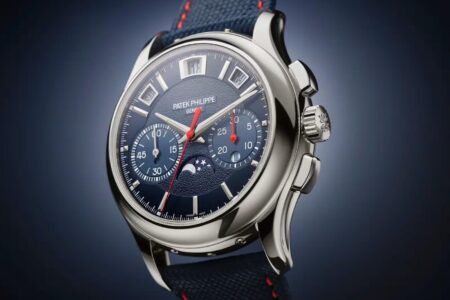
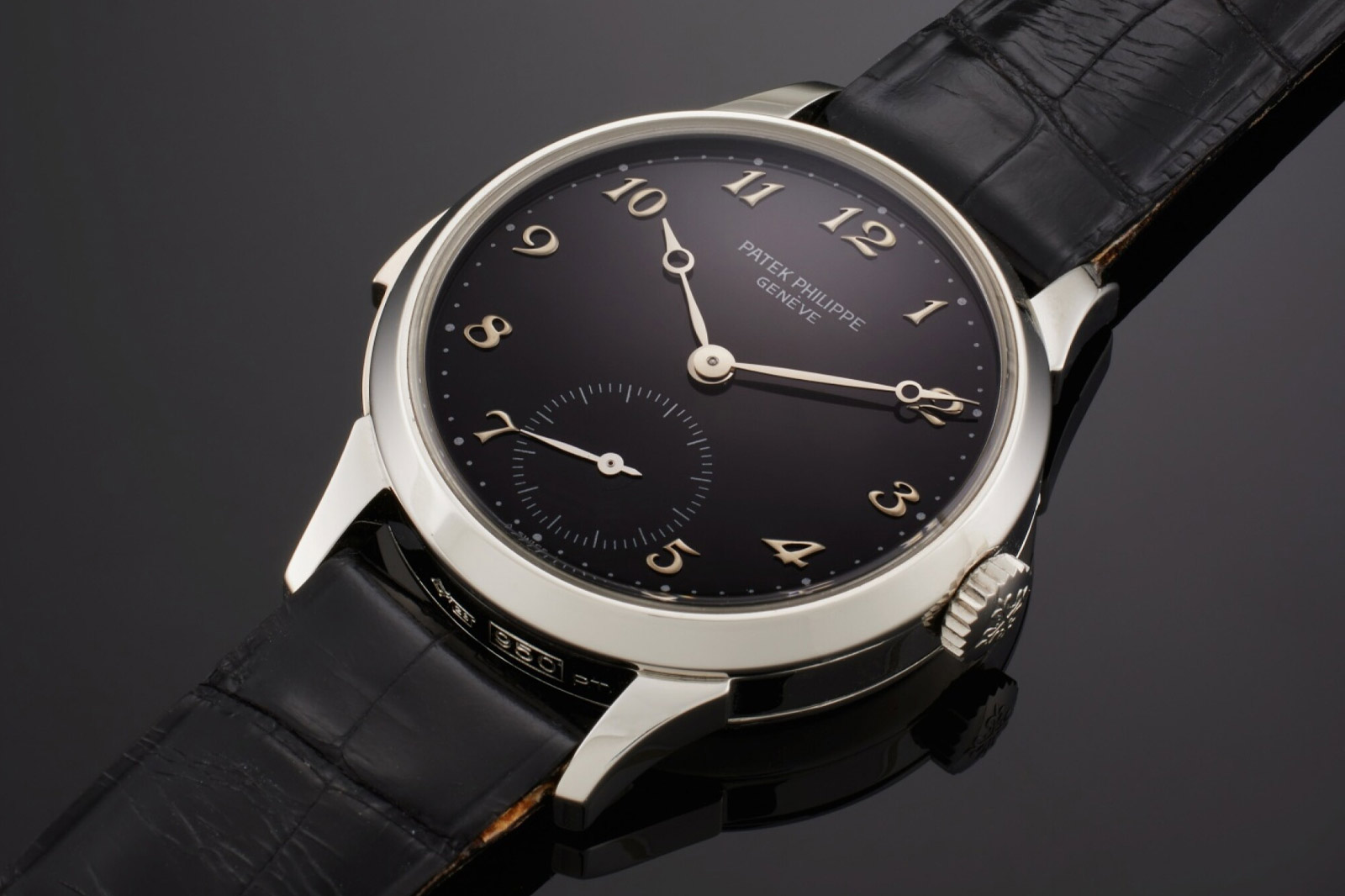
Across his working life, Hagmann produced roughly 1,500 repeater cases, with about a third going to Patek Philippe for references including the 3974, 3979 and 5029.
He also made cases for a wider spectrum of watchmaking, from highly complicated pieces to more accessible watches that occasionally appear at auction for far less than the masterpieces associated with his name.
Patek Philippe’s Star Caliber 2000 demanded invention
One of Hagmann’s defining assignments came with Patek Philippe’s Star Caliber 2000.
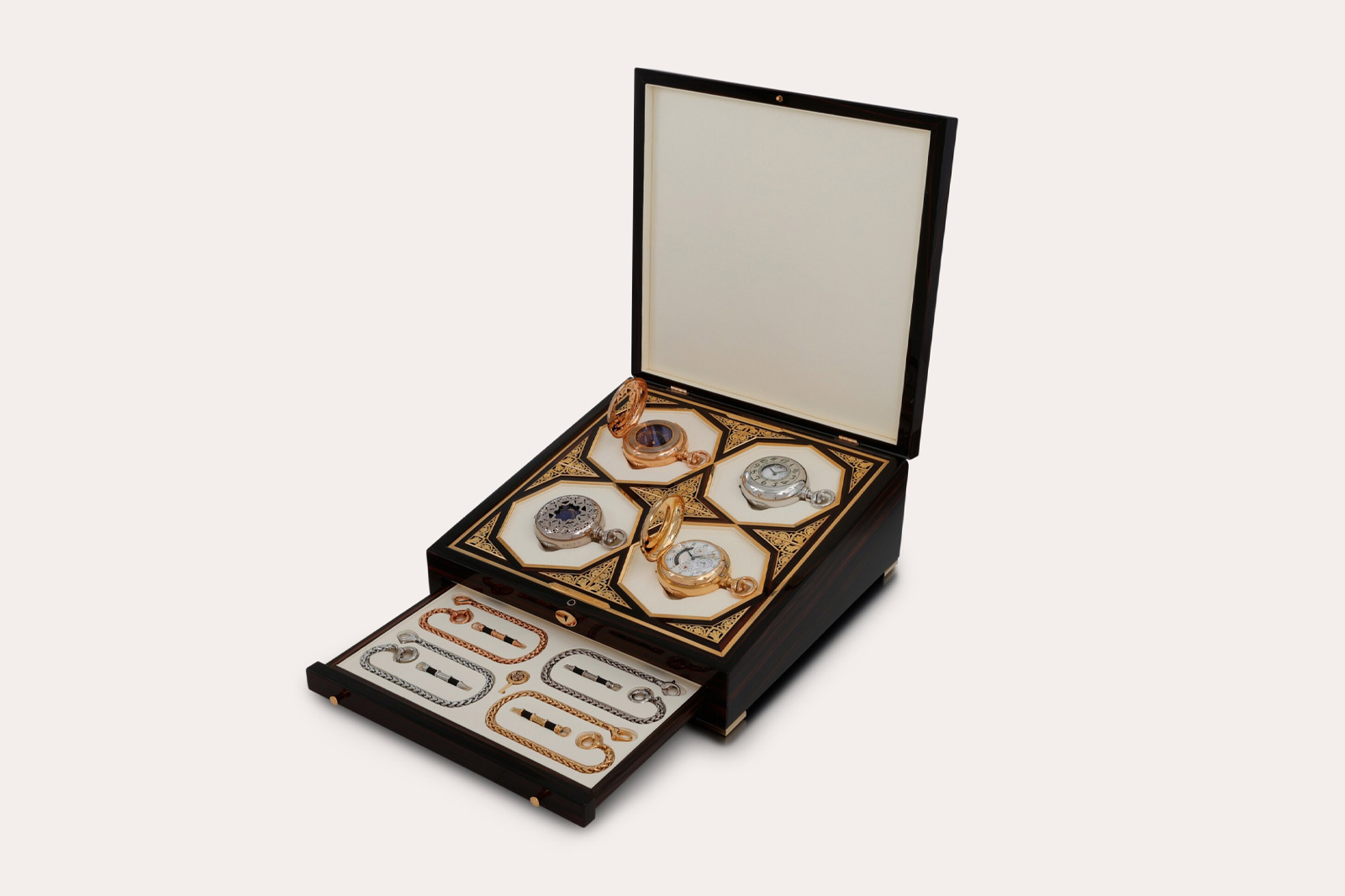
The pocket watch was created to mark the new millennium and brought together 21 complications with a Westminster chime.

It was also produced in rose gold, white gold, yellow gold and platinum, each metal presenting its own acoustic and physical challenges.
The case had to make the watch readable from both sides, which required a construction that could open front and back without compromising the integrity of the object.
Hagmann patented a system allowing the owner to rotate the pendant and unlock the sprung covers individually.
Twist the pendant and the side marked with the Calatrava cross releases.
The prototype remains in the Patek Philippe Museum, while a full four-metal set later sold at Sotheby’s for $11.9 million.
For a watch of that complexity, the case was not a finishing touch.
It was part of the watch’s identity.
The AkriviA chapter and a craft passed forward
Hagmann formally retired in 2017 at the age of 75, but his final act in watchmaking proved especially important.
In 2019, he joined AkriviA, the Geneva independent led by Rexhep Rexhepi.
The move placed one of the great traditional casemakers beside one of contemporary watchmaking’s most closely watched talents.
It was practical as much as poetic.
Hagmann wanted his knowledge to survive beyond his own bench, describing the period as his “last great fireworks.”
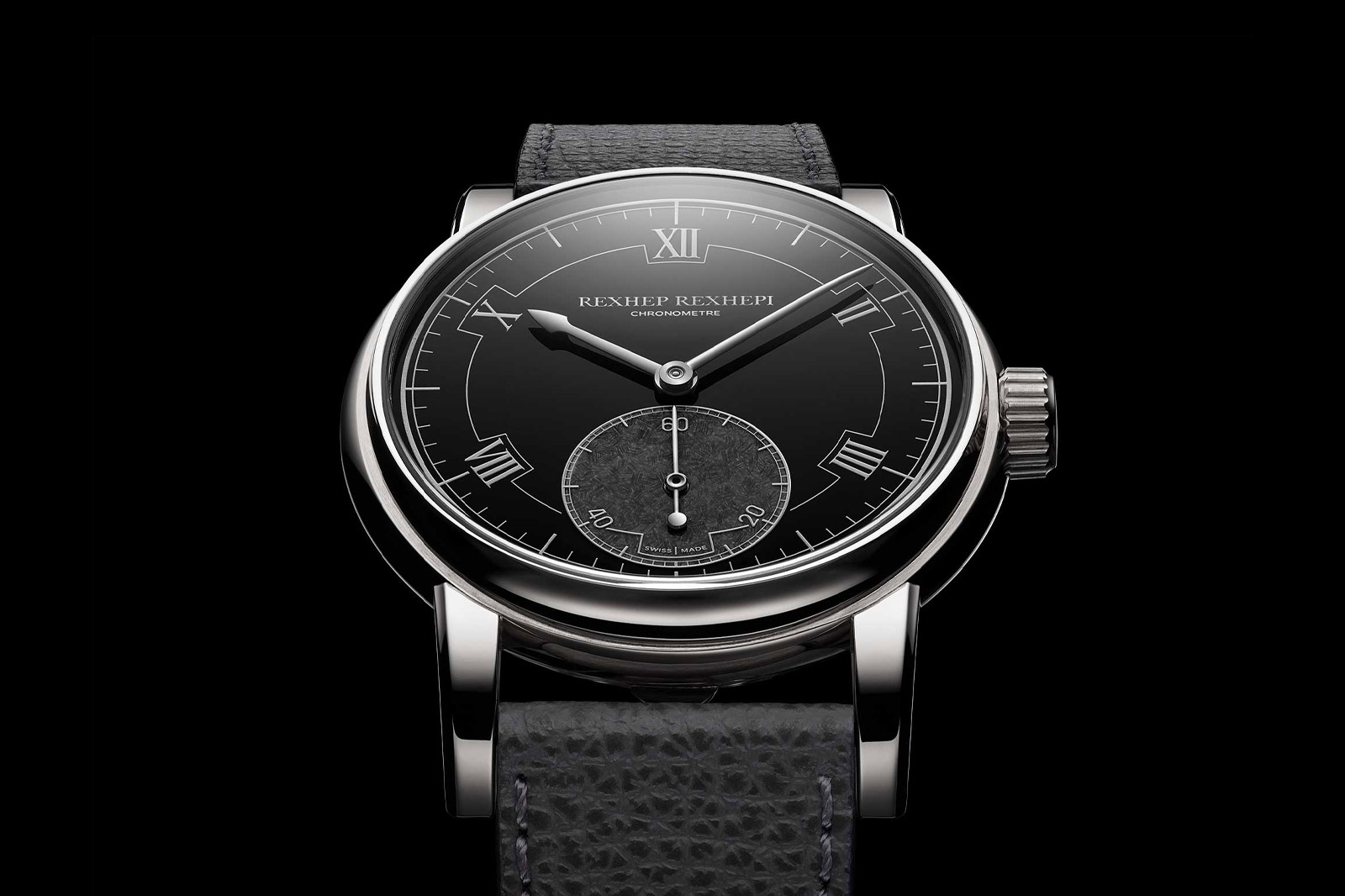
Among the watches connected with that late chapter was the Rexhep Rexhepi Chronomètre Contemporain, a model that helped define AkriviA’s blend of classical discipline and modern personality.
That watch has since become a serious auction presence, but its importance is not only commercial.
It reflects the kind of continuity that high watchmaking needs if hand craft is to remain more than nostalgia.
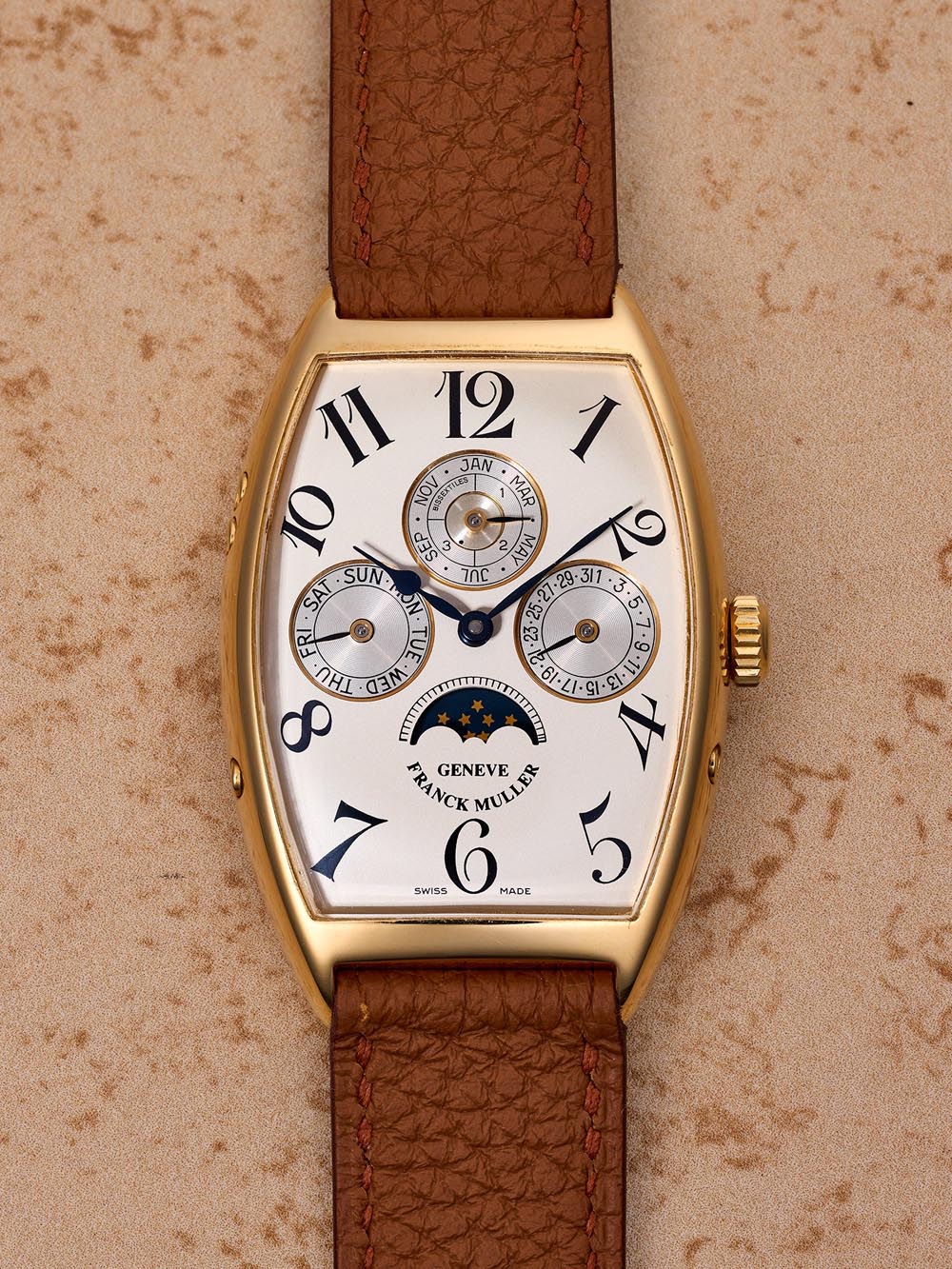
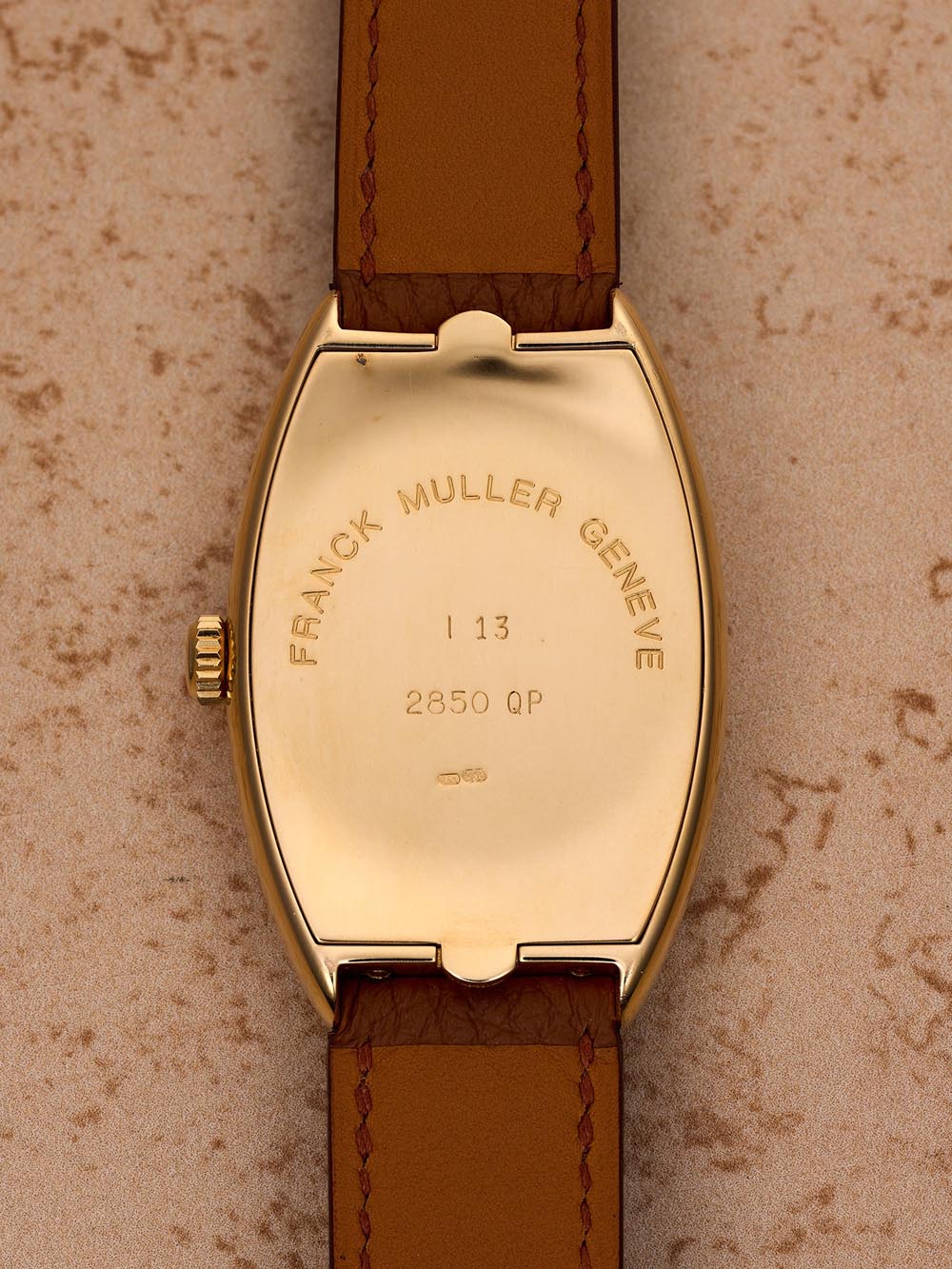
Hagmann died at 84, leaving a body of work that runs through Patek Philippe, Andersen Genève, Franck Muller and AkriviA.
The famous story of Swiss watch executives insisting that doctors save his injured eye after a motorcycle accident says plenty about his standing, but the watches say more.
In an era when most cases are made with heavy industrial assistance, Jean-Pierre Hagmann showed that the case could still be an instrument, a sculpture and a signature all at once.