Before the Big Bang, before the material experiments and before Hublot became shorthand for disruptive Swiss watchmaking, there was a quiet gold watch on a rubber strap.
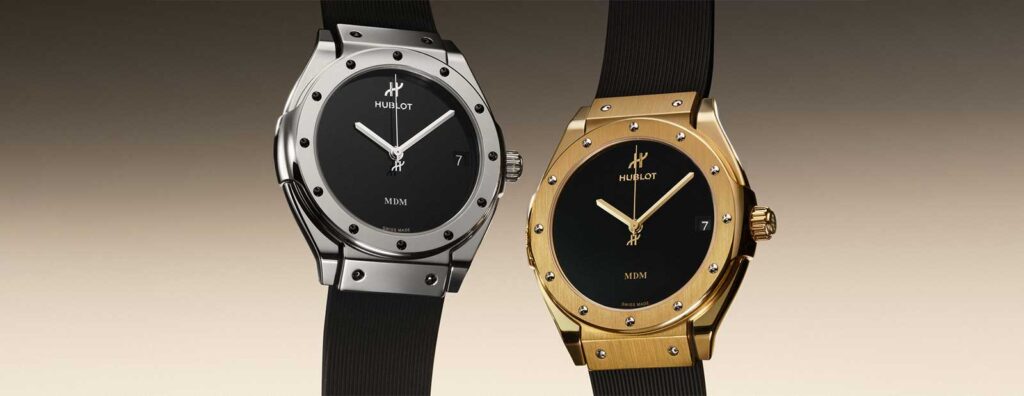
The new Hublot Classic Fusion Tributo returns to that founding idea with Carlo Crocco involved once again, revisiting the design language that made the brand unusual from its first appearance at Basel in 1980.
It’s not a replica in the strictest sense, but it is intentionally close to the watch that gave Hublot its name.

At a glance
- Hublot has introduced the Classic Fusion Tributo as a modern tribute to Carlo Crocco’s original 1980 Hublot.
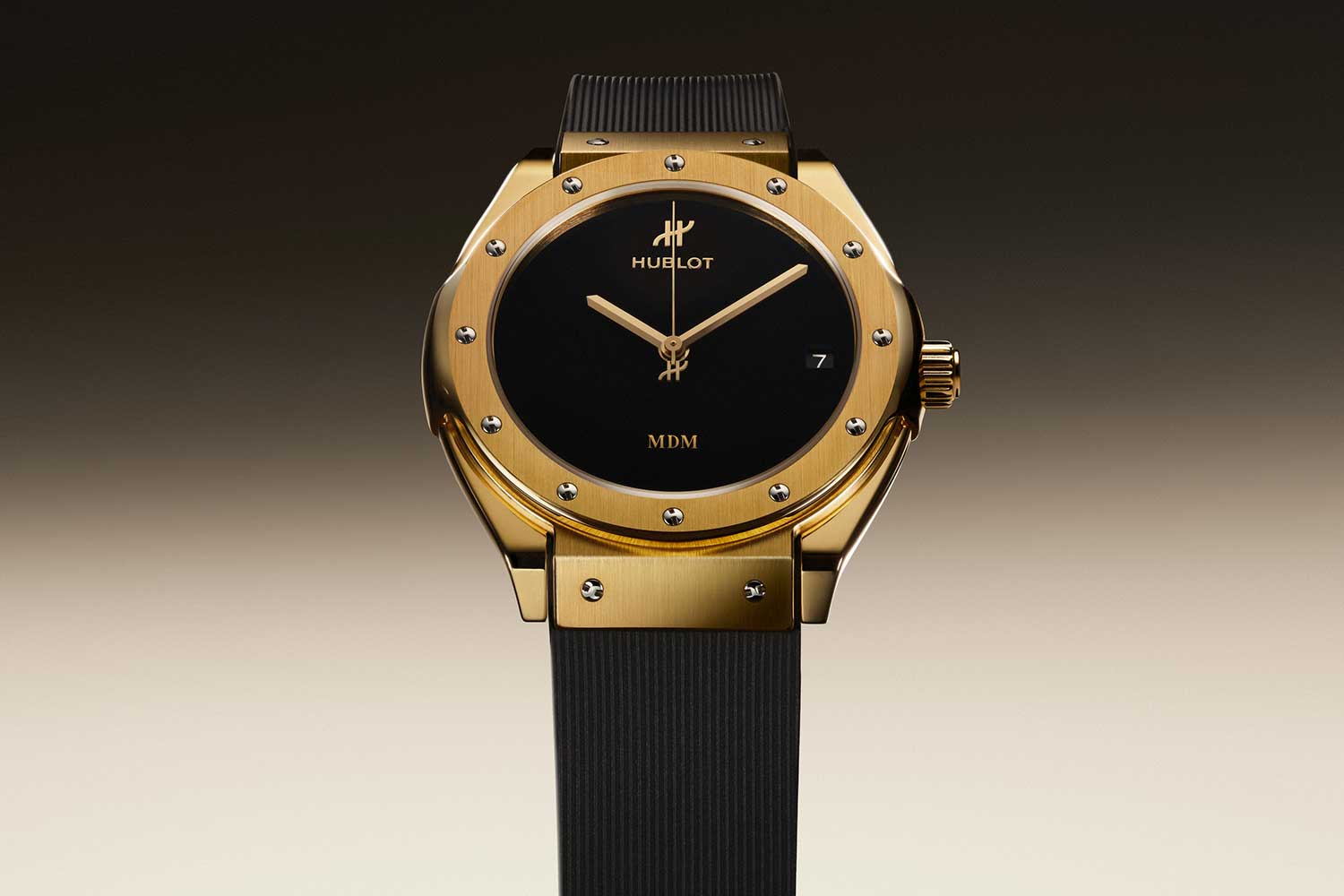
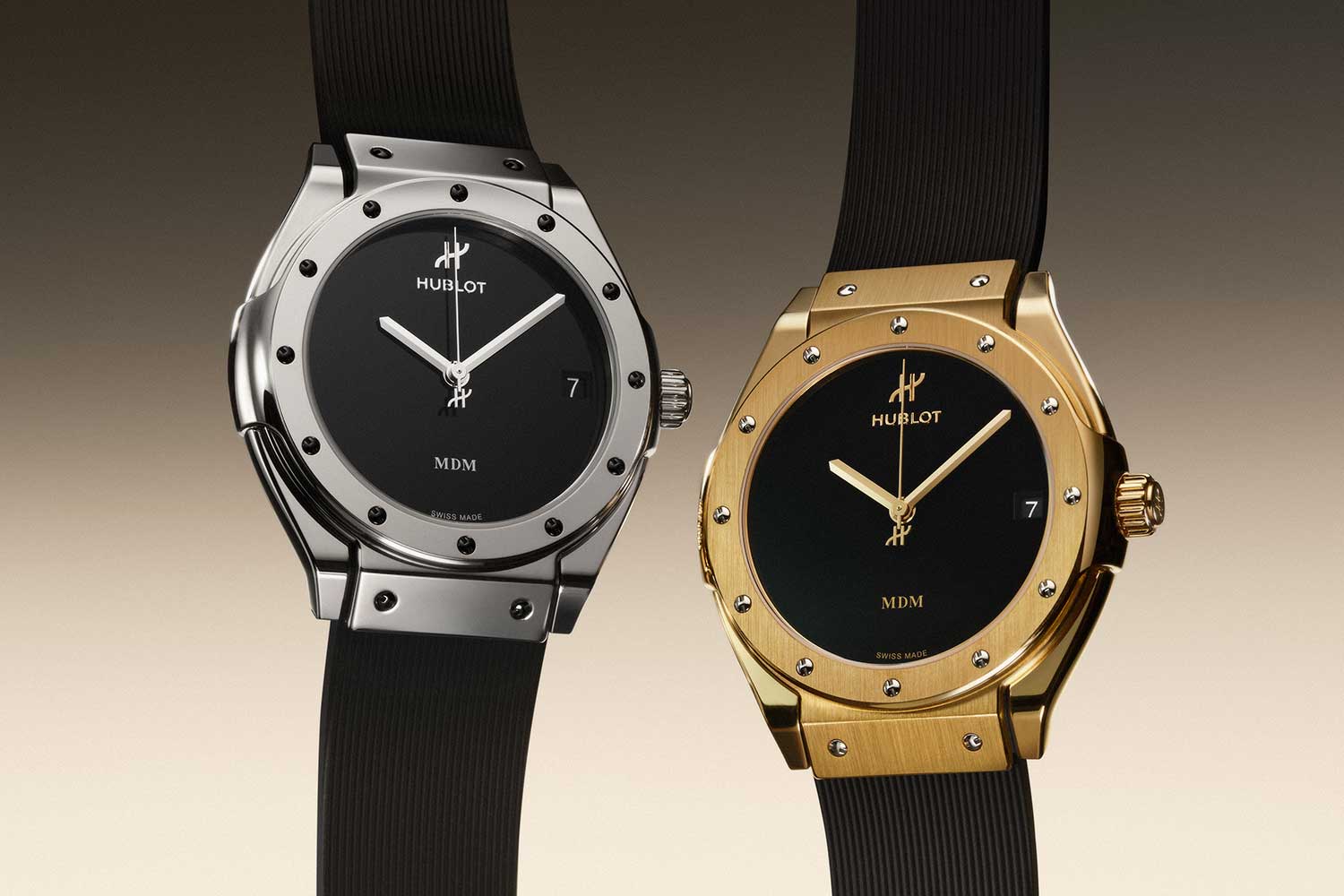
- The 38mm gold watch keeps the porthole-style bezel, 12 screws, black rubber strap and minimalist dial language of the original.
- It uses Hublot’s automatic manufacture Caliber HUB1711 and is priced at USD 30,900.
The gold watch that made rubber acceptable
Carlo Crocco’s original Hublot arrived at a difficult moment for Swiss watchmaking.
Quartz competition from Japan had taken a heavy toll, and many established Swiss names were under pressure or disappearing altogether.
Crocco’s answer was neither a traditional dress watch nor a conventional sports watch.
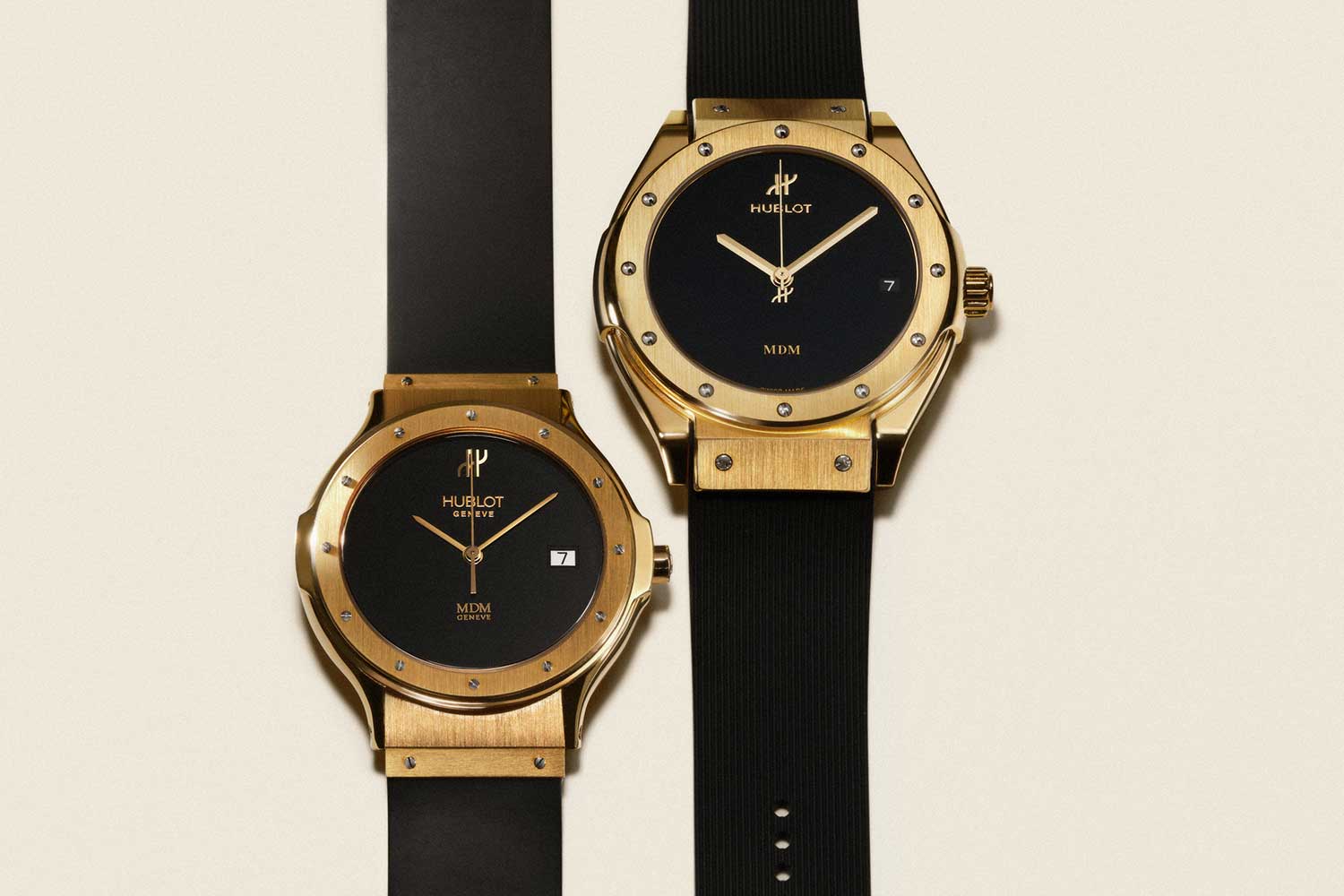
He built a 36mm gold quartz watch with an almost bare black dial, 12 bezel screws and a black rubber strap scented with vanilla.
That pairing of precious metal and rubber was radical enough that Crocco and his wife reportedly added “rubber strap” to the display window during the Basel fair to draw attention to the idea.
The reaction changed quickly.
Within months, Constantine II of Greece had purchased two examples, keeping one and giving the other to King Juan Carlos of Spain.
Other royal clients followed, along with industrialists, business figures and the international clientele that would later become central to Hublot’s identity.
Crocco has described the original concept as an attempt to introduce “a new language” rather than simply another beautiful gold watch.
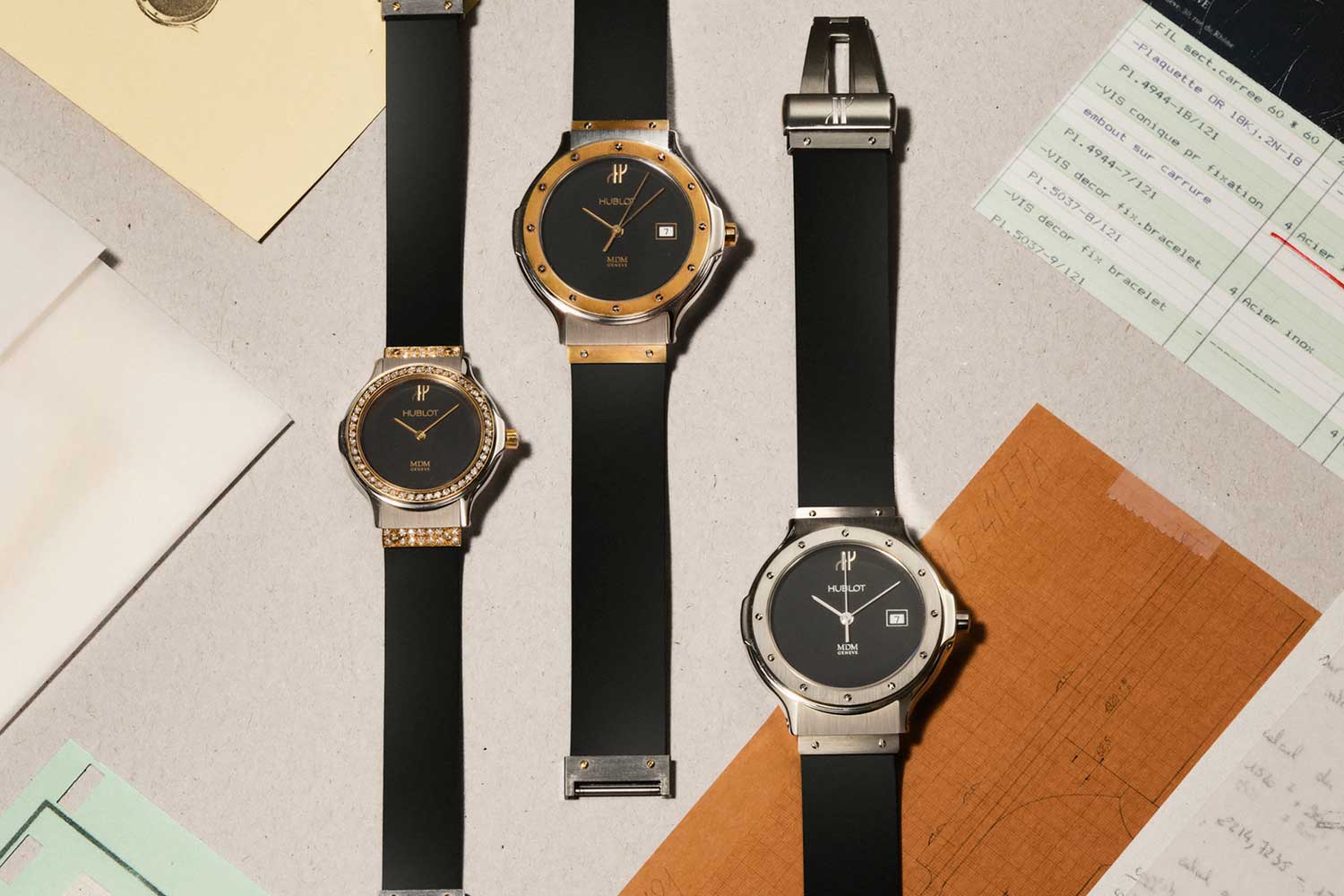
That language was built around contrast, minimalism, comfort and what he saw as an Italian sense of modernity applied to Swiss craft.
From MDM Genève to the Big Bang era
The first Hublot was created under MDM Genève, whose initials stood for Marie-Danielle Montre, named after Crocco’s wife.
The watch’s porthole association came through Swiss case maker Eric Bonnet, who noted that an earlier covered design resembled a ship’s porthole, or “hublot” in French.
The covered watch itself didn’t become the defining product, but the name stayed.
As Hublot gained momentum through the 1980s, the model name eventually eclipsed the company name.
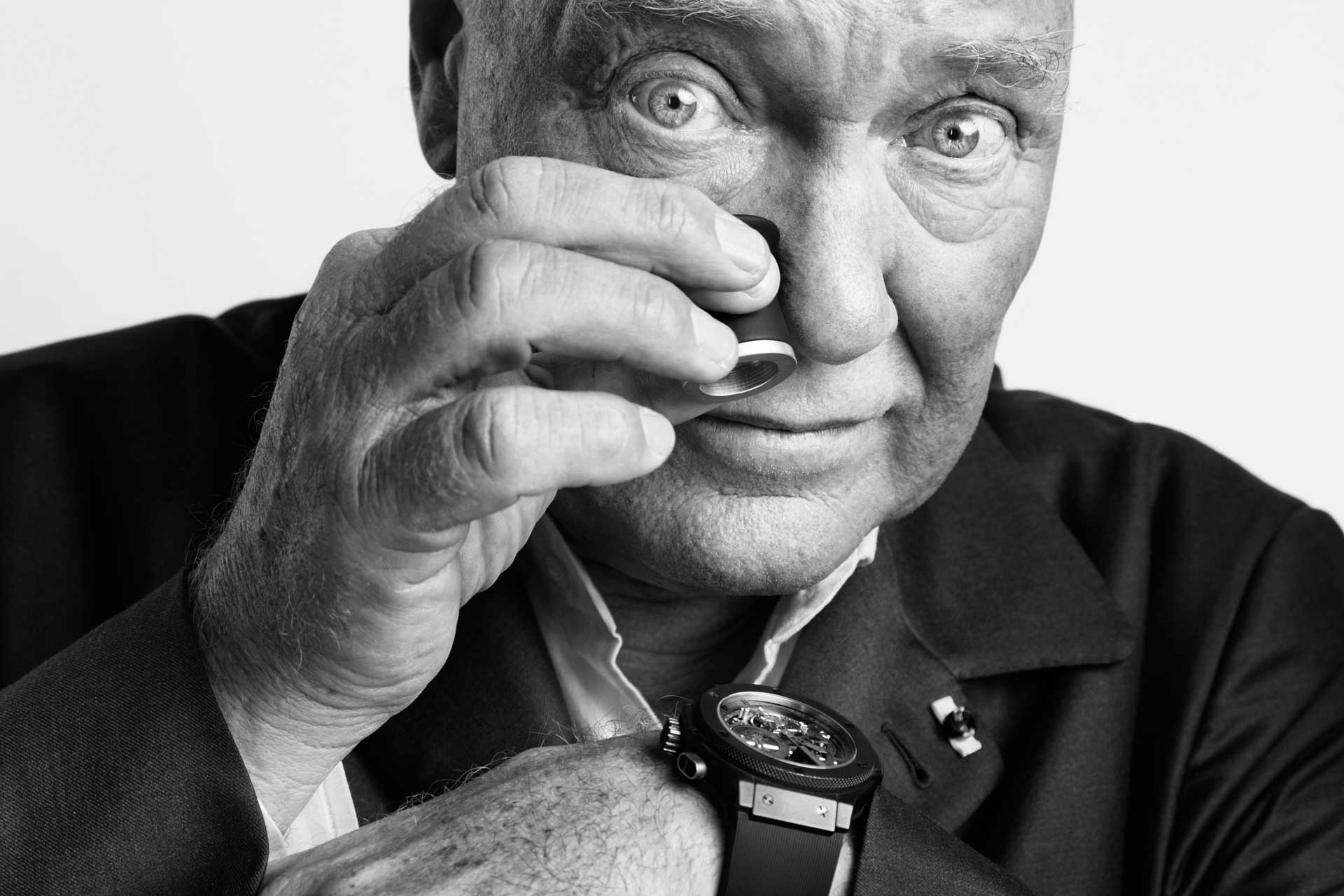
Two decades later, Jean-Claude Biver’s arrival reshaped the brand for a different era.
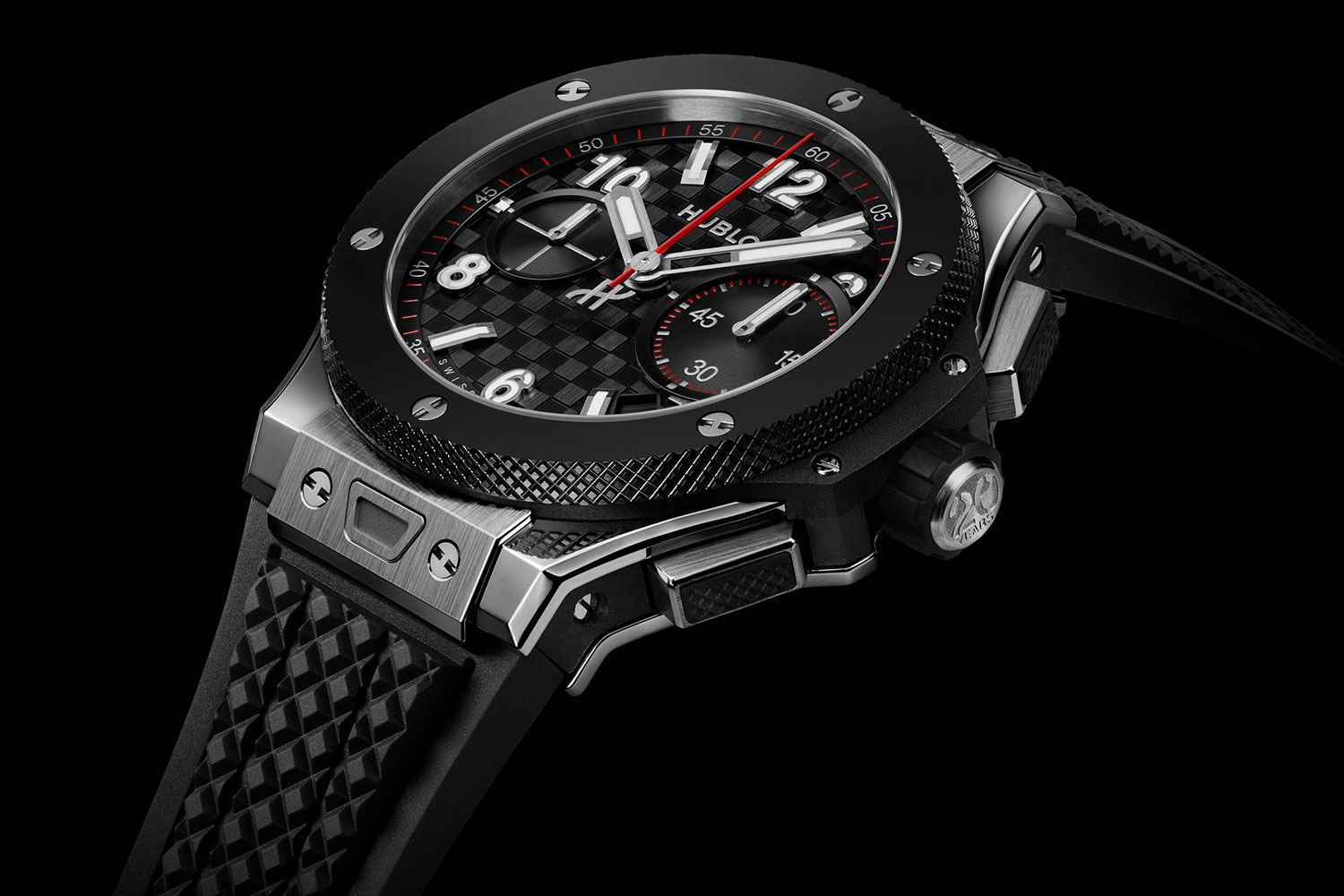
In 2005, the Big Bang took Crocco’s exposed screws, rubber strap and porthole architecture, then enlarged and complicated the formula with a more layered case construction.
That watch became the commercial engine of modern Hublot and helped define the brand’s reputation as a maker of assertive, material-driven sports watches.
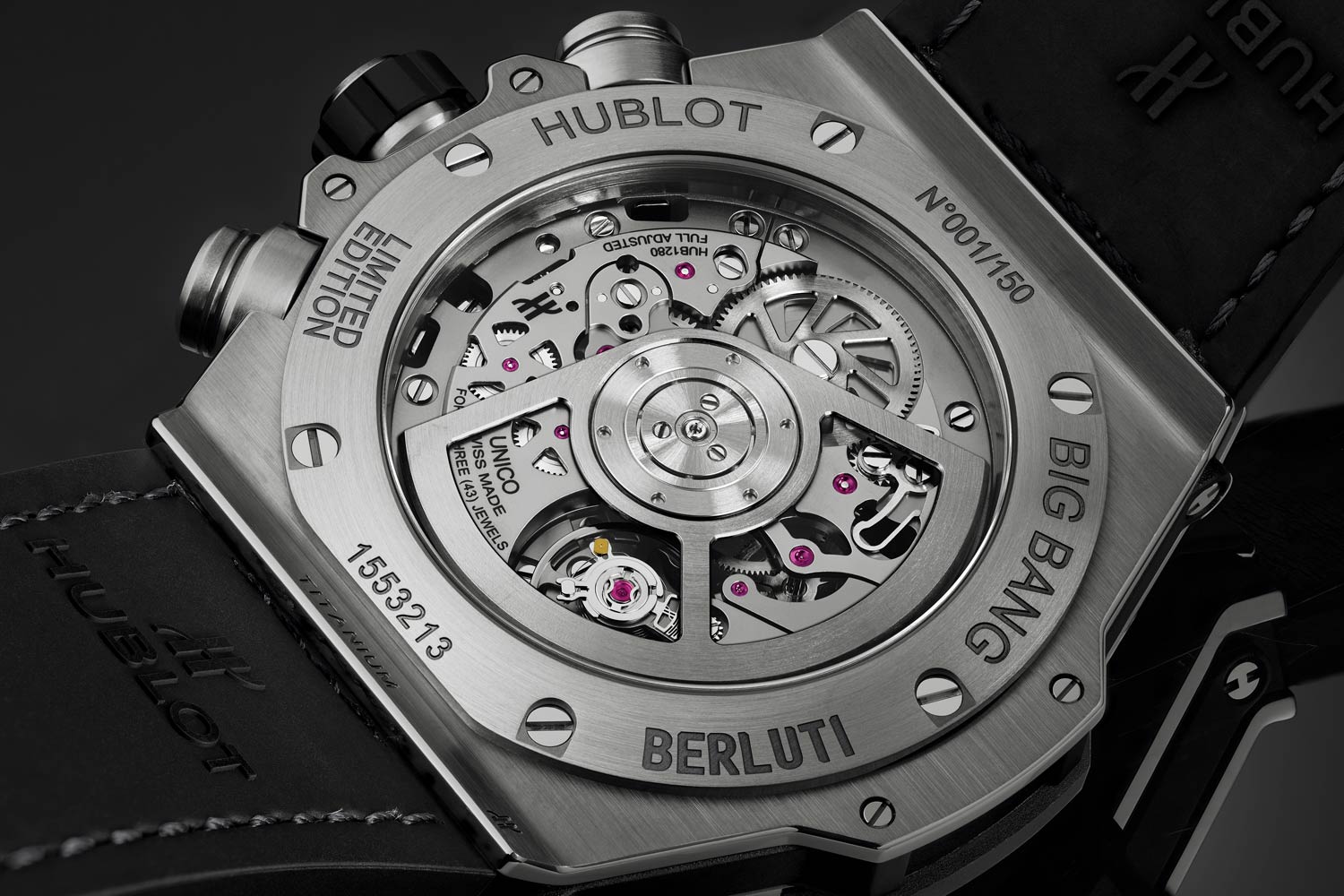
LVMH acquired Hublot in 2008.
The Classic Fusion Tributo returns to the first silhouette
Julien Tornare, who became Hublot CEO in 2024, has been studying the brand’s early history alongside its more avant-garde modern identity.
For Tornare, the original Hublot shows that the brand can be distinctive without leaning on complexity or visual excess.
The Classic Fusion Tributo is the clearest result of that approach so far.
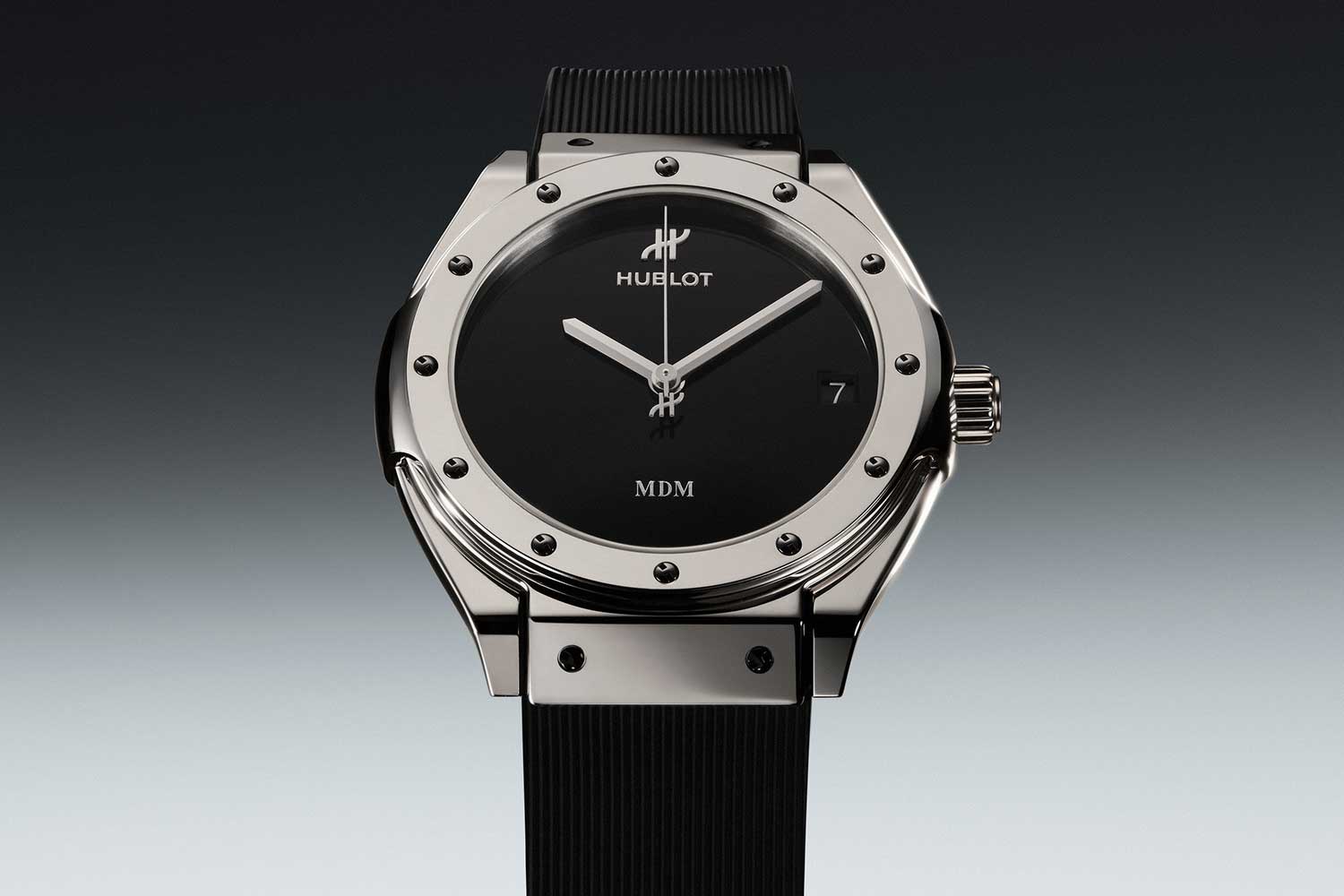
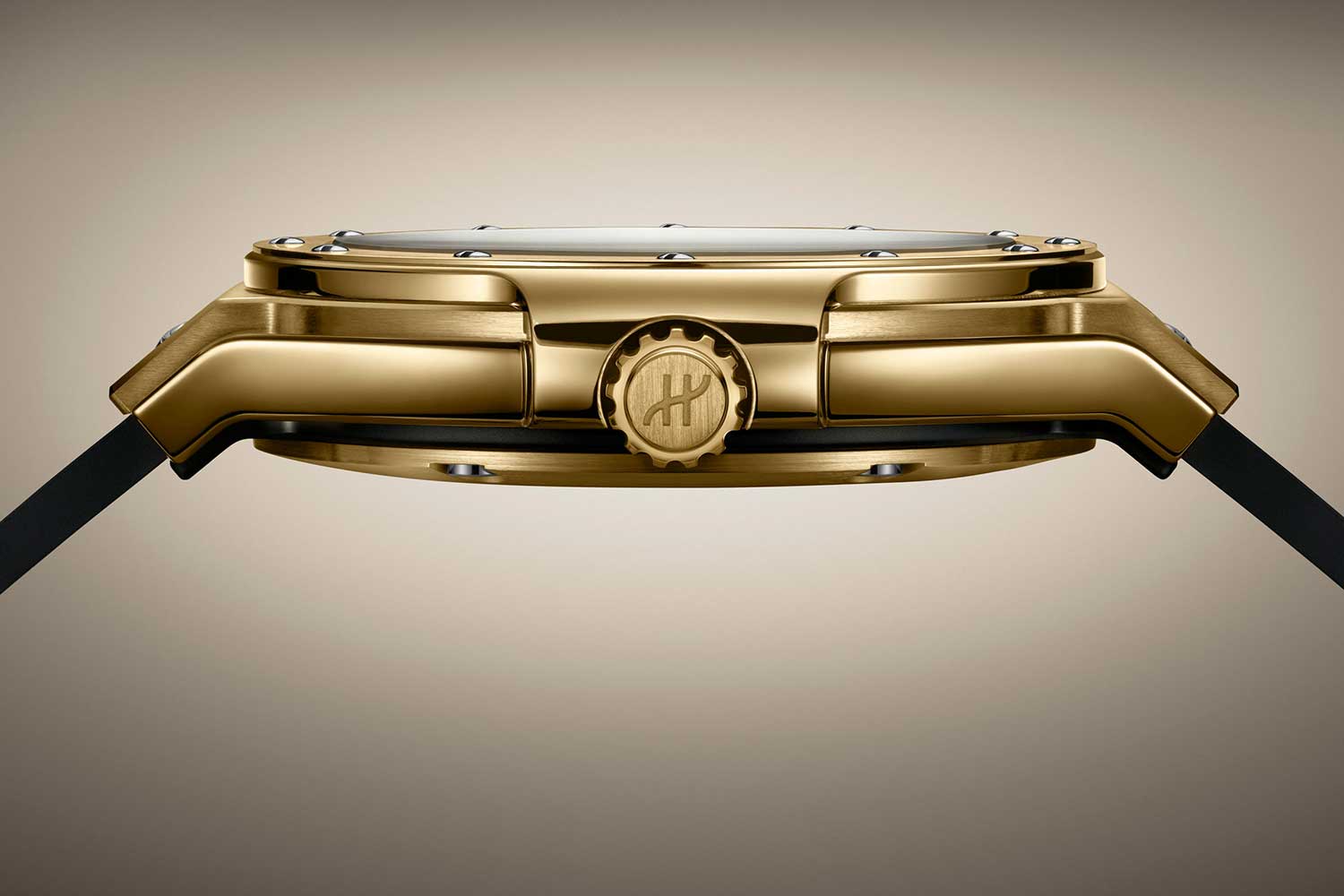
At 38mm wide and 9.5mm thick, it is only 2mm larger than Crocco’s 1980 watch.
The 12 slightly domed screws remain positioned around the bezel, doubling as hour references on a dial without conventional indexes.
The date sits at 3 o’clock, while the rubber strap connects directly to exposed lugs rather than using the One Click system found on many contemporary Hublot models.
There are two versions.
The yellow gold model is closest to the original, pairing an 18K yellow gold case with a matte black dial, gold hands and the MDM initials at 6 o’clock.
The white gold model uses a polished black onyx dial and black-plated titanium bezel screws.
Both are water resistant to 100 meters.
An automatic movement and a personal signature
The most significant mechanical shift sits behind the dial.
Where the 1980 watch used quartz, the Classic Fusion Tributo is powered by Hublot’s self-winding manufacture Caliber HUB1711.
The movement has 185 components and an approximate 60-hour power reserve.
Through the sapphire caseback, the H-shaped rotor appears in 22K gold on the yellow gold reference and black tungsten on the white gold version.
Crocco has said that respecting the original doesn’t mean reproducing it blindly, adding that a watch “must still live in its own time.”
The return of the MDM initials also carries a second meaning.
In 1998, Crocco founded the Main Dans la Main Foundation, which supports vulnerable children and families through projects in India, Switzerland and Italy.
Hublot is donating CHF 100,000 to the foundation to mark the launch of the Classic Fusion Tributo.
Details & Specifications
| Brand | Hublot |
|---|---|
| Model | Classic Fusion Tributo |
| References | 262.VX.1130.RX.MDM in yellow gold, 262.WX.6870.RX.MDM in white gold |
| Case size | 38mm x 9.5mm |
| Case material | Polished and satin-finished 18K yellow gold or 18K white gold |
| Bezel | Matching gold bezel with polished or black-plated titanium H-shaped screws |
| Dial | Matte black on the yellow gold model, black onyx on the white gold model, both with MDM signature at 6 o’clock |
| Movement | Self-winding manufacture Caliber HUB1711 |
| Components | 185 |
| Functions | Hours, minutes, seconds and date |
| Power reserve | Approximately 60 hours |
| Rotor | 22K yellow gold on the yellow gold model, black tungsten on the white gold model |
| Water resistance | 100 meters |
| Strap | Black lined rubber |
| Buckle | Deployant buckle in 18K gold, black-plated stainless steel and black-plated titanium |
| Price | USD 30,900 |
The Classic Fusion Tributo works because it doesn’t try to turn early Hublot into nostalgia alone.
It restores the tension that made the first watch matter, a formal gold case placed on rubber with almost nothing on the dial to soften the surprise.
For collectors who know Hublot mainly through the Big Bang, this is a useful reminder that the brand’s first disruption was quieter, slimmer and arguably more elegant.