
Mykonos has a way of making distances look harmless.
The island is small, the beaches are close, and the places everyone wants to be often sit only a few kilometres apart. Yet in July and August, getting from a villa to dinner, a beach club or the port can become the single detail that unravels an otherwise immaculate trip.
That’s the part many travellers underestimate. In Mykonos, transport isn’t background admin, it’s the framework that lets the island work.

At a glance
- Mykonos transport needs advance planning in high season, especially for dinners, beach clubs, airport runs and port transfers.
- The island’s small scale is misleading, with narrow roads, heavy seasonal traffic and limited taxi availability creating frequent delays.
- A dedicated driver or properly coordinated car schedule can make the difference between a seamless stay and a stressful one.
The road network was not built for August
On a map, Mykonos appears straightforward.
The old town, the port, the airport, Scorpios, Nammos and the beach clubs along the southern coast all look close enough to treat transport casually.
In practice, high season changes the equation completely.
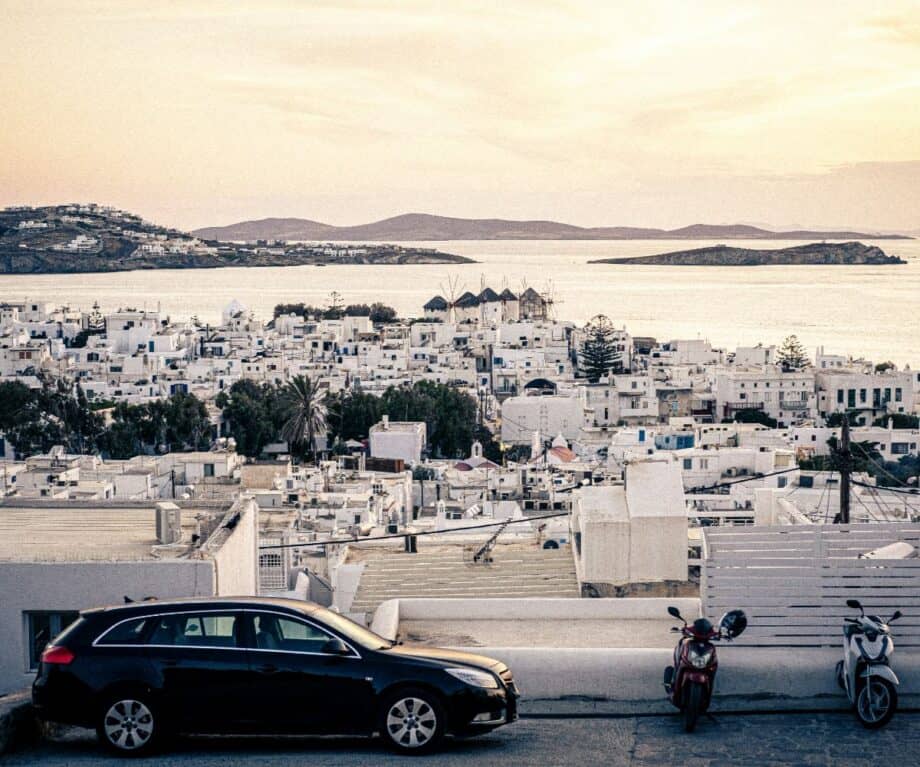
The island has the road network of a Cycladic community and the traffic pressure of one of Europe’s most in-demand summer destinations. Those two realities meet most painfully at the exact hours when visitors are trying to move between villas, restaurants, beach clubs and late-night venues.
A journey that looks short in kilometres can become long in time, especially around lunch, sunset and dinner.
The issue isn’t simply traffic volume. It’s also the character of the roads, the limited places to stop safely, the lack of reliable pavements in many areas and the number of visitors trying to secure transport at the same moment.
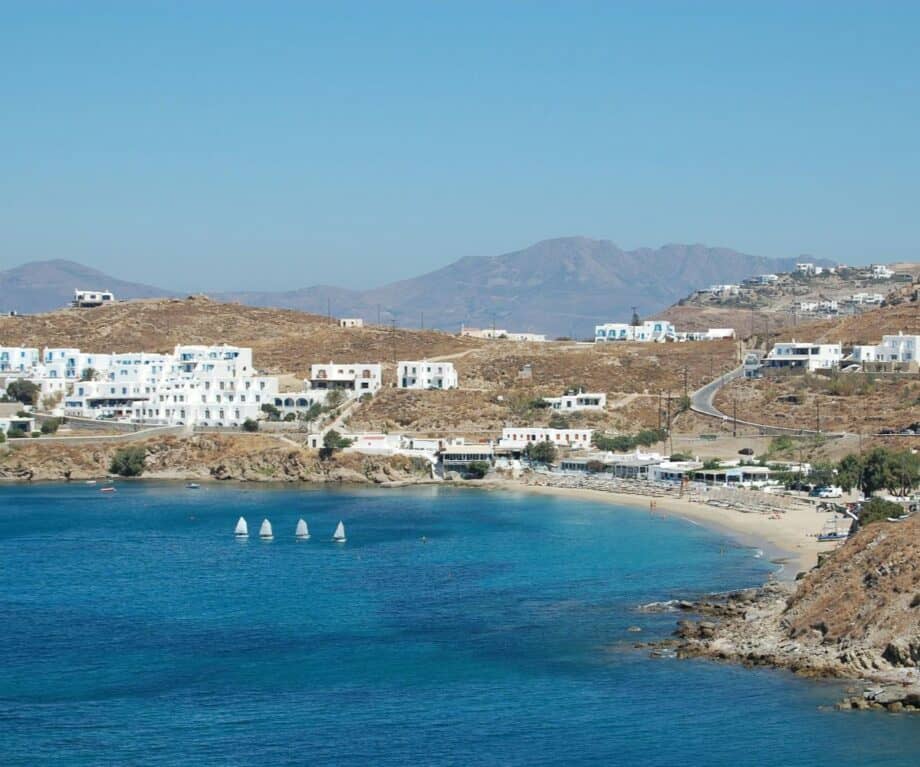
Mykonos rewards precision. It punishes assumptions.
Taxis are not a high-season strategy
The most common mistake is leaving transport to the moment it’s needed.
That may work in a city with deep taxi supply, public transport options and walkable alternatives. It doesn’t work reliably on Mykonos in August.

Waiting outside a restaurant, villa or beach club while trying to locate a taxi is not just inconvenient. It can cost a table, shorten a beach reservation, add stress before a flight or make a carefully planned evening feel chaotic before it has begun.
The better approach is to treat a car and driver as part of the itinerary, not as a last-minute add-on.
A good local driver knows which route makes sense at noon, which one works after midnight and where to wait without blocking traffic or forcing a chain of phone calls. That knowledge is not glamorous, but it is exactly what keeps a Mykonos trip feeling polished.
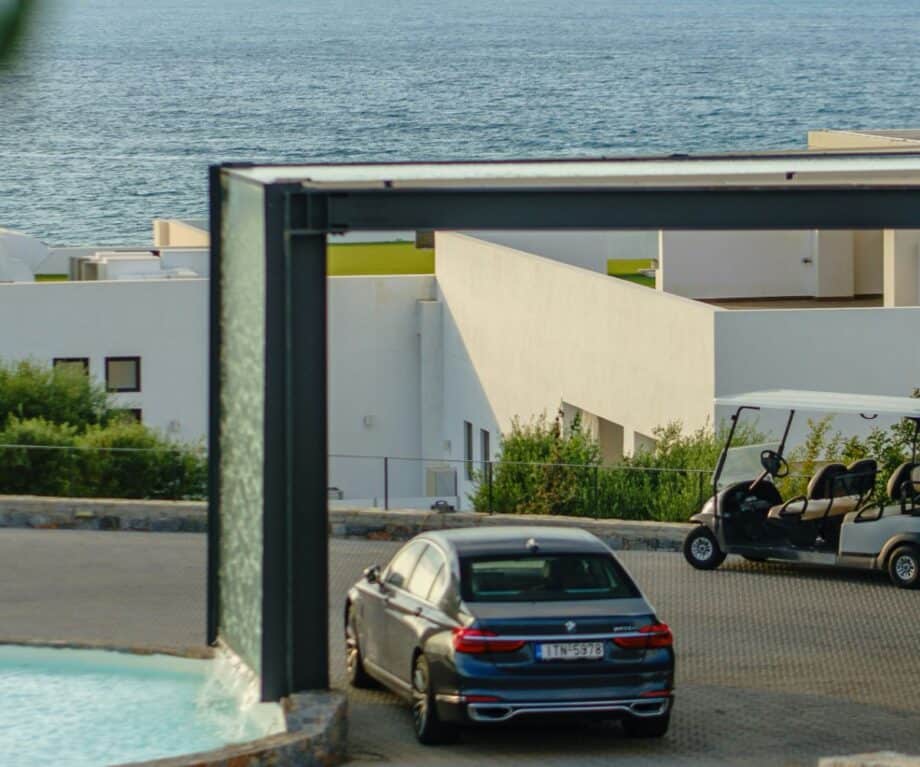
For luxury travellers, this is where the word convenience undersells the point.
The value of a driver is not only the vehicle. It is timing, local road knowledge, venue familiarity and the confidence that when dinner ends, the car is where it should be.
Airport transfers set the tone
Arrivals and departures deserve more attention than many travellers give them.
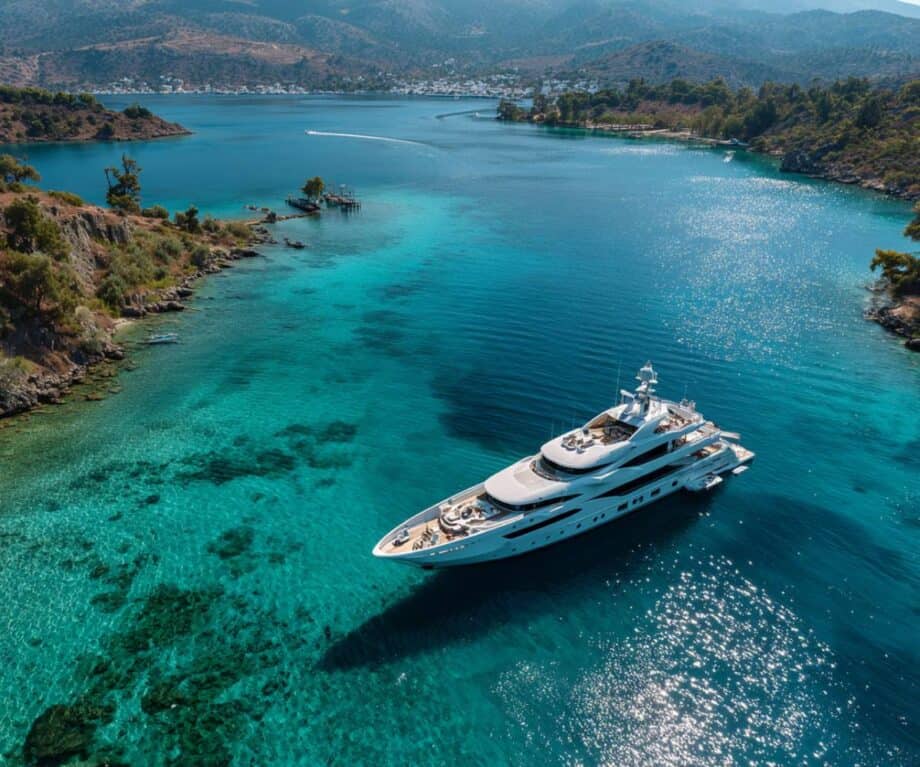
A smooth arrival in Mykonos means the transfer is already handled when guests clear the terminal. The car is close, the luggage plan is clear, and the drive to the villa feels like the beginning of the holiday rather than the final test of the journey.
That first impression matters.
After a flight, luggage delays and the heat of a busy island airport, a vague transfer arrangement can make even an exceptional villa arrival feel flat. A prepared driver changes the mood immediately.

Departures matter just as much.
Mykonos Airport in August is not the place to experiment with timing. Leaving the villa with a proper buffer is simple, but only if the transfer has been planned rather than guessed.
The aim is not to overcomplicate the process. It is to remove the mental arithmetic that begins when a guest starts wondering whether the car is coming, whether the road will be clear and whether there’s enough time before the flight.

Excursions only work when the car and boat agree
Some of the best experiences from Mykonos happen off the island.
Delos is one of the great archaeological sites of the ancient world, and a morning visit can be a highlight of a stay. Rhenia, the uninhabited island nearby, offers the kind of beaches many visitors imagine when they think of the Cyclades but never actually reach.
Both require coordination.

A boat has a departure time and a return time. The car on Mykonos needs to match both, especially when guests are returning to the port in the afternoon and heading straight to a villa, restaurant or beach club.
This is where small gaps in planning become visible.
If a boat returns at four, the car cannot be loosely arranged for some time around then. It needs to be there, because the port is not a place where travellers want to begin improvising transport at the end of a day on the water.

The same applies to late dinners, early flights, beach club transfers and movements between villas and the old town.
Mykonos works best when each piece connects quietly to the next.
How to keep movement in the background
The goal of good transport planning is not to make the car a feature of the trip.

It is to make transport disappear.
That means deciding in advance which evenings require a dedicated driver, which transfers need fixed timings and where flexibility is useful. It also means accepting that Mykonos in peak season is not a place where premium experiences can be separated from the logistics around them.
A great dinner is diminished if guests arrive irritated and late. A beach day loses its ease if the return journey becomes a scramble. A villa stay feels less private when every outing starts with uncertainty.
For travellers used to seamless service, the smartest move is often the least visible one.
Book the restaurants, charter the boat, choose the villa and plan the beach days, but give equal attention to how each moment connects. On Mykonos, that is often the difference between a beautiful itinerary and a beautiful trip.
The island still delivers exactly what people come for, from long lunches by the water to nights that run far later than planned. It simply asks for one practical concession in return. Don’t leave the getting around to chance.