Georgia is becoming harder for international real estate investors to ignore.
Positioned between Europe and Asia, the country has built a stronger case around tourism, infrastructure, hospitality and comparatively accessible entry points.
For investors who have watched values climb in more established destinations, Georgia offers something increasingly rare: a market with visible momentum that hasn’t yet priced out every opportunity.

At a glance
- Georgia is gaining traction as a real estate, hospitality and strategic land investment market.
- Growth is being supported by tourism diversity, improved connectivity, business-friendly procedures and international development activity.
- Opportunities are drawing interest in areas such as Kakheti wine country and the Black Sea city of Batumi.
A business-friendly market with improving infrastructure
Georgia’s appeal starts with practical fundamentals rather than marketing gloss.
The country is known for efficient company registration, a transparent tax environment and lower bureaucracy than many European jurisdictions, all of which matter when investors are assessing how quickly a project can move from acquisition to delivery.
Government investment has also improved confidence in the country’s direction.
Roads, airports, tourism infrastructure and public services have all played a role in making Georgia feel less like a speculative frontier and more like a market entering a steadier stage of development.
That matters because real estate growth is rarely driven by scenery alone.
Connectivity, governance, access and execution risk are just as important as the postcard view, especially for hospitality operators and land buyers considering larger projects.

Tourism gives Georgia a year-round investment story
One of Georgia’s strongest advantages is the range of experiences packed into a relatively compact country.
The Black Sea coastline, mountain regions, ski resorts, historic cities and wine-producing areas give the market a broader tourism profile than many single-season destinations.
That variety helps support different kinds of demand, from hotel stays and serviced apartments to wellness retreats, wine-led hospitality and lifestyle residential projects.
Improved air access is part of the same story.
Direct flights connect Georgia with London, Dubai and other international hubs, making it easier for leisure travellers, business visitors and overseas property buyers to engage with the market.
For hospitality investors, that improved accessibility can support occupancy and strengthen the case for higher-quality accommodation in key locations.
Global names are already testing the market
Georgia’s rising profile is not only being shaped by private investors looking for early-stage upside.
International developers including Emaar and Eagle Hills have announced major projects in Tbilisi and Batumi, while hospitality groups such as Marriott, Hilton, Radisson and Wyndham have expanded their presence in the country.
Those names matter because large developers and hotel operators rarely move into a market without careful due diligence.
Their activity signals confidence in Georgia’s tourism trajectory, urban development and broader economic direction.
For private capital, this can create an interesting window.
Institutional interest can validate a market, but pricing may not yet have reached the levels seen in more mature international destinations.
Kakheti and Batumi show two sides of the opportunity
The most compelling opportunities in Georgia are not all the same.
In Kakheti, the country’s celebrated wine region, a 19-hectare site in the Kindzmarauli PDO area points to the potential of wine tourism, boutique hospitality and experiential travel.
Surrounded by vineyards and established wine tourism infrastructure, land of this kind could suit concepts such as a boutique winery, wellness retreat, luxury villas or an integrated hospitality destination built around wine, gastronomy and nature.
This aligns with a wider shift in luxury travel.
Affluent travellers are increasingly looking beyond conventional resort stays and toward places with cultural depth, regional identity and a genuine sense of place.
Batumi offers a different proposition.
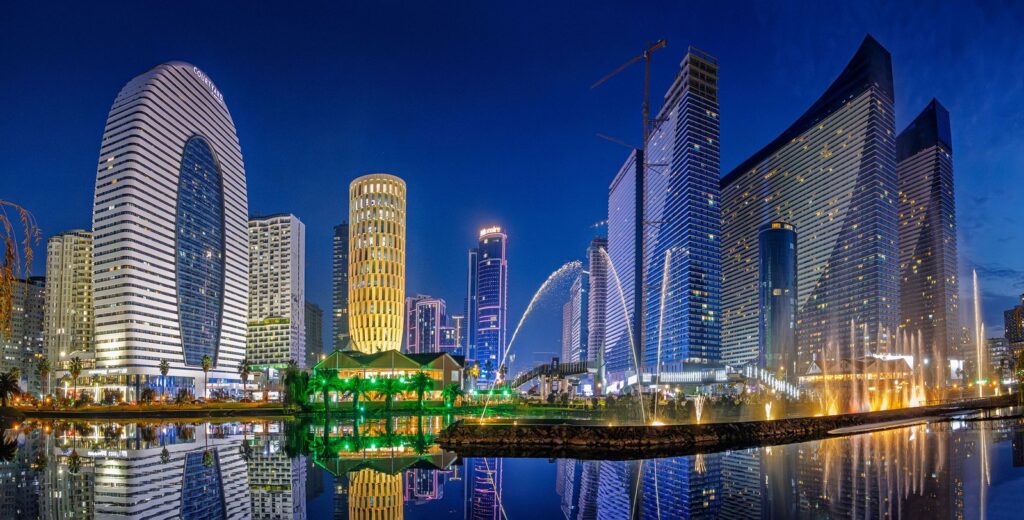
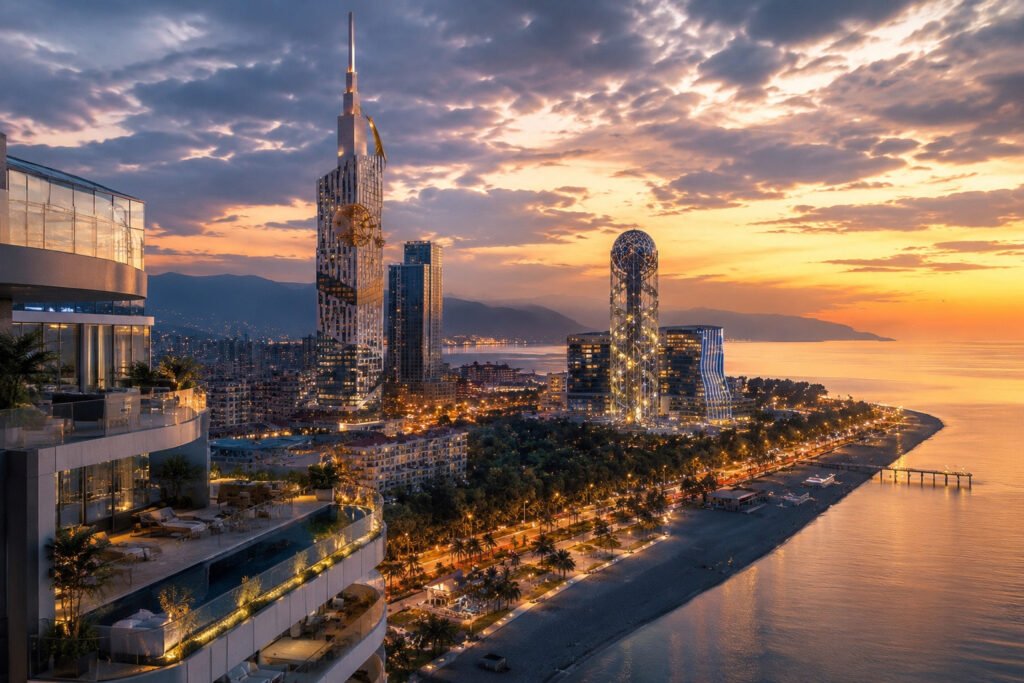
An elevated site with panoramic Black Sea views and access to city infrastructure reflects the city’s growing appeal for premium residential development, including villa communities and private residences.
Once seen mainly as a seasonal seaside destination, Batumi has benefited from investment in public spaces, hospitality, infrastructure and international connectivity.
That evolution has helped lift demand from local and international buyers seeking lifestyle property in a fast-growing Black Sea setting.
Georgia’s investment case is not about being undiscovered anymore.
It is about a country moving from early recognition into a more competitive phase, with tourism demand, international brands and strategic land opportunities now converging.
For investors seeking diversification beyond the familiar European and Gulf markets, Georgia’s timing is the real story.