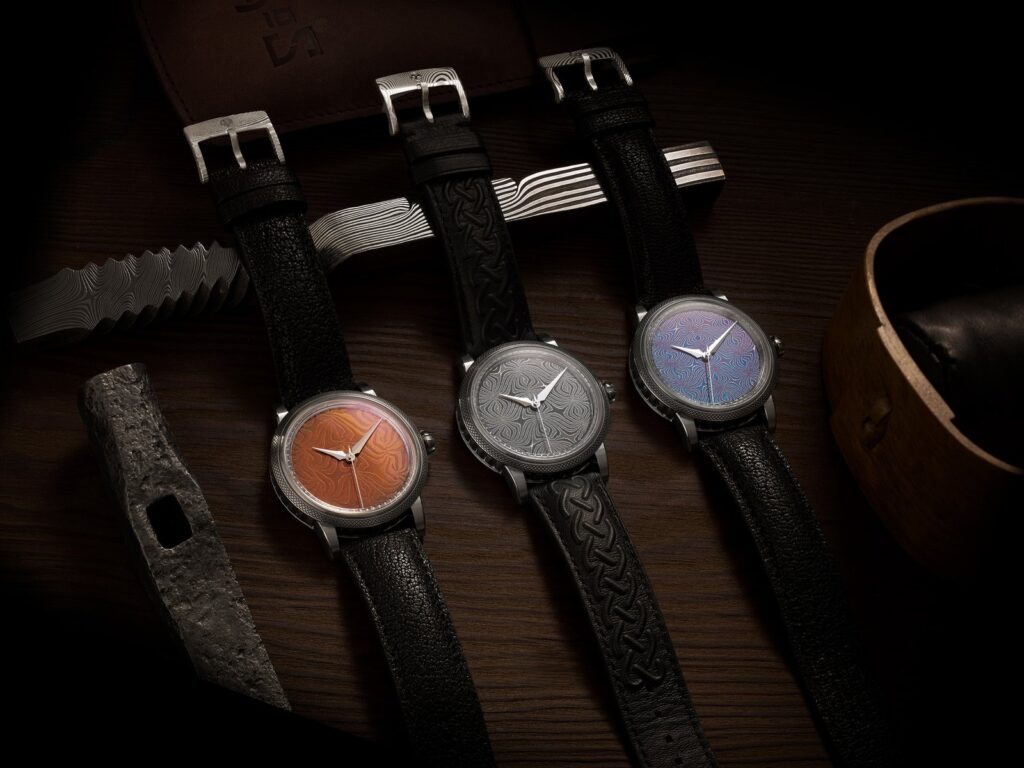
Independent watchmaking often trades on rarity, but GoS Watches has built its reputation on difficulty.
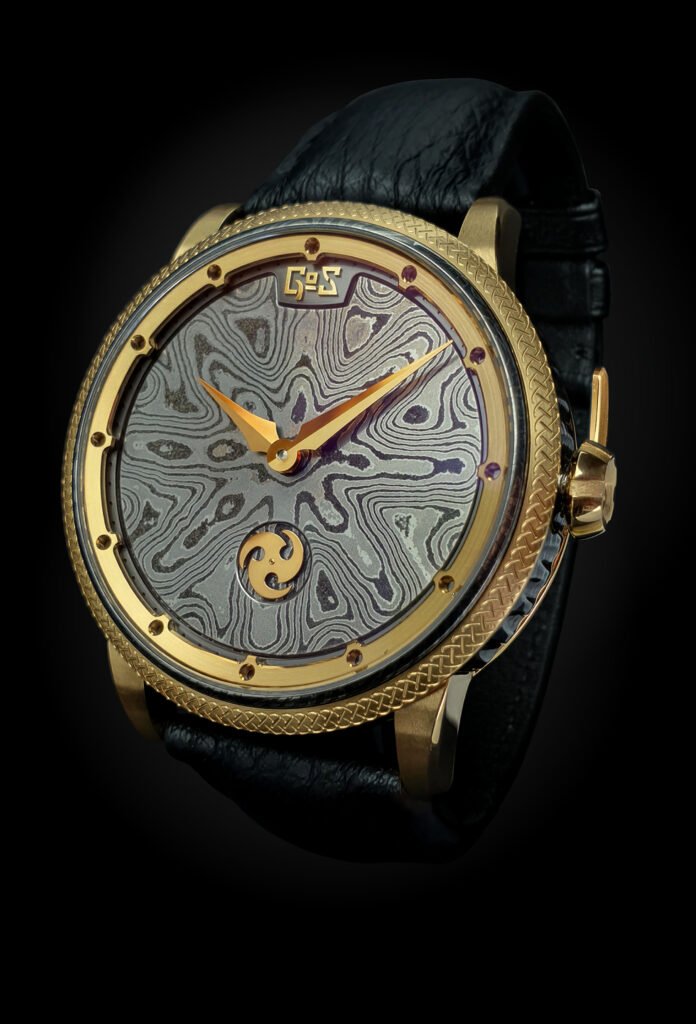
The Swedish atelier works with pattern-welded steel, a material better known to bladesmiths than dial makers, and has spent nearly two decades turning its unpredictable surface into a recognisable watchmaking language.
With the third generation of Winter Nights now drawing attention on the international stage, GoS remains a quietly compelling example of what happens when a workshop commits to an idea that can’t easily be industrialised.
At a glance
- GoS Watches continues to define itself through pattern-welded steel dials and components, nearly 20 years after the brand was founded in Sweden.
- The third-generation Winter Nights carries the brand’s forged-steel identity forward and is competing in the Artistic Crafts category at this year’s Grand Prix d’Horlogerie de Genève.
- GoS produces around 20 to 30 made-to-order watches annually, with a typical commission-to-delivery wait of six to eight months.
Pattern-welded steel as a watchmaking signature
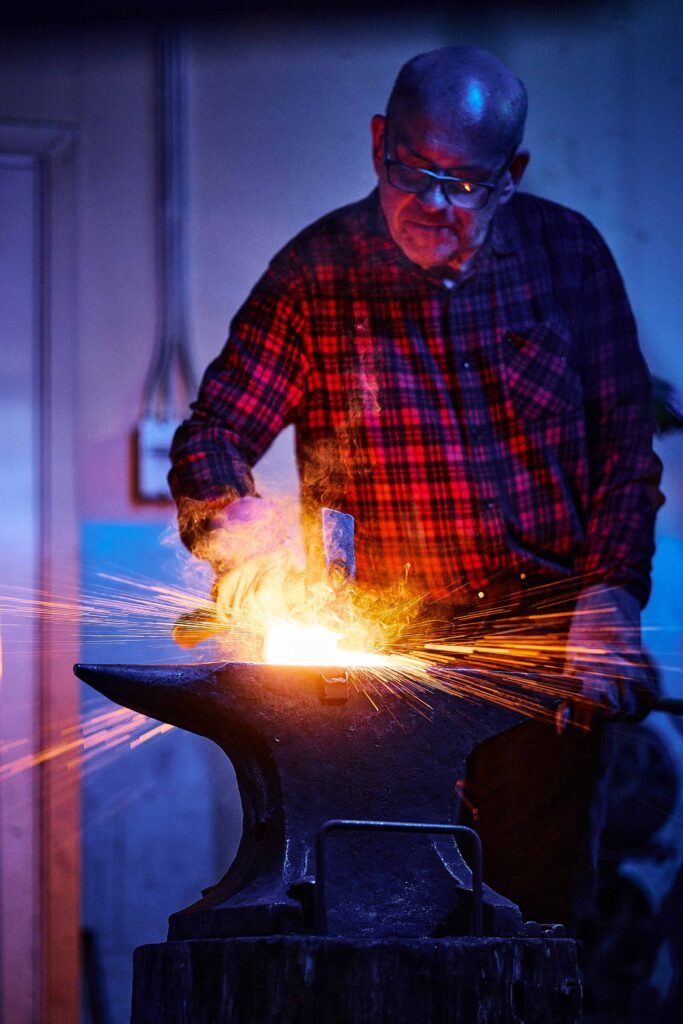
Pattern-welded steel has deep roots in northern European smithing, with techniques linked to Celtic and Viking-era metalwork dating back to around 300 to 500 AD.
In contemporary craft, the material is most often associated with high-end knives, swords and jewellery, where its layered surface can be celebrated across larger forms.
A watch dial is less forgiving.
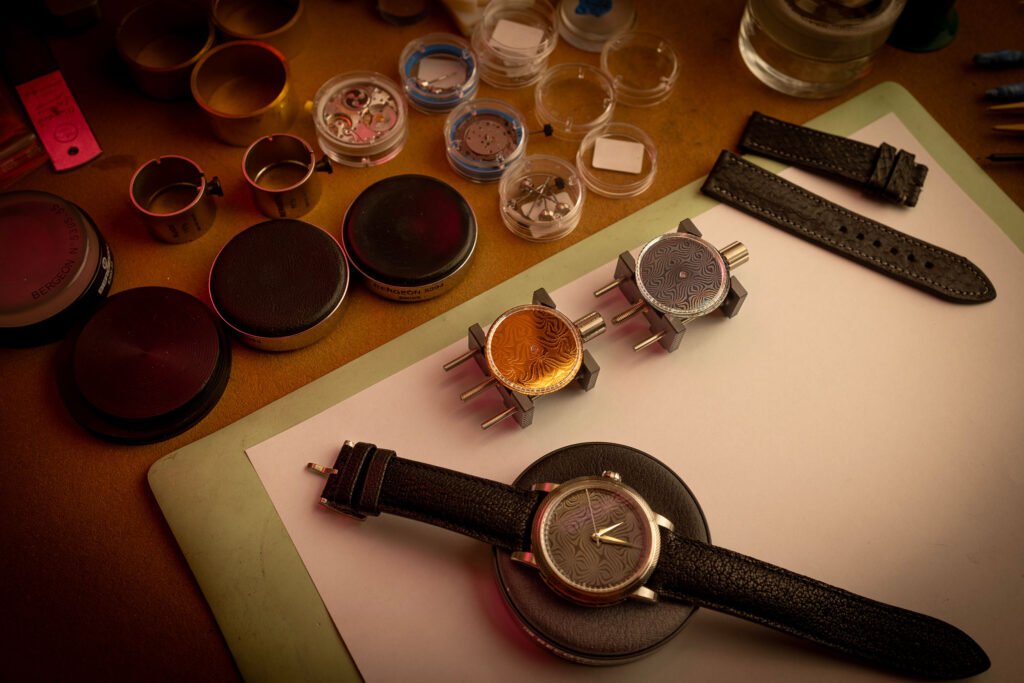
The steel must be forged, cut, flattened, thinned, finished and etched precisely enough to carry indices, hands and minute markings without distortion.
The beauty of the material is also the problem, because the pattern only reveals itself after etching and no two billets behave in exactly the same way.
That has made GoS an unusual presence in modern independent watchmaking.
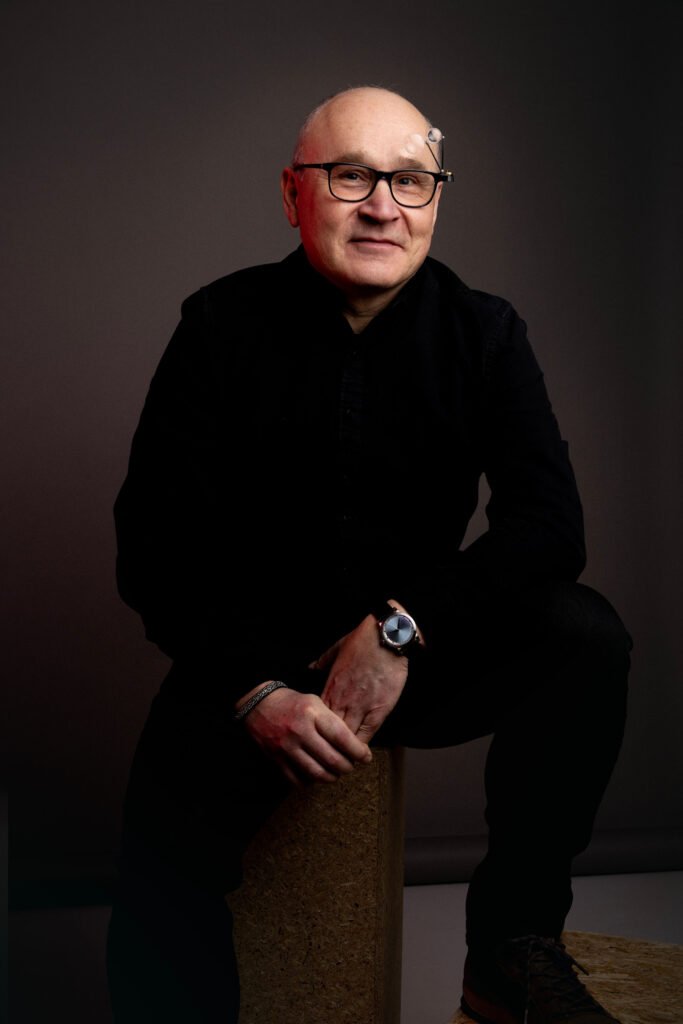
The company was founded in 2007 by Swedish watchmaker Patrik Sjögren and master bladesmith Johan Gustafsson, whose surname initials form the brand name Gustafsson och Sjögren.
Sjögren has led the brand independently since 2021, while master bladesmith Conny Persson now continues the forging work.
Persson specialises in mosaic Damascus and has worked with pattern-welded steel since the early 1990s, giving GoS continuity in a craft where experience matters as much as equipment.
A Swedish identity without obvious symbols
GoS is centred in Linköping, with engraving carried out remotely from Sweden’s west coast.
The watches are not broad-market objects, and that’s part of their appeal.
Annual production sits at roughly 20 to 30 pieces, made to order, with a six-to-eight-month wait between commission and delivery.
About half are sold directly to clients, often with bespoke details, while the rest reach collectors through retailers in the United States, Europe, the Middle East and Southeast Asia.
The design language draws from Swedish landscape and history, but it doesn’t lean heavily on literal Viking cues or obvious national symbolism.
On models such as Winter Nights, the steel itself does much of the storytelling, replacing decorative excess with the natural drama of the forged surface.
Several GoS watches carry no visible logo, or one discreet enough to demand a second look.
Sjögren’s goal is for the case profile, dial layout and material character to create recognition without needing a large signature on the dial.
The Väring line shows another side of that approach.
The first generation has been fully allocated, while a second-generation Väring is in development with a bronze case that Sjögren plans to pre-patinate before delivery, allowing the surface to continue changing on the wrist.
Winter Nights and the movement question
Winter Nights is important because it pushed GoS beyond distinctive dial craft and into movement development.
Five years into the brand, Sjögren commissioned a manufacture calibre in collaboration with German watchmaker Martin Braun, incorporating Damascus steel components directly into the movement.
For a workshop of GoS’s size, that was an ambitious step.
Sjögren has described the decision as “possibly a bit naive,” but it also revealed the practical engineering mindset behind the brand.
Before becoming a watchmaker, he trained as an engineer, and that problem-solving background has shaped the way GoS works within a small atelier environment.
The third-generation Winter Nights now competes in the Artistic Crafts category at the Grand Prix d’Horlogerie de Genève, a fitting placement for a watch whose core appeal lies in material transformation rather than conventional complication chasing.
A second manufacture movement is also in development, designed by Sjögren and built with a Swiss watchmaker whose identity has not yet been announced.
Sjögren is targeting a spring 2027 announcement for that project.
Built to be worn, serviced and kept
Sjögren’s background as a service watchmaker is central to the way GoS watches are conceived.
He studied at the Swedish watchmaking school and earned the Breitling scholarship at graduation, which sent him to Breitling for training in the summer of 2007, the same year GoS was founded.
He still owns the Breitling Cosmonaute he received at graduation, built around the movement he trained on that summer.
That experience has kept serviceability close to the centre of the brand’s philosophy.
“I’m also trained as a service watchmaker, which means I always keep serviceability in mind when I design a watch,” Sjögren says. “Every GoS piece should be serviceable by any trained watchmaker experienced in high-end work, without any custom tooling.”
It’s a practical position in a segment where some independent watches can become heavily dependent on their maker for long-term maintenance.
For collectors, that matters.
A forged-steel dial may be the visual hook, but a watch intended to live beyond its first owner needs more than atmosphere.
Details & Specifications
| Brand | GoS Watches |
|---|---|
| Full name | Gustafsson och Sjögren |
| Founded | 2007 |
| Location | Linköping, Sweden |
| Key model | Winter Nights, third generation |
| Signature material | Pattern-welded steel used for dials and selected components |
| Annual production | Approximately 20 to 30 watches |
| Availability | Made to order |
| Typical wait | Six to eight months from commission to delivery |
| Current recognition | Third-generation Winter Nights competing in the Artistic Crafts category at the Grand Prix d’Horlogerie de Genève |
GoS isn’t trying to turn Damascus steel into a trend, and that restraint is exactly what makes the watches persuasive.
They speak to collectors who value craft when it carries real technical consequences, and who understand that some of the most interesting independent watchmaking happens far from the usual centres of volume and visibility.