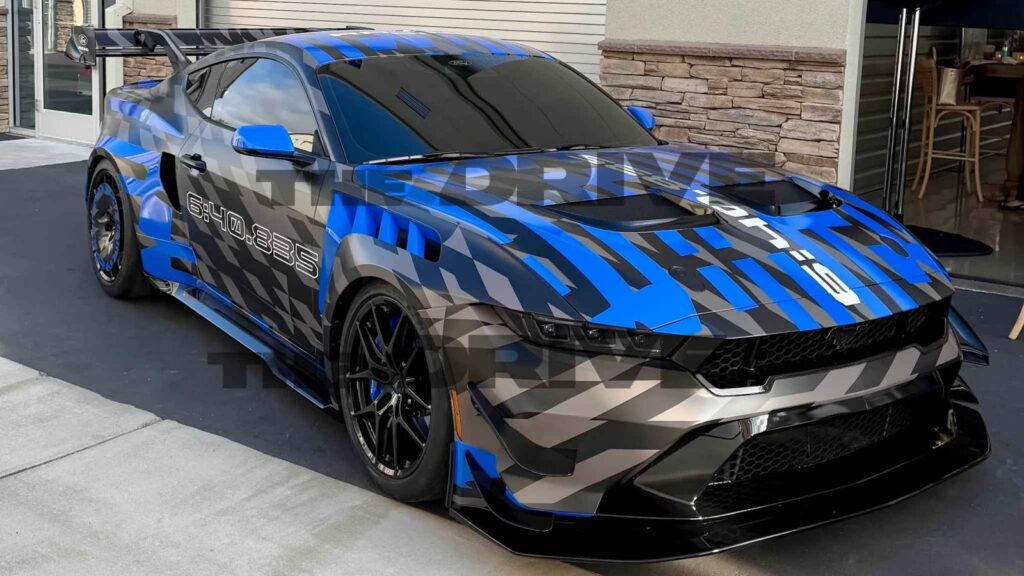
The Ford Mustang GTD Competition has added a sharp new line to the modern American performance story.
Its Nürburgring Nordschleife lap of 6:40.835 wasn’t just quick for a Mustang, it put the car ahead of some of the most serious production machinery to come out of the United States.
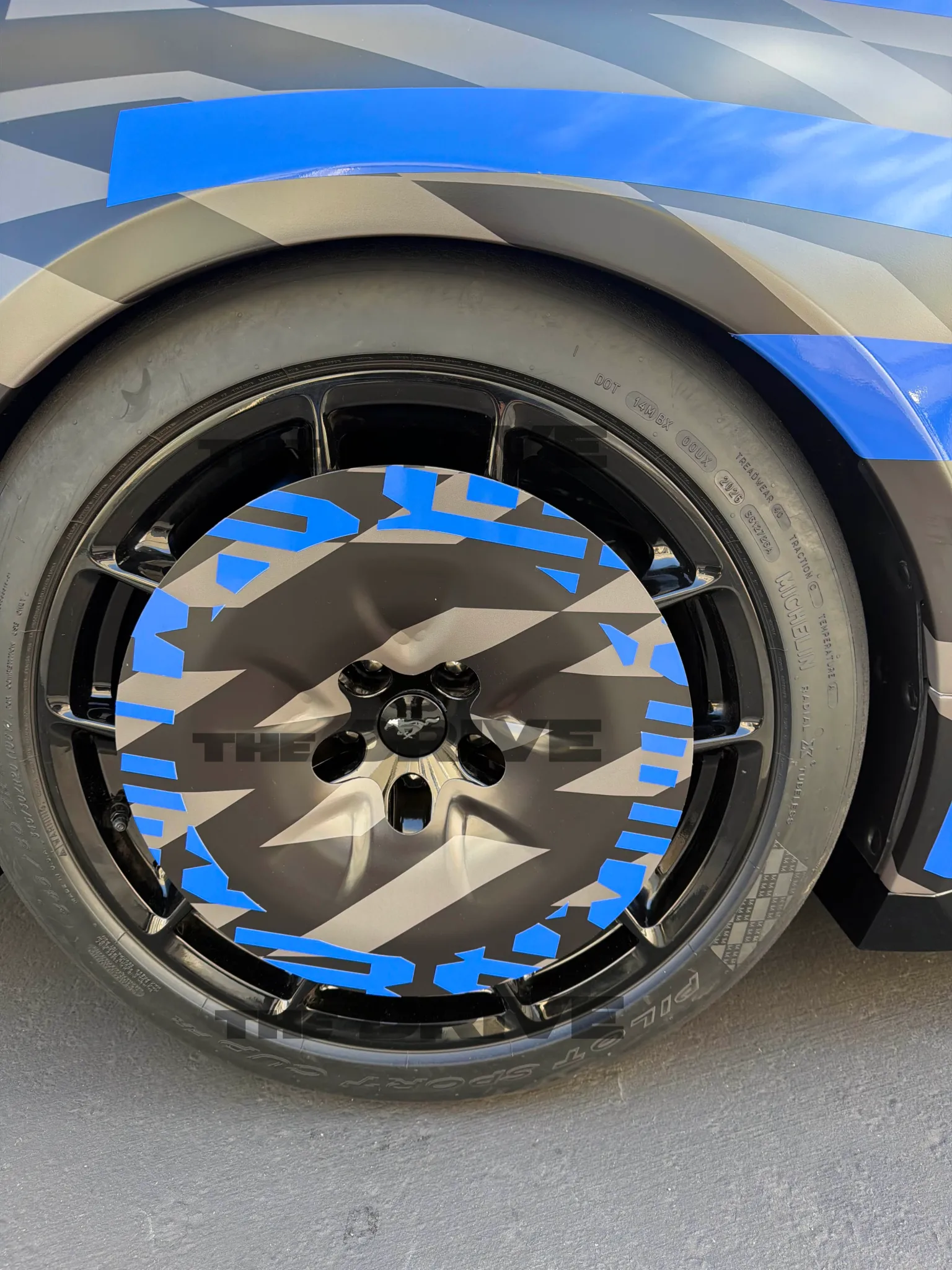
Just as importantly, Ford has now shown the exact car from the run wearing road-compliant Michelin Pilot Sport Cup FR tyres, settling one of the biggest questions around the lap.
At a glance
- Ford Mustang GTD Competition set a Nürburgring Nordschleife lap time of 6:40.835.
- The record car ran on street-legal Michelin Pilot Sport Cup FR tyres, not slick racing rubber.
- Driven by Multimatic racer Dirk Müller, it becomes the fastest American production vehicle around the circuit.
Road-legal tyres answer the biggest question
Ford displayed the record-setting Mustang GTD at Monterey Car Week fitted with the same Michelin Pilot Sport Cup FR tyres used for the Nordschleife attempt.
The tyres showed the kind of evidence track drivers recognise immediately, including outer-edge heat wear and rubber feathering from the lap.
That detail matters because the Nürburgring is as much a credibility test as a timing exercise.
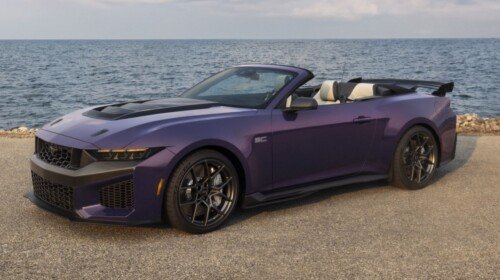
A lap this quick on compliant road tyres gives the GTD Competition a more relevant claim than it would have had on slicks, especially for a car positioned as a production model rather than a circuit-only special.
A Mustang built for the Nordschleife
The GTD Competition package pushes the already extreme Mustang GTD further into track-focused territory.
Its supercharged 5.2-litre V8 makes more than the base GTD’s 815 horsepower, though Ford has not detailed the exact output in this context.
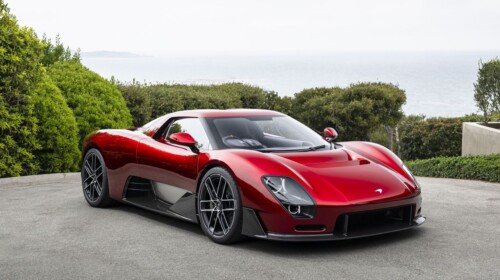
The aero package is more aggressive as well, adding secondary front dive planes, carbon-fibre rear aero discs and a recalibrated Drag Reduction System.
Weight reduction also plays a central role, with magnesium wheels, carbon-fibre bucket seats and lightweight active dampers all part of the package.
On a circuit like the Nordschleife, those changes are not decorative.
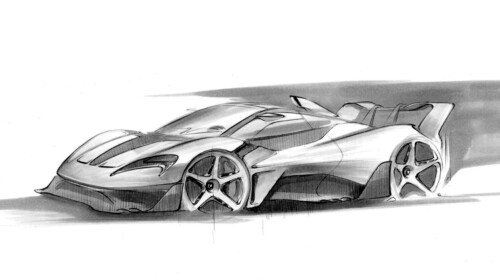
The lap rewards stability over crests, traction through uneven corners and confidence under heavy braking, which is why aero balance, unsprung mass and damper control become just as important as peak power.
How the lap reshapes the American performance hierarchy
Dirk Müller’s 6:40.835 run trimmed more than 11 seconds from the standard GTD’s previous benchmark.
It also put the Mustang ahead of the 1,250-hp, all-wheel-drive Chevrolet Corvette ZR1X, which has a recorded lap time of 6:49.275.
That margin of more than eight seconds is substantial at this level.
For Ford, the achievement reframes the Mustang GTD Competition as more than a halo version of a familiar badge.
It places the car directly into the conversation around the world’s most serious road-legal track machines, while still carrying the cultural weight of the Mustang name.
Details & Specifications
| Brand | Ford |
|---|---|
| Model | Mustang GTD Competition |
| Engine | Supercharged 5.2-litre V8 |
| Output | More than the base Mustang GTD’s 815 hp |
| Tyres | Michelin Pilot Sport Cup FR, road-compliant |
| Nürburgring lap time | 6:40.835 |
| Driver | Dirk Müller |
| Aero updates | Secondary front dive planes, carbon-fibre rear aero discs, recalibrated DRS |
| Weight-saving features | Magnesium wheels, carbon-fibre bucket seats, lightweight active dampers |
The GTD Competition’s lap is the sort of number that will be debated in garages and paddocks for years, but the tyre confirmation gives it a firmer footing.
For Mustang loyalists, it’s a landmark moment; for the wider performance world, it’s proof that America’s most recognisable pony car nameplate can now play at the sharpest end of the Nürburgring game.