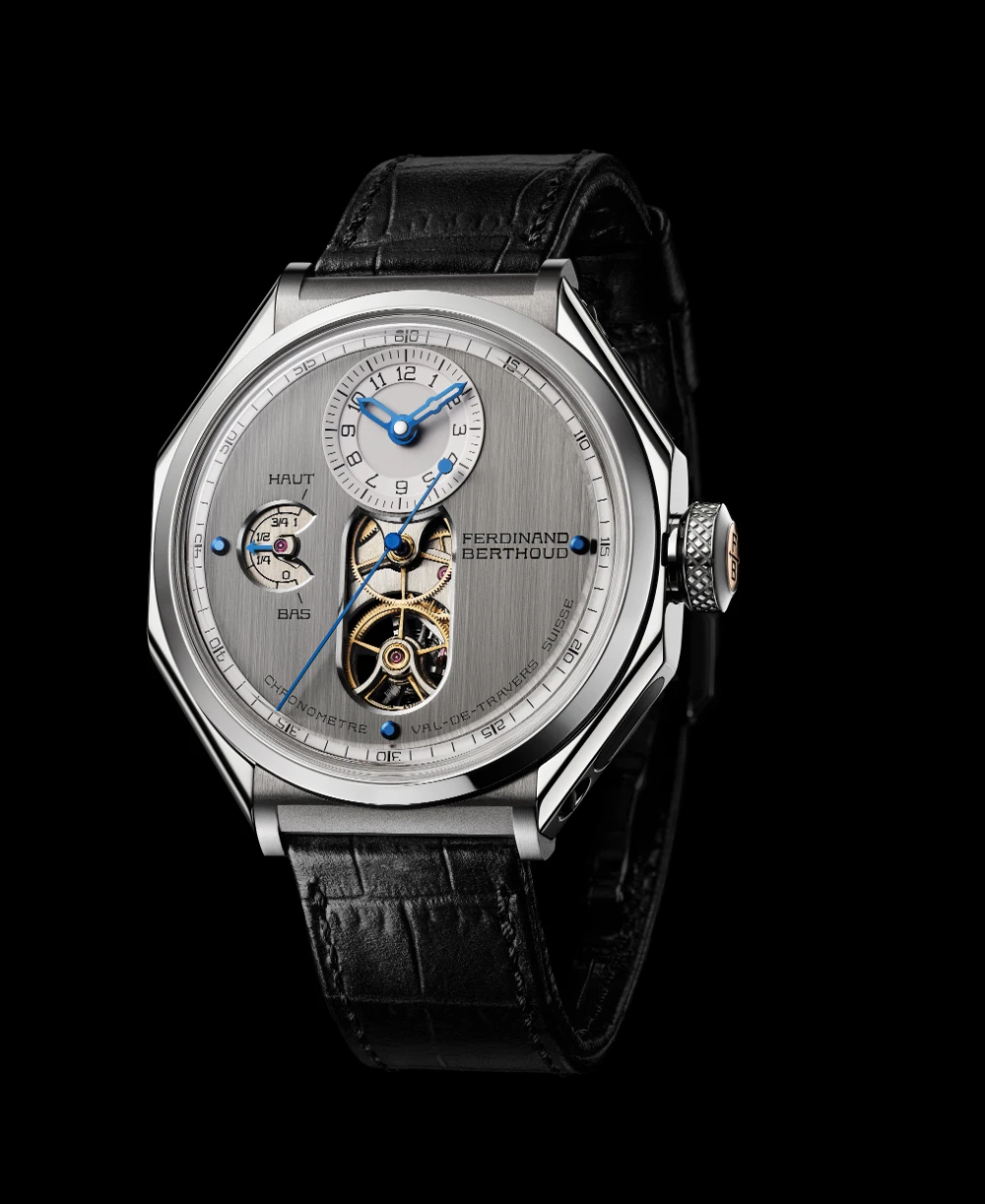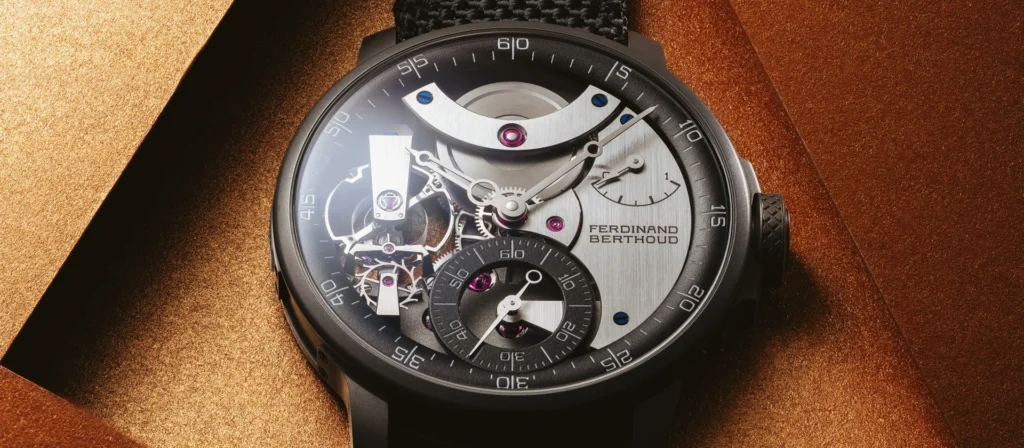
Ferdinand Berthoud has added a sharper, more technical expression to the Chronomètre FB 3SPC family.
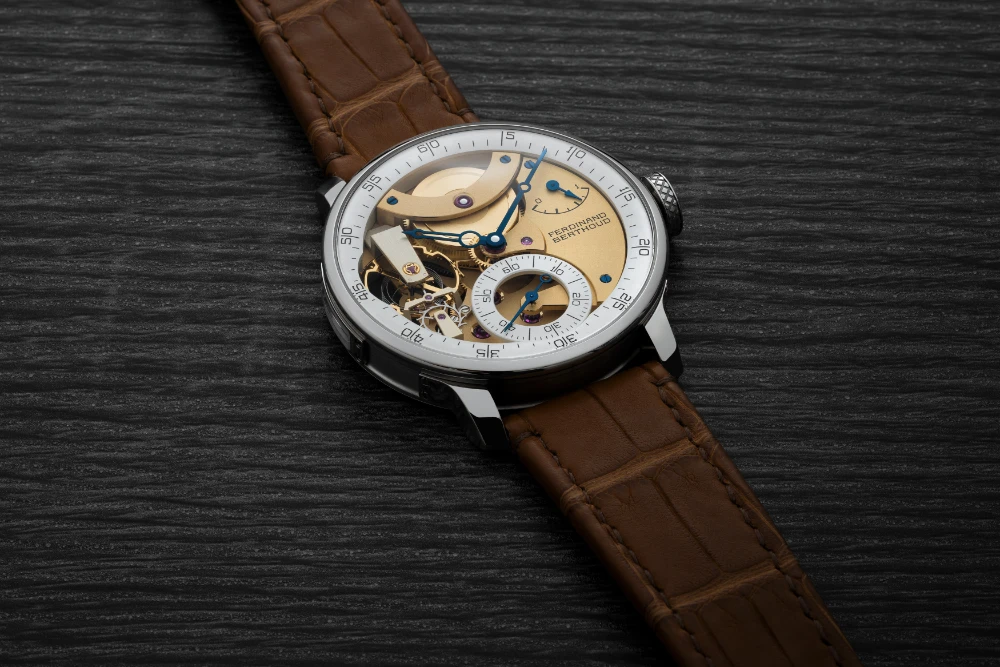
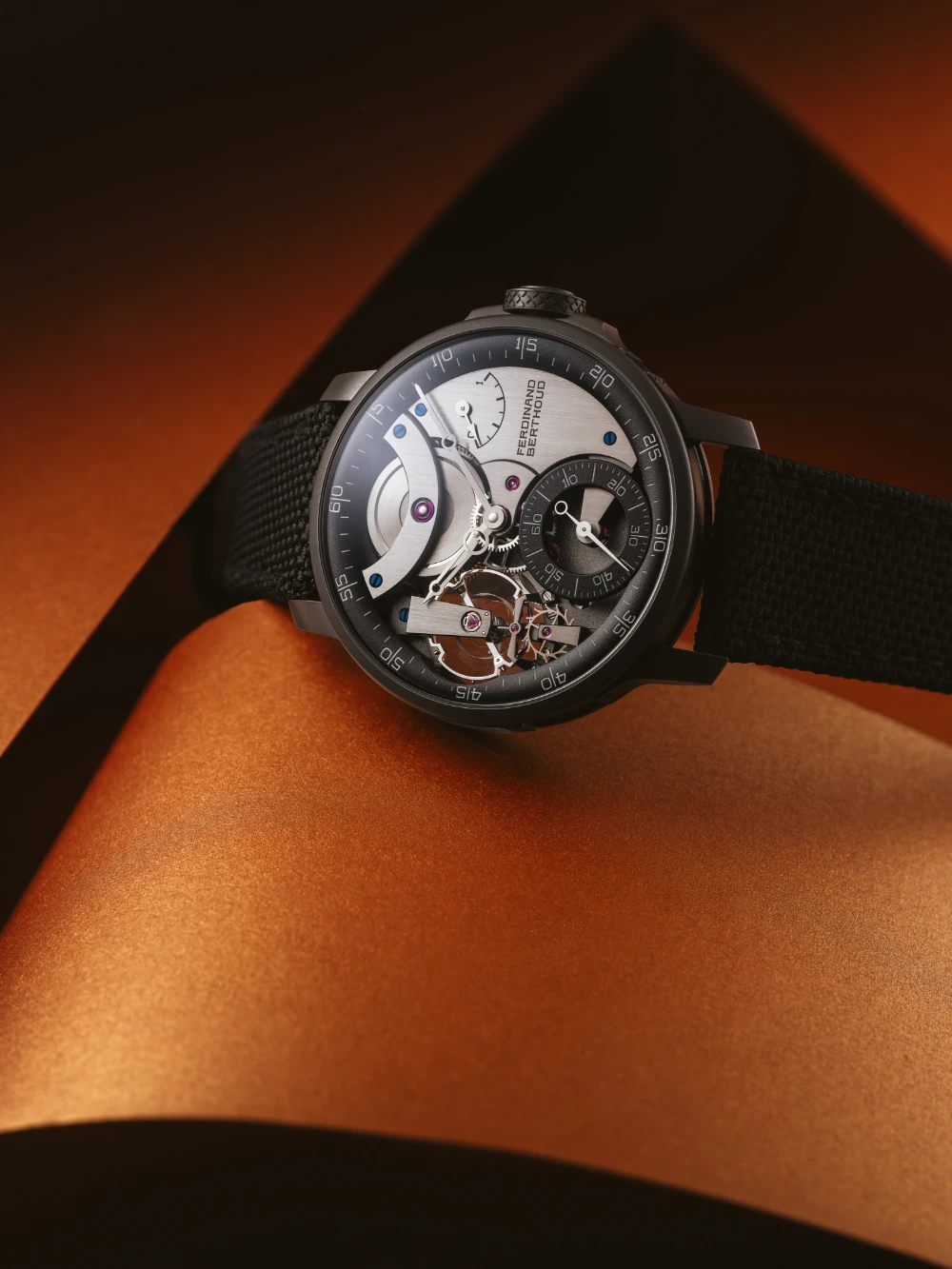
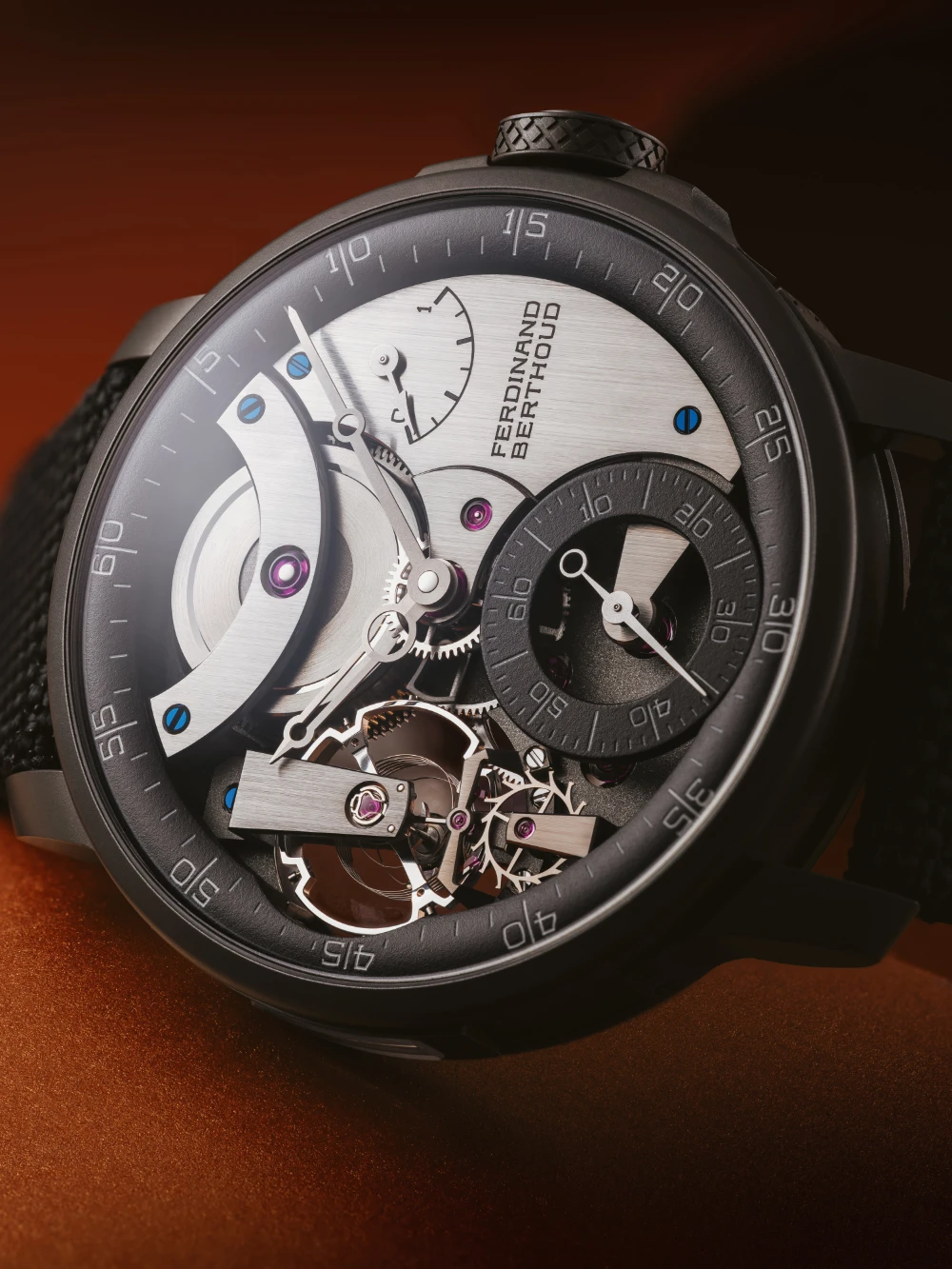
The new FB 3SPC.4-1 arrives in ceramised titanium, bringing a darker contemporary tone to one of the more intellectually serious chronometers in modern independent watchmaking.
Its appeal isn’t just material novelty, though. This is a watch built around a difficult regulating organ with deep marine chronometer roots, adapted for the far less predictable life of a wristwatch.

At a glance
- Ferdinand Berthoud has introduced the Chronomètre FB 3SPC.4-1 in ceramised titanium for Geneva Watch Days.
- The watch uses the FB 3SPC architecture with a cylindrical balance spring and COSC chronometer certification.
- The FB 3SPC collection was launched in 2022 and won the GPHG Chronometry Prize in 2023.
A contemporary material for the FB 3SPC
The FB 3SPC.4-1 continues Ferdinand Berthoud’s habit of treating case material as more than a cosmetic afterthought.
Ceramised titanium gives the watch a modern technical character while keeping it within the broader language of the maison, where historical horology is rarely allowed to look nostalgic.
That distinction matters for Ferdinand Berthoud.
Since its modern revival in 2015 under Karl-Friedrich Scheufele, the brand has built watches that acknowledge 18th-century chronometry without simply reproducing antique forms.
The first FB 1 set that tone with a marine chronometer-inspired case, a pillar-style movement, a tourbillon, direct-drive central seconds and a fusee-and-chain transmission.
The FB 3SPC family took a different route, moving the attention from constant force to the regulating organ itself.
The cylindrical balance spring challenge
The defining feature of the Chronomètre FB 3SPC is its cylindrical balance spring.
This type of spring has strong historical relevance within precision timekeeping, appearing in marine chronometers including Ferdinand Berthoud’s No. 54.
In a ship’s chronometer mounted in a gimbal, the mechanism remains broadly horizontal even as the vessel moves.
That stable position suits a cylindrical hairspring, which can develop more concentrically than a conventional flat spring and support better isochronism.
A wristwatch presents a much harder problem.
On the wrist, the movement constantly changes position, and the height of a cylindrical spring can make it vulnerable to gravitational distortion.
Ferdinand Berthoud’s answer was not to dilute the idea, but to spend three years developing a version capable of passing formal chronometer testing.
The result was the first wristwatch fitted with a cylindrical balance spring to receive COSC chronometer certification.
Hand-shaped curves and chronometer intent
The technical work behind the FB 3SPC is unusually tactile for such a precision-led project.
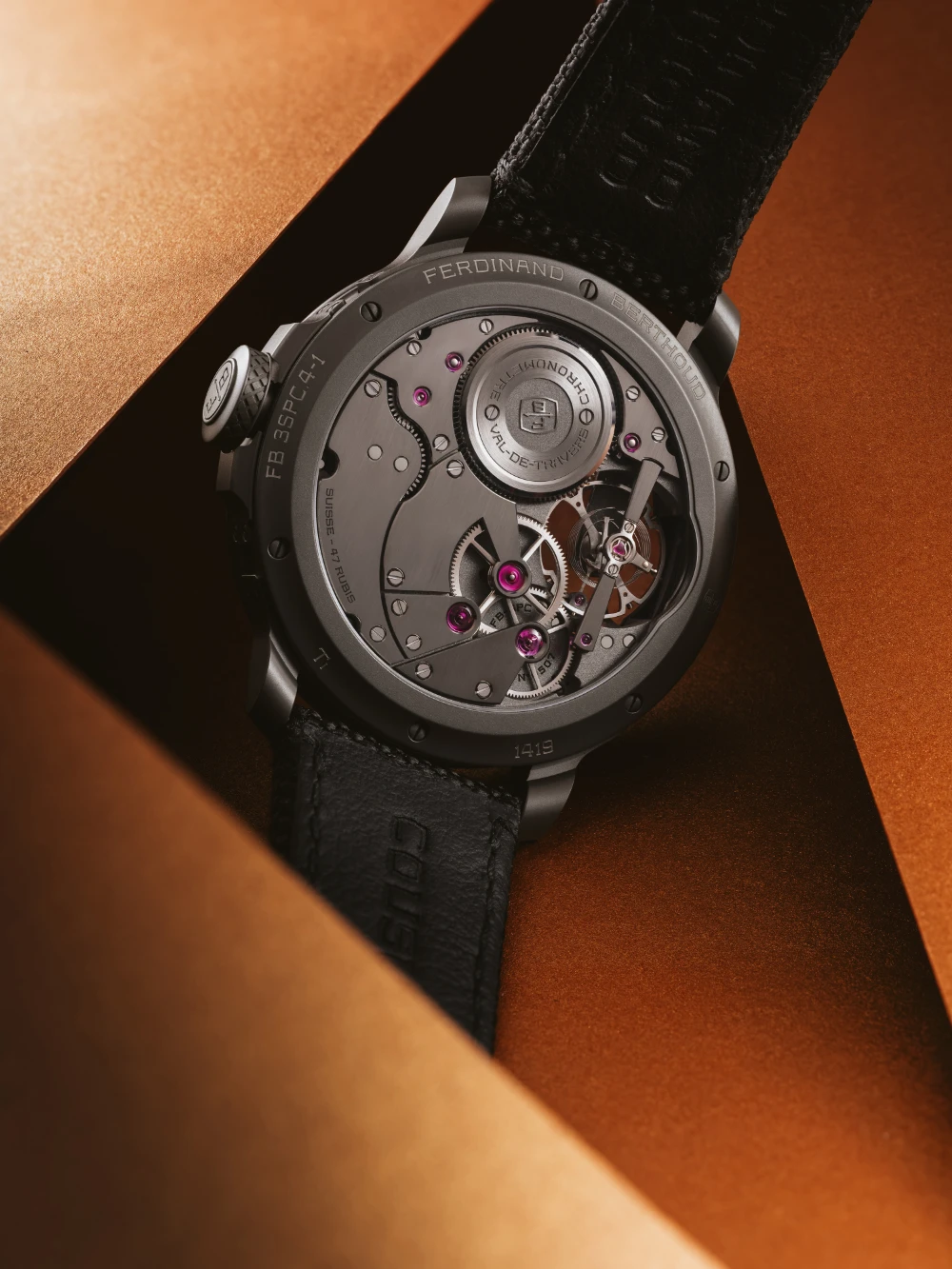
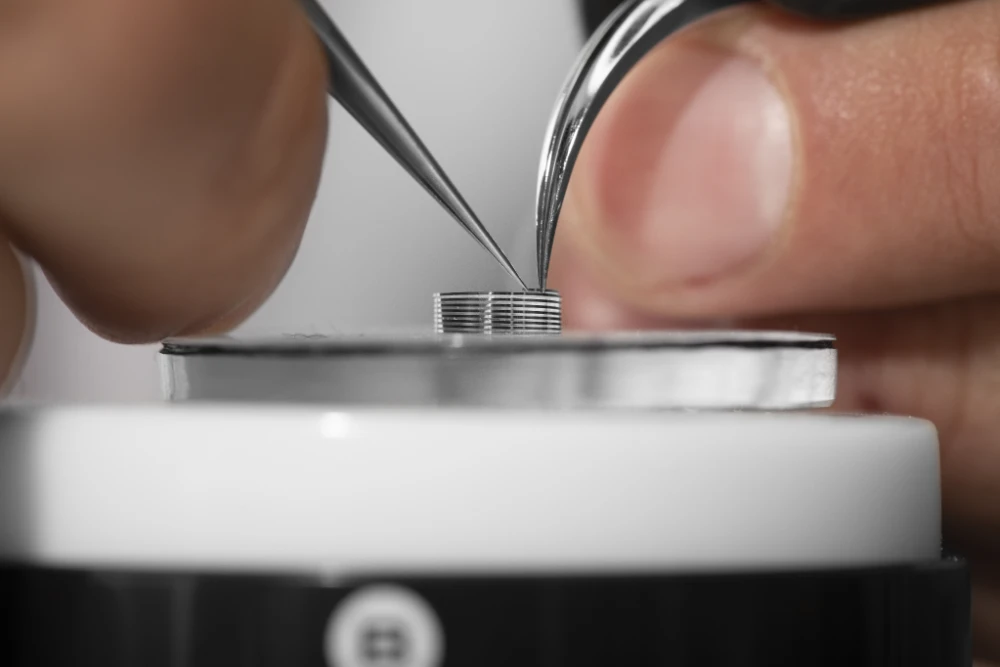
Each cylindrical balance spring is made with two terminal curves, formed by hand under 20-times magnification.
Each curve requires three bends, making six hand-formed bends across the two terminal curves.
That detail is central to the watch’s character because it shows the meeting point between mathematical precision and artisanal adjustment.
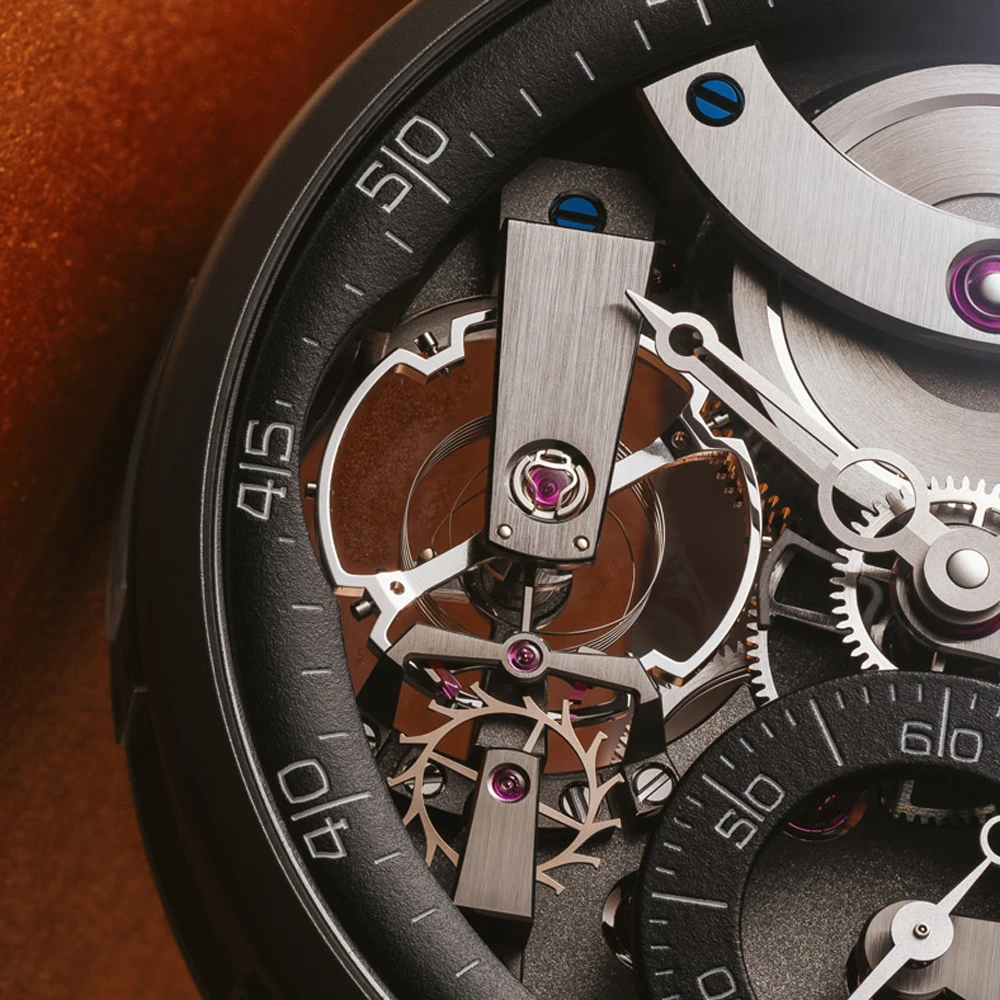
The maison also developed a specific collet intended to reduce mass and position that mass as close as possible to the centre of the balance wheel axis.
In a watch like this, those microscopic decisions are the story.
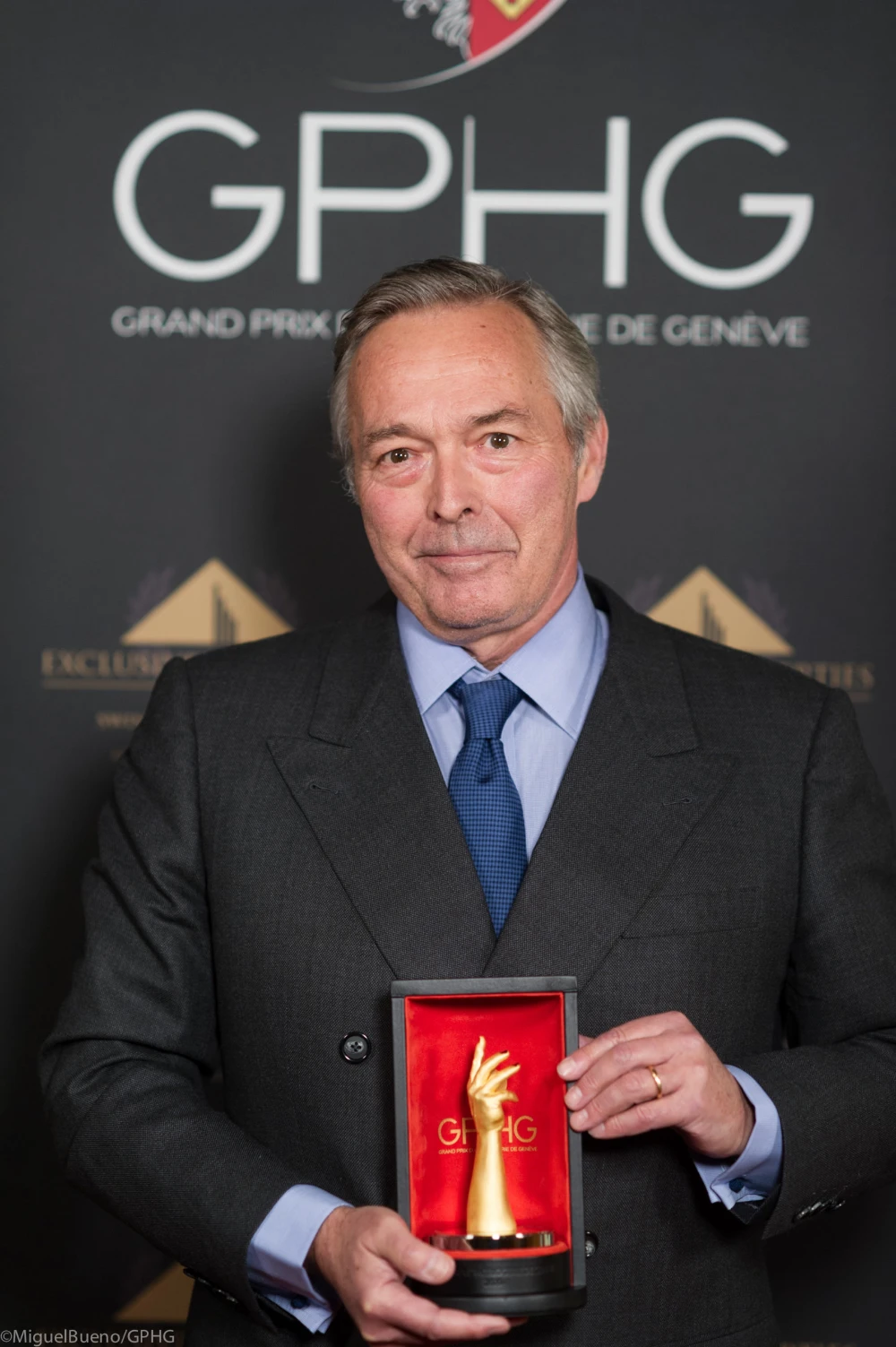
The FB 3SPC’s recognition at the 2023 Grand Prix d’Horlogerie de Genève, where it received the Chronometry Prize, confirmed the seriousness of the concept beyond its visual drama.
Where the FB 3SPC.4-1 sits in the collection
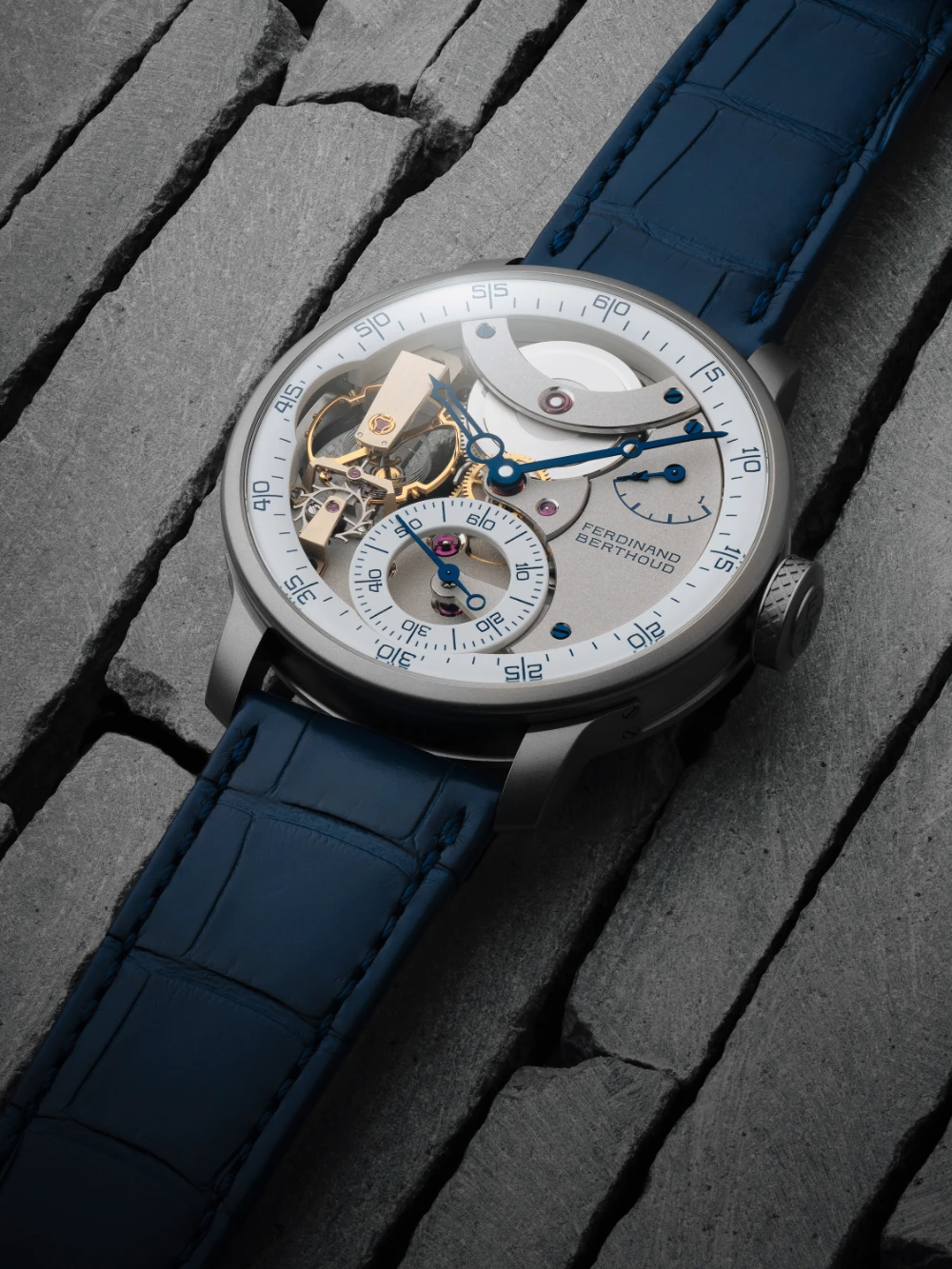
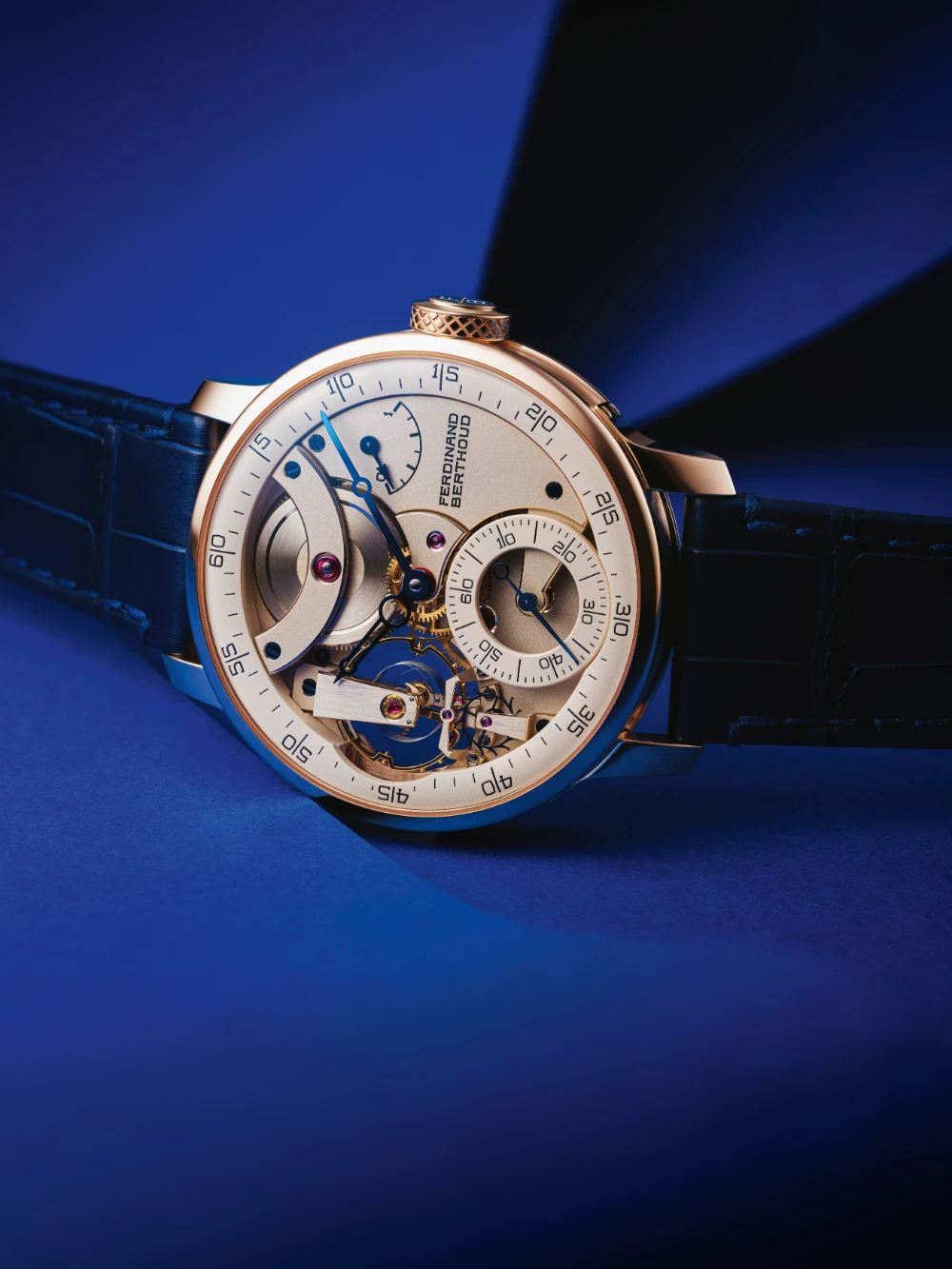
The ceramised titanium FB 3SPC.4-1 broadens the personality of the collection rather than replacing earlier interpretations.
Ferdinand Berthoud has consistently offered its watches in different materials and finishes, giving collectors a choice between warmer, more classical executions and cooler, more technical ones.
This new version should speak to collectors who value chronometry as a discipline, but who don’t necessarily want that discipline wrapped in a traditional precious-metal case.
It is also a reminder that the FB 3SPC is not a simple heritage exercise.
Its historical references are real, but the watch is fundamentally concerned with solving an old chronometric problem under modern wristwatch conditions.
Details & Specifications
| Brand | Chronométrie Ferdinand Berthoud |
|---|---|
| Model | Chronomètre FB 3SPC.4-1 |
| Case material | Ceramised titanium |
| Collection | FB 3SPC |
| Regulating organ | Cylindrical balance spring with two hand-formed terminal curves |
| Certification | COSC chronometer certified |
| Recognition | FB 3SPC awarded the GPHG Chronometry Prize in 2023 |
| Launch context | Introduced for Geneva Watch Days |
For a certain kind of collector, the FB 3SPC.4-1 will be compelling precisely because it doesn’t chase easy spectacle.
It is a technical watch with historical memory, contemporary materiality and a regulating system that rewards close study.