
There’s a point in the European winter when the charm wears thin.
Cape Town answers that moment with summer, but its appeal isn’t only about swapping grey skies for warmer weather. The city gives you scale in a way many winter-sun escapes don’t, with beaches, wine estates, mountain trails and a proper urban pulse all within easy reach.
For travellers looking at villas rather than hotels, the argument has become even stronger.

At a glance
- Cape Town’s summer runs from November to March, making it a natural escape when Europe moves into winter.
- The Atlantic Seaboard, especially Clifton and Camps Bay, is the key villa territory for ocean views, beach access and mountain backdrops.
- December and January book early, while March can offer warm weather with thinner crowds and easier restaurant reservations.
The Atlantic Seaboard is the sweet spot
Most serious villa searches in Cape Town eventually narrow to the Atlantic Seaboard, particularly the stretch around Clifton and Camps Bay.
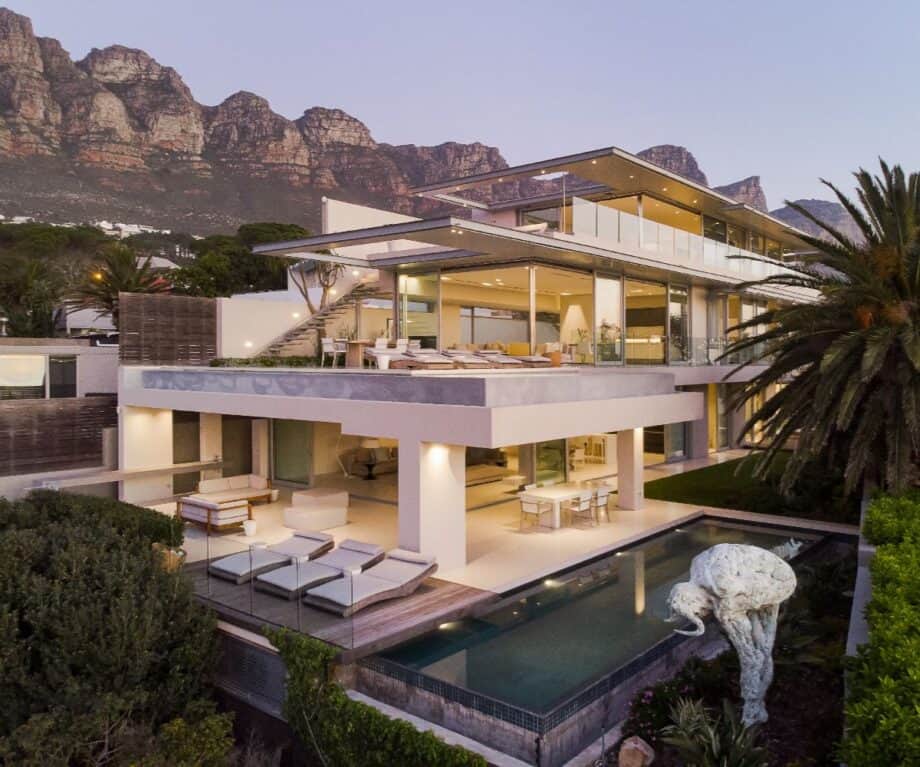
This is where the city’s visual drama is at its most concentrated, with the Twelve Apostles rising behind the coast and the Atlantic sitting directly in front.
The setting isn’t just about scenery.

The mountains help shelter this side of the peninsula from some of the harsher wind, which can mean calmer days, longer golden hours and a more convincing case for spending whole afternoons outside.
Clifton is the quieter, more discreet choice.
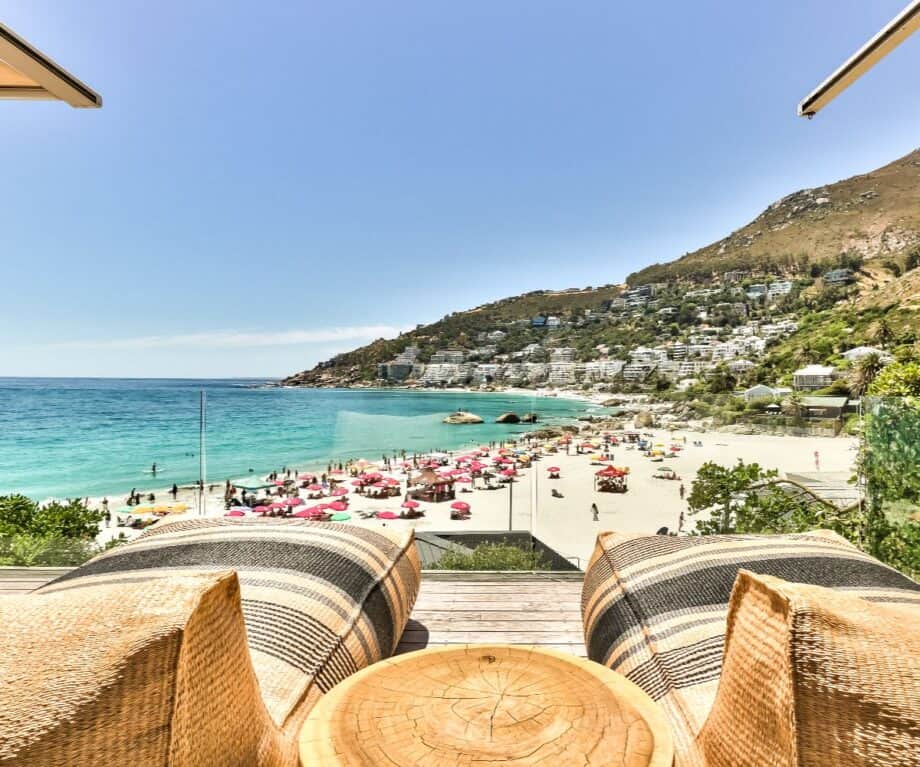
Its four coves are separated by large granite boulders, giving the beaches a protected, almost private rhythm even when the city is busy.
Camps Bay, just around the headland, has a different tempo.
Victoria Road fills with restaurants, bars and pavement tables in the evenings, giving the area a sociable energy that suits travellers who want dinner and a drink within easy reach of the villa.
Neither neighbourhood is the obvious winner for everyone.

Clifton is better for privacy and beach-first days, while Camps Bay makes more sense if you want the convenience and buzz of a livelier strip.
What the best Cape Town villas get right
The strongest properties along this coast are designed around the view.
Expect long decks, wide glass, outdoor dining areas and pools positioned to make the Atlantic feel like part of the house rather than something glimpsed from a balcony.
A private pool is less of a bonus here than a baseline expectation at the upper end of the market.
Private chefs are also increasingly part of the experience, especially for families and groups who don’t want to turn every evening into a restaurant booking exercise.
The practical details matter more than they might appear on a listing.
In Clifton, where homes are tucked into a steep hillside, secure parking, easy access and a direct route to the beach can be more valuable in daily use than an extra bedroom.
Cape Town also works particularly well for multi-generational travel.
Many villas have en suite bedrooms, separated living areas and layouts that let different generations keep their own pace without feeling scattered across a resort.
The city gives you more than a coastline
The reason Cape Town stands apart from more static beach destinations is that the villa doesn’t have to be the whole holiday.
It can be the base.
Constantia’s vineyards sit just inland, close enough for a relaxed lunch, tastings and mountain views without turning the day into a major excursion.
Table Mountain adds another dimension entirely, whether you hike in summer conditions or take the cable car up for the city-and-sea panorama.
Then there’s the drive down the Cape Peninsula towards Cape Point.
It brings together cliff roads, coastal villages and the penguins at Boulders Beach in a way that makes the city feel much larger than a beach break, but still easy to navigate from the Atlantic Seaboard.
When to go for the best villa stay
December and January are peak Cape Town.
The weather is warm, the city is lively and the best-positioned villas in Clifton and Camps Bay can be taken well in advance.
For beachfront Clifton properties during the busiest weeks, planning six to eight weeks ahead is a sensible minimum, and longer lead times can make a real difference for the most desirable houses.
March is the more quietly compelling choice.
The crowds thin, restaurants become easier to enjoy and the weather often remains comfortably warm, with plenty of sun and a softer pace across the city.
For travellers with flexible dates, it may be the best balance of climate, availability and atmosphere.
Cape Town’s appeal as a winter escape isn’t that it does one thing perfectly.
It’s that it lets you have a beach house, a city, a wine region and a mountain landscape in the same trip, with only a small time-zone adjustment for UK travellers.
When Europe settles into its coldest stretch, that combination starts to look less like an indulgence and more like the most rational plan on the table.