Porsche isn’t treating the next 911 GT3 RS like a gentle update.
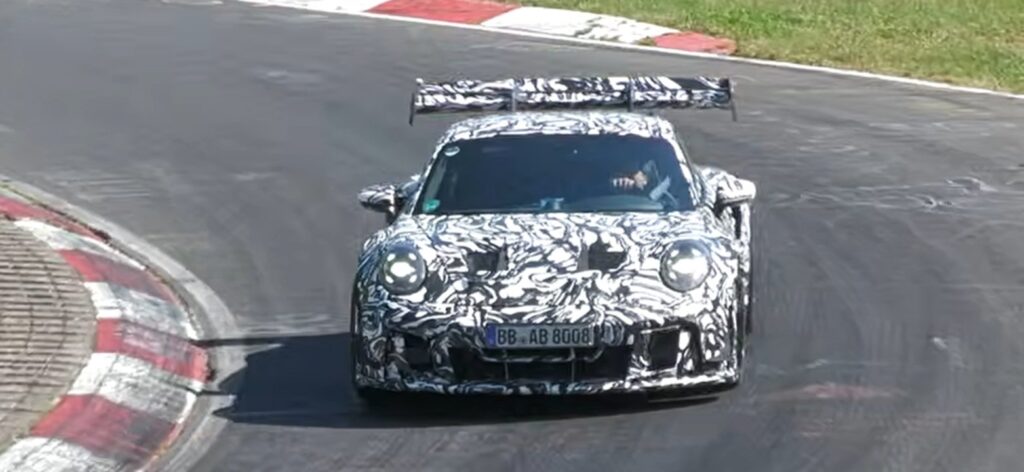
The 992.2-generation car has been seen lapping the Nürburgring at serious pace, with multiple test drivers pushing camouflaged prototypes through the circuit’s faster sections and heavy braking zones.
For a car built around lap time, stability and repeatability, this kind of development work is exactly where the interesting details start to show.

At a glance
- The 2027 Porsche 911 GT3 RS 992.2 is undergoing intensive track testing at the Nürburgring.
- Visible updates point to revised front aero, cooling changes and a subtly reworked rear wing.
- No major engine or transmission changes are currently expected, keeping the focus on chassis and aerodynamic refinement.
Nürburgring laps sharpen the GT3 RS brief
The GT3 RS has always been the 911 that makes the fewest concessions to everyday softness, and the latest prototype activity suggests Porsche is tuning the 992.2 with the same single-minded approach.
The Nürburgring remains a natural laboratory for this kind of car, combining long high-speed sections, compressions, kerbs and braking zones that expose weaknesses quickly.
Recent running has shown the prototype being driven hard rather than merely circulated for systems checks.

The exhaust note also suggests Porsche is staying close to the familiar naturally aspirated character that defines the GT3 RS experience, even if final mechanical details have not been formally announced.
Revised aero appears to be the main story
Although the latest test car is heavily camouflaged, earlier less-disguised prototypes have given away some of the likely visual and functional changes.
The front end appears to be the area of greatest attention, with changes expected around the bumper and hood.
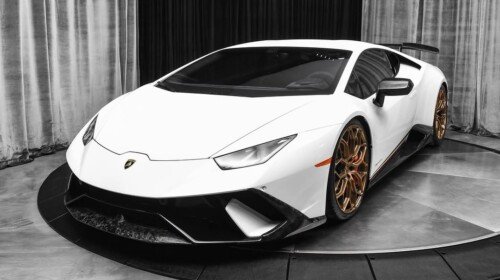
That points to a dual aim of increasing front-end downforce while improving cooling, both essential on a car designed to survive prolonged circuit use.
At the rear, the signature oversized wing remains central to the car’s identity, but it appears to have been subtly altered as Porsche continues refining the balance between drag, downforce and stability.
Large front brake discs are also visible, and they may be ceramic given the demands of a model that is expected to spend a meaningful amount of time on track.

Powertrain continuity puts pressure on the details
The most interesting possibility is that Porsche may not need a dramatic engine or transmission change to make the next GT3 RS quicker and more precise.
No major revisions to the engine and gearbox are expected at this stage, which would make the 992.2 update more about air management, braking confidence and chassis calibration.
That’s not a conservative path for a car like this.
At GT3 RS level, small changes to cooling flow, aero balance, brake consistency and tyre loading can make the car feel measurably different over a full lap.
Details & Specifications
| Brand | Porsche |
|---|---|
| Model | 911 GT3 RS |
| Generation | 992.2 |
| Model year | 2027 |
| Development focus | Track testing, aerodynamic refinement and cooling updates |
| Visible updates | Revised front bumper and hood, altered rear wing, large front brake discs |
| Testing location | Nürburgring |
| Engine and transmission | No major changes currently expected |
For buyers and collectors who value the GT3 RS as Porsche’s most focused road-legal track tool, the 992.2 looks set to refine a formula that was already operating at a very high level.
The changes may not be loud on paper, but on a circuit like the Nürburgring, the smallest aerodynamic and braking gains are often the ones that matter most.