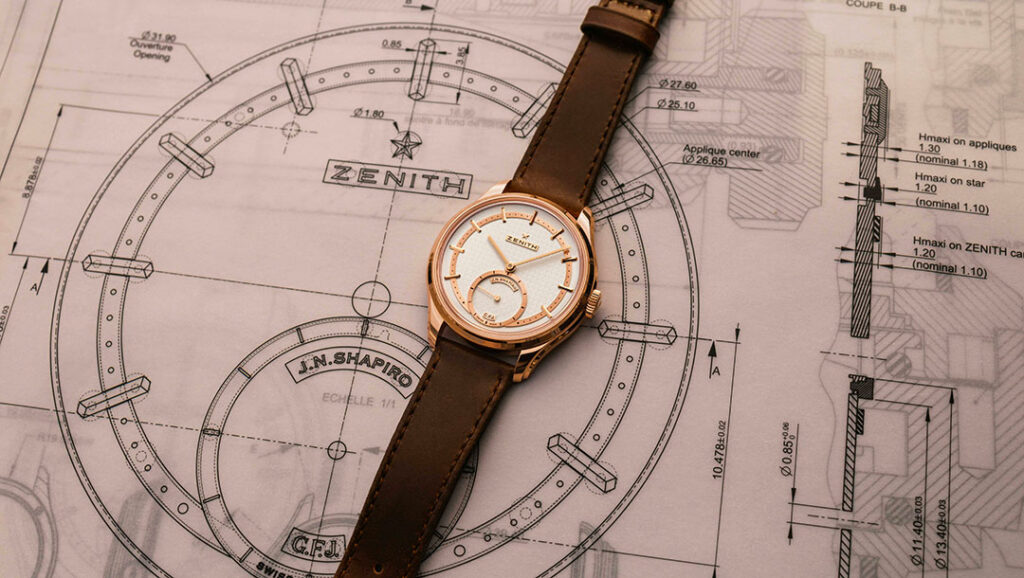
Zenith’s Double Signed program has found a particularly apt partner in Joshua N. Shapiro.
For its second edition, the brand has placed the G.F.J. Calibre 135 in the hands of the California-based independent watchmaker, whose reputation was built on deeply considered guilloché dials before his workshop expanded into movement development.
The result is a 25-piece rose gold watch that treats geometry not as ornament, but as the central character.
At a glance
- Zenith has created the G.F.J. Calibre 135 Double Signed with J.N. Shapiro as the second edition of its Double Signed program.
- The watch features a silver dial with three guilloché patterns made using rose engine and straight-line guilloché machines.
- The rose gold limited edition is restricted to 25 pieces and is powered by a COSC-certified manual calibre 135 with a 72-hour power reserve.
A classical Zenith shaped by California guilloché
The appeal here starts with a familiar tension in contemporary watchmaking.
Zenith’s G.F.J. Calibre 135 is rooted in a classic silhouette, while Shapiro’s dial work gives it a sharper and more graphic personality.
Founded in 2018, the J.N. Shapiro workshop made its name through guilloché before moving further into movement development, and that background is central to this collaboration.
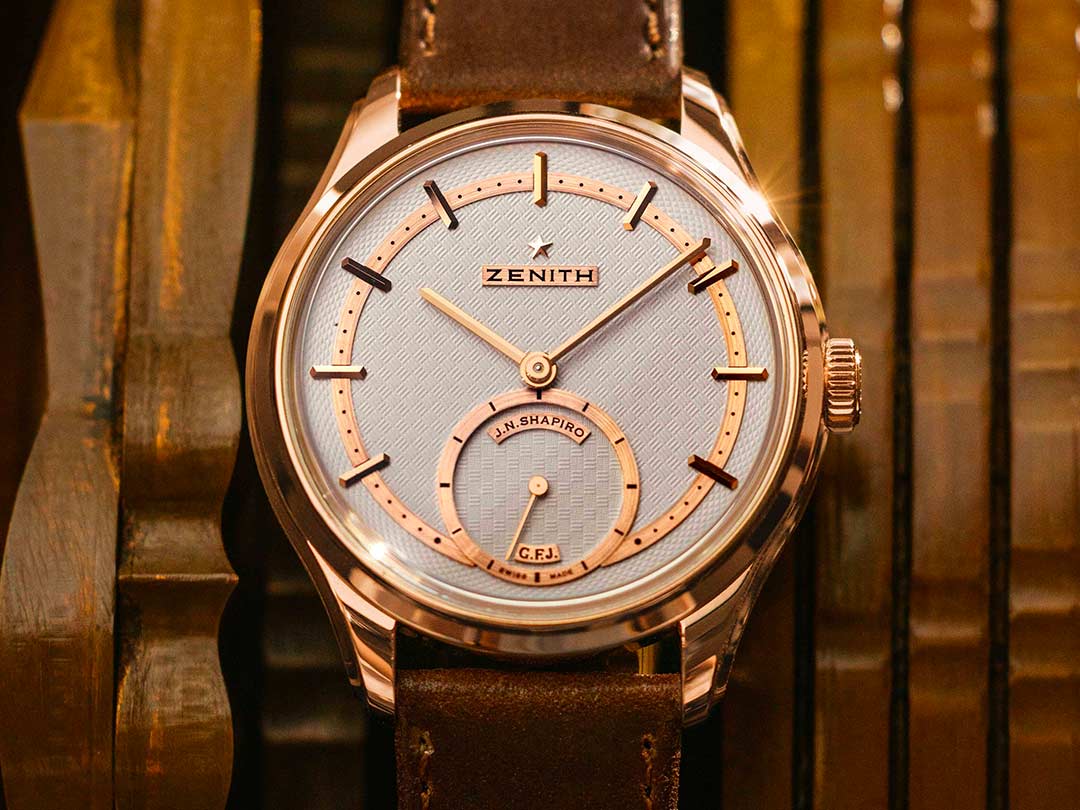
The silver dial is crafted on the West Coast of the United States and brings together three separate decorative patterns.
A barleycorn motif sits around the periphery, giving the outer dial a traditional frame with visible texture.
The centre uses a basketweave pattern, a woven composition that adds depth without pulling the eye away from the hour display.
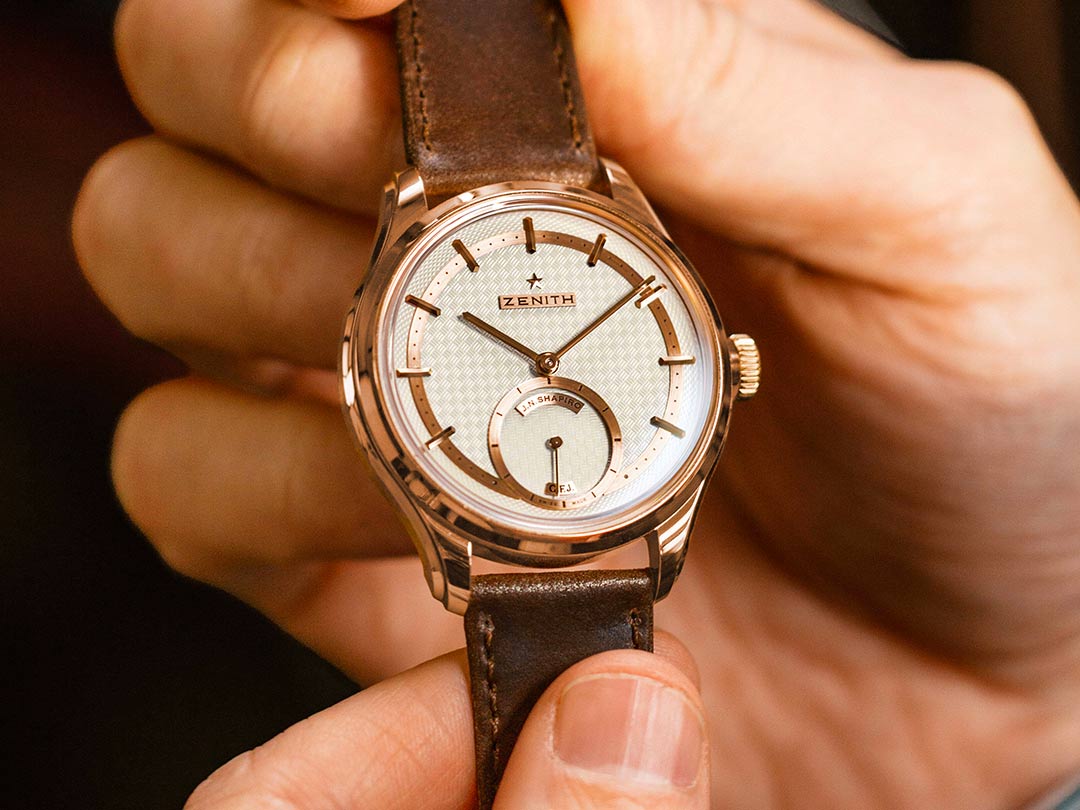
At 6 o’clock, the small seconds subdial carries Shapiro’s signature Infinity Weave, an intricate interlacing design that has become closely associated with his work.
Three patterns, one disciplined composition
Guilloché can easily become decorative noise when too many surfaces compete for attention.
On this watch, the variation in scale and rhythm is what keeps the dial controlled.
The barleycorn outer section, basketweave centre and Infinity Weave seconds register each have their own texture, but the dial remains organised by rose gold rings and hour markers.
Those applied rose gold elements also carry the two signatures, reinforcing the collaborative nature of the piece without turning the dial into a branding exercise.
Legibility matters especially on a watch with this much surface activity.
Here, the different reliefs enrich the face rather than obscure it, giving the watch a decorative density that still reads as balanced.
A movement finished with an American reference point
The 39.15mm rose gold case houses Zenith’s manually wound calibre 135.
The movement is COSC-certified and delivers a 72-hour power reserve, placing the decorative work around a serious chronometric base rather than making the dial the only story.
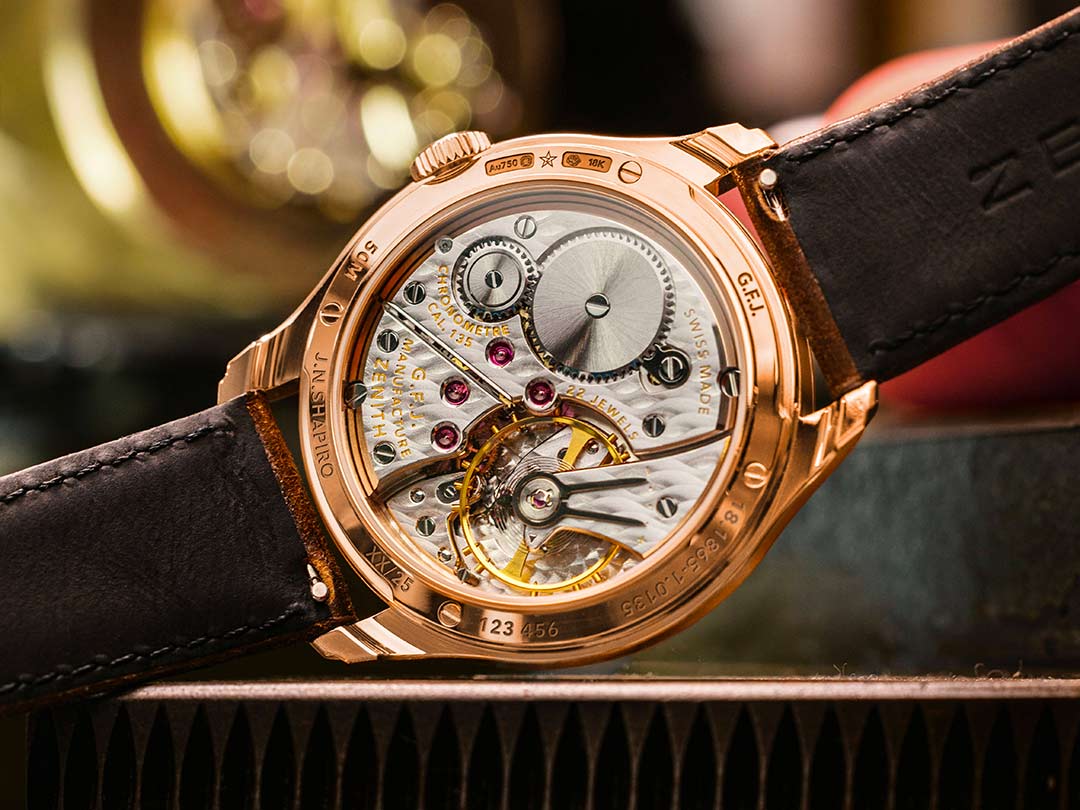
Through the sapphire crystal caseback, the bridges are finished with damaskeening.
That finishing choice is notable because it draws on historic American pocket watches, extending Shapiro’s influence beyond the dial and into the movement’s visual language.
It’s a subtle but important point in the watch’s identity.
This isn’t simply a Zenith case and calibre paired with an independent dial treatment, but a watch where American decorative traditions are allowed to shape both the front and back.
Details & Specifications
| Brand | Zenith |
|---|---|
| Model | G.F.J. Calibre 135 Double Signed with J.N. Shapiro |
| Case size | 39.15mm |
| Case material | Rose gold |
| Dial | Silver dial with barleycorn, basketweave and Infinity Weave guilloché patterns |
| Movement | Manually wound calibre 135 |
| Certification | COSC-certified |
| Power reserve | 72 hours |
| Caseback | Sapphire crystal caseback |
| Finishing | Damaskeening on the movement bridges |
| Production | Limited edition of 25 pieces |
The G.F.J. Calibre 135 Double Signed with J.N. Shapiro will appeal most to collectors who care about craft with a point of view.
It respects Zenith’s historic watchmaking language, but its character comes from the precision and restraint of Shapiro’s geometry.