Patina is one of the most powerful words in vintage watch collecting, because it describes the visible aging that can make one watch feel completely different from another.
At its best, patina is not damage or neglect, but the natural change in color, tone and texture that appears after decades of use, sunlight, heat, oxidation and wear.
The meaning of patina on a vintage watch
In watch terms, patina most often appears on the dial, bezel and luminous markers.

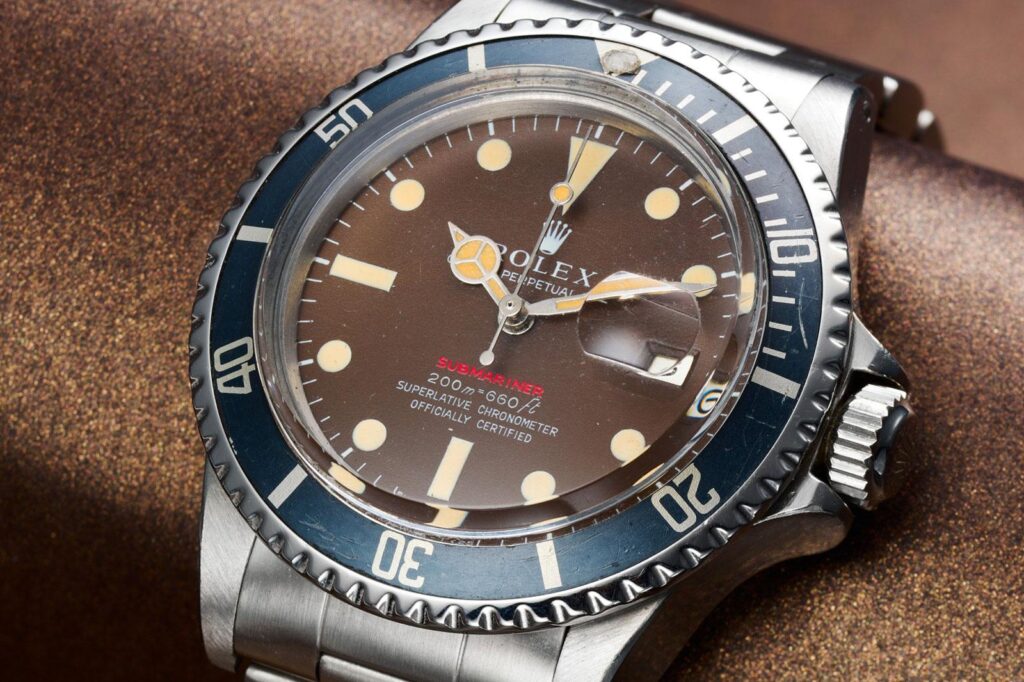
A black dial may slowly shift toward chocolate brown, a white dial may become warmer and creamier, and colored details can fade into entirely new shades.
The case and bracelet can also age visibly, though this depends heavily on the metal.
Steel tends to show scratches, dents and polishing history, while bronze and silver can tarnish dramatically as they react with air and skin.

Tropical dials, creamy lume and faded bezels
The most celebrated forms of patina usually come from materials that were never as stable as today’s watchmaking standards would demand.
Older dial paints and lacquers could react to UV exposure over long periods, creating what collectors often call a tropical dial.
That is why some vintage black dials have turned brown, while certain white, red or colored dials have drifted into yellow, pink or orange tones.

Luminous material tells a similar story.
Rolex and many other brands used tritium for decades, and those once-bright markers often age into cream, parchment or dull yellow tones.
On the right watch, that softened lume can bring the whole design together, especially when the hands and hour plots have aged consistently.

Bezels can be just as important.
The Rolex GMT-Master reference 1675 is famous for examples where the red portion of the Pepsi bezel has faded toward fuchsia, a quirk that can carry a meaningful premium when the color is strong.
When aging becomes damage
Not every mark is desirable, and this is where vintage buying becomes difficult.
Collectors tend to reward honest aging, but they are far less forgiving of moisture damage, corrosion, heavy restoration or artificial aging.
Water is especially problematic.
A decades-old watch that has been compromised by moisture can develop stains, rust and movement issues, which are very different from an evenly faded dial or warm tritium plots.
The line can be fine, which is why condition, originality and consistency matter so much.
A beautiful tropical dial loses much of its appeal if the rest of the watch raises questions.
Why collectors pay more for honest aging
Patina appeals because it gives a watch evidence of life.
A vintage Rolex Submariner, Omega Speedmaster or Heuer Monaco with the right signs of age does not feel like a modern object pretending to be old.
It carries the visible consequences of time, use and environment.
That individuality is a major part of the attraction.
Two new watches of the same model should look identical, but two vintage examples may differ completely after 40 or 50 years.
One might have orange lume, another a faded bezel, and another a dial that has turned a rich brown.
That uniqueness is also why patina can affect value.
Paul Newman’s own Rolex Daytona reference 6239 is often remembered not only for its provenance, but also for the way its dial aged into a warm creamy tone rather than remaining clinically fresh.
The strongest vintage watches are usually not the shiniest ones.
They are the pieces that remain correct, coherent and naturally aged, with enough character to separate them from the rest of the market.
For collectors, that is the real appeal of patina.