A good travel watch isn’t just a watch with an extra hand.
At its best, it lets you land, set local time quickly and keep a quiet eye on home without turning the dial into a puzzle.
These five watches approach the job in different ways, from approachable world time displays to hand-finished haute horlogerie with a rotating globe on the dial.
At a glance
- Five current travel watches show how differently brands interpret GMT, dual-time and worldtimer functions.
- The selection ranges from true GMT utility and daylight-saving adjustment to complex universal time displays.
- Prices span from EUR 4,995 for the Frederique Constant Classic Worldtimer Manufacture to CHF 380,000 for the Greubel Forsey GMT Balancier Convexe.
GMT, dual time and world time do different jobs
The most practical travel watches tend to fall into three camps.
A true GMT, sometimes called a traveller’s or flyer’s GMT, lets the wearer jump the local hour hand in increments while the watch keeps running, which is exactly what you want when crossing borders.
A dual-time watch usually displays home time and local time together, often with a day-night indicator to prevent accidental midnight phone calls.
A worldtimer goes broader, using a city ring and 24-hour scale to show the time across multiple places at once.
None is automatically better than the others, but the right choice depends on how you travel.
Tudor and Frederique Constant keep travel time approachable
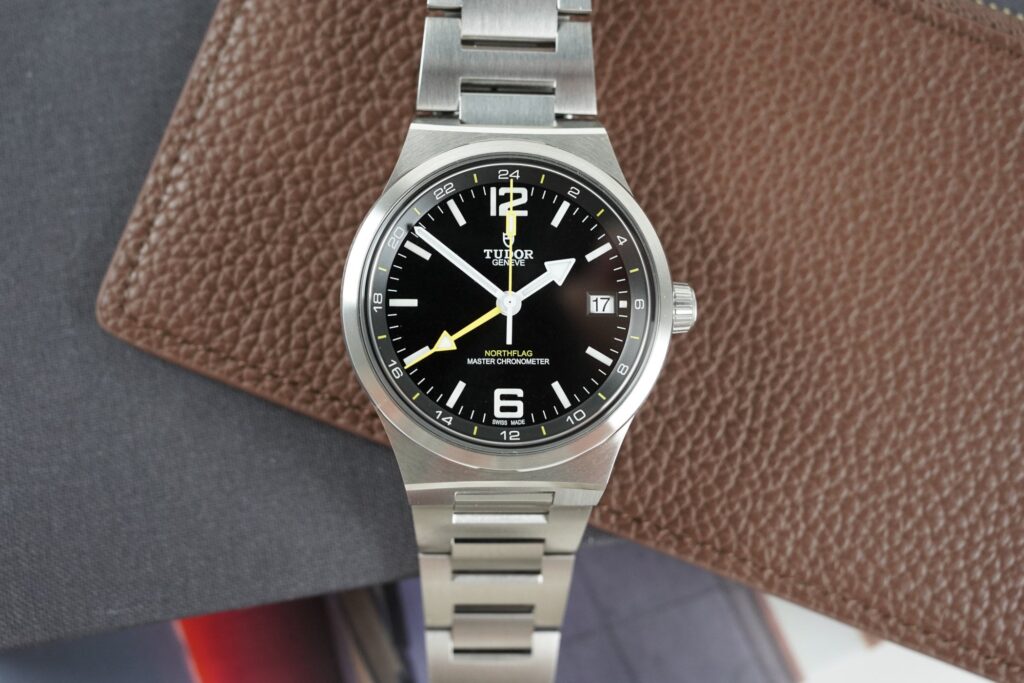
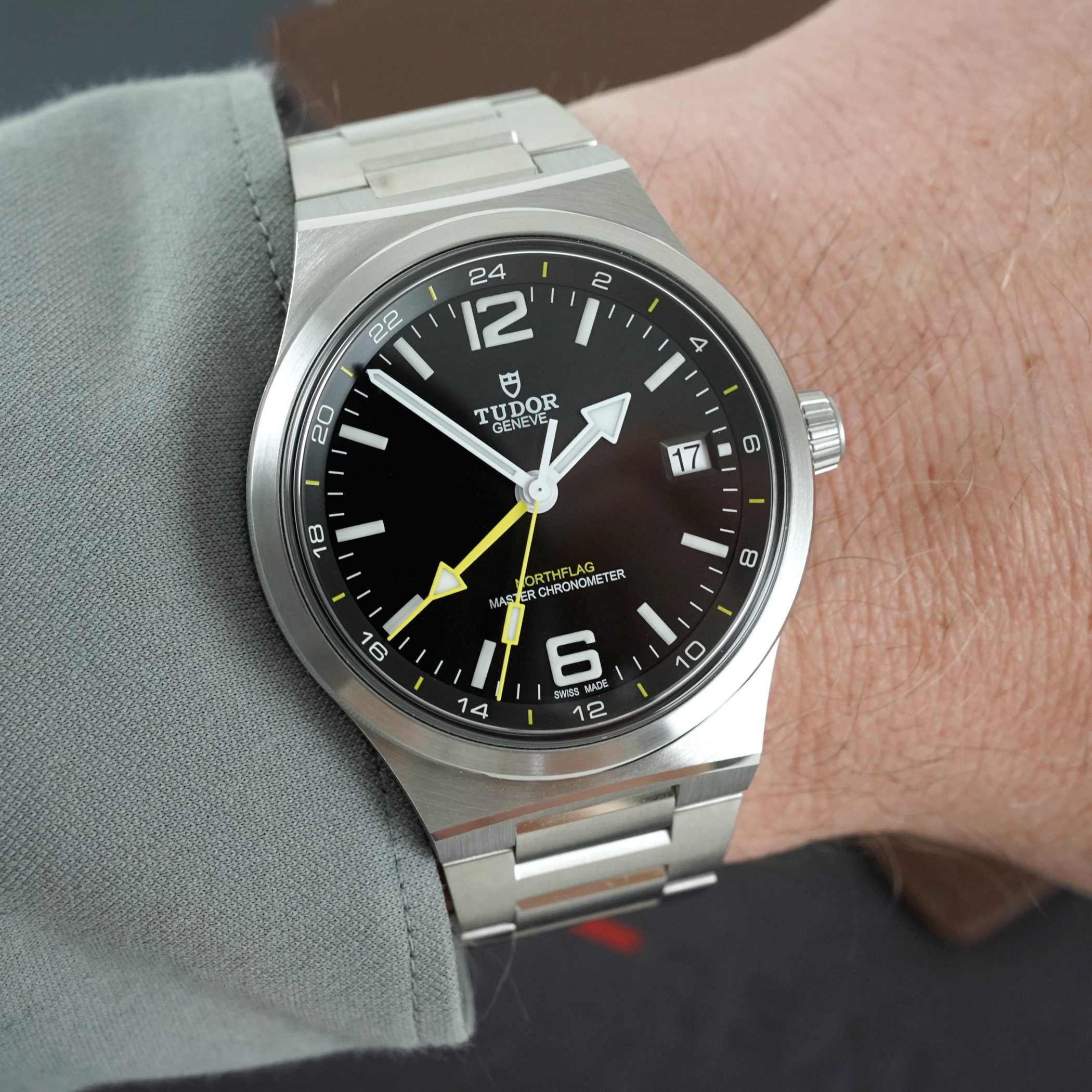
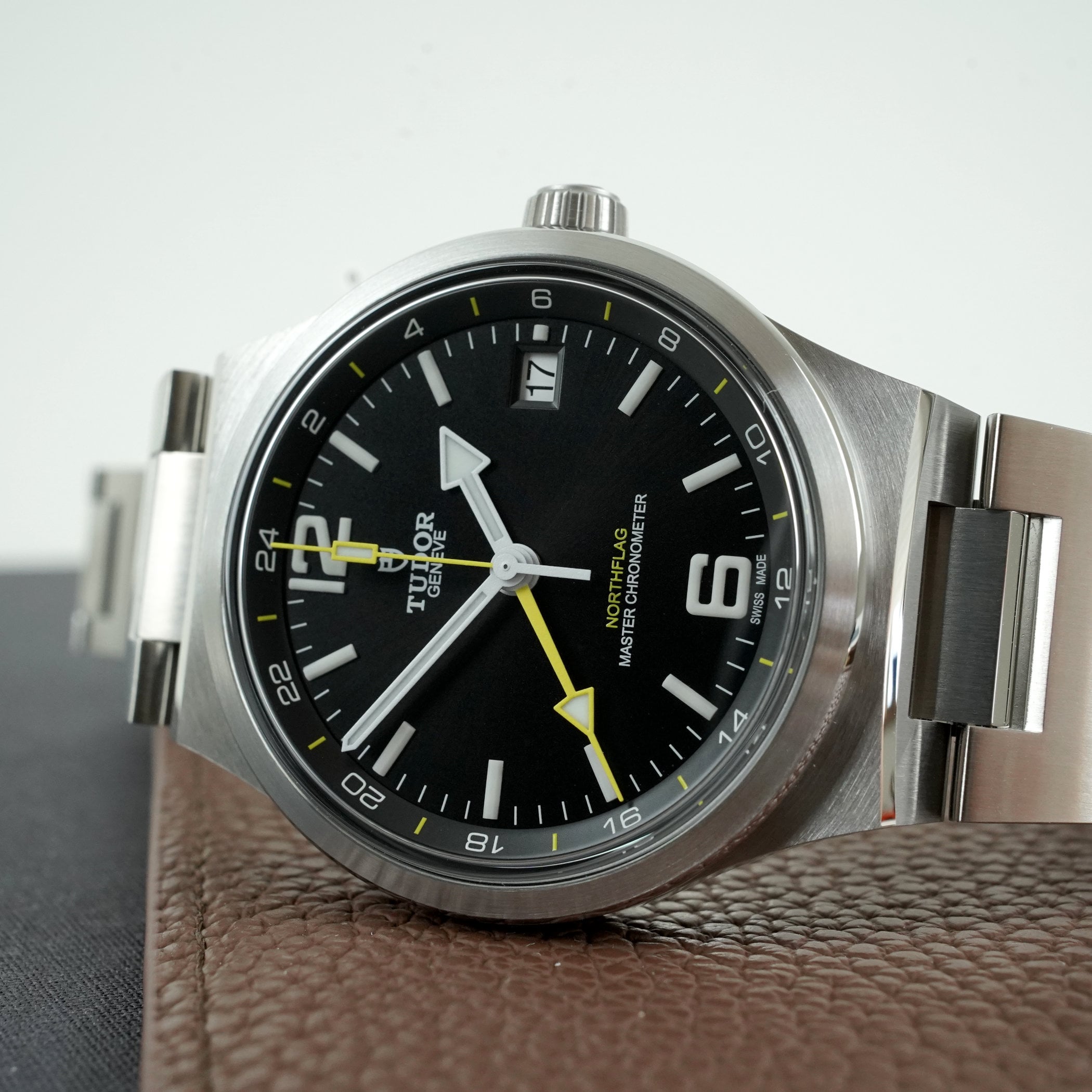
The Tudor Northflag GMT brings back a familiar name with a heavily revised specification.
The watch uses a 40mm stainless steel case measuring 12.7mm thick, with the black, white and yellow palette carrying the old North Flag spirit into a cleaner GMT format.
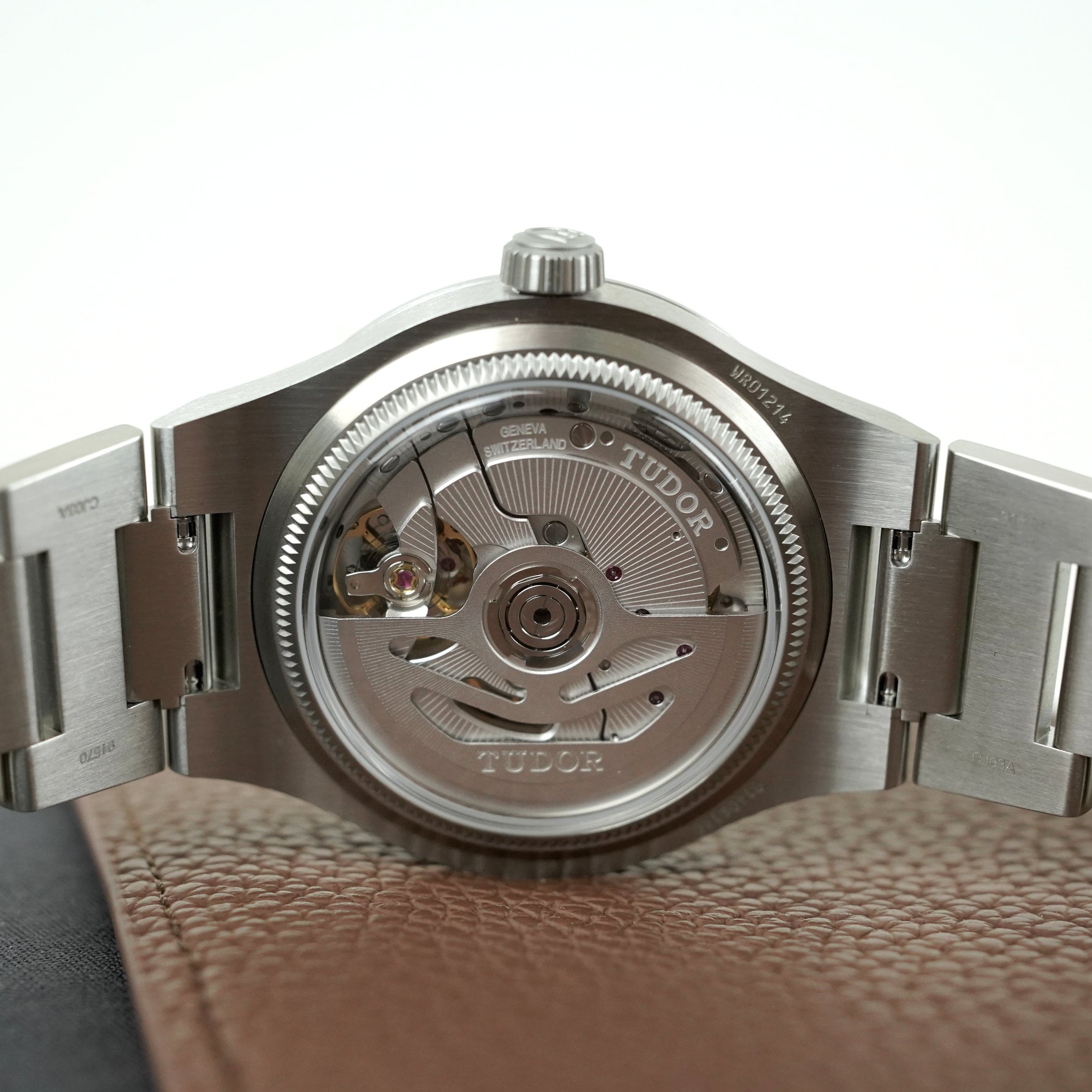
Its Calibre MT5652-U is a true GMT automatic movement, and the watch is certified by both METAS and COSC.
The integrated steel bracelet has Tudor’s T-Fit adjustable clasp, while the 100-metre water resistance and 65-hour power reserve keep the Northflag GMT firmly in everyday sports-watch territory.
At EUR 5,050, it’s a Tudor Boutique Exclusive and one of the more direct answers here for travellers who want local-time jumping rather than global city-ring theatre.
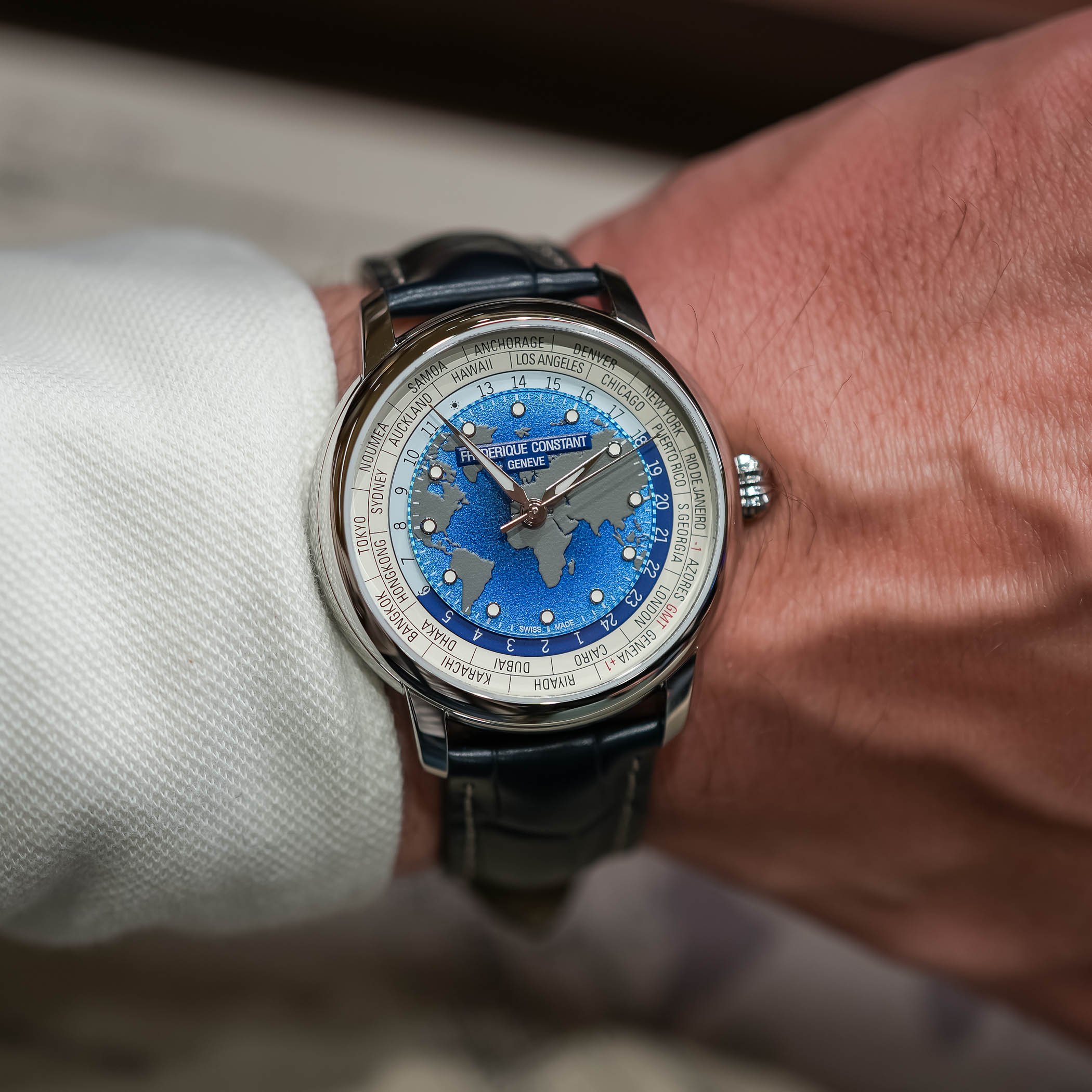
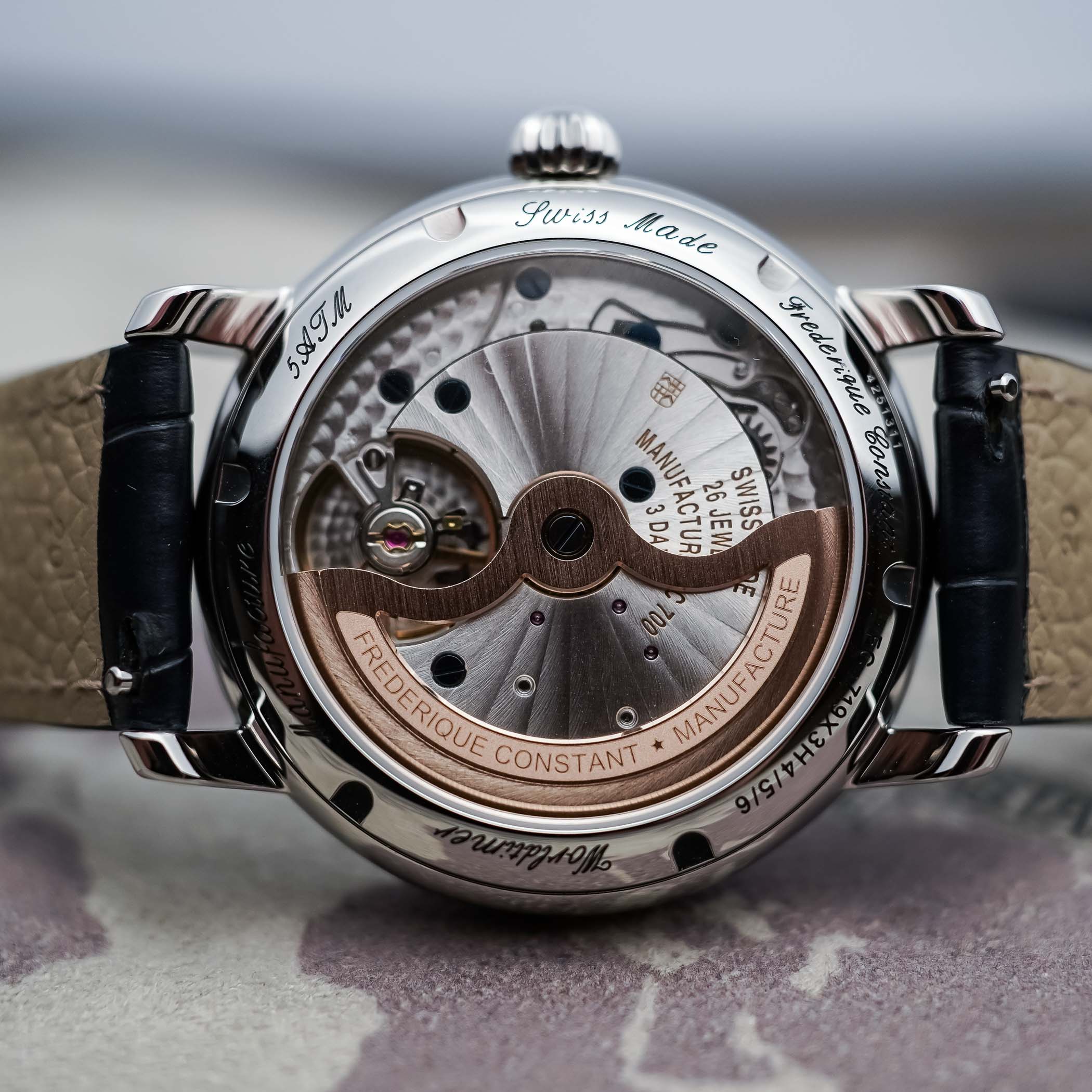
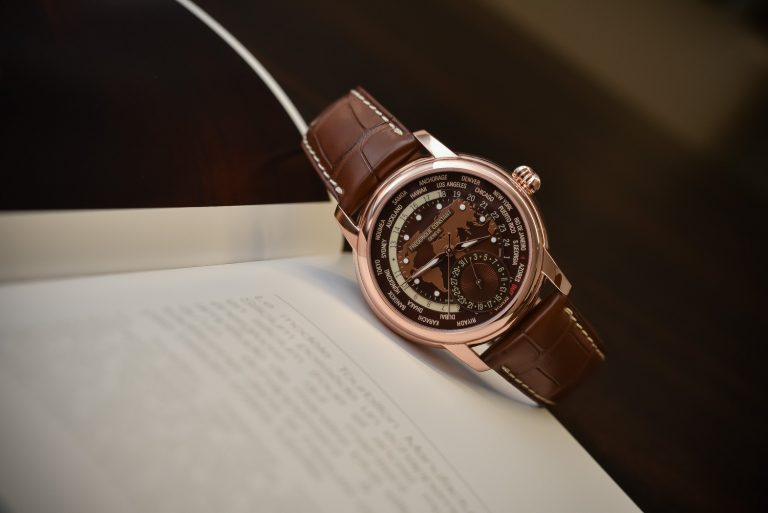
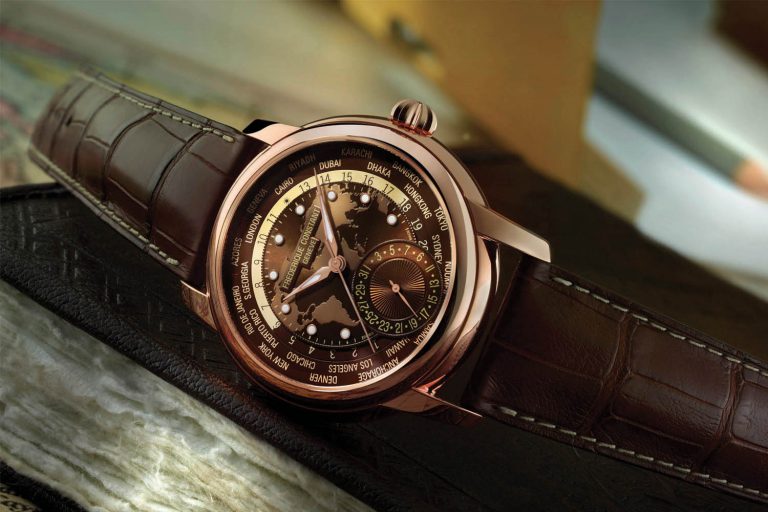
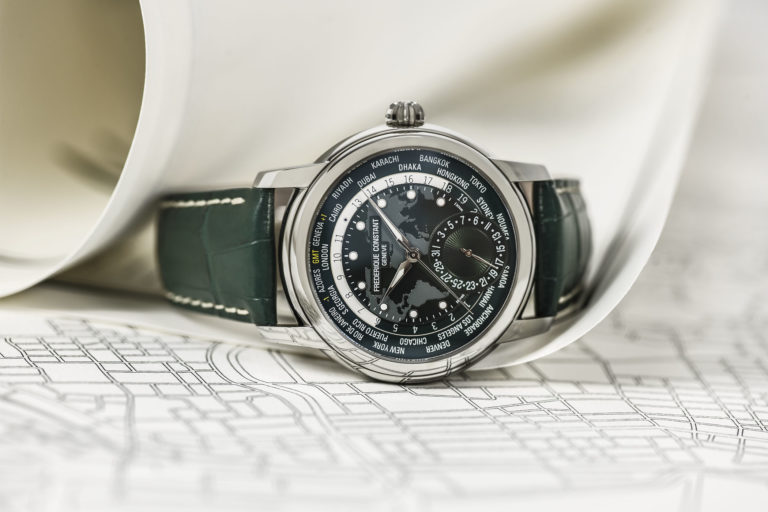
Frederique Constant’s Classic Worldtimer Manufacture takes the opposite route, putting the map on the dial and the world in view.
The 40mm polished stainless steel case houses the in-house automatic Calibre FC-719, now with a 72-hour power reserve.
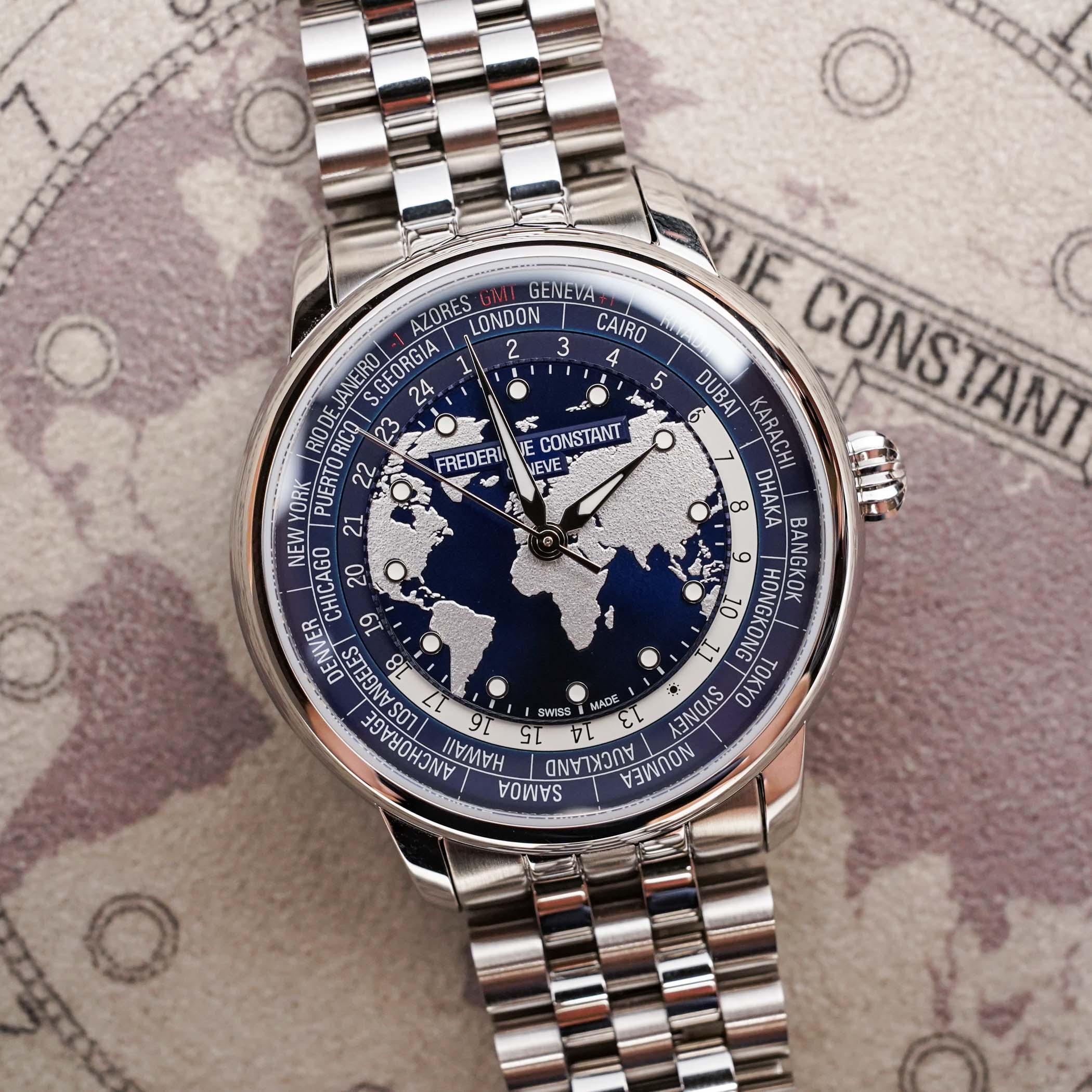
The dial is offered in navy blue or gradient blue, with a world map, city ring and 24-hour ring arranged around central hours, minutes and seconds.
It’s available on an interchangeable leather strap or five-link bracelet, priced at EUR 4,995.
A diamond-set version is also part of the line-up, limited to 88 pieces and priced at EUR 7,995.
Ming adds daylight-saving logic to the worldtimer
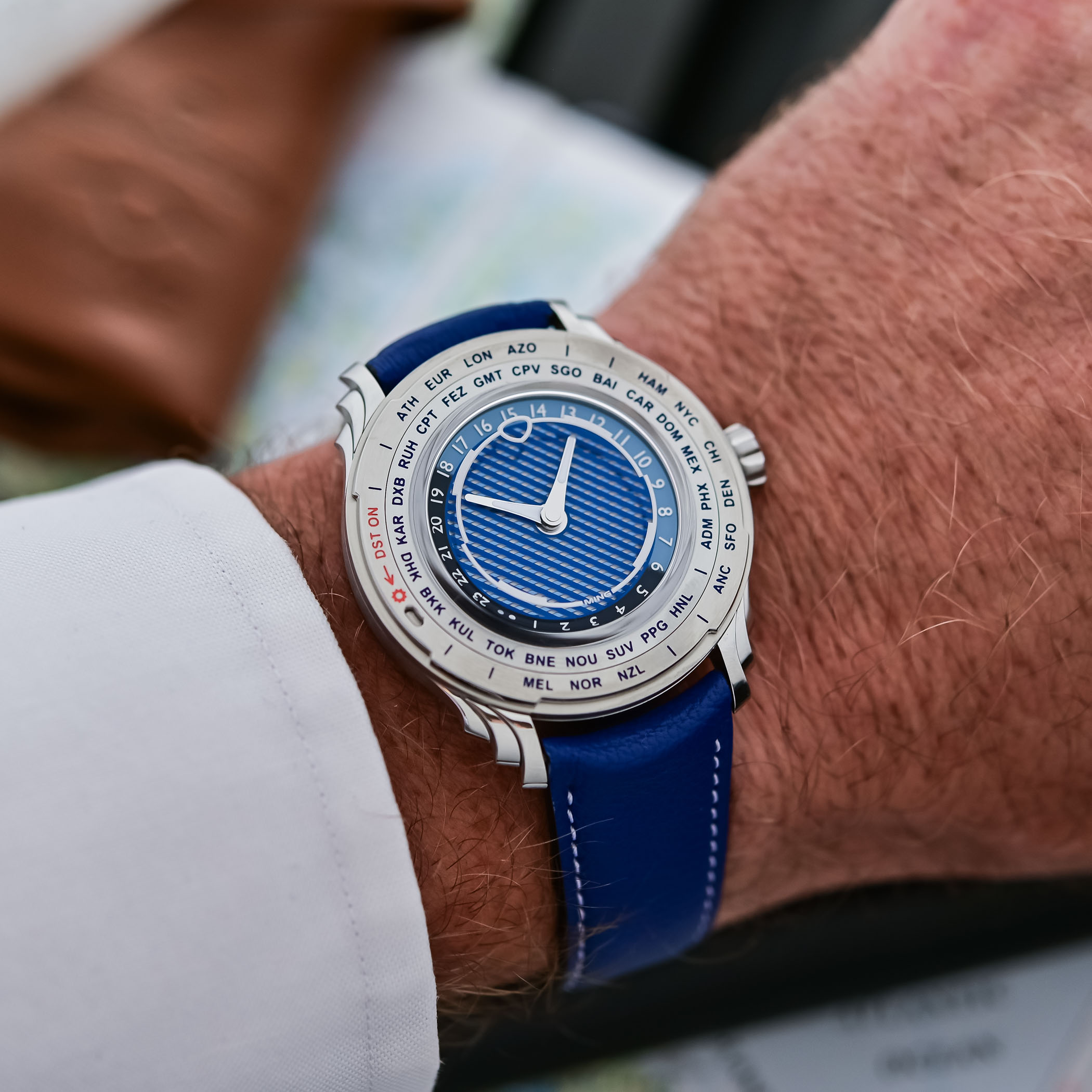
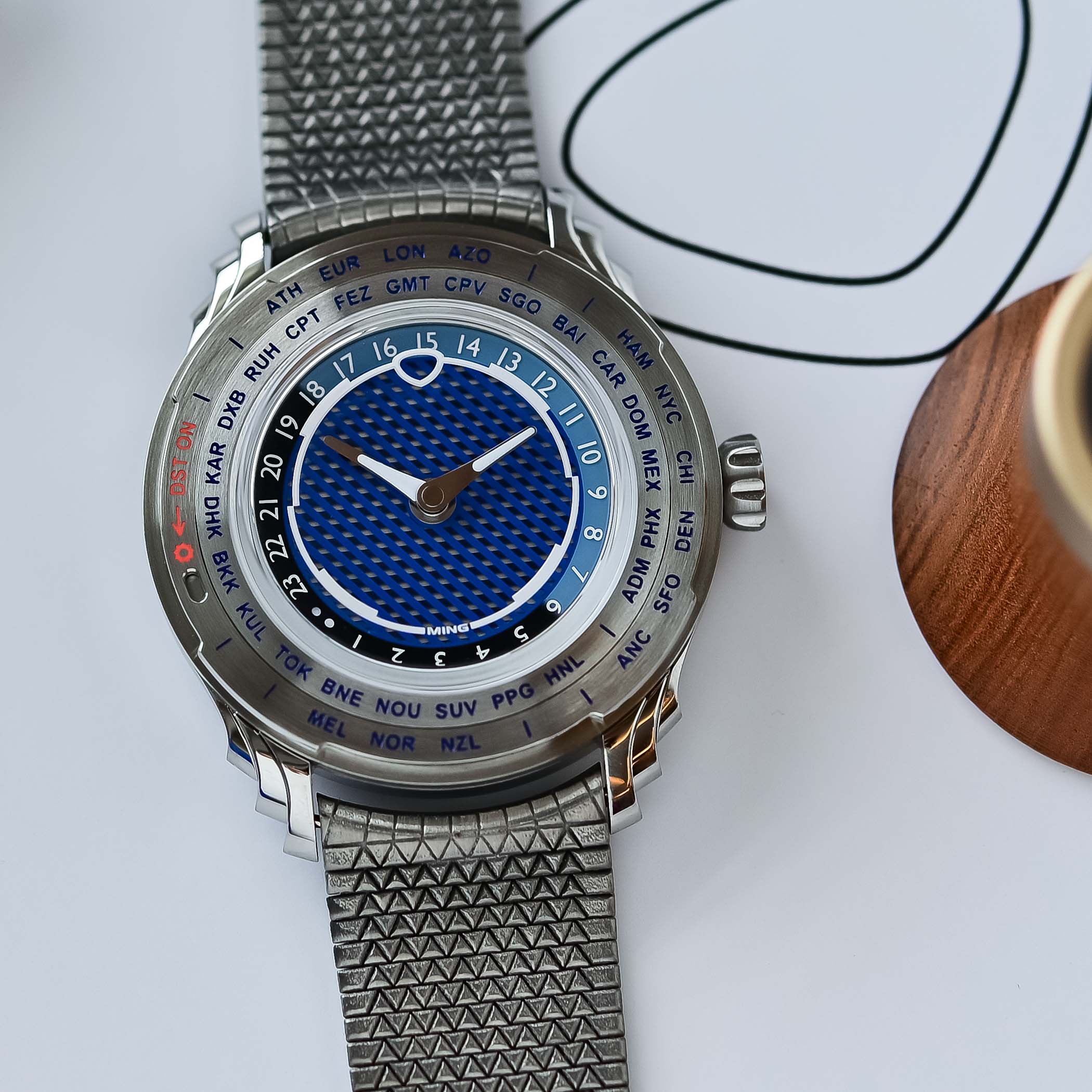
The Ming 57.05 Comet is the most quietly clever watch in this group.
Its worldtime display is paired with a patent-pending adjustable bezel designed to account for Daylight Saving Time, a small real-world complication that many travel watches simply leave to the wearer’s memory.
The 40mm stainless steel case is slim at 10.33mm, and the blue multilayered dial brings Ming’s familiar use of texture, depth and lume.
A two-tone 24-hour ring handles the global timing information, while the outer bezel can be switched into a DST setting when needed.
Power comes from the Sellita for Ming Calibre 330.M2 automatic movement, with an approximate 50-hour power reserve.
The 57.05 Comet is limited to 200 pieces, priced at CHF 6,950 on cobalt blue leather or CHF 7,950 on Ming’s 3D-printed titanium Polymesh bracelet.
Vacheron Constantin and Greubel Forsey go further upmarket
The Vacheron Constantin Overseas Dual Time Cardinal Points gives the travel-watch formula a lighter, more adventurous edge.
Its 41mm titanium case is paired with an anthracite bezel, crown and pusher ring, and the watch offers 150 metres of water resistance.
The dial comes in white, blue, green or brown, each with a grained texture and luminous hands and markers.
Functionally, it keeps things useful rather than theatrical, displaying central time, a second time zone, day-night information and the date.
The in-house automatic Calibre 5110 DT/3 provides around 60 hours of power reserve, and the package includes the Overseas collection’s interchangeable rubber strap and titanium bracelet proposition.
At CHF 33,700, it sits in serious luxury-sports-watch territory while still looking ready for frequent use.
Greubel Forsey’s GMT Balancier Convexe is another world entirely.
The shaped titanium case measures 42.9mm by 44.9mm and 15.1mm thick, with a domed and curved sapphire crystal helping the watch wear more cohesively than the numbers suggest.
The display includes hours, minutes, small seconds, a power-reserve indicator, GMT counter, day-night indication and a rotating globe for world time.
On the caseback, a universal time display covers 24 time zones and Daylight Saving Time.
The manual-winding in-house movement is built from 496 components, and production is limited to 22 pieces.
At CHF 380,000 on strap, it’s less a practical airport companion than a statement of what travel-time watchmaking can become when complexity and hand finishing are pushed to the extreme.
Details & Specifications
| Tudor Northflag GMT | 40mm stainless steel case, true GMT Calibre MT5652-U automatic, 65-hour power reserve, 100m water resistance, integrated steel bracelet, EUR 5,050 |
|---|---|
| Frederique Constant Classic Worldtimer Manufacture | 40mm stainless steel case, worldtimer dial with city and 24-hour rings, Calibre FC-719 automatic, 72-hour power reserve, EUR 4,995 |
| Ming 57.05 Comet | 40mm stainless steel case, DST-adjustable bezel, 24-hour worldtime ring, Sellita for Ming Calibre 330.M2 automatic, limited to 200 pieces, from CHF 6,950 |
| Vacheron Constantin Overseas Dual Time Cardinal Points | 41mm titanium case, second time zone, day-night indicator, date, Calibre 5110 DT/3 automatic, 150m water resistance, CHF 33,700 |
| Greubel Forsey GMT Balancier Convexe | 42.9mm by 44.9mm titanium case, GMT, rotating globe, universal time caseback, manual-winding 496-part movement, limited to 22 pieces, CHF 380,000 |
The best choice here depends on whether you value instant local-time adjustment, a full worldtime display or the pleasure of mechanical complexity for its own sake.
For regular travel, the Tudor, Frederique Constant and Ming make the strongest practical cases, while the Vacheron Constantin and Greubel Forsey show just how far the category can stretch when finishing, materials and mechanical ambition become part of the itinerary.