Newcastle is often introduced through football, nightlife or the Tyne Bridge, but the city becomes far more compelling at street level.
On a Newcastle Tour Company street-food walk led by Michael, a lifelong Geordie and former firefighter, the Toon is framed as a place of appetite, invention and very old stone.
His opening claim is delivered with full local conviction: “Without Newcastle, the world would not exist.”
At a glance
- A Newcastle street-food tour connects Tyneside cooking with Roman, medieval and industrial history.
- The route takes in local dialect, claimed city firsts, Grainger Market, Blackfriars and modern Asian street food.
- It suits travellers who want food, architecture and city storytelling in one walkable experience.
A city that likes to remind you what it started
Michael’s case for Newcastle rests on a catalogue of firsts and inventions tied to the city and its surroundings.
He points to the first street lit by electric light, the first two-tier road and rail bridge, the first commercial hydroelectric swing bridge and Newcastle Central Station, described on the tour as the world’s first covered train station.
The list continues with names and objects woven into everyday British life, from Greggs, Domestos and Lucozade to the modern light switch, the windscreen wiper and the first purpose-built lifeboat.
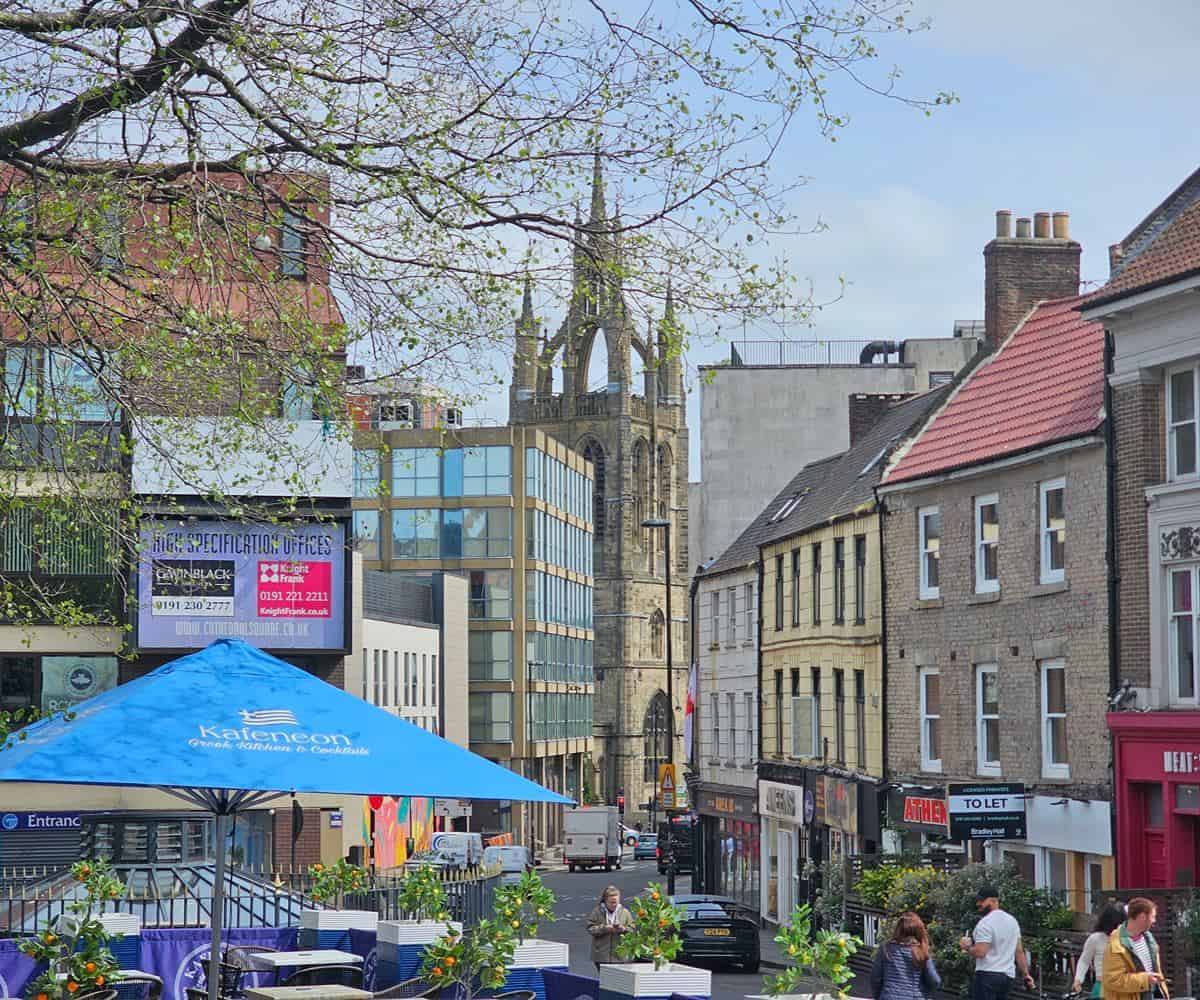
It’s a knowingly grand argument, but it lands because Newcastle’s streets give it texture.
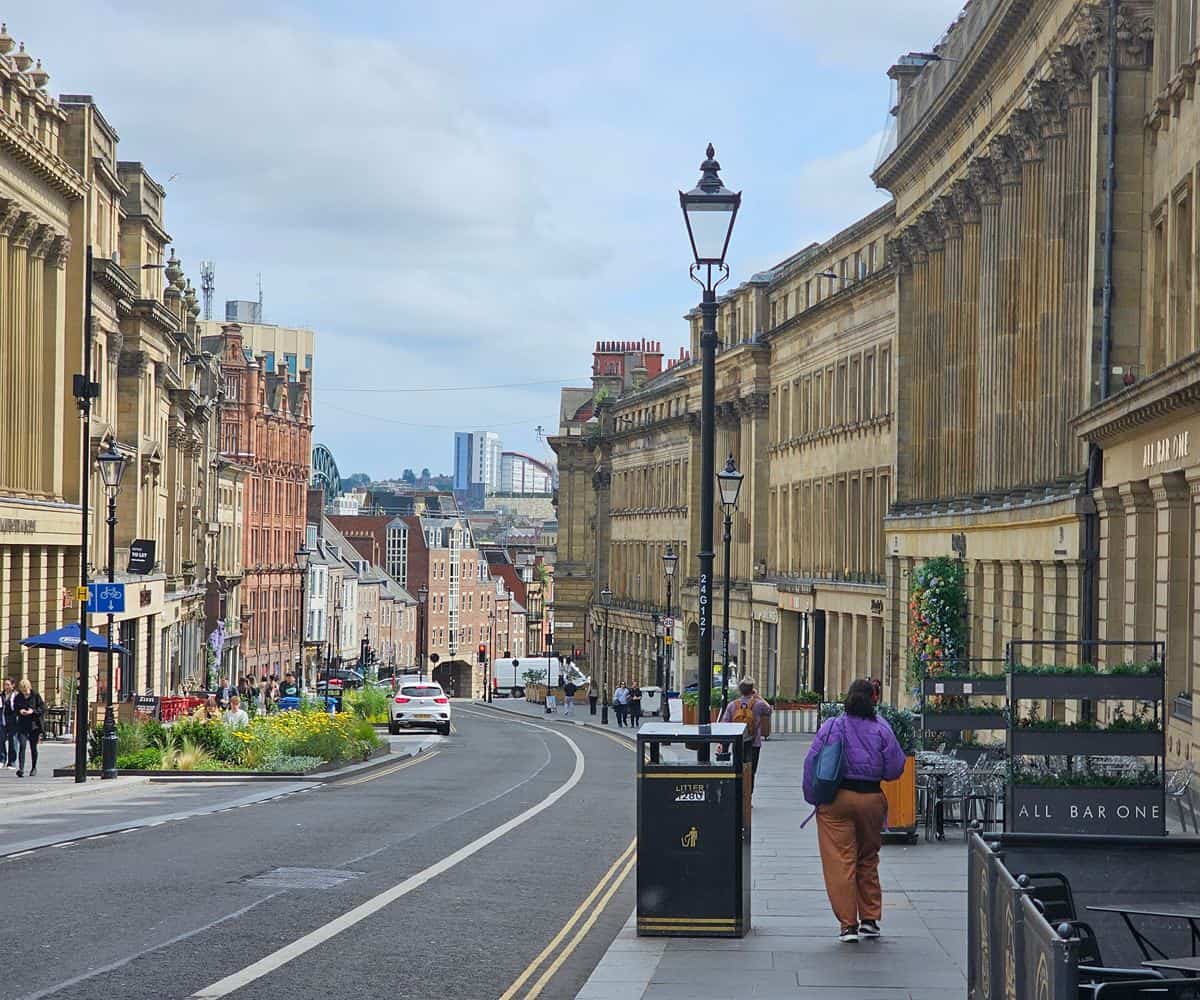
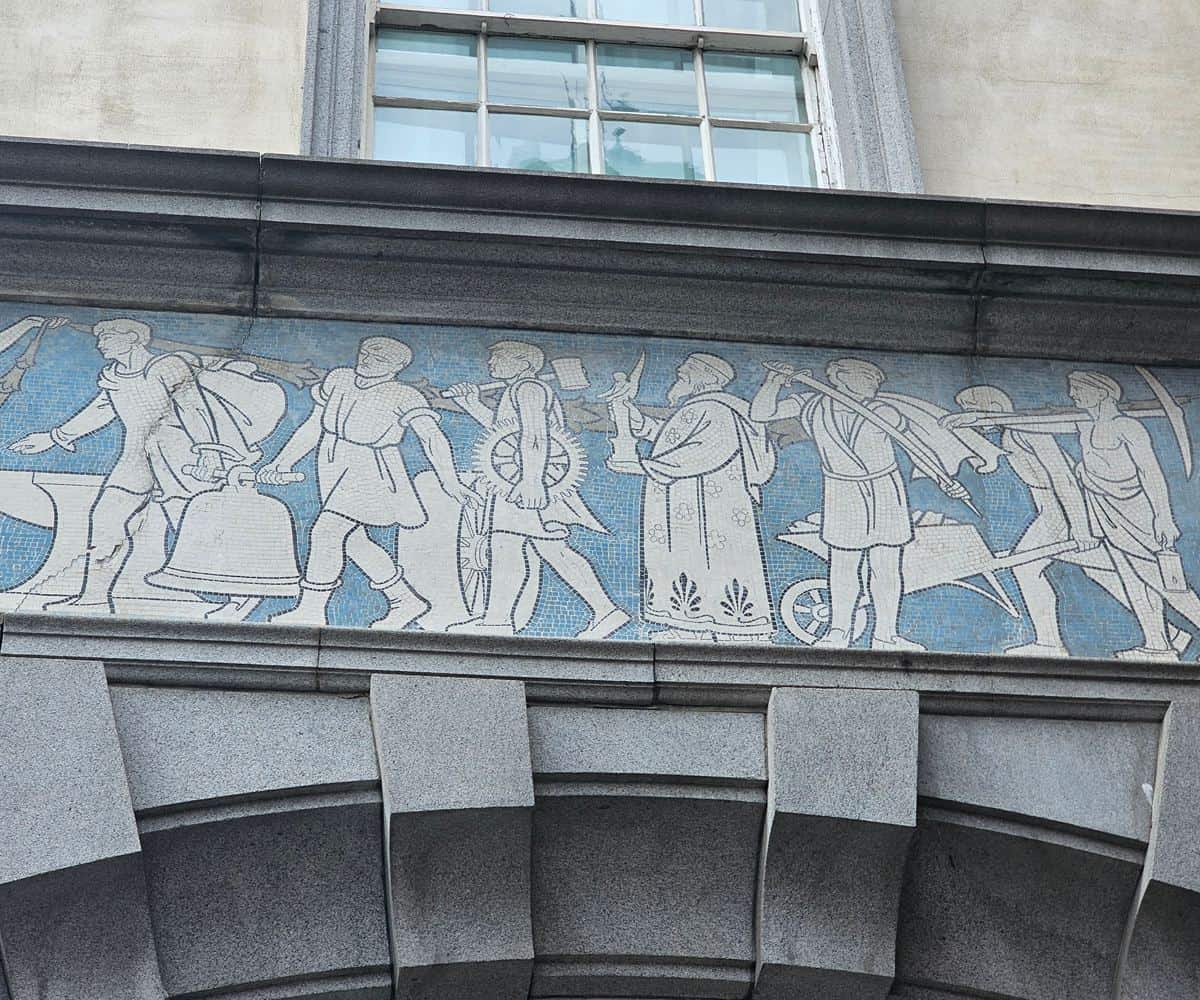
The city’s industrial story runs through coal, bridges and railways, with Michael tying Tyneside’s engineering confidence to George Stephenson, Locomotive No. 1, The Rocket and the early passenger railway age of the 1820s.
That mix of civic pride and hard infrastructure is part of the city’s appeal.
Geordie language before lunch
Food is only one part of the walk, because in Newcastle, language is its own kind of local produce.
Michael introduces the Geordie identity through history, monarchy and border rivalry, linking the nickname to Newcastle’s royalist leanings under a run of King Georges.
He also traces the accent through Roman withdrawal, early Christianity, Norse influence and Anglo-Saxon layers.
The vocabulary is as useful as any map.
- Hinny is a term of affection.
- Bairns means children.
- Yem means home.
- Hoy means to throw or toss.
- Clamming means very hungry.
It’s hard to think of a better word than clamming before the first proper food stop.
From Roman walls to artisan sausage rolls
The route moves quickly between eras.
Hadrian’s Wall, begun under Emperor Hadrian in 122 AD, sets the Roman frame, while the medieval Town Walls show how compact and fortified Newcastle once was.
Michael describes Roman food influence through olive oil, beans and garum, alongside local catches and game such as haddock, mackerel, crab, wild boar and other meats.
At Bath Lane, beside 13th-century stone fortifications, the city’s defensive history becomes more vivid and less polite.
Michael dismisses the familiar image of boiling oil being poured from battlements, arguing that oil was too expensive and water too precious during a siege.
His alternative involves boiling urine mixed with sand, a grim piece of battlefield practicality he presents as Newcastle’s claim to an early form of chemical warfare.
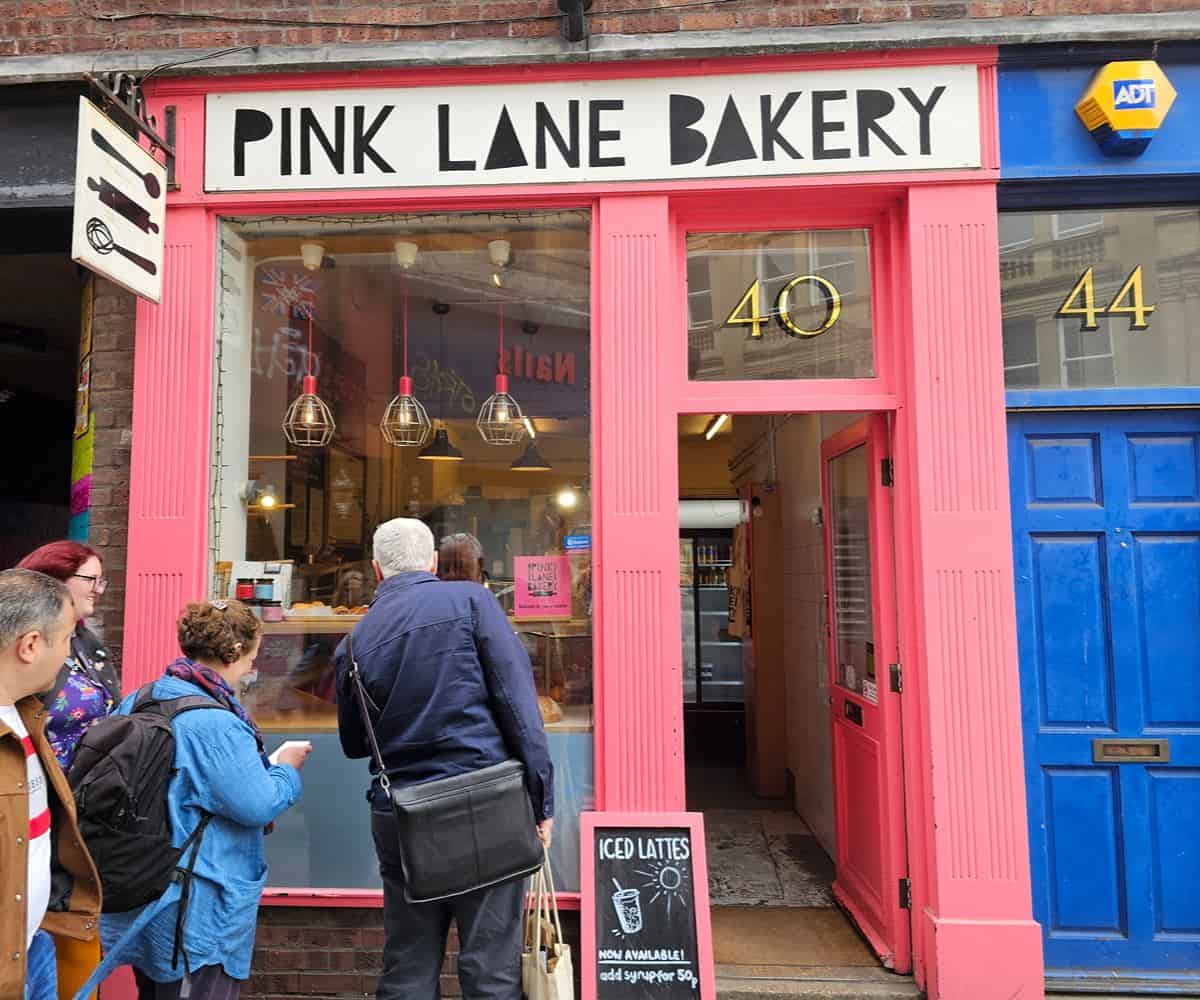
The first official food stop brings the story back to the present on Pink Lane, where the sausage roll is treated with more care than its humble reputation suggests.
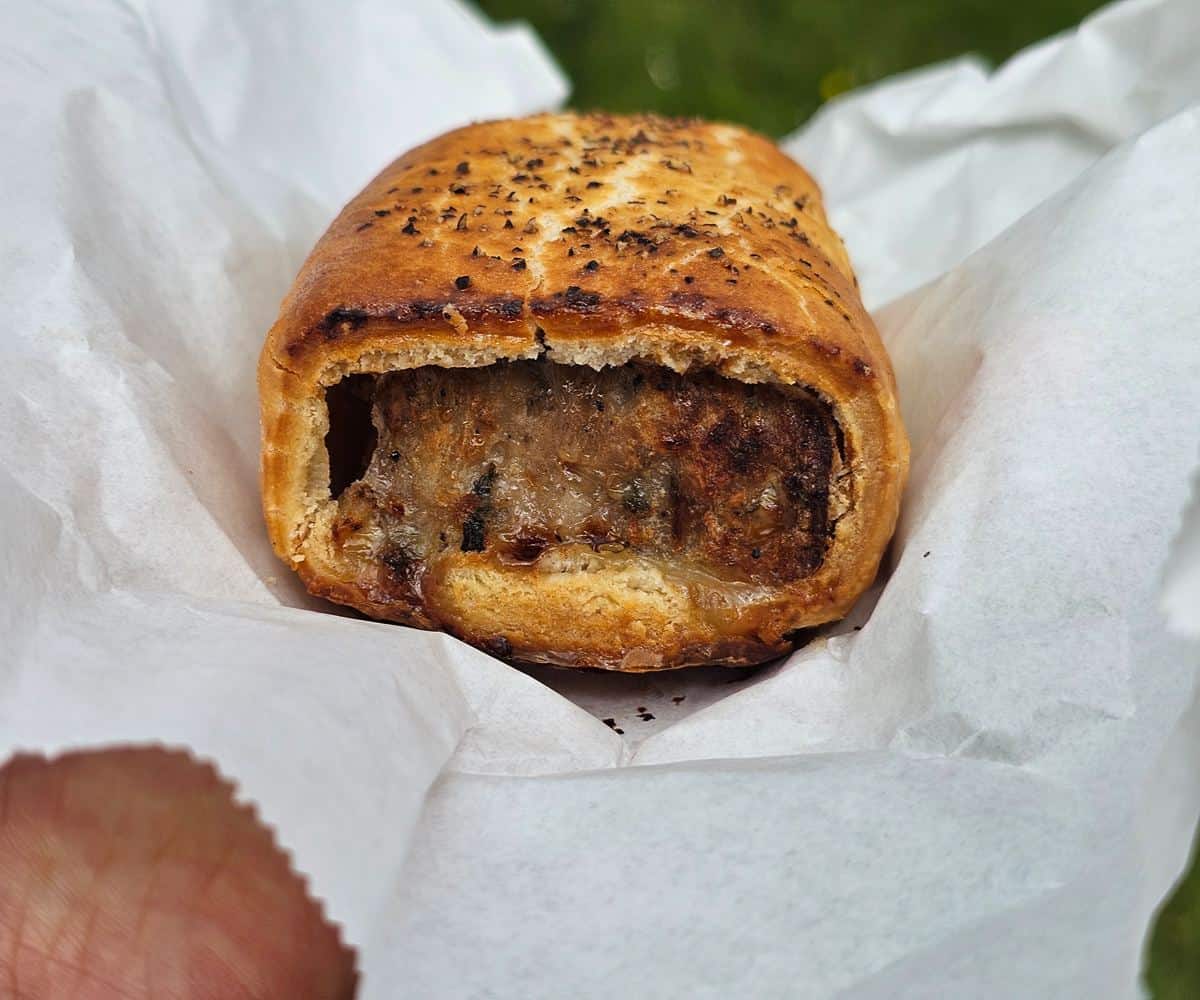
The version described on the tour combines pork sausage meat, pancetta and rosemary in golden pastry, while the vegan roll uses mushrooms, onions, miso and garlic oil.
Greggs, inevitably, is never far from the conversation.
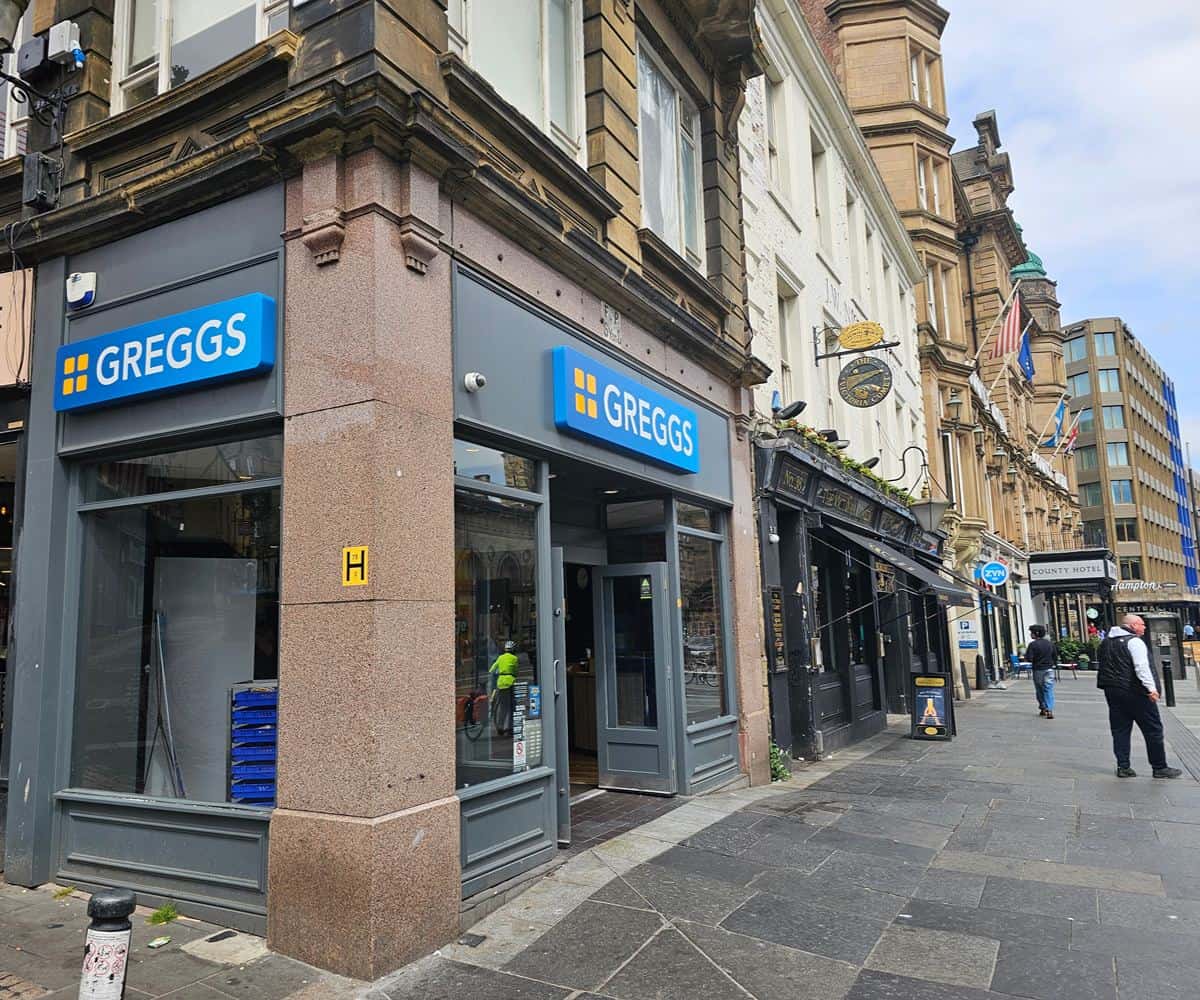
Michael places the bakery’s beginnings on Gosforth High Street, where Ian Gregg opened his first shop, and treats its modern Tyneside ubiquity as both cultural shorthand and local punchline.
Markets, friaries and the modern palate
Newcastle’s food story isn’t limited to pastry and pease pudding.
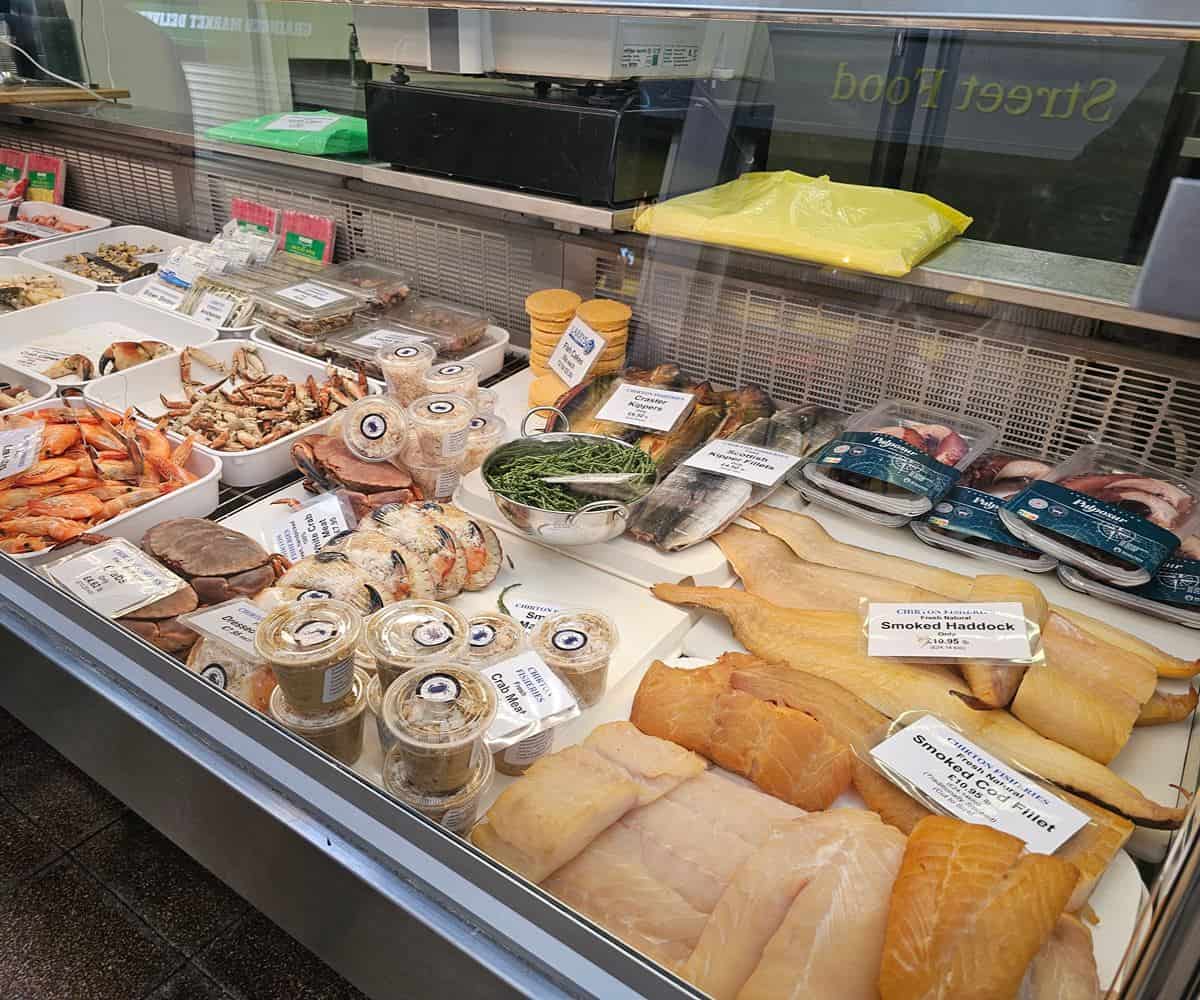
Michael describes a rich North Sea seafood heritage, including herring fleets supplying Scandinavia and the Baltic states, plus brown crab, lobster and langoustines.
He also tells the old local story of River Tyne salmon being so abundant in the 18th and 19th centuries that apprentices were said to complain if served it more than four times a week.
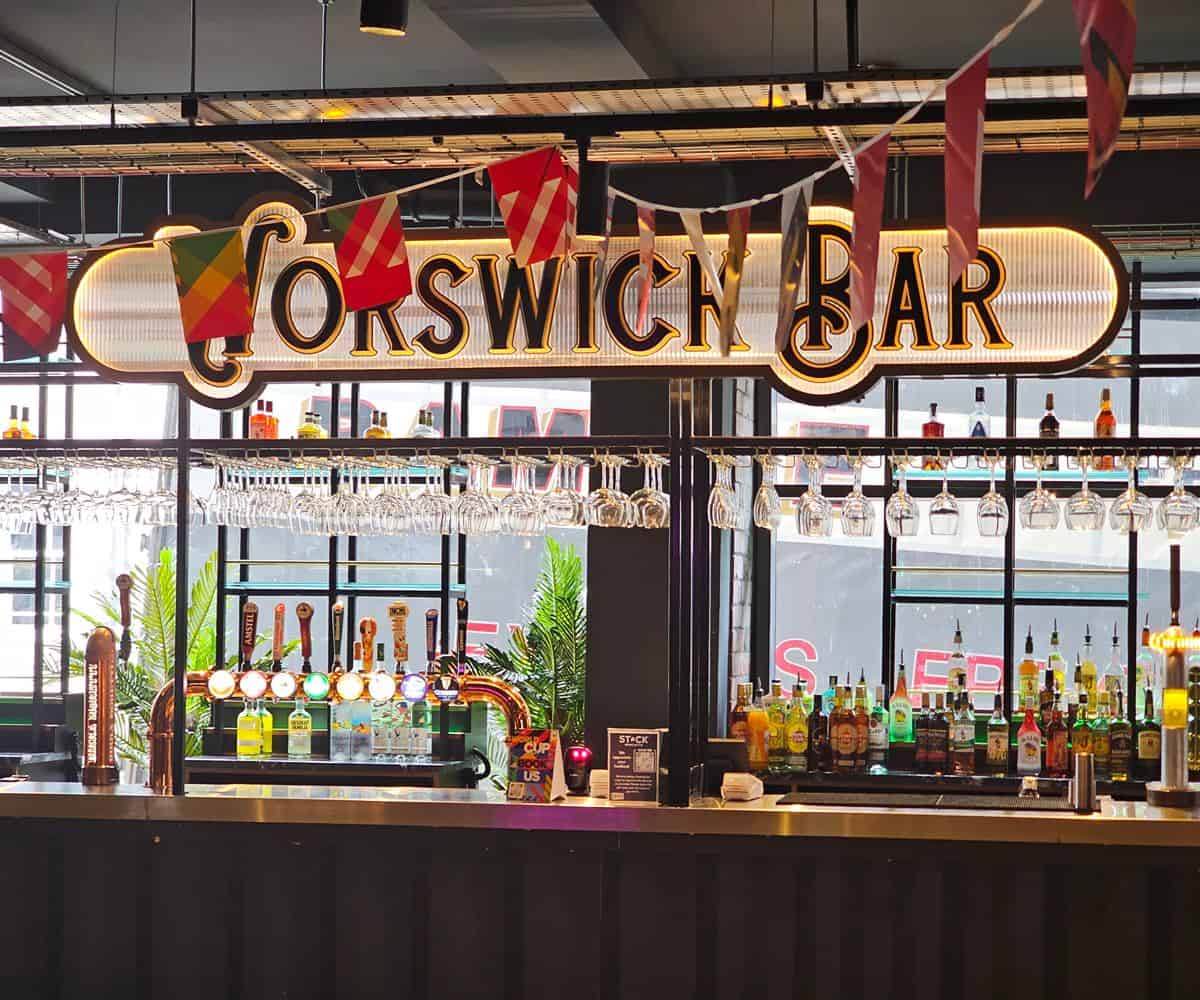
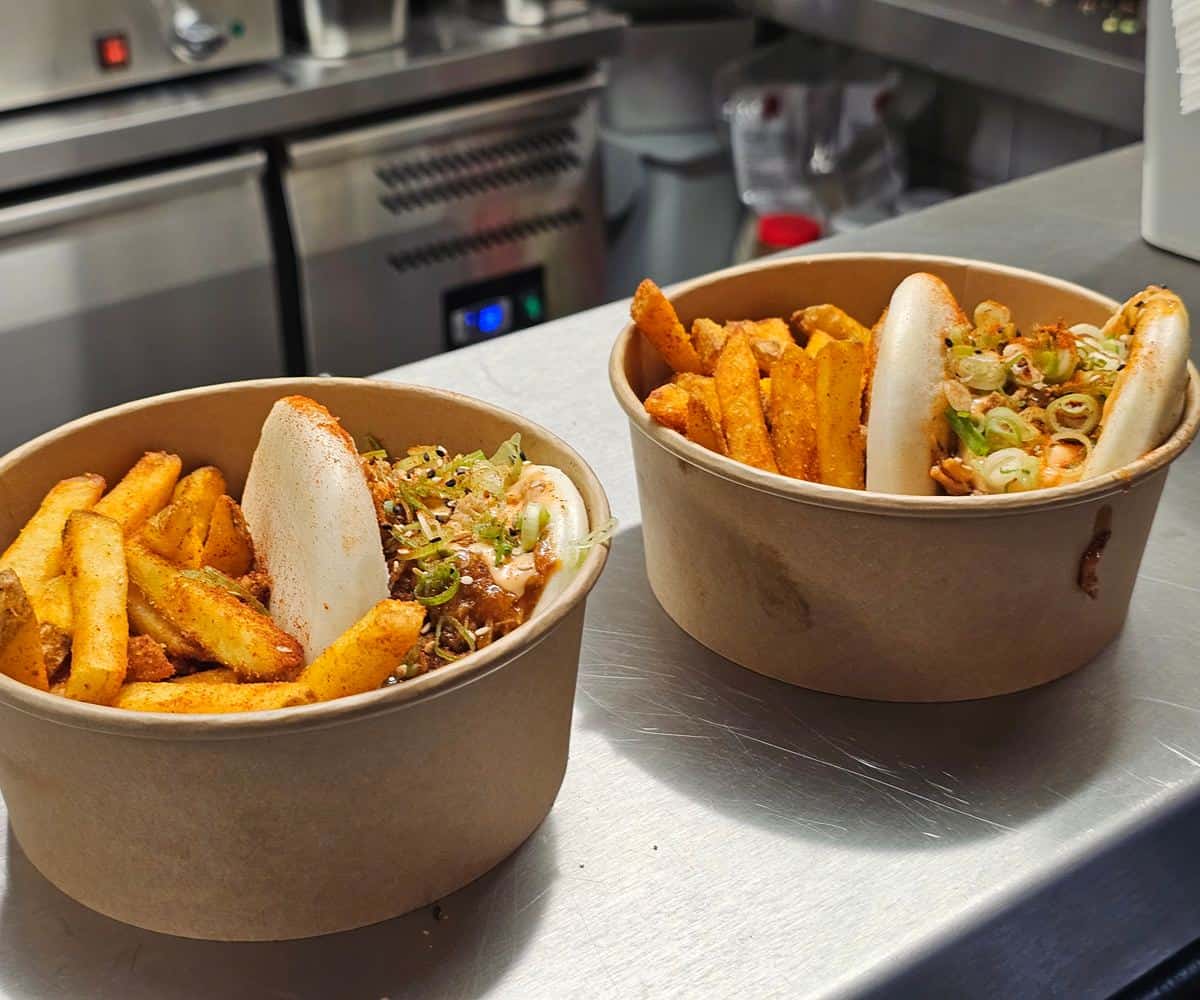
The route’s modern register appears at Bao Down at STACK, inside Worswick Chambers on Pilgrim Street, where steamed bao buns and Asian street food sit comfortably within the city’s broader food identity.
That stop also opens the door to Newcastle’s Chinatown on Stowell Street and the Asian heritage Michael connects to the city’s contemporary palate.
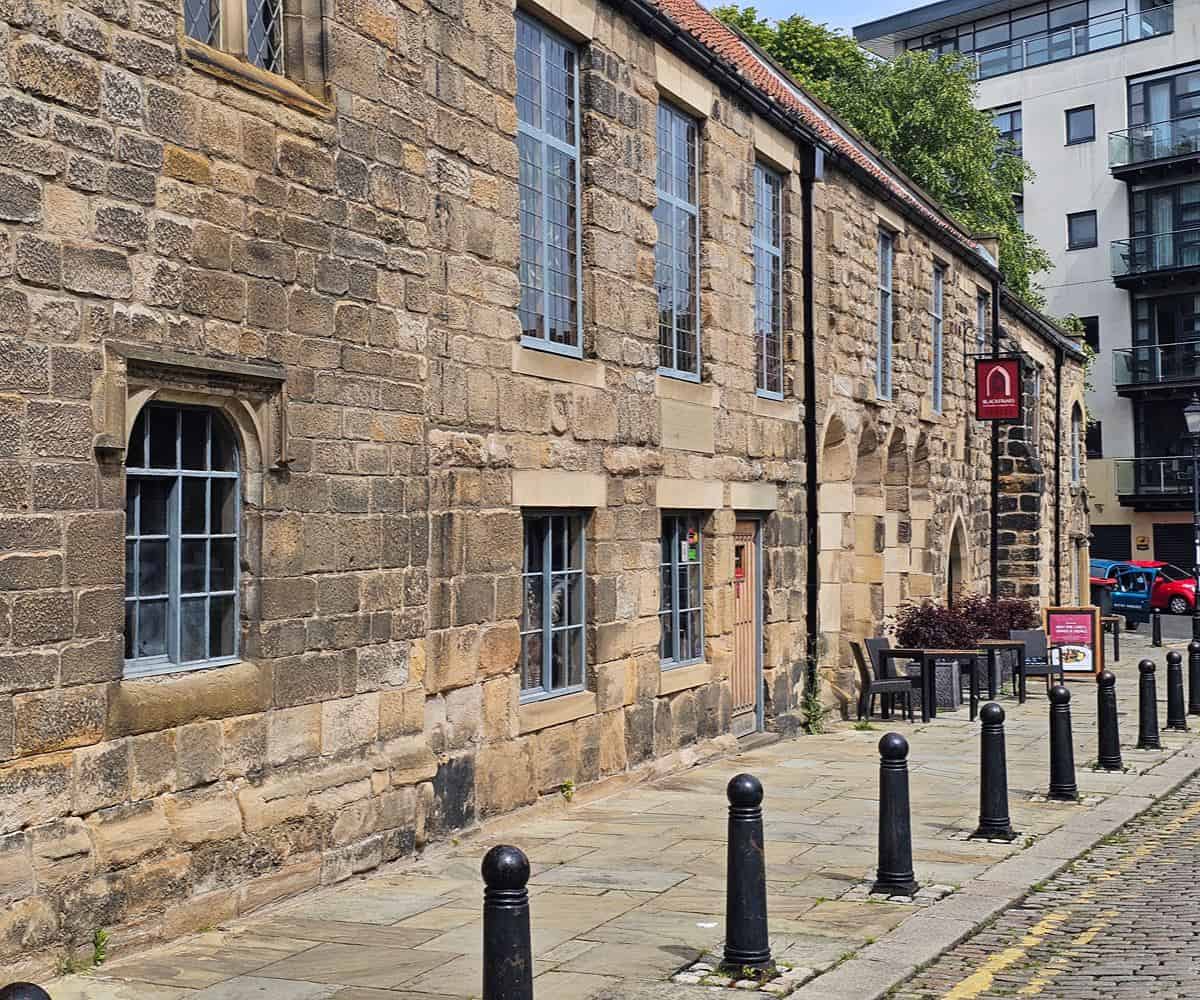
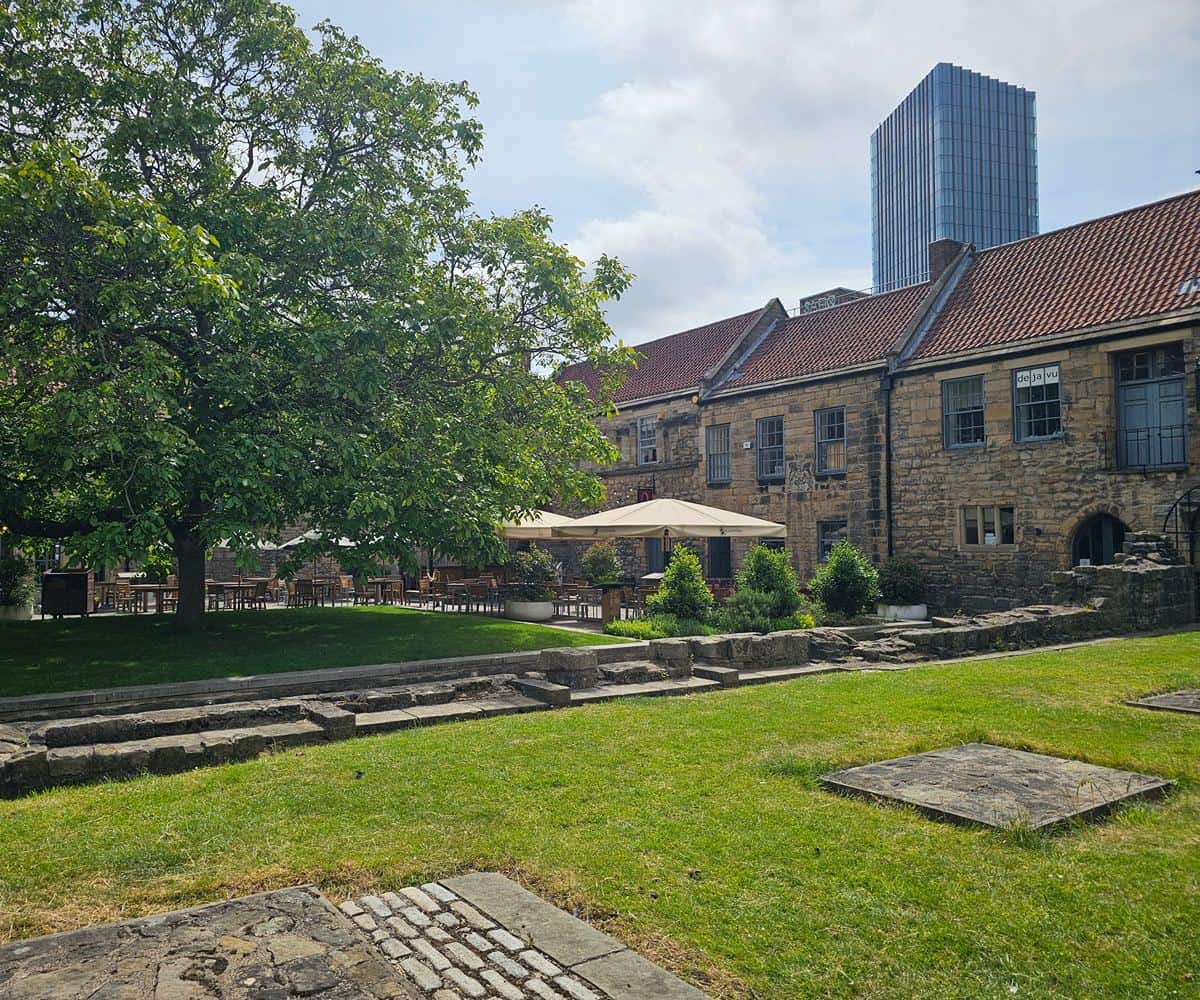
Blackfriars gives the tour its most atmospheric dining room.
The complex dates to 1239 as a Dominican friary, with the “Black Friars” name coming from the friars’ black cloaks.
It survived the Dissolution of the Monasteries and later industrial decline, before being restored after facing dereliction and demolition in the 1970s.
Today it’s presented as one of Newcastle’s notable dining institutions, with regional British cooking set among medieval stone columns, herb gardens and local folklore about a ghost said to move between the friary and nearby Nun Street.
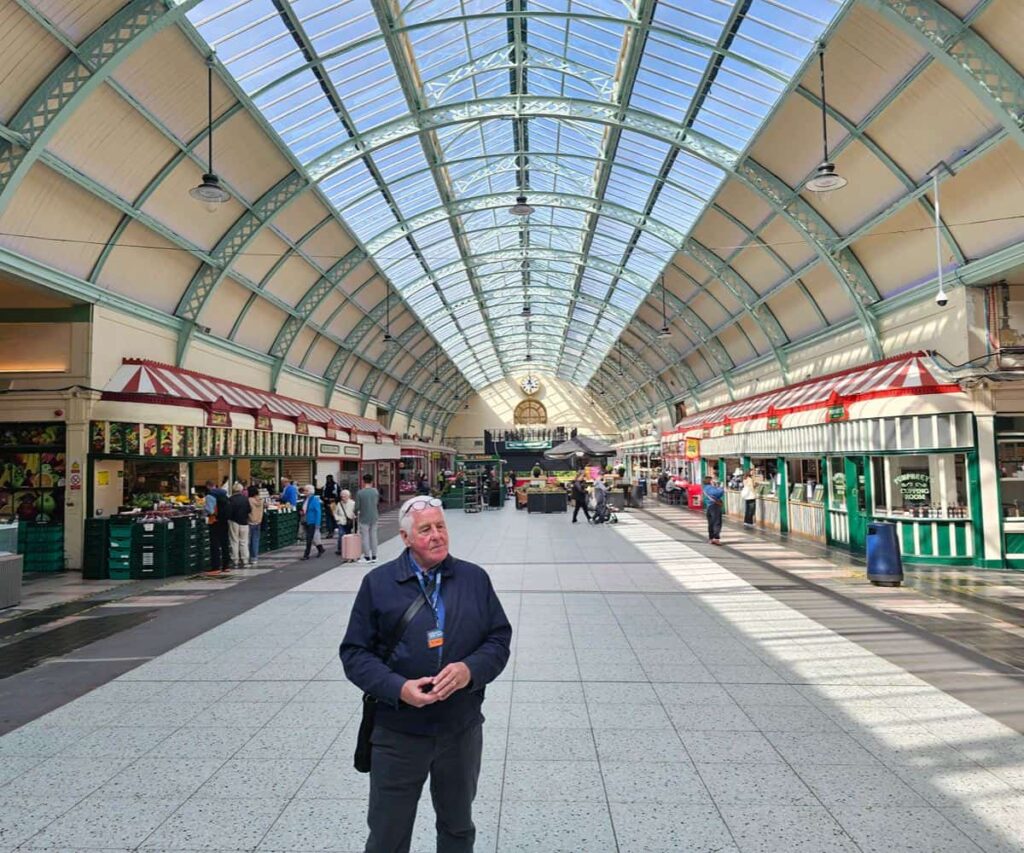
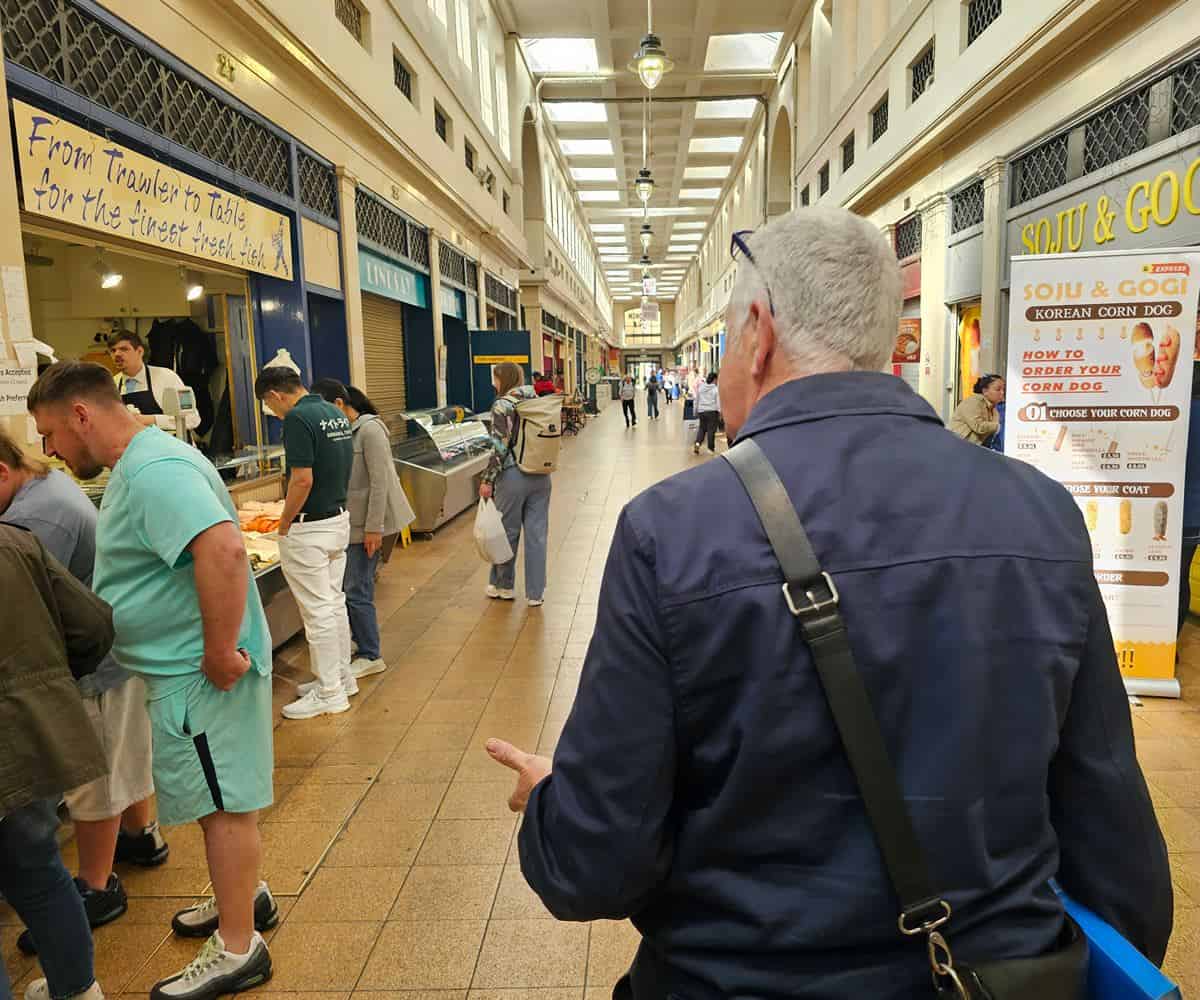
Grainger Market shifts the focus again, from monastic quiet to civic theatre.
Richard Grainger and John Dobson reshaped Newcastle in the 1830s, replacing parts of the medieval city with neoclassical streets, curves, columns and grander urban ambition.
The market opened in 1835 and is described on the tour as having been the largest enclosed market in Europe at the time.
Inside, the smallest Marks & Spencer in the world retains its original 1890s storefront slogan, “Don’t ask the price, it’s a penny.”
This is also the natural setting for pease pudding and stotties, the compact, filling food associated with miners and working Newcastle.
A stottie is a heavy, flat, round oven-bottom bread roll, traditionally filled with boiled ham and seasoned crushed yellow split peas.
For a city shaped by coal and graft, it makes practical sense before it becomes nostalgia.
The Toon in a glass
The tour also passes drinking culture and civic reinvention.
Michael points out local haunts including The Beehive and the former fire station on Pilgrim Street, now Hotel Gotham, Newcastle’s only five-star hotel.
For him, the building is personal, having spent 21 years of his firefighting career manoeuvring turntable ladder trucks through its narrow arches.
Newcastle Brown Ale completes the picture.
Michael traces the famous “Blue Star” ale to Colonel James Porter and 1827, and explains the local phrase “a bottle of dog” as miners’ coded way of saying they were going out for a drink.
The expression has the neatness of all good local folklore, half euphemism and half social history.
What makes this walk work is the way food keeps opening into something bigger.
A sausage roll becomes a route into Greggs and Tyneside identity, bao leads to Chinatown and modern Newcastle, and a stottie speaks to the city’s coal economy as clearly as any monument.
Michael’s claim outside Central Station may be deliberately oversized, but the sentiment behind it is persuasive.
Newcastle has engineered, fed, defended and reinvented itself for centuries, and its best stories are still best encountered on foot, with something warm in hand.