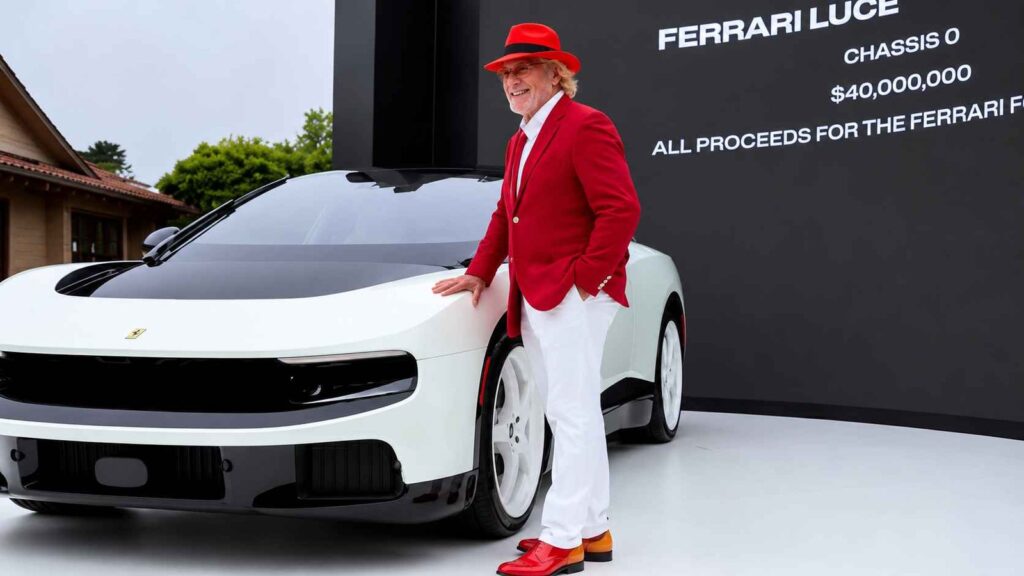
The $40 million winning bid for the first-ever Ferrari Luce EV now has a name attached to it.
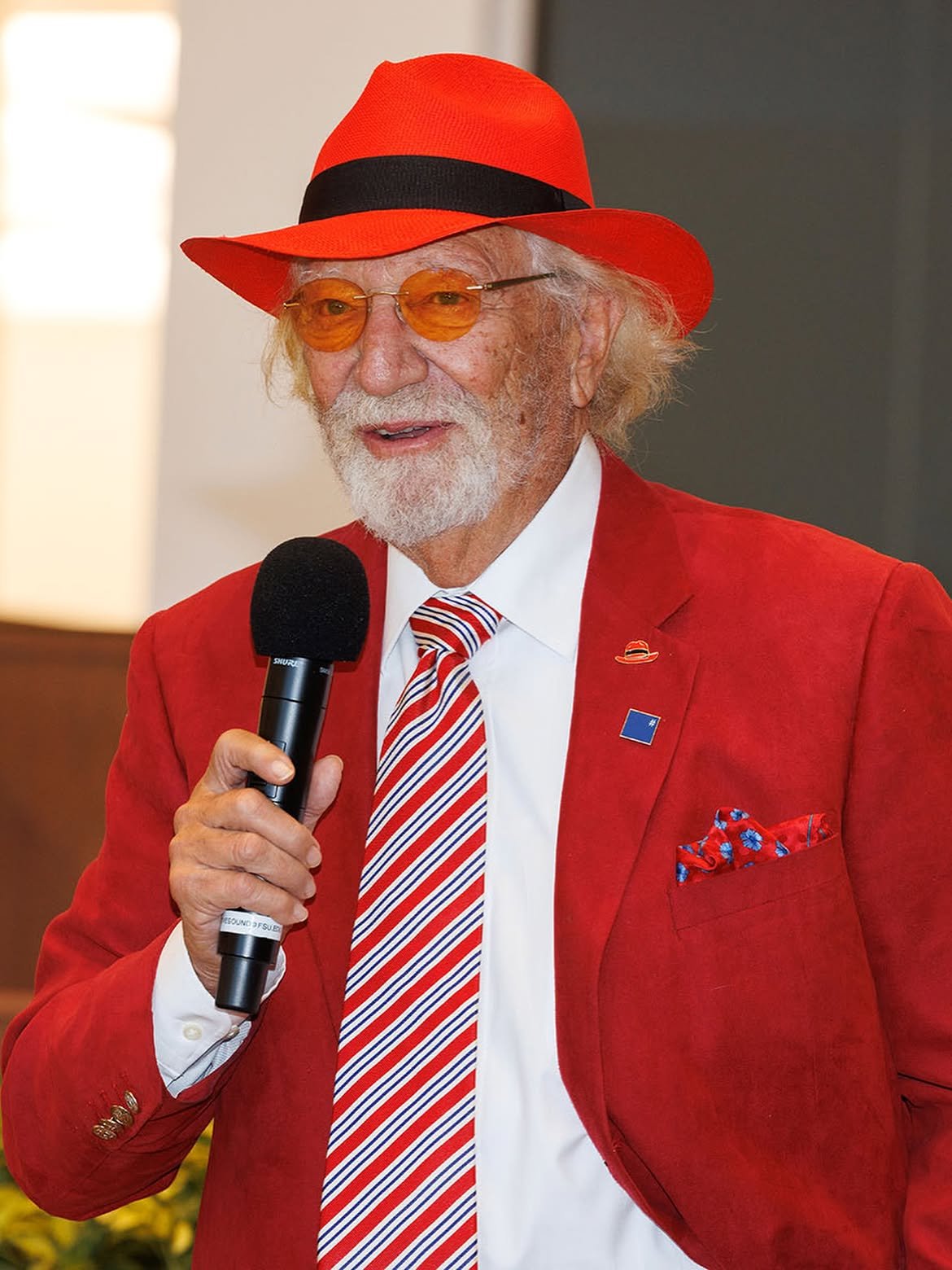
Dr. Herbert “Herbie” Wertheim, the billionaire businessman, inventor and philanthropist, acquired Chassis 0 during Monterey Car Week, turning Ferrari’s electric debut into one of the most talked-about auction moments of the season.
The number is remarkable on its own, but the context gives it more weight. The Luce sold for 36 times its original auction estimate, with proceeds directed to The Ferrari Foundation and its education-focused work.
At a glance
- Dr. Herbert “Herbie” Wertheim paid $40 million for Chassis 0 of the first-ever Ferrari Luce EV.
- The electric Ferrari crossed the block during Monterey Car Week and sold for 36 times its original estimate.
- Proceeds from the sale go to The Ferrari Foundation, which supports educational initiatives.
A landmark Luce sale at Monterey Car Week
Monterey Car Week has never been short on theatre, but a $40 million Ferrari EV is a different kind of headline.
The car in question is Chassis 0 of the Ferrari Luce, giving it a symbolic position within Maranello’s electric chapter. For collectors, that number matters because it places the car at the very beginning of the model’s story.
The final price was striking even by the standards of modern Ferrari auction results.

At 36 times the initial estimate, the Luce became less a conventional sale and more a statement purchase, with the winning bid reflecting rarity, timing and charitable purpose as much as the car itself.
Who is Herbie Wertheim
Wertheim’s path to becoming a high-profile Ferrari buyer is far from the usual collector biography.
Born in Philadelphia in 1939 to working-class parents, he later moved with his family to Florida, where they lived above a bakery. His career took a decisive turn in 1969 when he identified the role ultraviolet light plays in causing cataracts and damaging human eyes.
That discovery led him to develop the first UV-absorbing dye for plastic eyeglass lenses.
He went on to found Brain Power Inc., a company that became a major force in optical tints and ophthalmic chemicals. Wertheim holds more than 100 patents and copyrights, making his fortune through invention rather than inherited wealth or finance.
A Ferrari habit with a philanthropic edge
The Luce purchase also follows another major Ferrari moment for Wertheim.
One year earlier at the same Monterey gathering, he bought a Tailor Made Ferrari Daytona SP3 for $26 million. That sale, like the Luce auction, was tied to The Ferrari Foundation and its support of educational programmes.
That detail changes the character of both transactions.
These are spectacular additions to any collection, but they’re also public acts of patronage, with Ferrari’s most desirable machinery used to raise significant money for education.
For Ferrari, the Luce sale places its electric future in a familiar collector context. The brand’s shift toward electrification will be judged by engineering, design and driving feel, but moments like this show how quickly a new model can acquire cultural value when rarity and purpose align.
Details & Specifications
| Brand | Ferrari |
|---|---|
| Model | Luce EV |
| Chassis | Chassis 0 |
| Powertrain | Electric |
| Sale event | Monterey Car Week auction |
| Winning bid | $40 million |
| Estimate result | 36 times the original auction estimate |
| Buyer | Dr. Herbert “Herbie” Wertheim |
| Beneficiary | The Ferrari Foundation |
For the right collector, Chassis 0 of the Luce was always going to be more than a car.
In Wertheim’s hands, it becomes a marker of Ferrari’s next era, a philanthropic gesture and another chapter in a collecting story that now includes two of Monterey’s most memorable modern Ferrari sales.