In Monaco, specialist boutiques often survive on more than product alone.
Galerie Shayesteh is one of those businesses where knowledge, patience and personal trust are part of the object being sold.
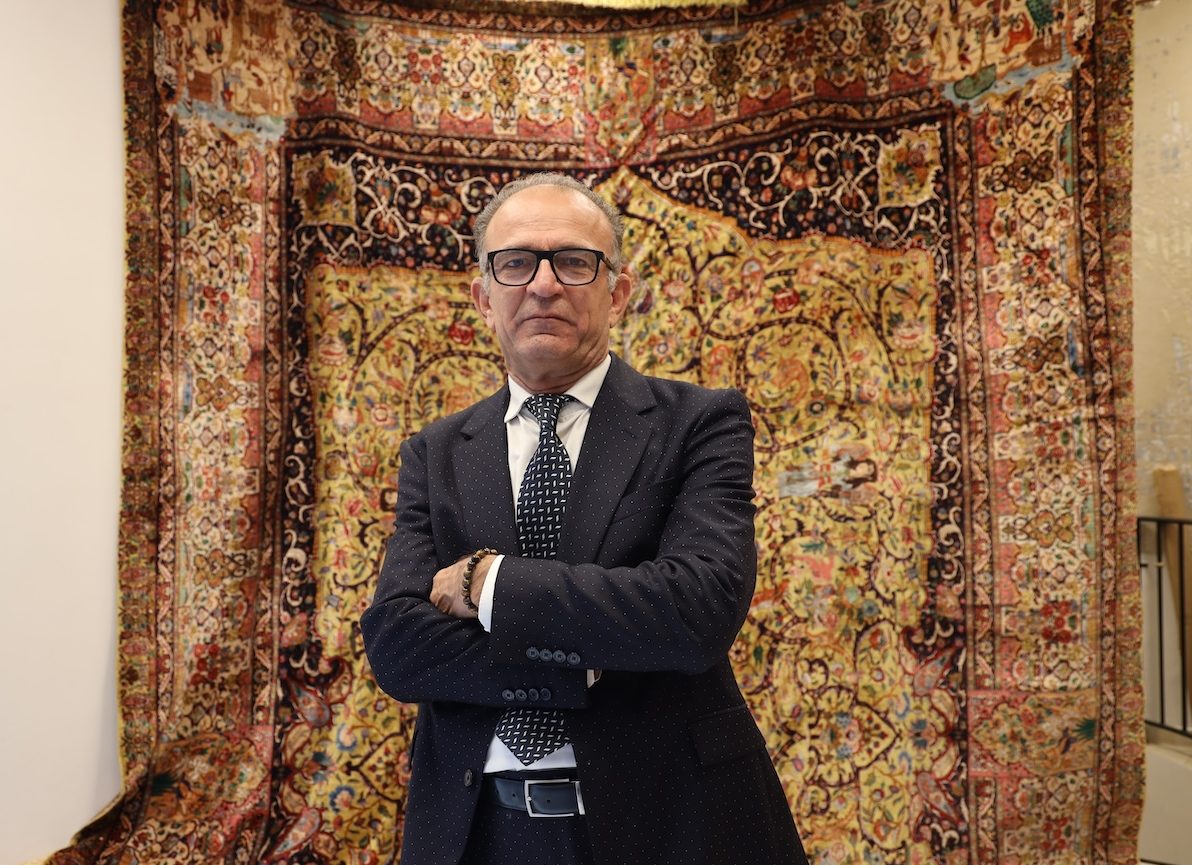
Founded by Christophe Shayesteh in 2001, the gallery is rooted in a lifelong education in Persian carpets and the belief that a handmade piece should be understood before it’s chosen.
At a glance
- Galerie Shayesteh is Christophe Shayesteh’s Monaco-based business devoted to handmade Persian and Oriental carpets.
- The gallery combines sales with personalised advice and after-sales support, drawing on four decades of professional experience in the carpet trade.
- Its appeal lies in the meeting of Iranian craftsmanship and Monaco’s international approach to contemporary living.
A family education in handmade carpets
Christophe Shayesteh’s connection to carpets began well before he opened his own gallery.
He was introduced to the craft at the age of 15, learning alongside his brothers and family through direct experience rather than theory.
That early exposure gave him a practical understanding of materials, weaving traditions and the visual language that distinguishes handmade carpets.
In February 1986, at the age of 25, he began working in Monaco’s carpet industry.
The move placed him inside a market shaped by international clients, refined interiors and the kind of purchasing decisions that often carry long-term significance.
When he established Galerie Shayesteh in 2001, he shifted from working within the trade to shaping his own business around sales, advice and after-sales care.
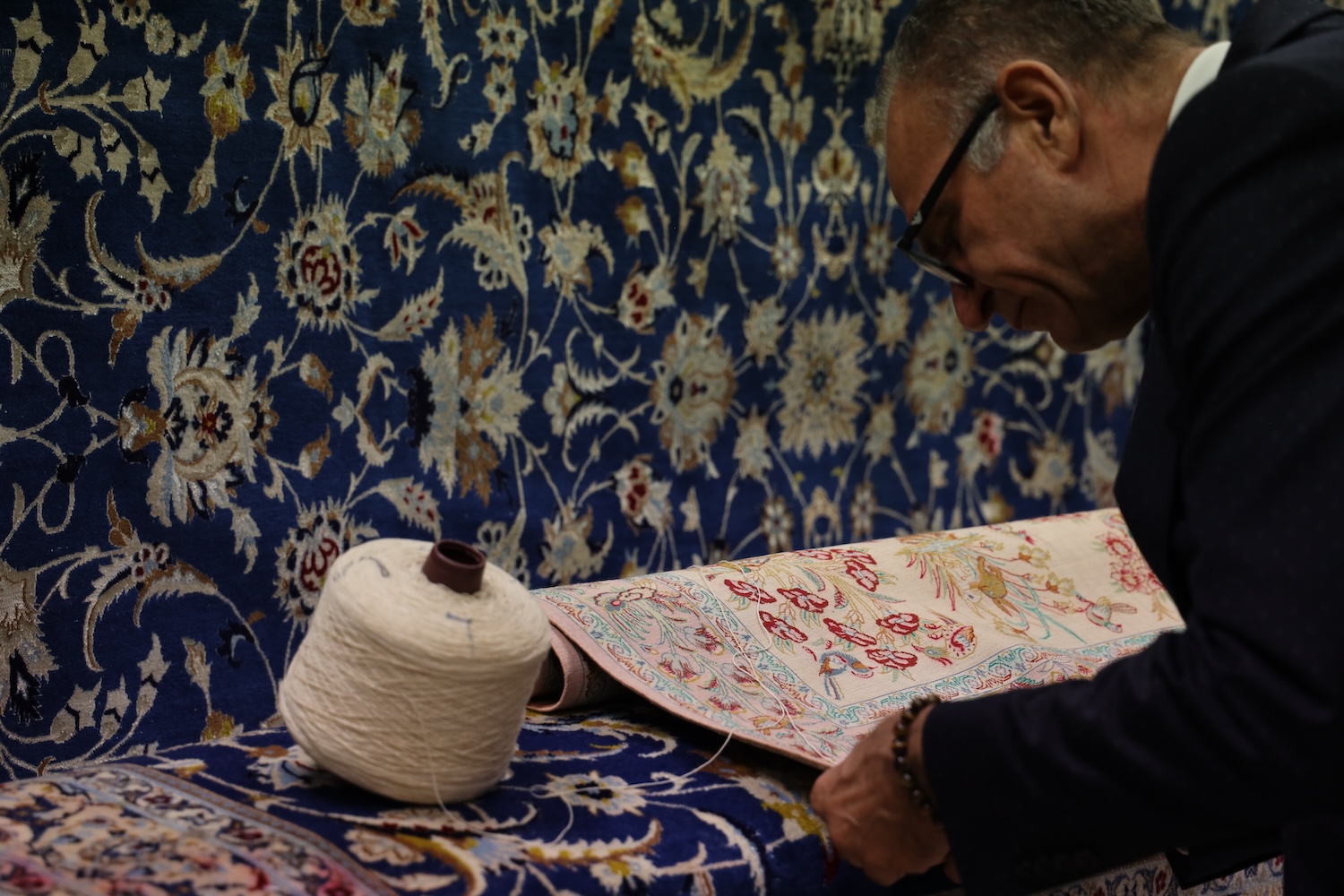
That distinction matters because a handmade carpet is rarely just a decorative purchase.
It has to suit a room, a rhythm of life and, in many cases, a home that may keep it for years or generations.
The patience behind a Persian carpet
A handmade Persian carpet is an object of accumulated time.
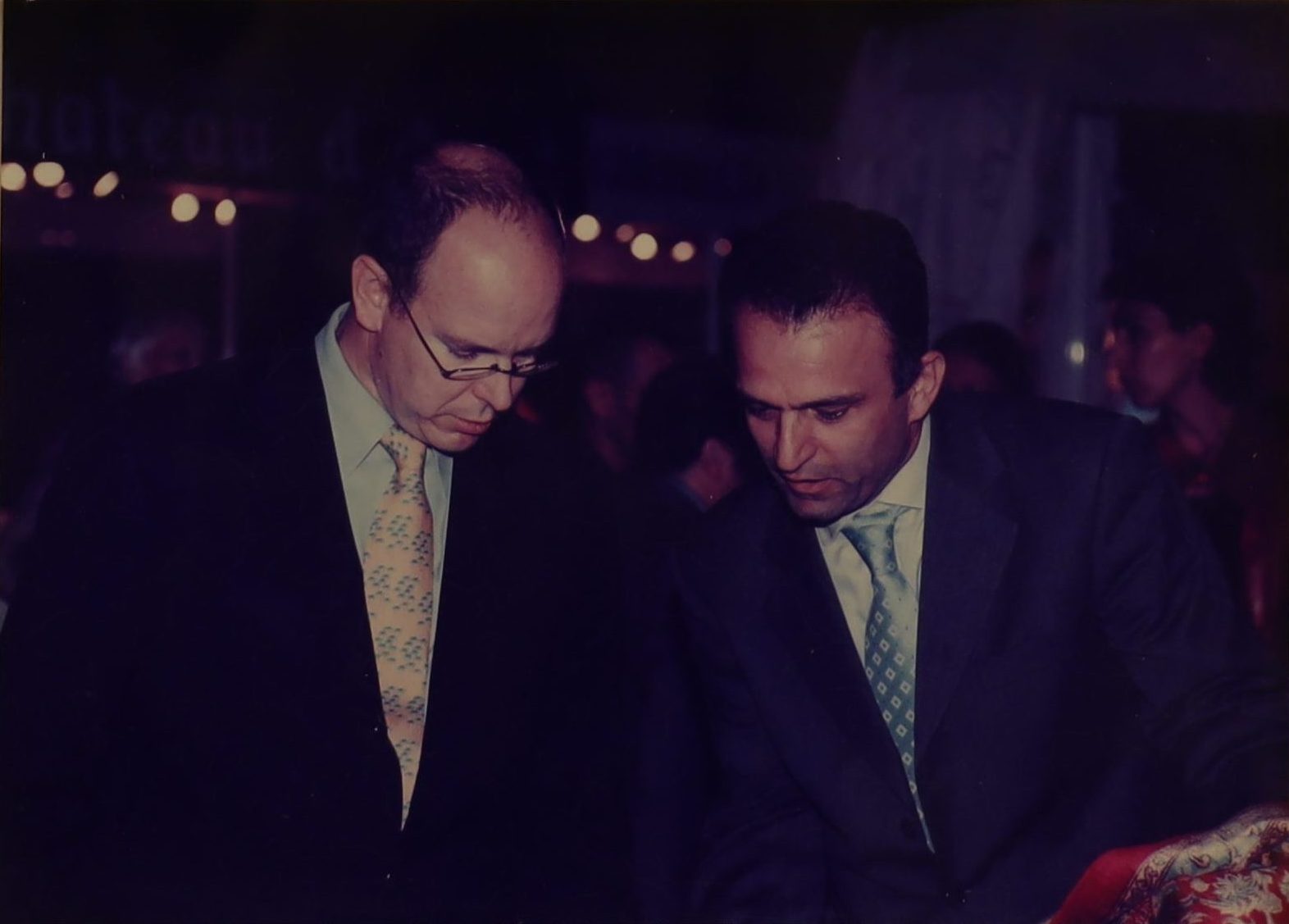
Depending on its size, complexity and production methods, some pieces can take five or six years to complete.
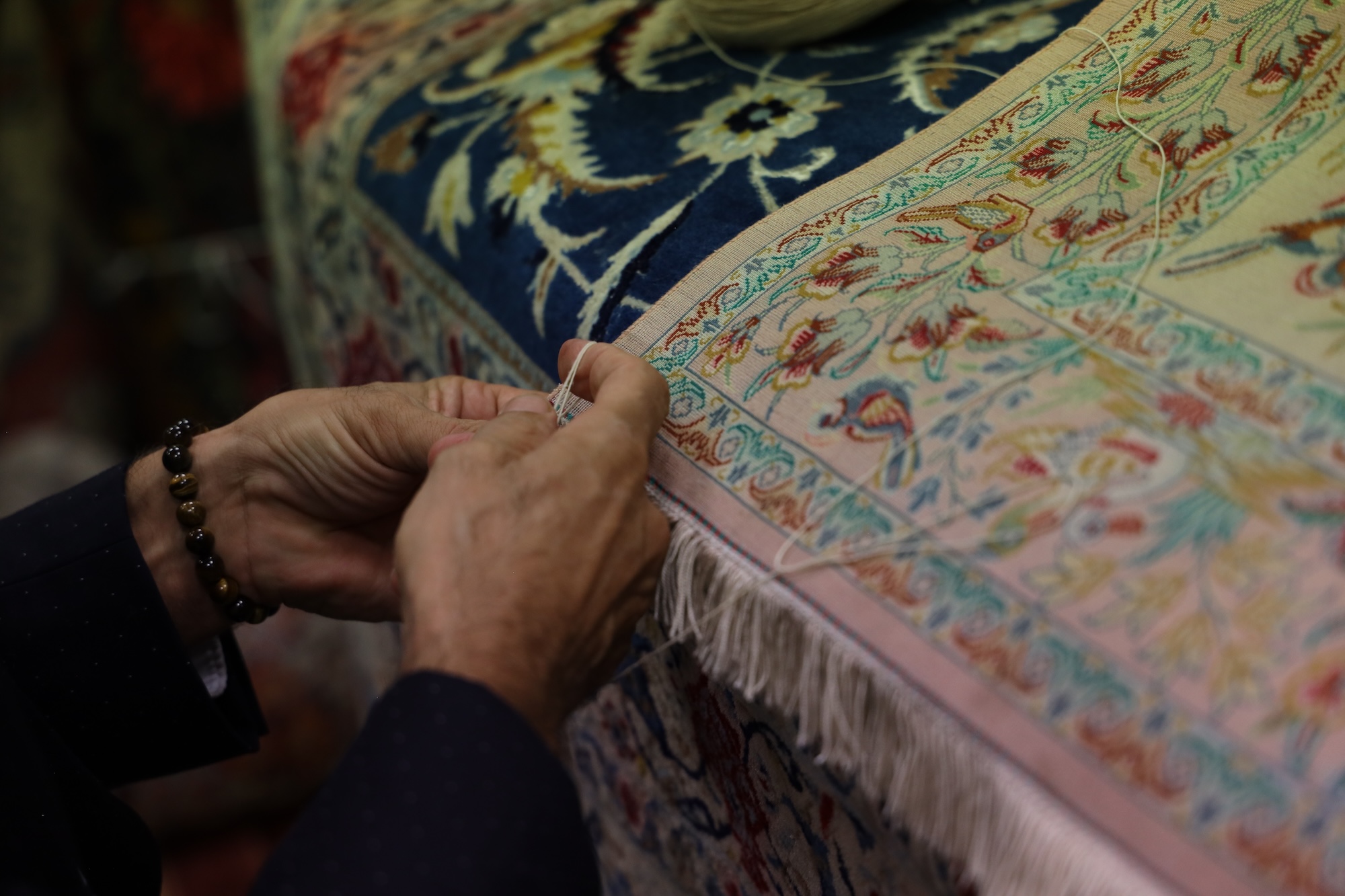
Every knot contributes to the final composition, building pattern, texture and colour through a slow process that resists shortcuts.
For buyers, the first attraction may be visual, but Christophe encourages a wider reading of the piece.
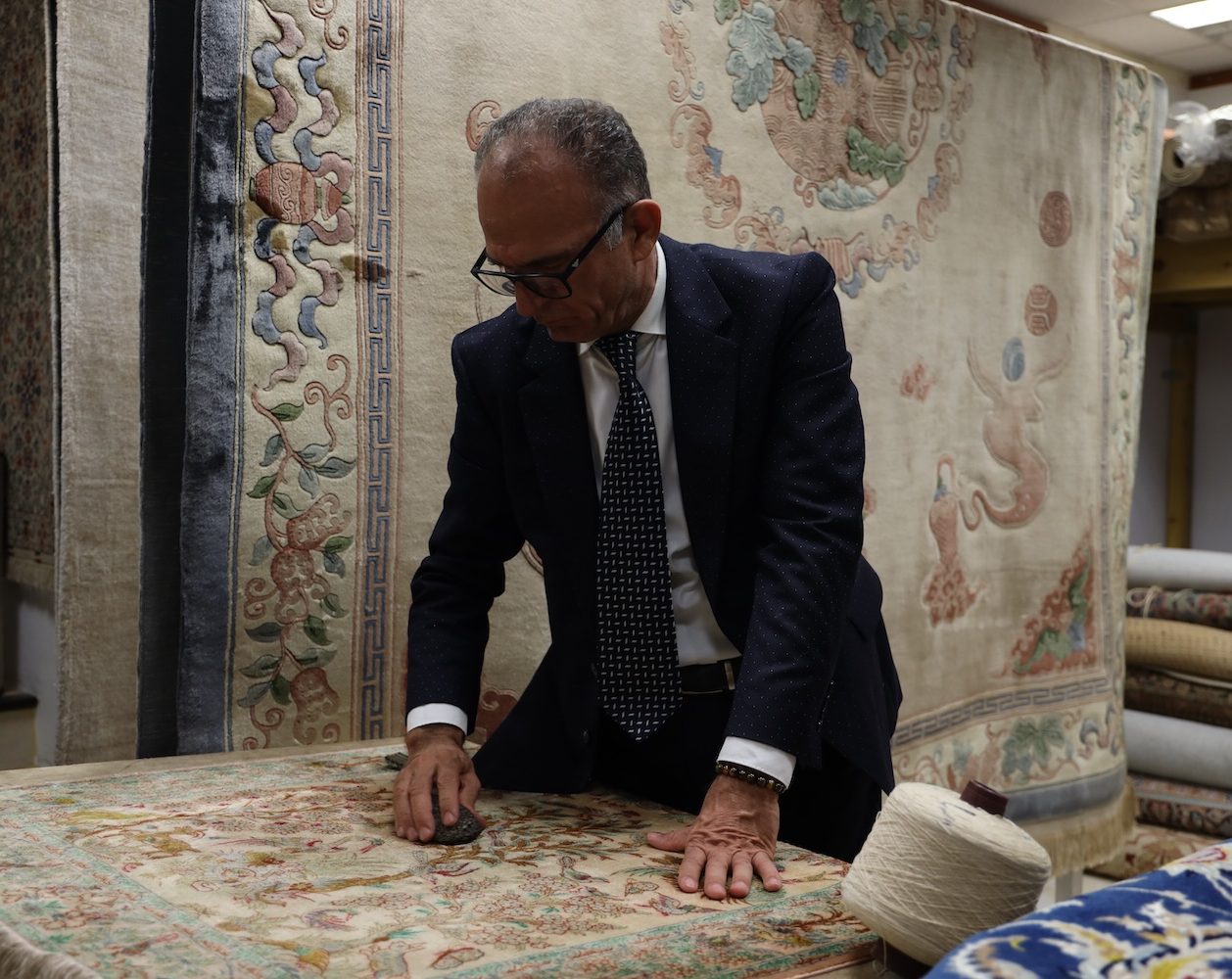
Origin, materials, age, condition and construction all help define what a carpet is and how it should be valued.
Knot density and fineness can suggest the amount of work involved, though quality is never reduced to one number or one visible feature.
Authenticity is equally important in the world of handmade Oriental carpets.
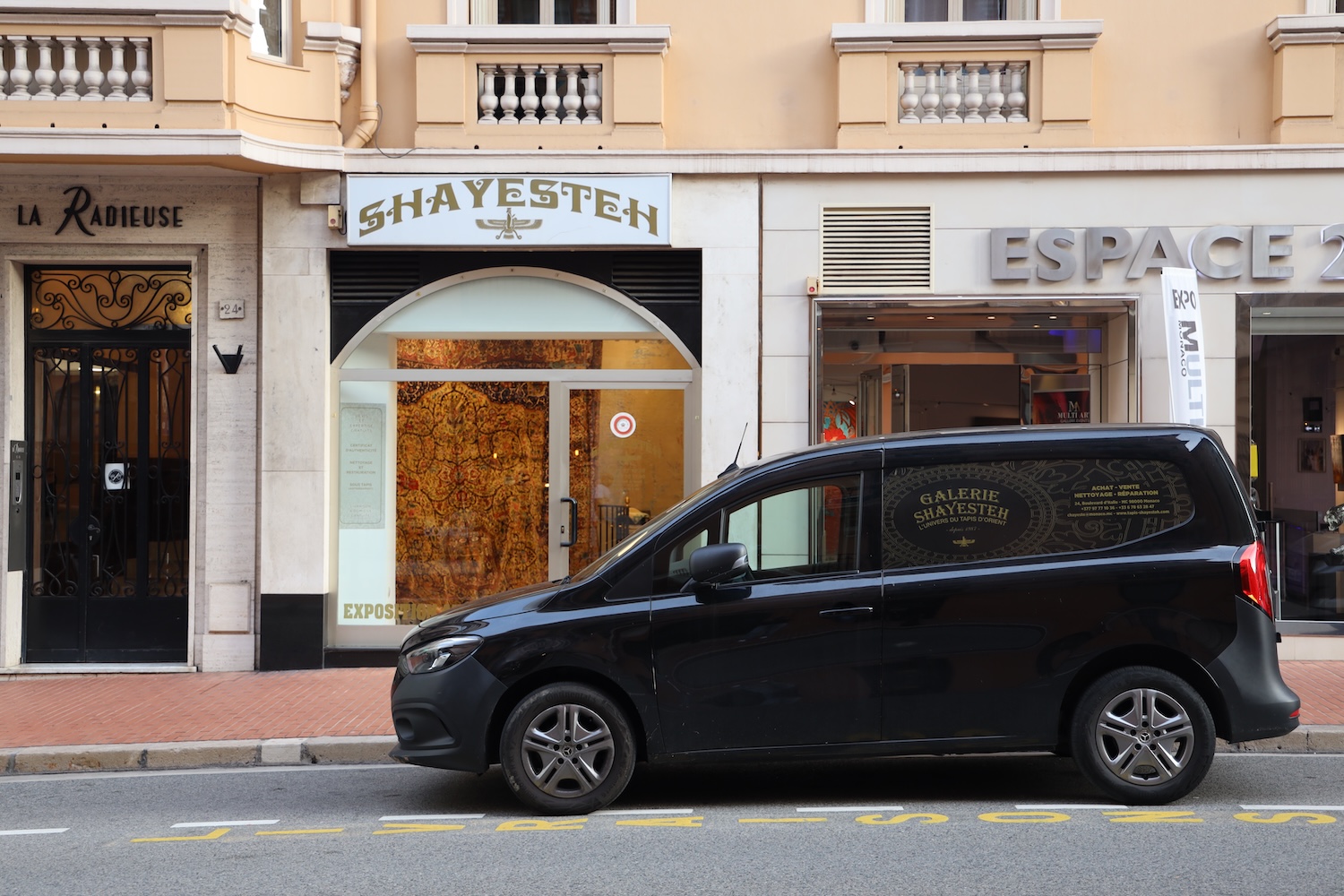
Asking about provenance, understanding origins and requesting relevant documentation, including a certificate of authenticity when available, can help buyers make better decisions.
The cultural dimension is part of the appeal.
Motifs, colours and regional weaving traditions carry inherited knowledge, giving each carpet a character beyond surface pattern.
Persian heritage in a Monaco interior
Monaco is a fitting setting for this kind of specialist gallery because its homes often bring together international taste, contemporary architecture and objects with personal meaning.
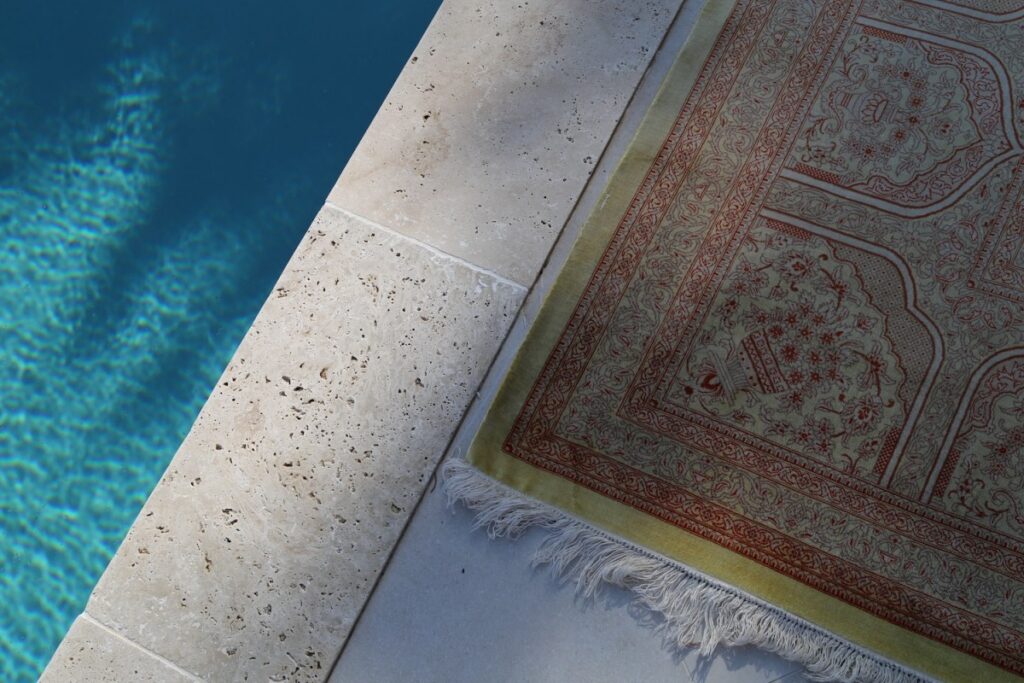
A Persian carpet can soften a minimal room, add depth to polished interiors or anchor a more traditional arrangement.
In a restrained space, a richly patterned carpet can become the focal point.
In a room with warmer materials or classic furniture, a subtler palette can create continuity rather than contrast.
The right choice depends on scale, natural light, furniture placement and the atmosphere the client wants to create.
This is where Galerie Shayesteh’s advisory role becomes central.
Christophe’s work is not simply to present carpets, but to help clients understand how a piece will live inside a particular space.
He has also referred to Prince Albert II’s appreciation for Iranian carpets as part of the wider cultural connection between Monaco and Iranian craftsmanship.
It’s a reminder that traditional arts often travel through personal recognition as much as through commerce.
Service beyond the sale
The gallery’s identity rests as much on relationships as it does on inventory.
Christophe has described the client connection as a force that keeps him engaged after so many years in the profession.
“What encourages me to continue after all these years is the relationship I build with my clients.”
That view fits the nature of the object.
Selecting a carpet involves taste, but it also involves practical questions about use, placement and care.
Christophe has also noted that every client brings a different way of looking at things.
“Every client has a different perspective, a different taste and a different way of seeing things. These exchanges teach me something new.”
For a specialist, that kind of listening is not a courtesy added at the end of the process.
It is part of the expertise.
After-sales service is an important extension of that approach, especially for carpets that may remain in a home for decades.
Owners may need advice on cleaning, maintenance, suitable underlays or changes in condition over time.
Christophe recommends considering professional cleaning approximately every five years, depending on condition, use and environment.
Spills and stains require particular caution, as household cleaning products can damage delicate fibres or affect dyes.
Specialist guidance is often the safer route because the right response depends on the material, the stain and the individual carpet.
The enduring appeal of Galerie Shayesteh is that it treats Persian carpets as living objects rather than static ornaments.
They enter homes with history already woven into them, then gather more meaning through use, care and the relationships formed around choosing them.