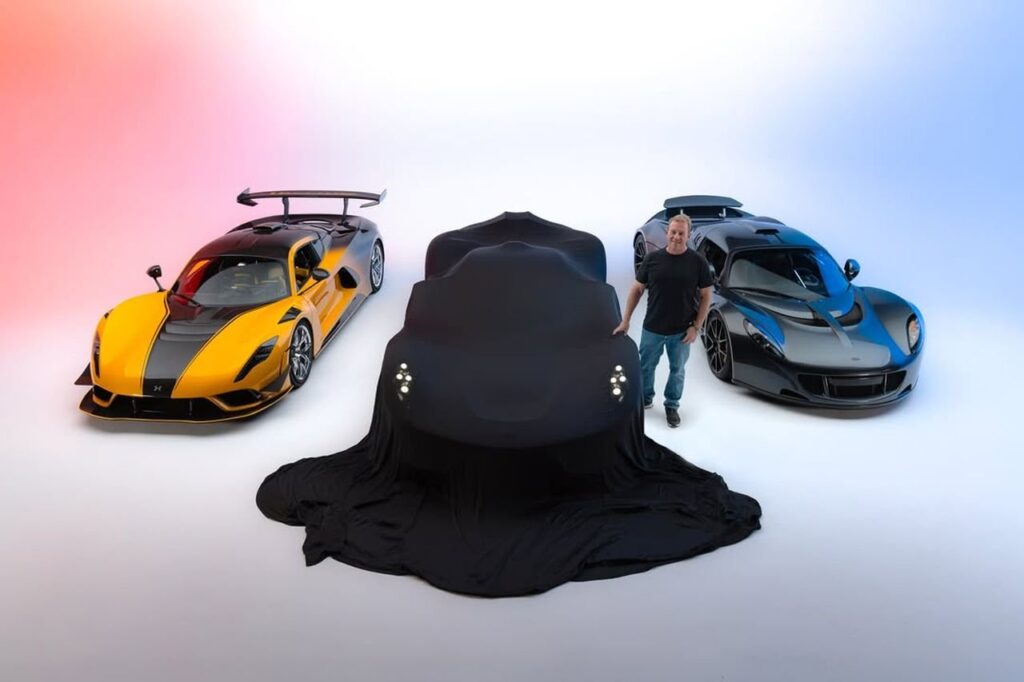
Hennessey has revealed the name and core philosophy behind its next hypercar, and it’s a sharp departure from the modern horsepower playbook.
Called the Blackbird, the new machine takes inspiration from the SR-71 aircraft while leaning into a rare mechanical formula for today’s hypercar market.
Rather than chasing the familiar twin-turbo route, Hennessey is building this car around a naturally aspirated V8, a manual gearbox and rear-wheel drive.
At a glance
- Hennessey’s next hypercar is named Blackbird, drawing its identity from the legendary SR-71 aircraft.
- It uses a new naturally aspirated 6.2-liter V8 from Ilmor Engineering with a six-speed manual transmission.
- Production is planned at 71 units, positioning the car as a more usable touring hypercar than the Venom F5.
A different third act for Hennessey
The Blackbird will become Hennessey’s third hypercar, following the Venom GT and the Venom F5.
That lineage matters because both earlier cars helped define the Texas company through extreme speed and straight-line intensity.
The Blackbird appears to be taking a different route, with John Hennessey describing it as a different kind of hypercar.
The shift is clear in the hardware.
Instead of using the twin-turbo V8 formula associated with the Venom F5, the Blackbird moves to an all-new naturally aspirated 6.2-liter V8 developed by Ilmor Engineering.
That engine will be paired with a six-speed manual transmission, sending power to the rear wheels.
Manual gearbox, naturally aspirated V8 and rear-drive intent
In a segment increasingly shaped by dual-clutch transmissions, hybrid assistance and all-wheel-drive traction, the Blackbird’s layout feels intentionally analogue.
A naturally aspirated engine paired with a manual gearbox gives Hennessey a more tactile proposition, one aimed less at effortless numbers and more at driver involvement.
The six-speed manual is the defining detail here.

It suggests the Blackbird won’t simply be another high-output flagship, but a car built around rhythm, sound and mechanical connection.
Rear-wheel drive reinforces that character, keeping the experience focused and relatively old-school by hypercar standards.
SR-71 influence and carbon-fibre construction
The aircraft reference goes beyond the name.

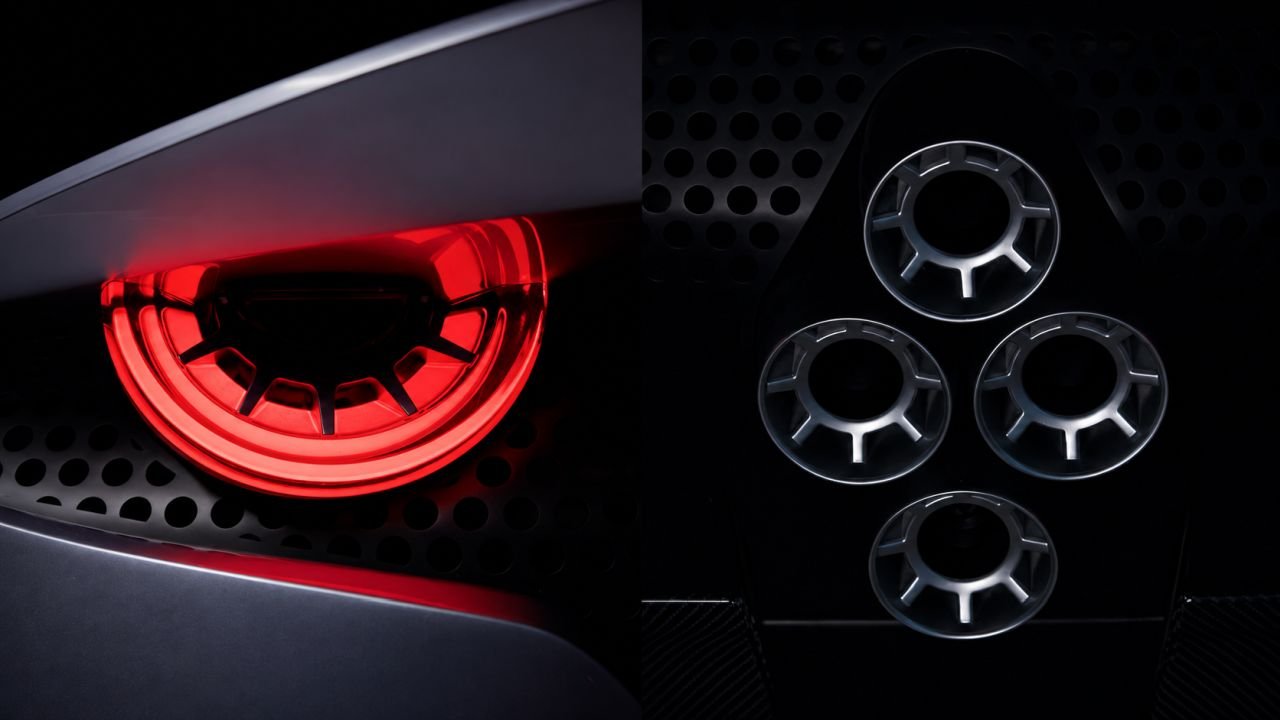
Hennessey says the Blackbird features aerospace-inspired bodywork and active vertical stabilizers, an unusual detail that should give the car a more technical visual identity than the brand’s previous models.
The car is made entirely from carbon fibre, keeping weight and structure at the center of the package.
That construction also fits the wider brief, since the Blackbird is being positioned as the brand’s ultimate touring hypercar rather than a more singular speed weapon.
The mention of touring is important.
It hints at a car intended to be more usable than the Venom F5, while still carrying the intensity expected from a limited-run Hennessey project.
Limited to 71 examples
Hennessey plans to build just 71 units of the Blackbird.
The number neatly connects the car to its SR-71 namesake, while giving the project the scarcity expected of a modern hypercar from a specialist manufacturer.
Full performance figures, pricing and delivery timing have yet to be detailed, leaving the mechanical concept as the main story for now.
Even at this early stage, the Blackbird stands out because it chooses feel over convention in a category that often measures progress through automation and forced induction.
Details & Specifications
| Brand | Hennessey |
|---|---|
| Model | Blackbird |
| Engine | Naturally aspirated 6.2-liter V8 |
| Engine development | Ilmor Engineering |
| Transmission | Six-speed manual |
| Drivetrain | Rear-wheel drive |
| Construction | Carbon fibre |
| Aerodynamics | Aerospace-inspired bodywork with active vertical stabilizers |
| Production | 71 units |
| Positioning | Touring hypercar |
For collectors and drivers who still value the physical act of driving, the Hennessey Blackbird could become one of the more intriguing hypercars of the moment, not because it follows the category’s current logic, but because it deliberately resists it.