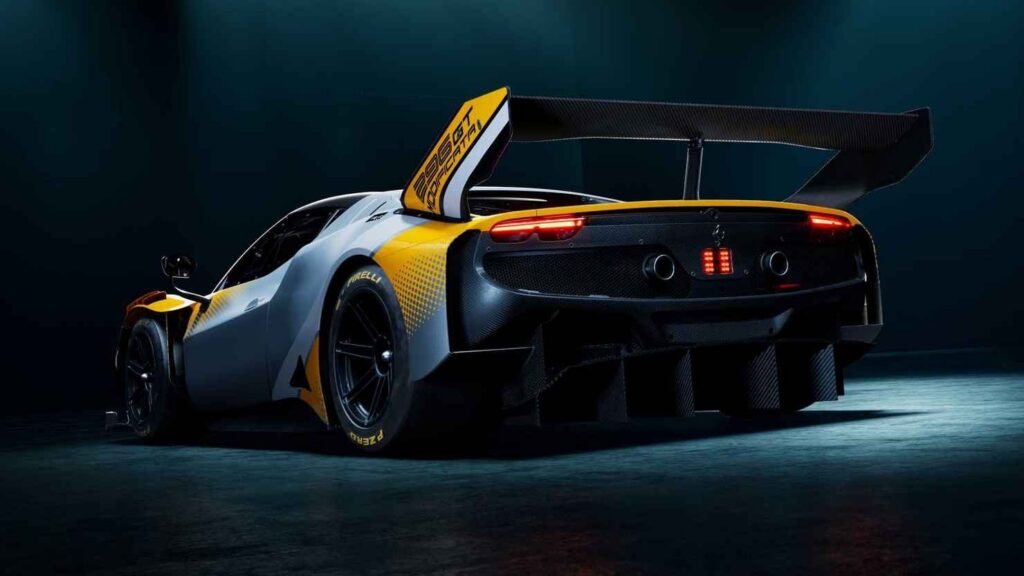
Ferrari is exploring a different way to make active aero work at the rear of a supercar.
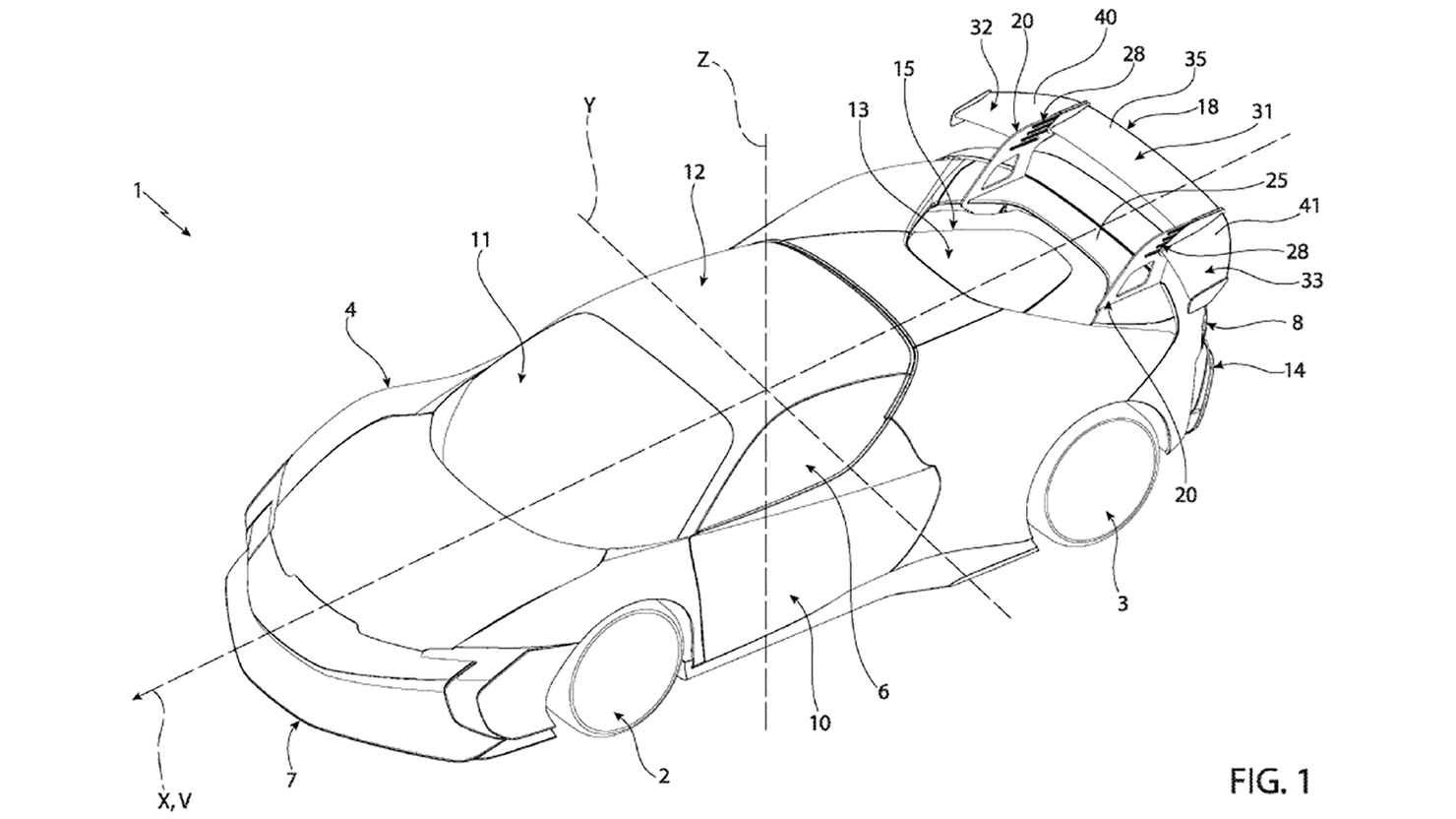
A newly filed patent describes a rear wing that changes position without electric motors or hydraulic actuators, using airflow and a spring mechanism instead.
It’s a neat idea because it addresses two opposing demands in modern performance car design, where aerodynamic efficiency has to coexist with crash regulations.
At a glance
- Ferrari has filed a patent for an active rear wing that can move without motors or hydraulic actuators.
- The design uses airflow to push the wing rearward at speed, while a spring can return it to a forward compliant position.
- The concept is intended to balance downforce, packaging and safety requirements, with Ferrari describing it as relatively simple and inexpensive to manufacture.
A wing designed around real-world packaging rules
Rear wings tend to work most effectively when they’re positioned close to the diffuser, where they can help manage airflow at the back of the car.
That ideal location is not always straightforward, because safety and crash regulations can make it difficult to mount a wing at the extreme rear of the vehicle.
Ferrari’s proposed answer is a wing with two operating positions.
At lower speeds, the wing sits over the rear bodywork in a position intended to satisfy safety requirements.
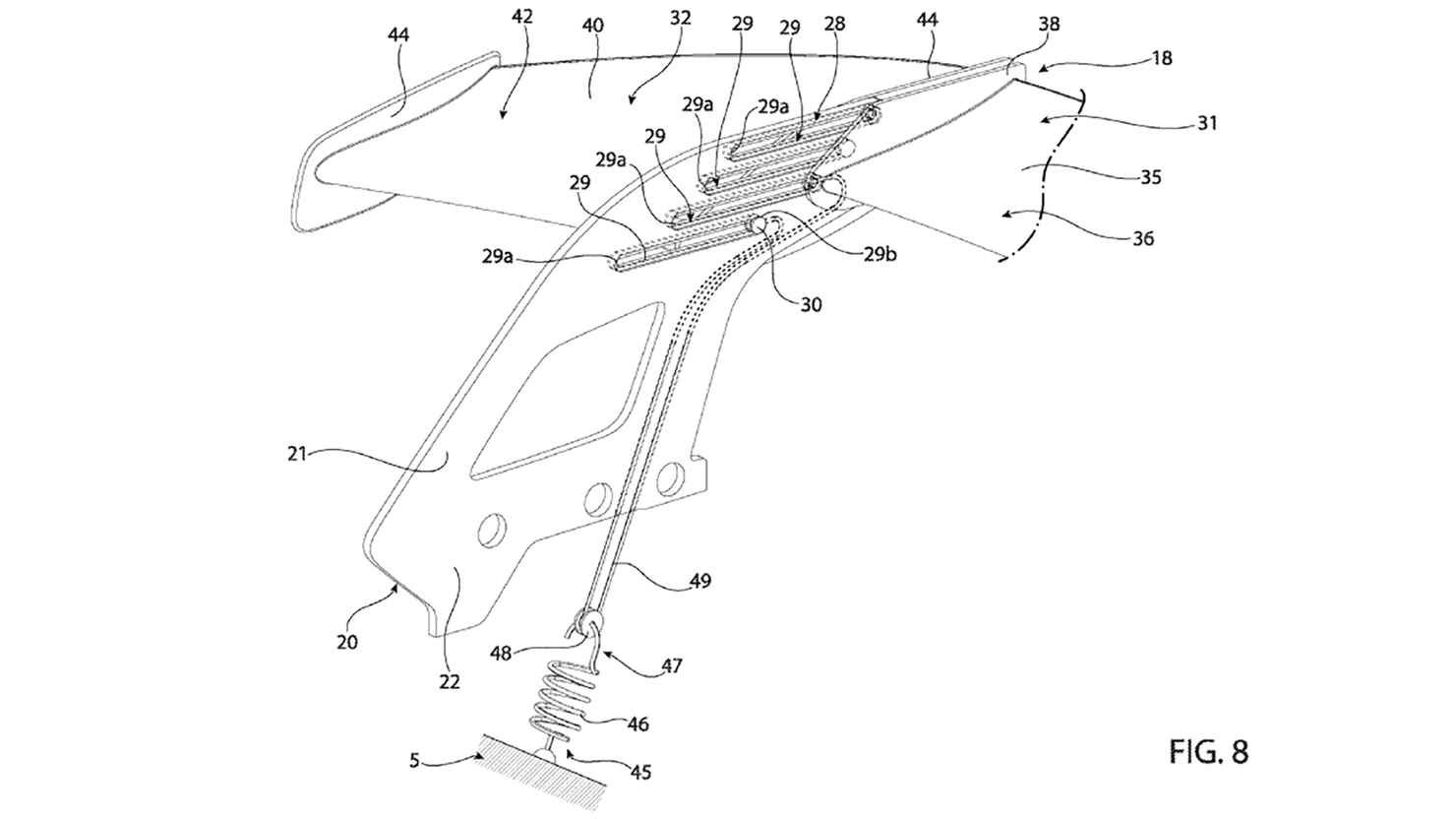
As the car accelerates, airflow pushes the wing backwards along tracks, moving it into cleaner air where it can generate more downforce.
Active aero without the usual hardware
The striking part of the patent is what it leaves out.
Rather than using electric motors or hydraulic systems to change the wing angle or position, Ferrari’s design relies on aerodynamic force and a spring mechanism.
That could make the system less complex than a conventional active rear wing, at least in principle.
Ferrari says the system should be relatively simple and inexpensive to manufacture, which is notable for a piece of hardware associated with high-performance aerodynamics.
The concept also has a built-in safety response.
If the wing is struck from behind, a spring pulls it forward into its compliant position, reducing the chance that the extended rear element remains in a more exposed state after an impact.
Independent sections add a practical touch
The patent also describes a wing made of three sections that can move independently.
That detail matters because damage to one section would not necessarily prevent the others from functioning.
It’s a practical layer in a design that already seems focused on making active aero simpler and more resilient.
The independent movement could also help contain the effects of a localised impact, though Ferrari’s patent details focus on the sectioned layout rather than any production application.
Details & Specifications
| Brand | Ferrari |
|---|---|
| Component | Active rear wing patent |
| Actuation method | Airflow and spring mechanism |
| Conventional hardware avoided | Electric motors and hydraulic actuators |
| Wing positions | Forward low-speed position and rearward high-speed position |
| Movement path | Along tracks |
| Wing sections | Three independently moving sections |
| Safety feature | Spring returns wing forward if struck from behind |
As a patent, this is not the same as a confirmed production feature, but it shows Ferrari thinking carefully about how to make future aerodynamic systems more efficient, more robust and less mechanically complicated.