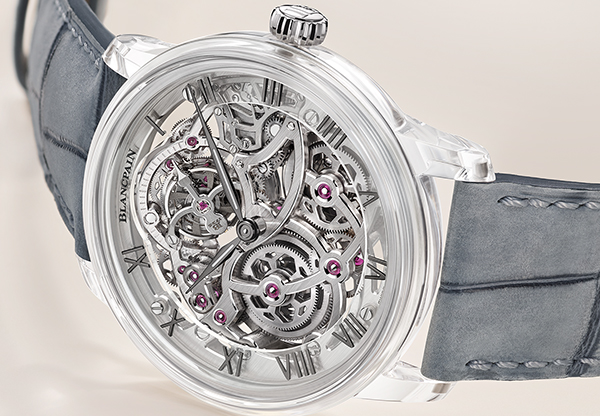
Blancpain has returned to one of the most distinctive mechanisms in its modern catalogue with the Carrousel Incliné, a watch built around a one-minute flying carrousel set at a 30-degree angle.
It’s an uncommon proposition even by high-complication standards, not least because the carrousel itself has largely belonged to Blancpain in contemporary wristwatch form since the manufacture revived it in 2008.
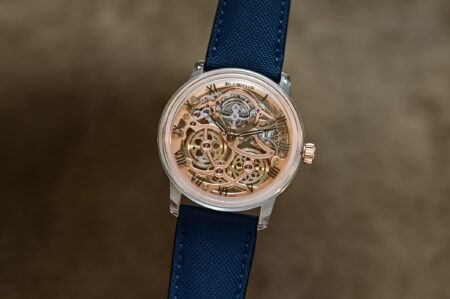
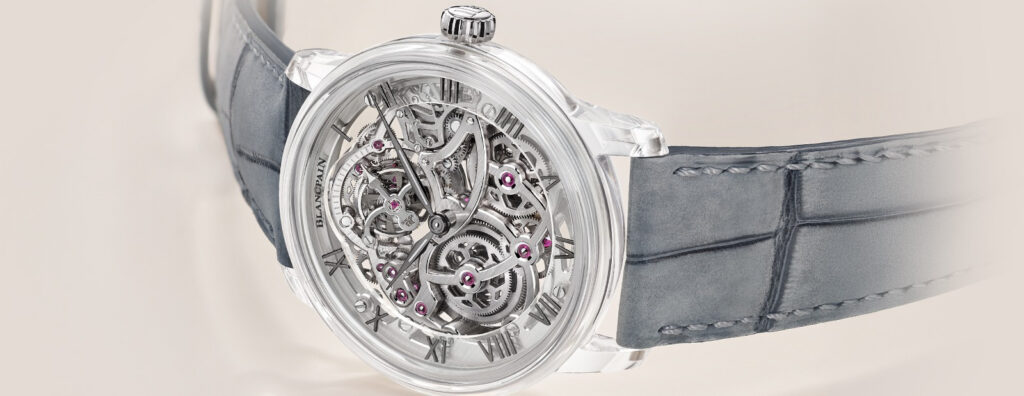
This new piece pushes the idea further, placing the mechanism inside the brand’s first sapphire case and pairing it with a fully openworked 18k gold movement.
At a glance
- Blancpain has introduced the Carrousel Incliné with a one-minute flying carrousel inclined at 30 degrees.
- The watch uses the manual-winding Calibre 222ISQ, an openworked 18k gold movement with a 100-hour power reserve.
- Two versions are offered in a sapphire case, priced at US$502,600, with production expected to be extremely limited.
A carrousel set at 30 degrees
The carrousel was patented in England in 1892 by Danish watchmaker Bahne Bonniksen as an alternative to the tourbillon.
It performed well in Kew Observatory trials and found a foothold among British watchmakers before production faded with the decline of British watchmaking.
Blancpain brought the mechanism back to wristwatches in 2008 with the Carrousel Volant Une Minute, described as the first carrousel wristwatch, using a flying cage, a centrally positioned balance and a one-minute rotation.
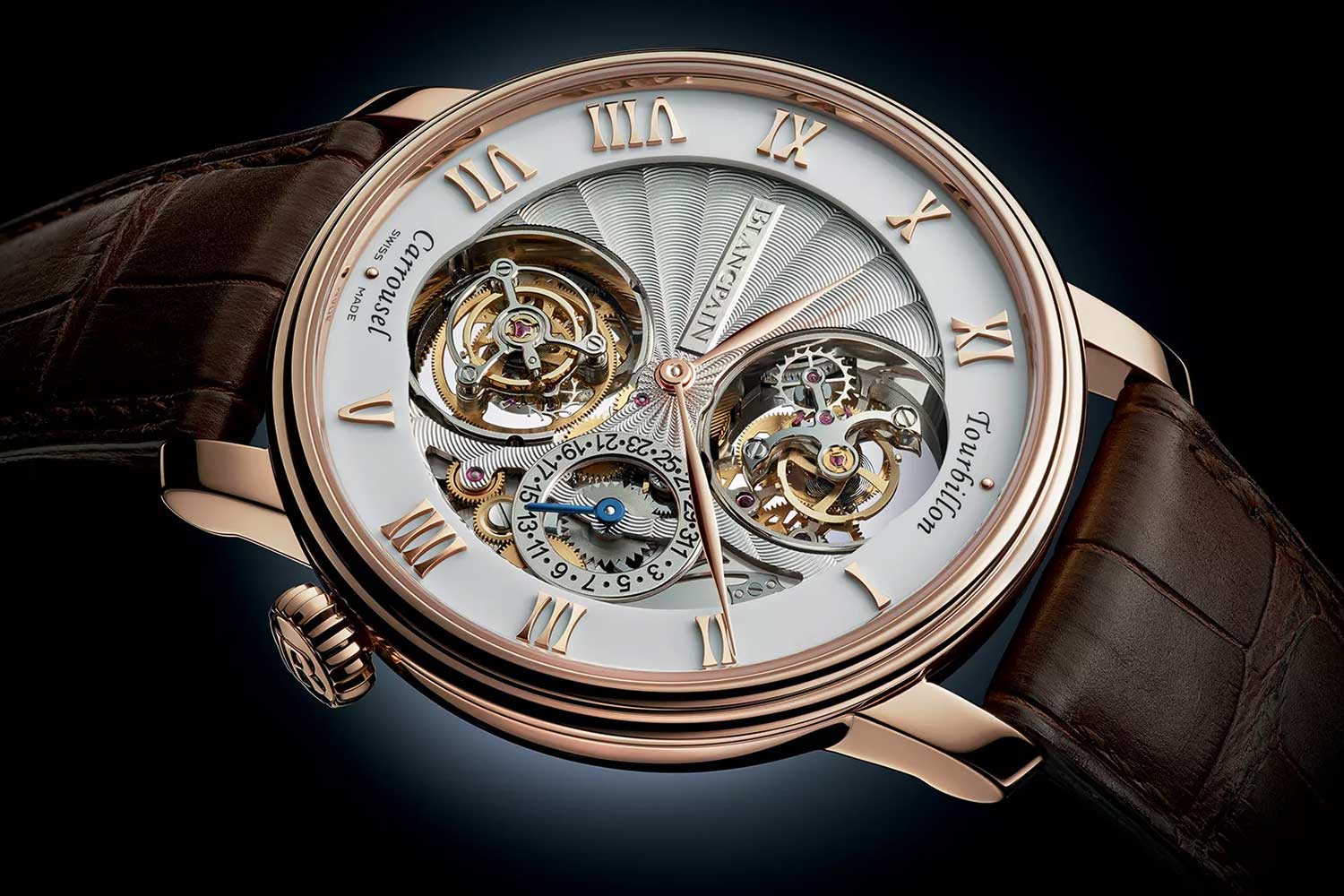
The manufacture later combined the carrousel with major complications, including a cathedral minute repeater in 2010 and a minute repeater with flyback chronograph in 2013.
Also in 2013, Blancpain placed a tourbillon and a carrousel in the same watch, linked by a differential that averaged their rates.
The Carrousel Incliné takes a different route by changing the geometry of the regulating organ itself.
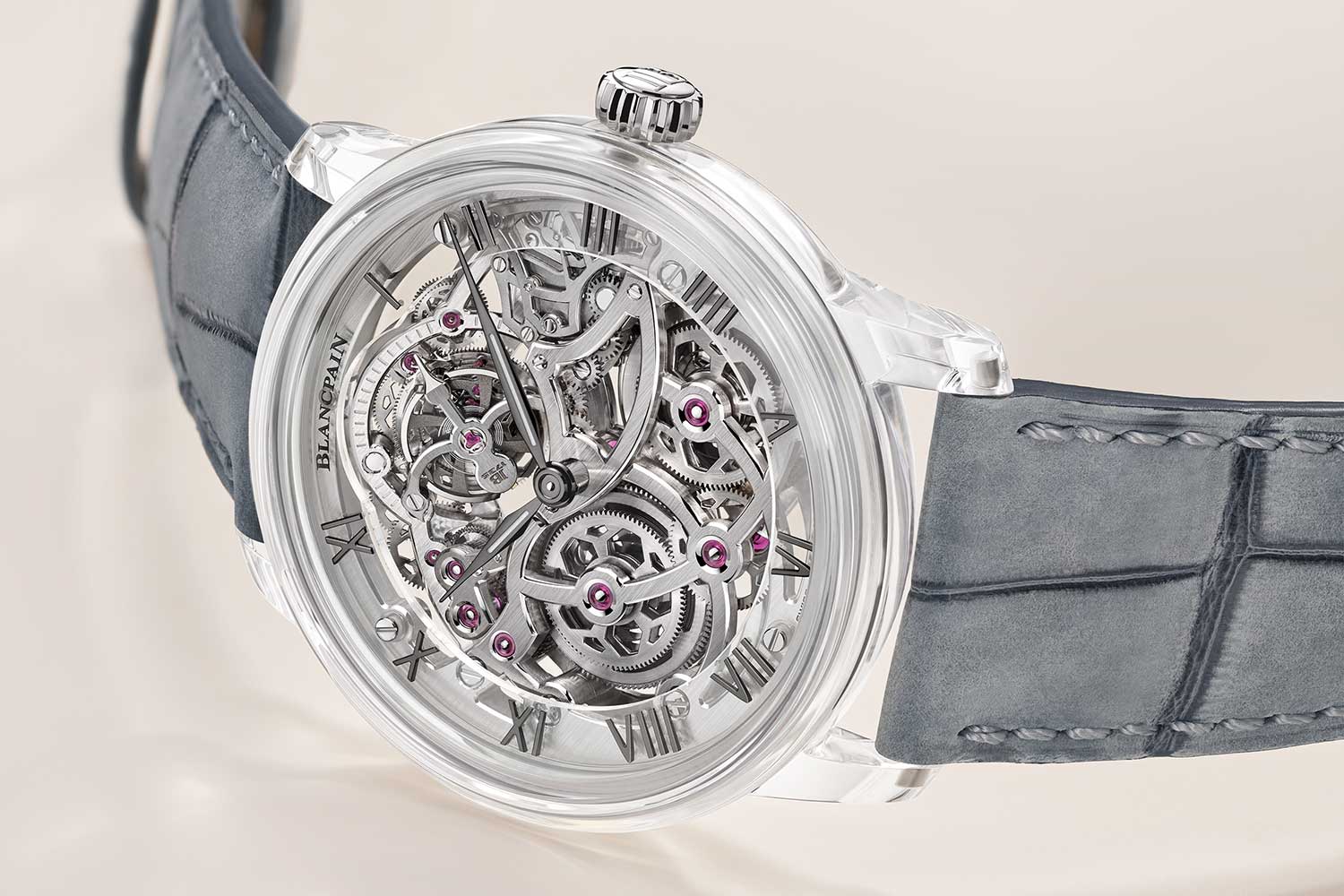
Its cage sits at 30 degrees to the mainplate, an angle Blancpain selected after testing inclinations from 0 to 35 degrees in five-degree increments.
The purpose is to extend positional averaging when the watch lies flat, where a conventional carrousel offers less advantage than it does in vertical positions.
Blancpain records rate, amplitude and maximum rate variation across the six standard positions, then issues each watch with an individual internal chronometry certificate.
The stated mean daily rate is 0 to +2 seconds, with one-minute rate measurements taken in all six positions and repeated continuously across the 100-hour power reserve.
Sapphire case and exposed architecture
The watch is housed in Blancpain’s first sapphire case, measuring 40.3mm in diameter and 11.3mm thick.
Those dimensions are restrained for a watch with an inclined regulating organ, particularly one that displays so much of its movement architecture from multiple angles.
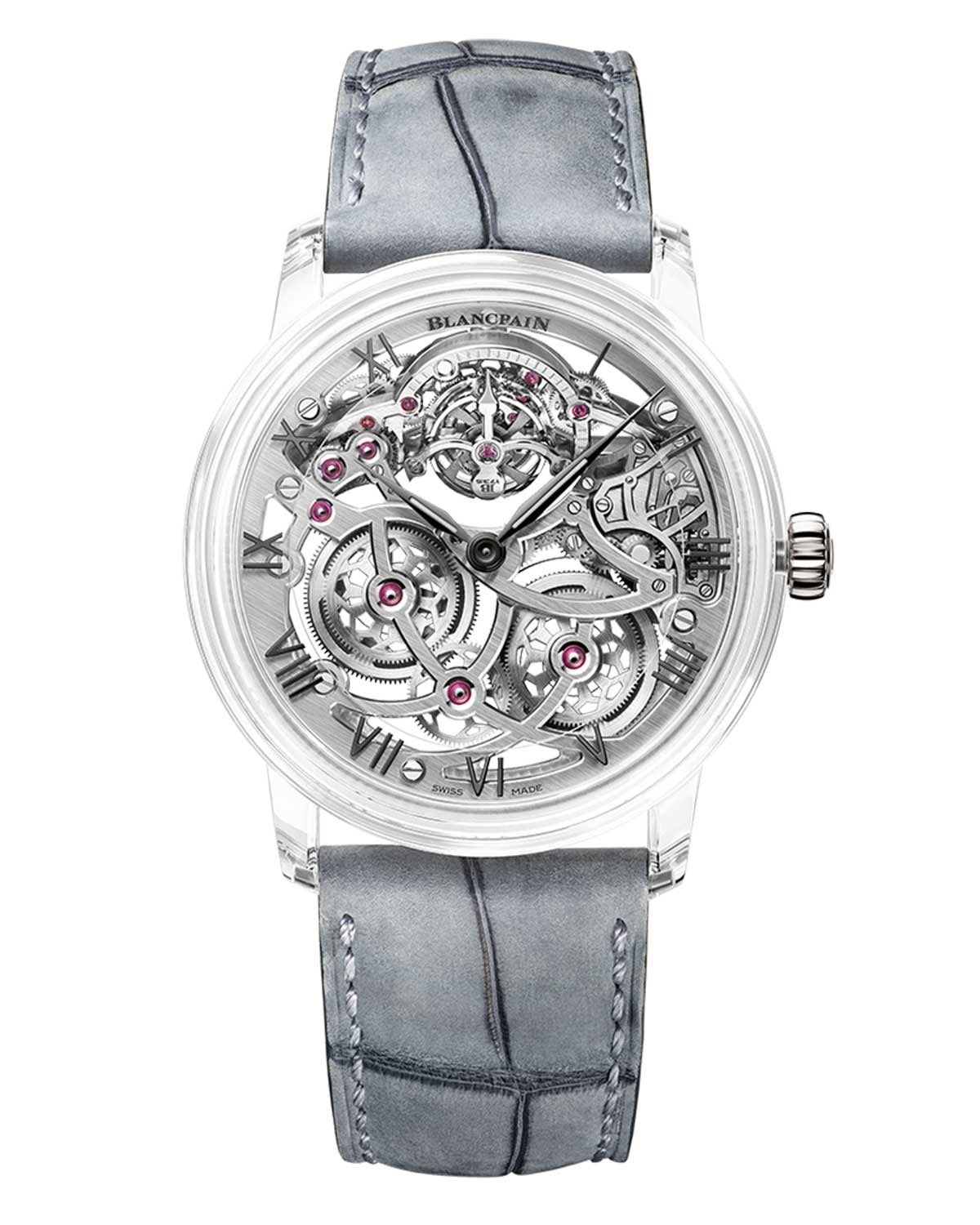
The case has no screws and is made from three parts.
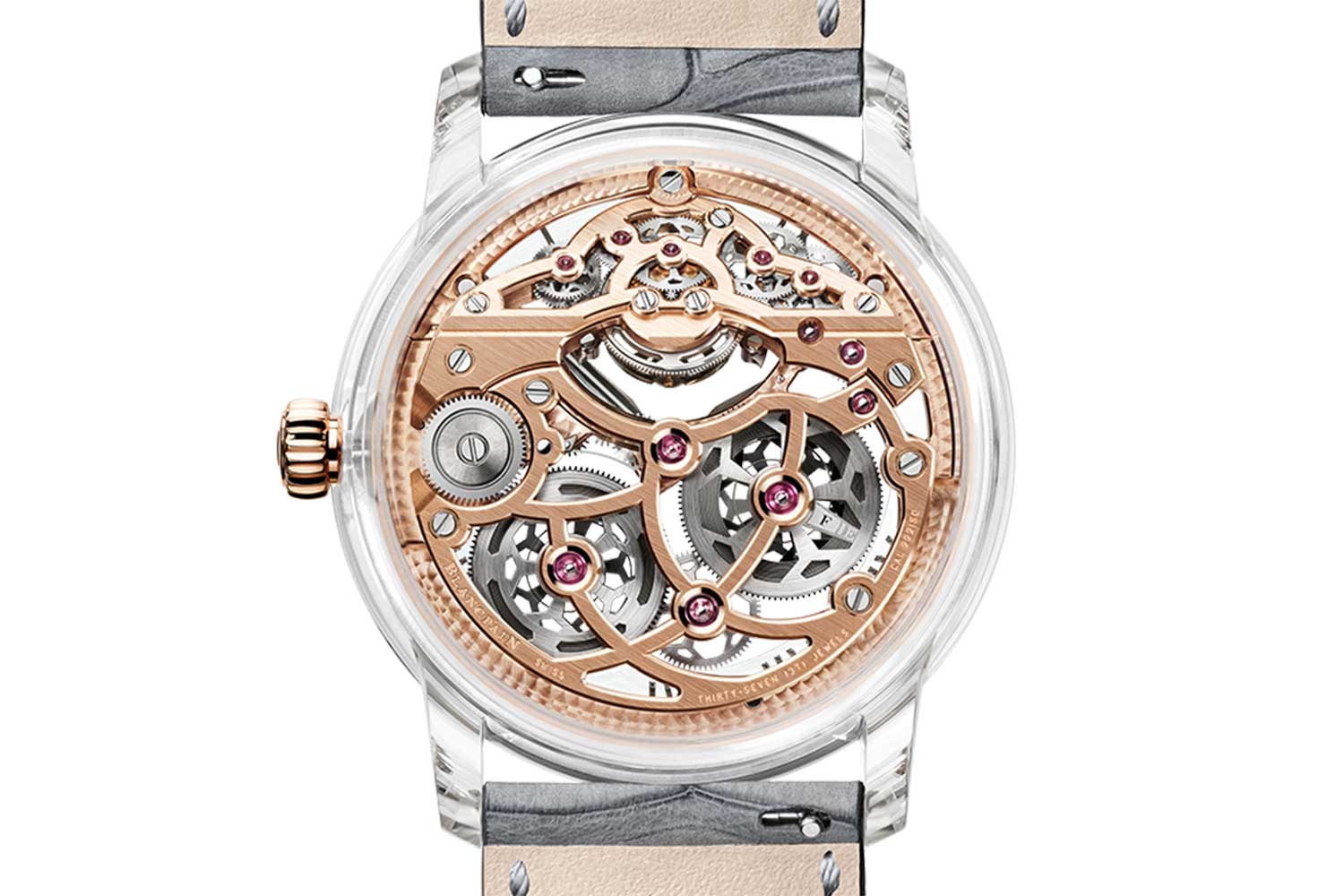
The caseback and middle are permanently bonded with adhesive, while the bezel is held by a compressed gasket and can be removed for access to the movement from above.
Despite the all-sapphire construction, Blancpain specifies water resistance of 30 metres.
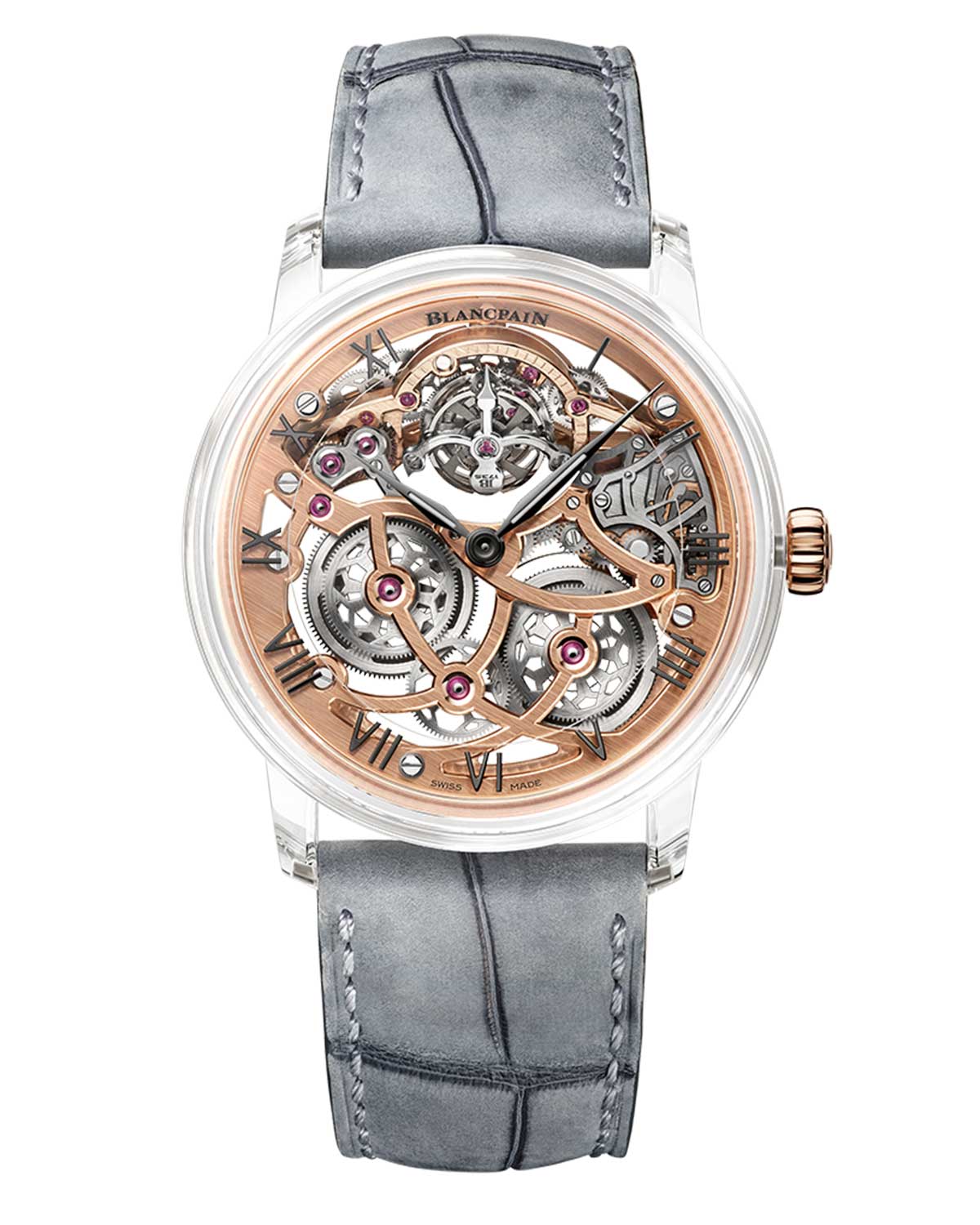
The case is manufactured in La Chaux-de-Fonds, with each component said to require around 100 hours of machining and polishing.
A sapphire dial keeps the movement visible while gold appliqués and luminous hands maintain the time display above the mechanics.
The watch is offered with either a rhodium-plated openworked gold movement or a movement left in red gold.
Inside Calibre 222ISQ
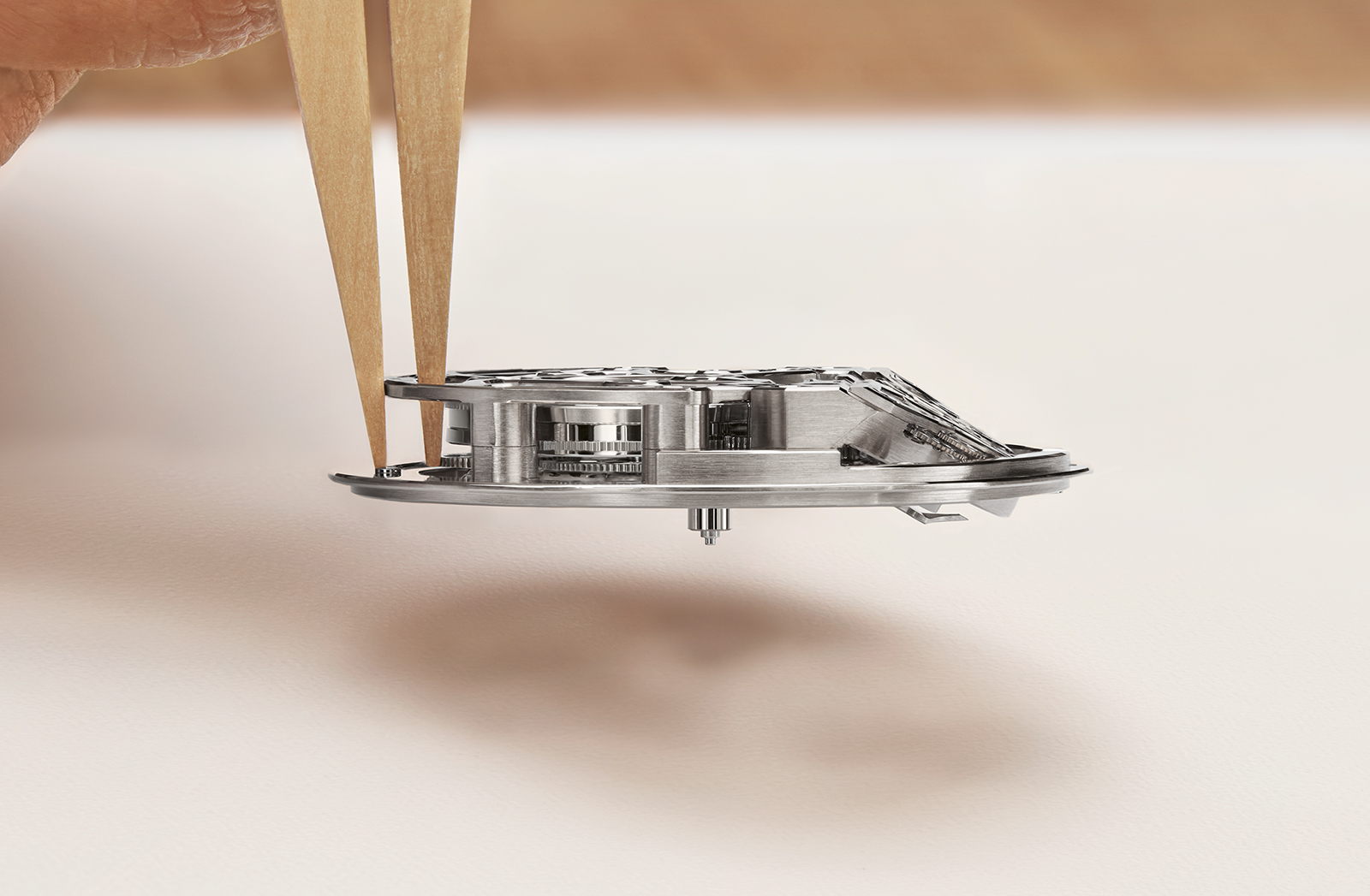
The manual-winding Calibre 222ISQ measures 35.2mm wide and 5.3mm thick, rising to 6.98mm at the highest point of the inclined cage.
It uses two mainspring barrels connected in series for a total power reserve of 100 hours.
Rather than using one large barrel, the twin-barrel layout is intended to deliver a more even torque curve as the springs unwind.
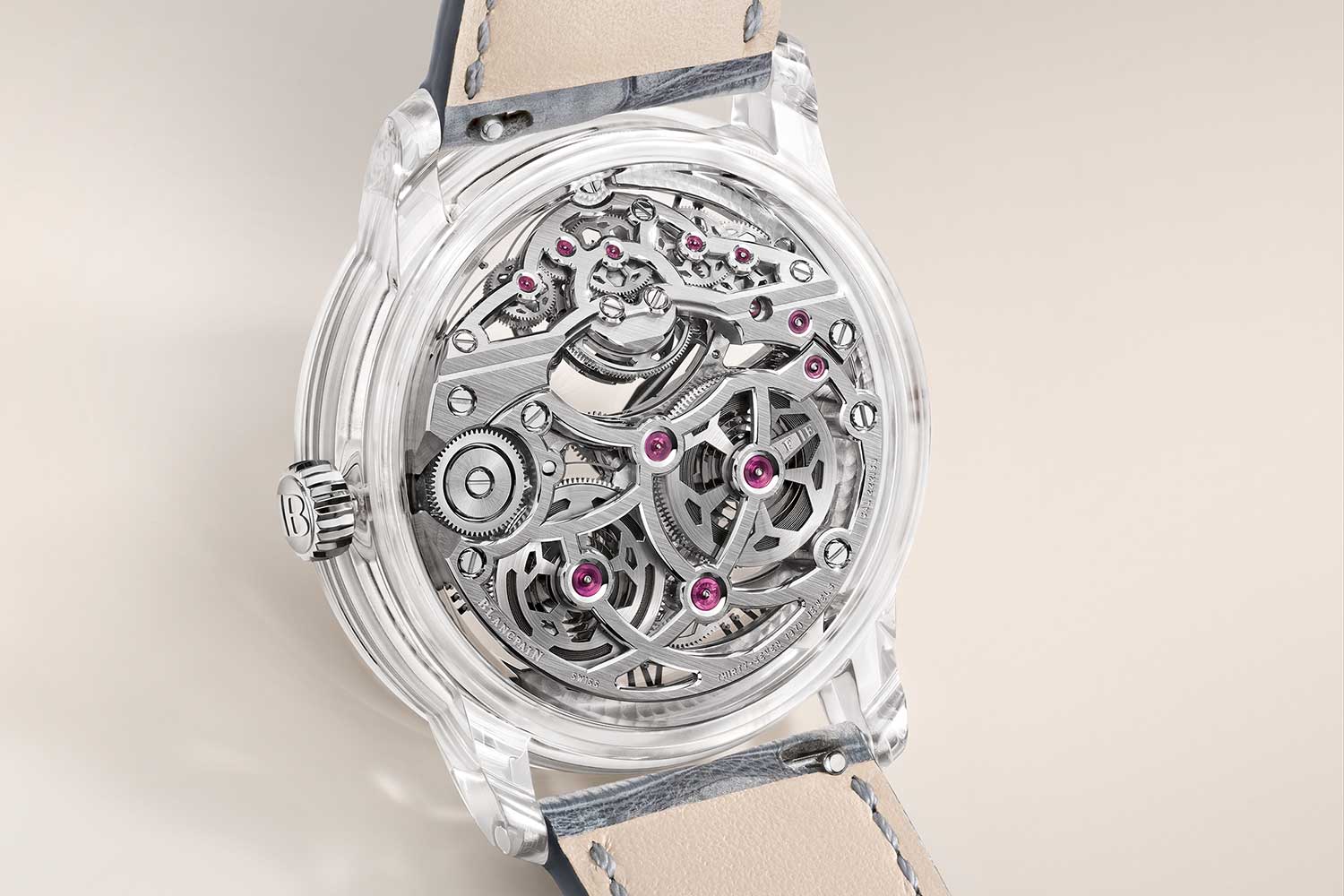
Openings in the barrel drums allow the state of wind to be seen directly.
The movement runs at 28,800 vibrations per hour, or 4Hz, and uses a silicon hairspring with an 8mm free-sprung balance fitted with inset adjustment screws.
The cage completes one revolution per minute and carries a seconds pointer that bends slightly downward to clear the crystal.
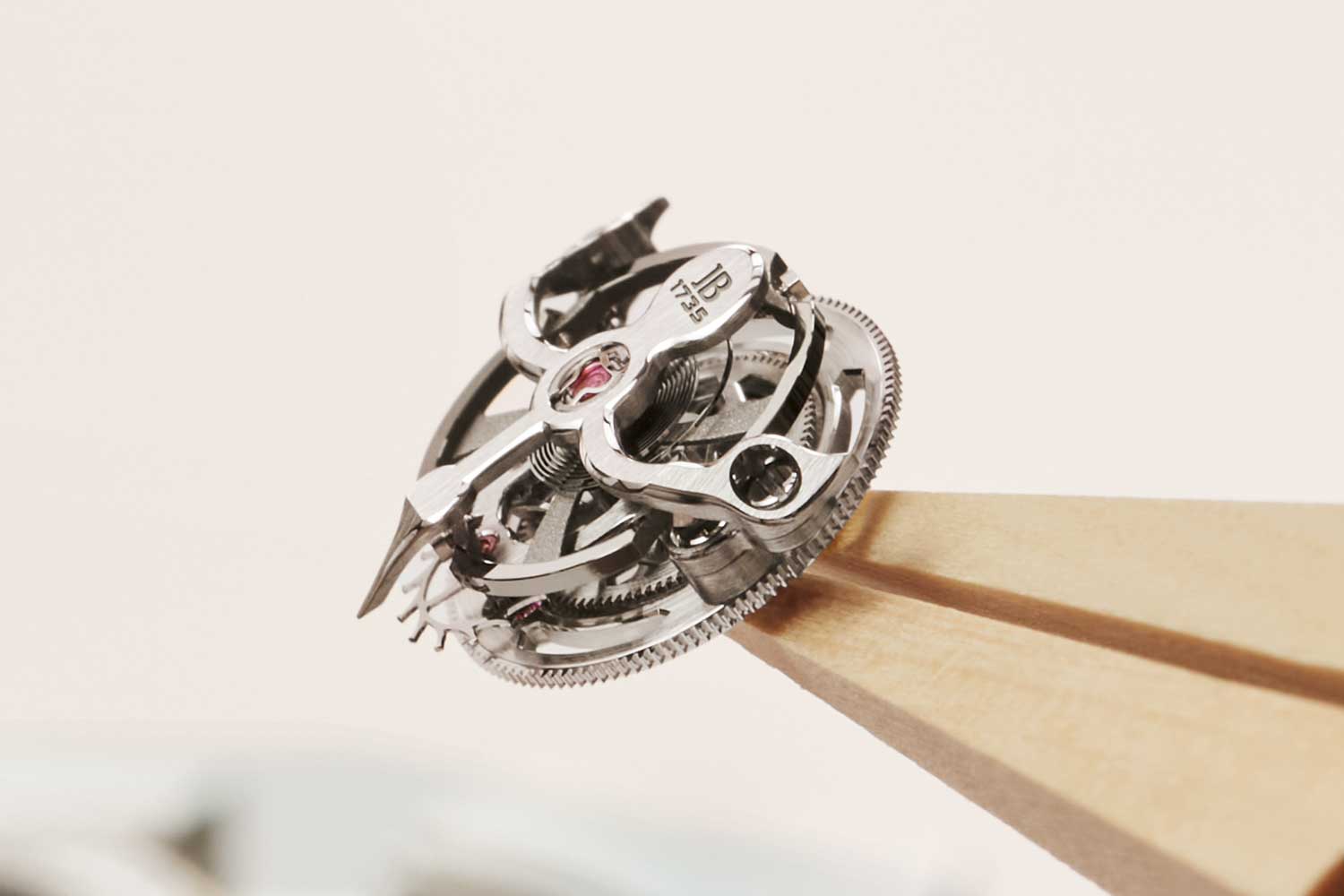
The mechanical distinction between a carrousel and a tourbillon remains central to the appeal here.
In a tourbillon, the cage is part of the power path to the escapement, while in a carrousel the transmission is divided into two linked branches, with one supplying the escapement and the other controlling cage rotation.
Because the inclined assembly sits at 30 degrees to the mainplate, Blancpain uses two successive gear meshes to change the plane of the gear train in stages of 22 and 8 degrees.

Both engagements take place before the split into the two transmission paths that define the carrousel architecture.
Blancpain also reduced the carrousel cage, with its mass down by 8.5 percent and rotational inertia reduced by 30 percent compared with the previous construction.
The toothed lower wheel now measures 9mm, only slightly larger than the balance itself.
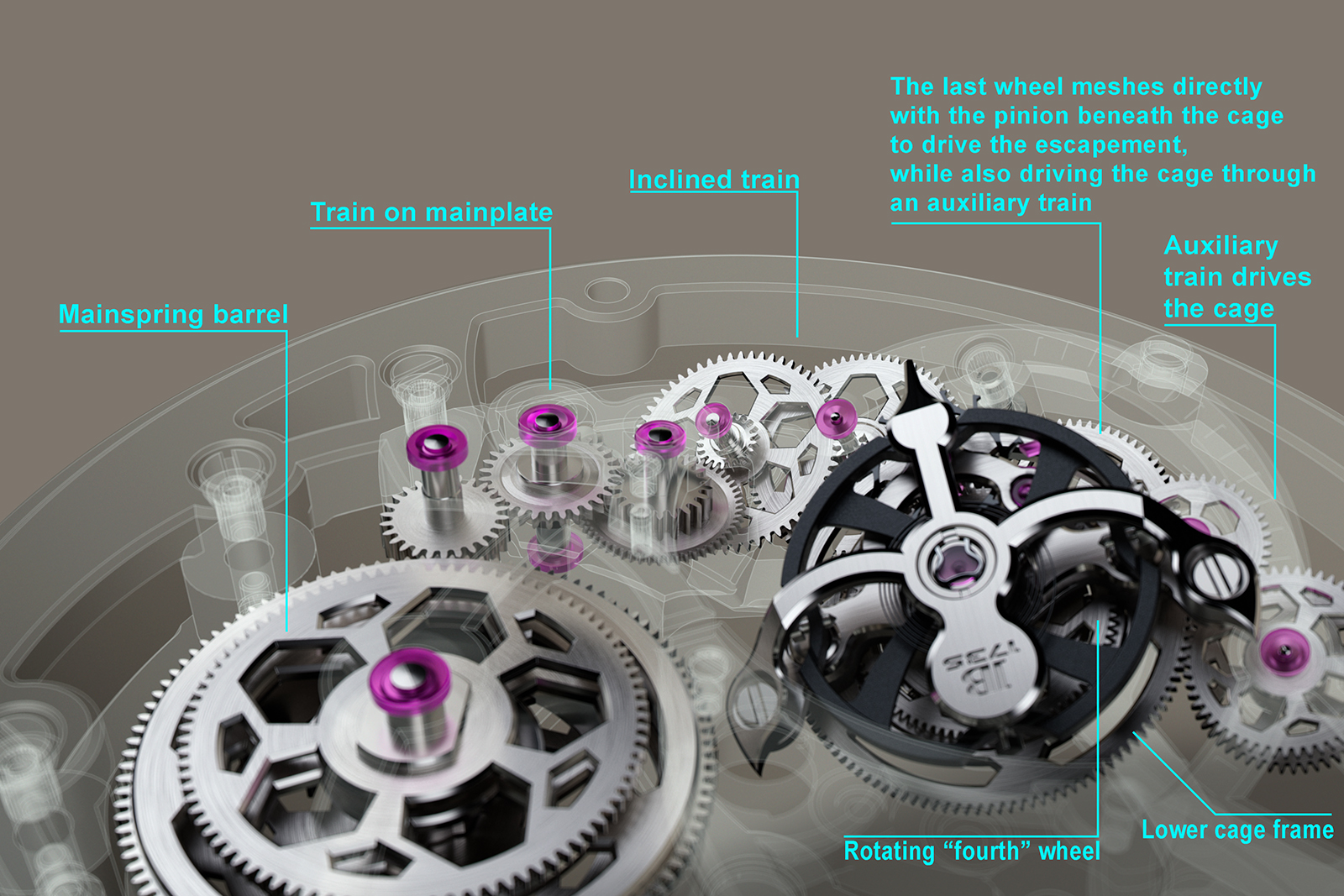
To keep the inclined assembly slim, Blancpain replaced separate end bearings with two concentric ball bearings at the same height, one supporting the cage and the other supporting the drive arbor.
Finishing built for scrutiny
The openness of the watch makes the finishing impossible to hide, and Blancpain has treated the movement accordingly.
The mainplate and bridges are made in gold, dramatically openworked and decorated on both sides.
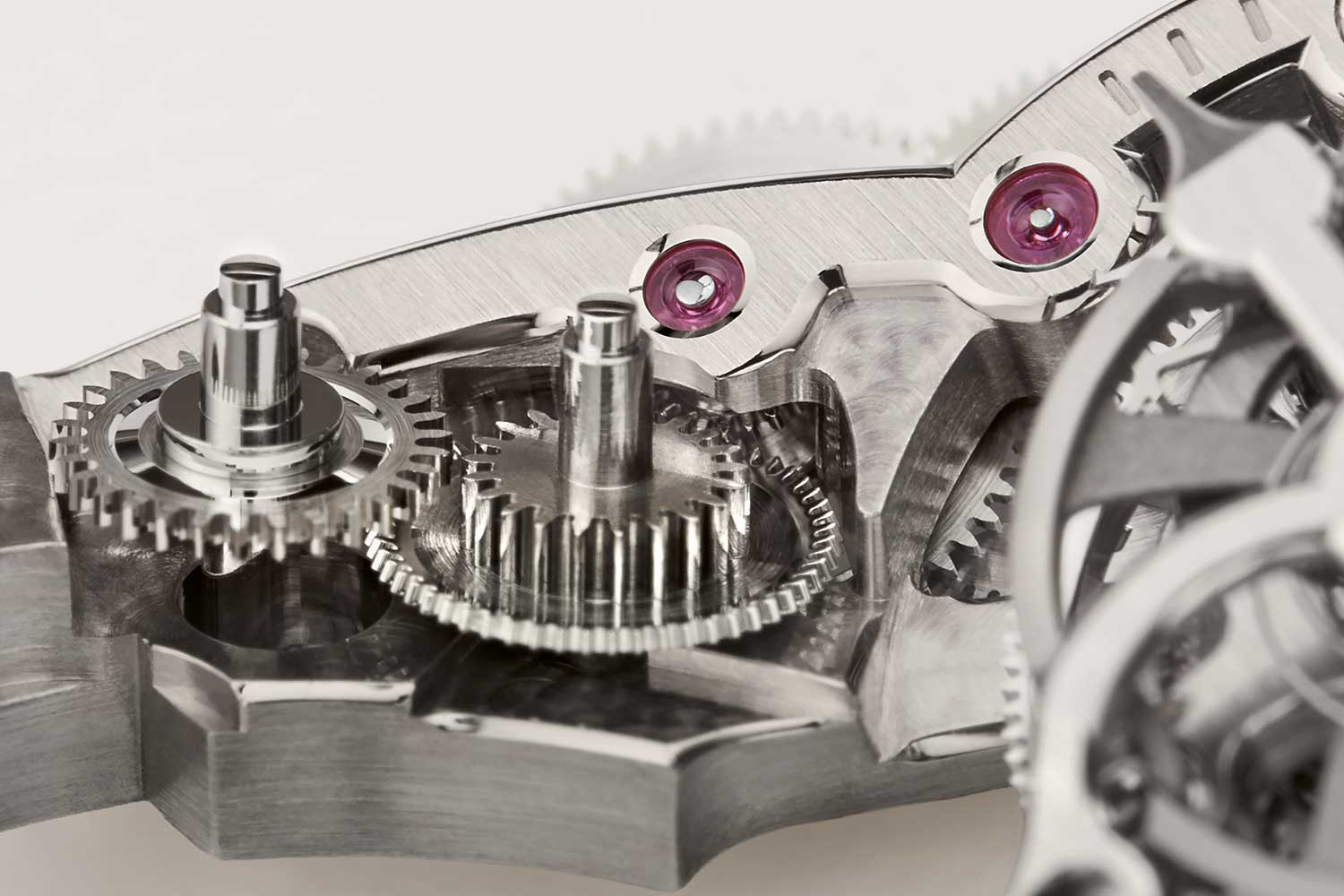
Blancpain specifies broad upper bevels cut at 30 degrees and lower bevels at 45 degrees, with 253 sharp inward angles beveled and polished by hand.
The manufacture says more than 60 custom tools were made for the decoration of this calibre.
The anglage is described as traditional handwork without rotary tools, beginning with a burin, continuing through progressively finer abrasive papers on wooden files and ending with gentian wood charged with diamond paste.
Blancpain states that the mainplate or barrel bridge alone requires 55 to 60 hours of work, while the lower inclined bridge takes around a week and a half.
Total hand finishing for the Calibre 222ISQ is given as 210 hours.
Details & Specifications
| Brand | Blancpain |
|---|---|
| Model | Carrousel Incliné |
| Case size | 40.3mm diameter, 11.3mm thickness |
| Case material | Sapphire |
| Water resistance | 30 metres, 3 bar |
| Dial | Sapphire with gold appliqués |
| Movement | Manual-winding Calibre 222ISQ in rhodium-plated or red 18k gold |
| Movement dimensions | 35.2mm diameter, 5.3mm thick, rising to 6.98mm at the highest point of the cage |
| Complication | One-minute flying carrousel inclined at 30 degrees |
| Frequency | 28,800 vph, 4Hz |
| Hairspring | Silicon |
| Power reserve | 100 hours |
| Chronometry | Internal certificate with stated mean daily rate of 0 to +2 seconds per day |
| Functions | Hours, minutes and seconds indicated by the carrousel |
| Strap | Interchangeable glazed blue-grey leather with gold folding clasp and safety catch |
| Price | US$502,600 |
| Availability | Not a limited edition, with production expected to be extremely limited |
The Carrousel Incliné is not merely a display of rarity for its own sake.
It connects a historic alternative to the tourbillon with a modern approach to chronometry, then places the whole argument in a transparent case where both the engineering and the handwork have nowhere to hide.