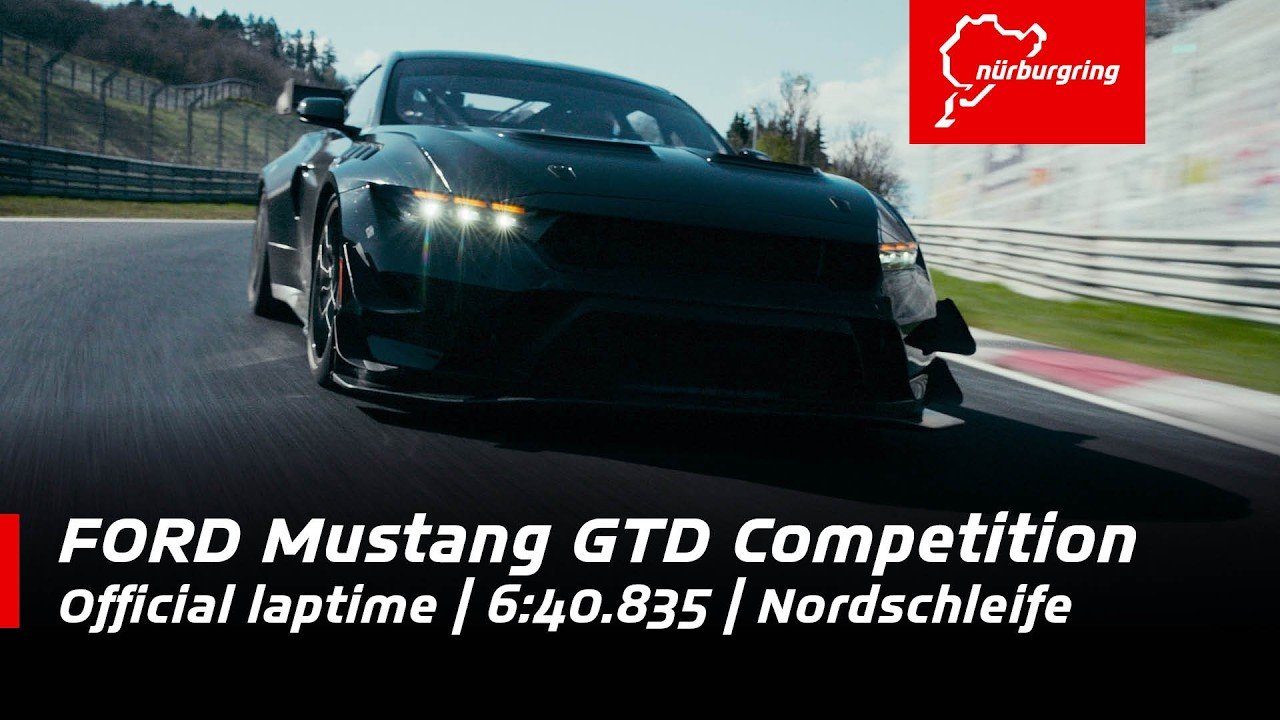
The Ford Mustang GTD and Chevrolet Corvette have given America’s performance-car rivalry a sharp new edge.
But Chevrolet isn’t treating Ford’s latest Nürburgring benchmark as a call to immediately return to Germany.
Corvette chief engineer Tony Roma has made it clear that the team’s next move won’t be dictated by a stopwatch duel alone.
At a glance
- Corvette chief engineer Tony Roma says Chevrolet has no current plan for a direct Nürburgring response to the Ford Mustang GTD.
- Chevrolet’s previous Nürburgring run used development drivers working with engineers, tyre specialists and data analysts.
- The Corvette programme has shifted attention to Pikes Peak for now, though Roma hasn’t ruled out another Nürburgring attempt in future.
Chevrolet is not chasing a quick rematch
Speaking on The Drivecast, Roma said General Motors’ Corvette team has no plans for a simple tit-for-tat run at the Nürburgring in response to Ford.
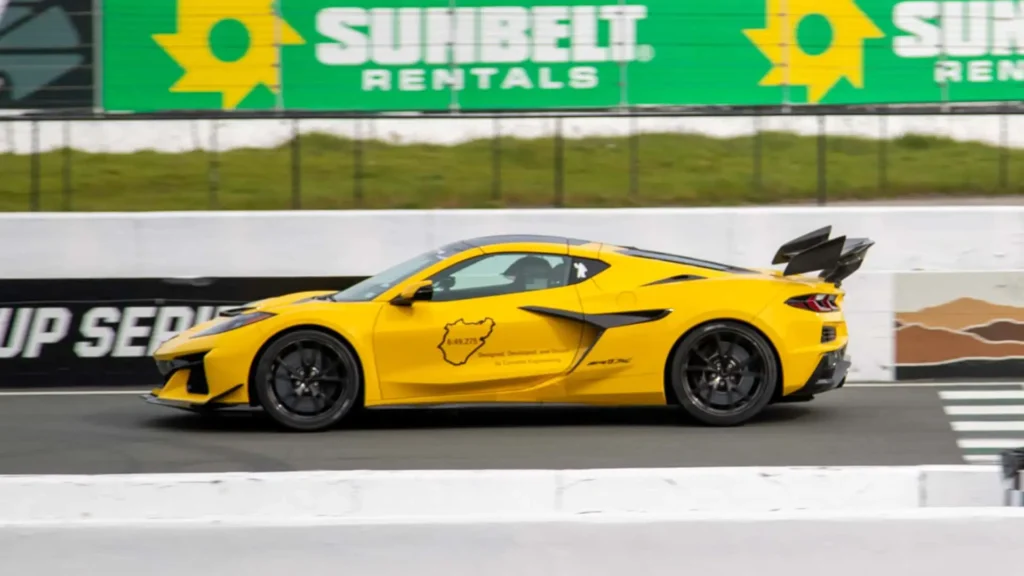
That matters because the Corvette’s recent Nürburgring effort was never framed internally as a publicity lap alone.
Roma said the programme used Chevrolet’s own development drivers and leaned on collaboration between engineers, tyre specialists and data analysts.

The result was a lap under seven minutes, which made the Corvette the fastest American car around the circuit at the time.
Roma described that achievement as something the team remains proud of, but his comments also suggest Chevrolet sees more value in targeted development stories than reactive record chasing.
The Nürburgring run was a development statement
The Nürburgring remains one of the most visible proving grounds in performance motoring, partly because a single lap time is easy to understand and hard to ignore.
For Chevrolet, the significance of its sub-seven-minute run appears to sit in the way it was achieved as much as the number itself.
Using development drivers rather than outside hired guns gave the effort a direct link to the people involved in shaping the car.
The presence of engineers, tyre specialists and data analysts also underlines how modern lap times are built from systems, setup and methodical interpretation rather than bravery alone.
That’s why Roma’s reluctance to turn the next Nürburgring visit into a reactionary contest feels consistent with how the Corvette team wants to present the programme.
Pikes Peak gives Corvette a different stage
Chevrolet’s attention this year moved away from the Nürburgring and toward Pikes Peak.
The historic American hill climb offers a very different challenge, with its altitude, elevation changes and road character demanding another kind of performance credibility.
It also gives Corvette a home-soil arena rather than another chapter in the European lap-time economy.
For a car line that has spent decades balancing American identity with global performance ambitions, that choice is not insignificant.
What could bring Corvette back to Germany
Roma hasn’t closed the door on another Nürburgring attempt.
The important condition is purpose.
If Chevrolet returns, his comments suggest it would need to serve the wider Corvette programme rather than simply answer Ford’s Mustang GTD moment.
That restraint may frustrate fans who want a clean scoreboard fight, but it also reflects a more mature approach to performance credibility.
The rivalry is real, yet Chevrolet appears more interested in choosing the right proving ground than letting Ford choose it for them.