Thirty years after Casio pushed G-Shock into metal, MR-G has become the brand’s most serious laboratory for toughness, finishing and Japanese craft.
Its 2026 anniversary program looks back to the first full-metal G-Shock, but the headline is pointed firmly forward.
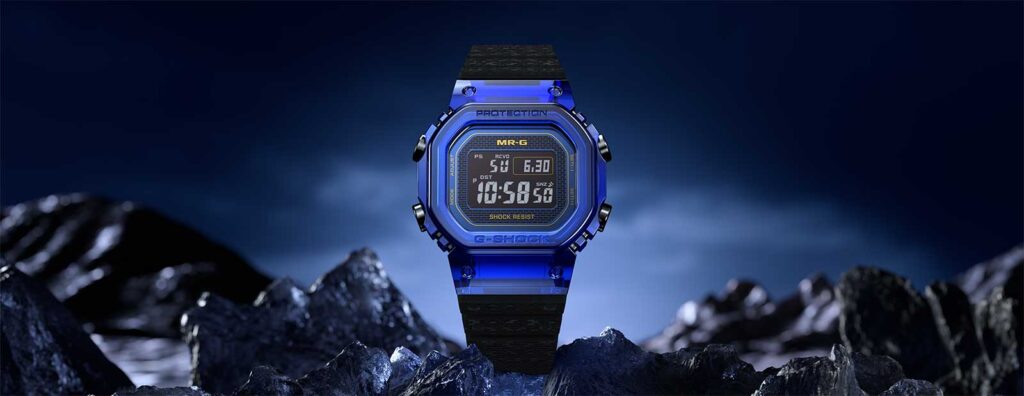
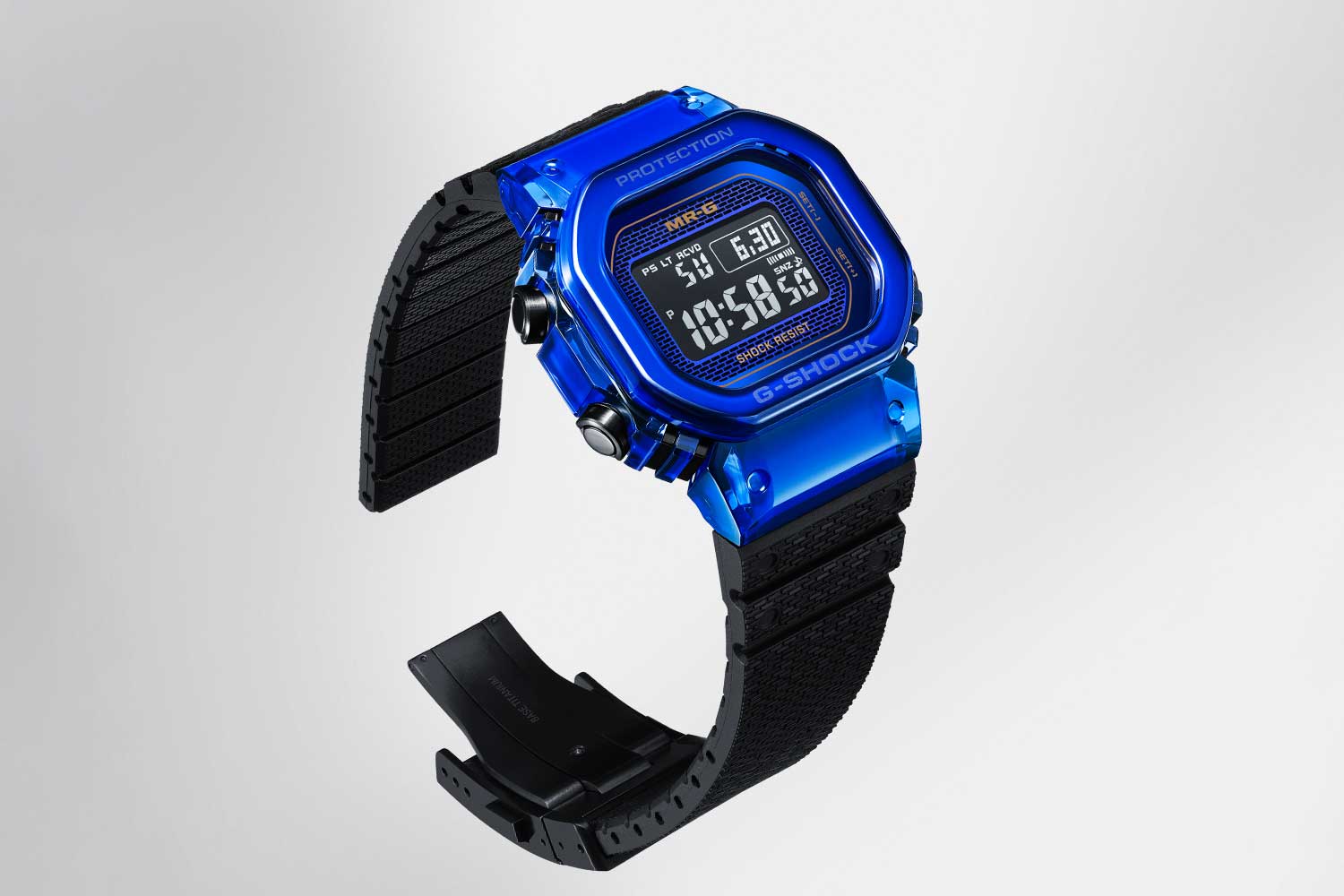
With the Blue Rose Project, Kikuo Ibe’s long-running pursuit of a shock-resistant G-Shock in sapphire crystal moves from dream to statement piece.
At a glance
- Casio is marking 30 years of MR-G with a three-part anniversary program for 2026.
- The program spans an ice-inspired Frogman, Haruka models with metal-leaf dial craft, and the sapphire-focused Blue Rose Project.
- The anniversary reinforces MR-G’s position as the most advanced expression of G-Shock durability and finishing.
How MR-G turned G-Shock toughness into metal
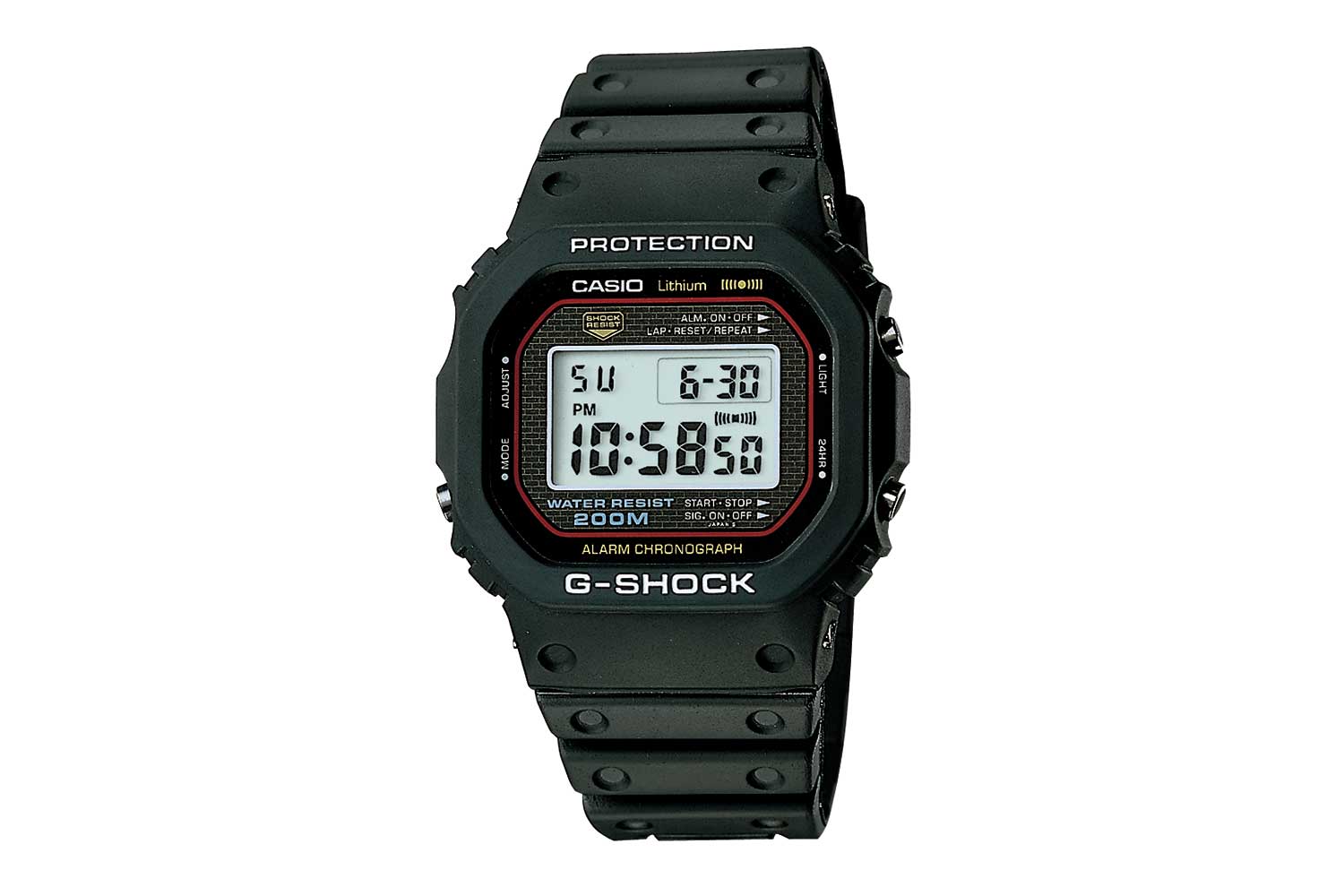
The first G-Shock, the DW-5000C of 1983, was built around Kikuo Ibe’s now-famous “Triple 10” target.
It had to survive a 10-meter drop, offer 10 bar of water resistance and run for 10 years on a single battery.
That watch relied on a hollow case structure and a protective urethane exterior, a practical solution that gave G-Shock its visual identity as much as its reputation for punishment.
By the early 1990s, the audience that had grown up with G-Shock was changing, and Ibe saw room for a tougher watch with a more mature feel.
The phrase used to pull the early team together was “the watch we all wanted,” which neatly captures the ambition and the risk of the project.
Metal was not simply a cosmetic upgrade.
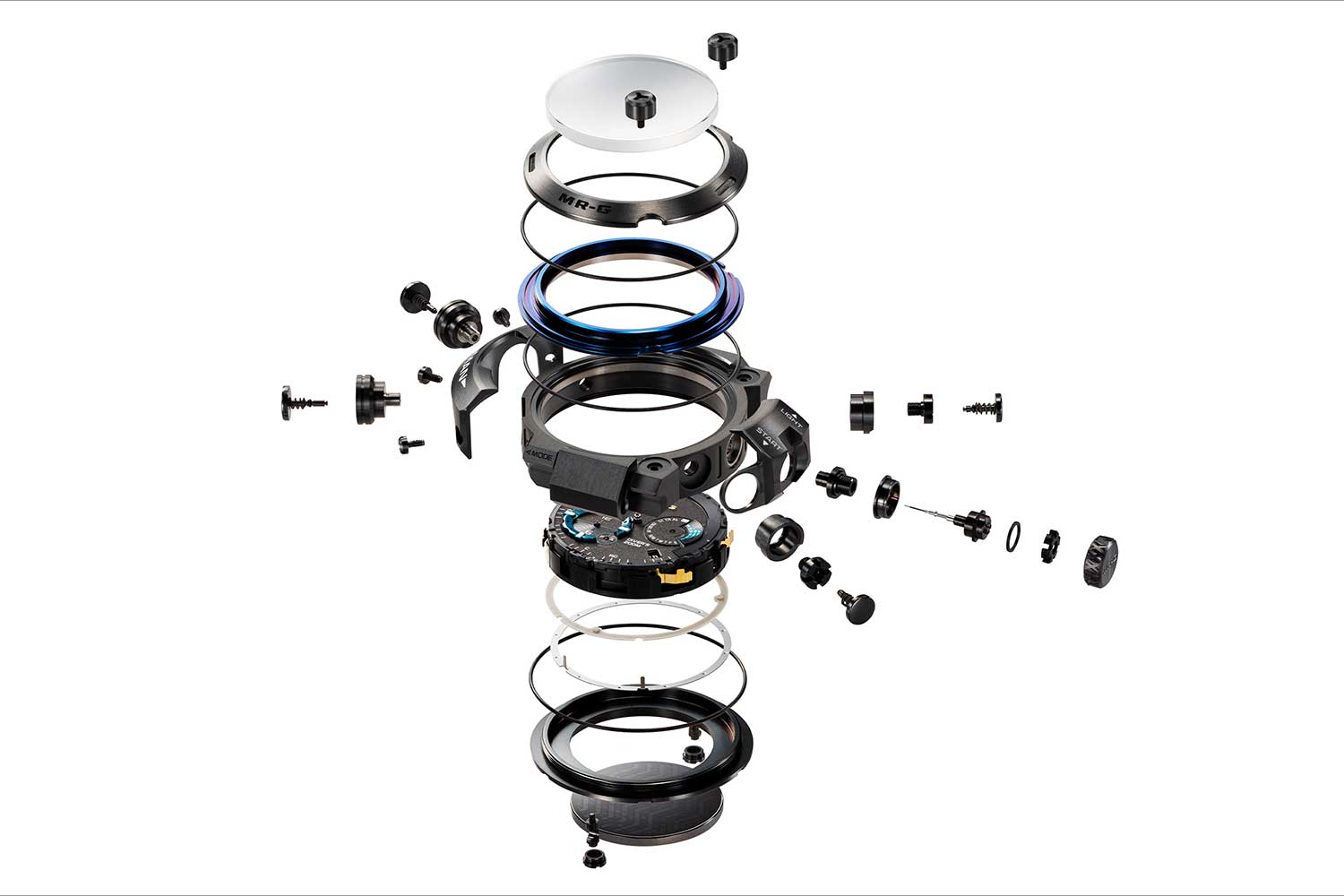
Resin could flex, absorb and disperse impact before it reached the module, while metal demanded a different architecture to protect the watch from shocks arriving from multiple directions.
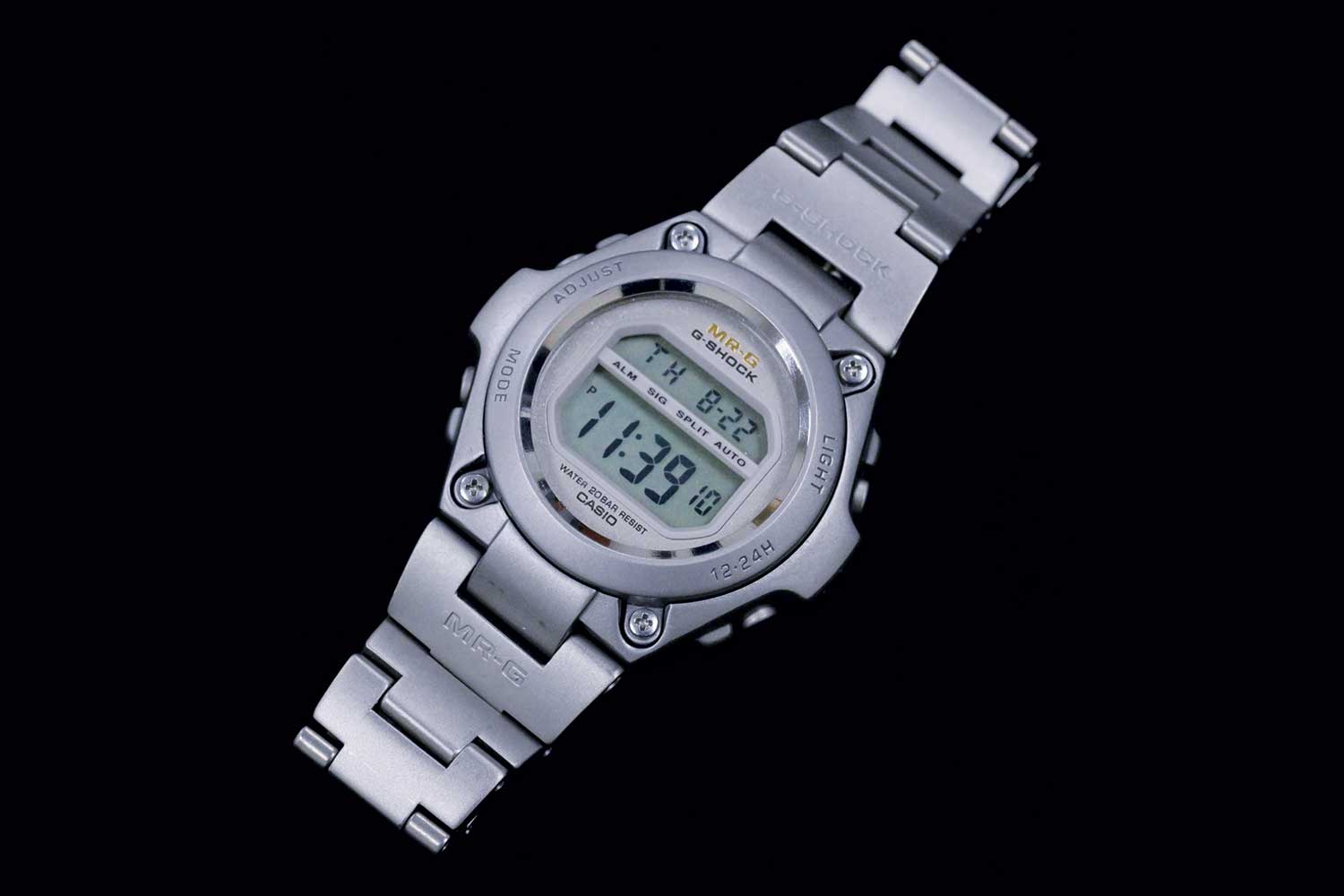
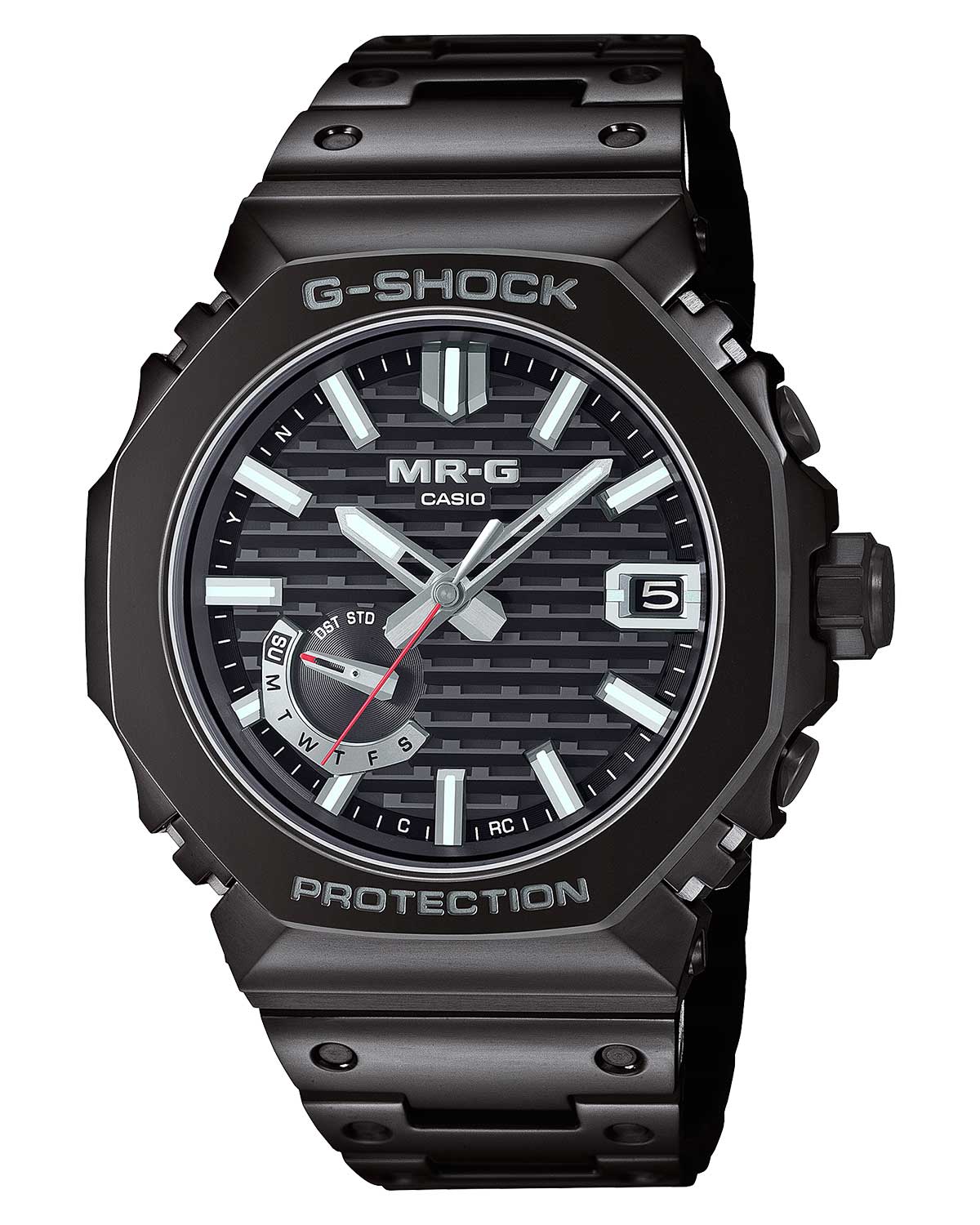
The answer arrived in November 1996 with the MRG-100, the first full-metal G-Shock.
What began under the early MR.G identity has since evolved into MR-G, now framed by Casio as the “Majestic and Revolutionary G-Shock.”
The anniversary program is built in three chapters
The 2026 anniversary is not being treated as a single commemorative model.
Casio has shaped it as a three-chapter program that moves through materials, craft and engineering ambition.
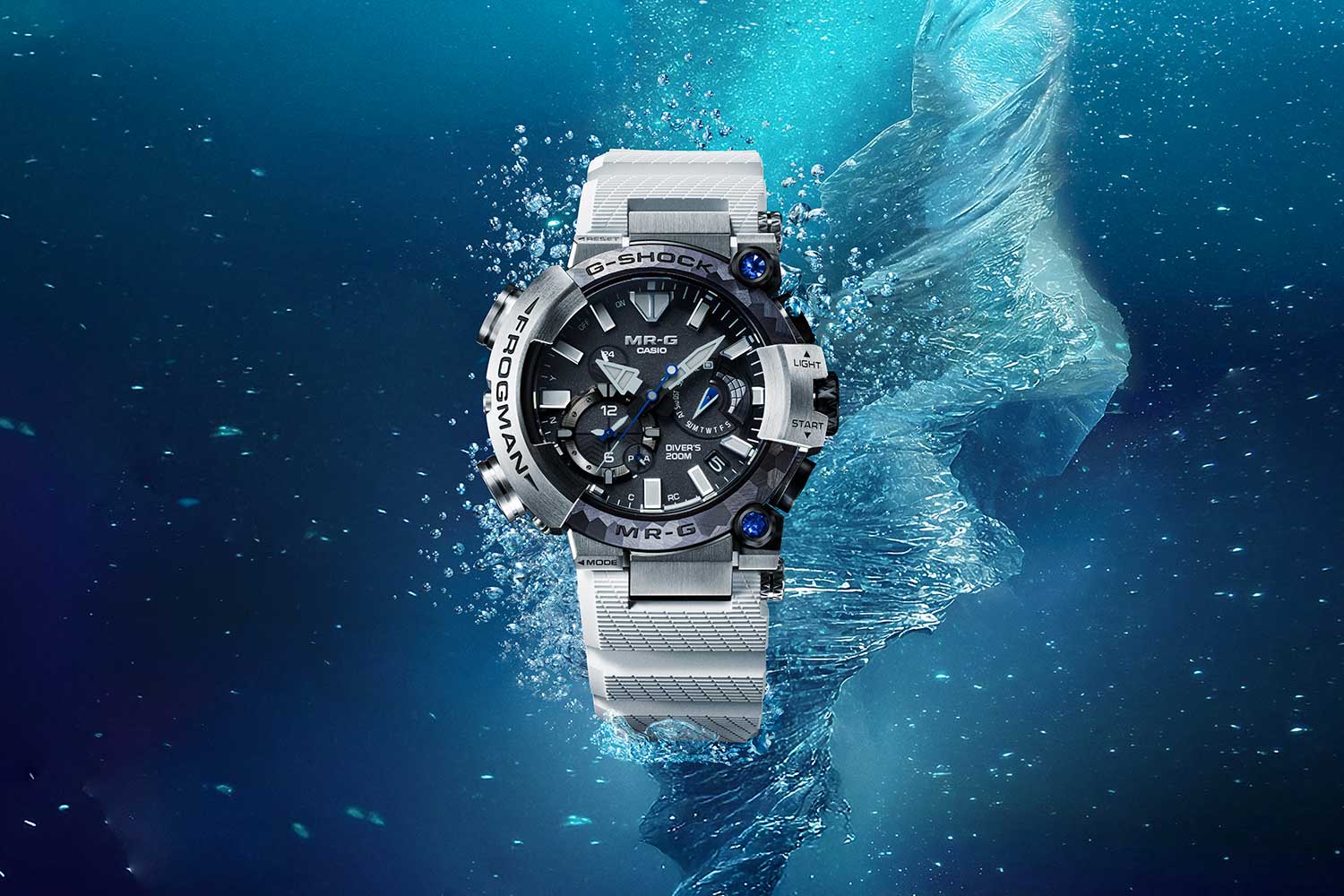
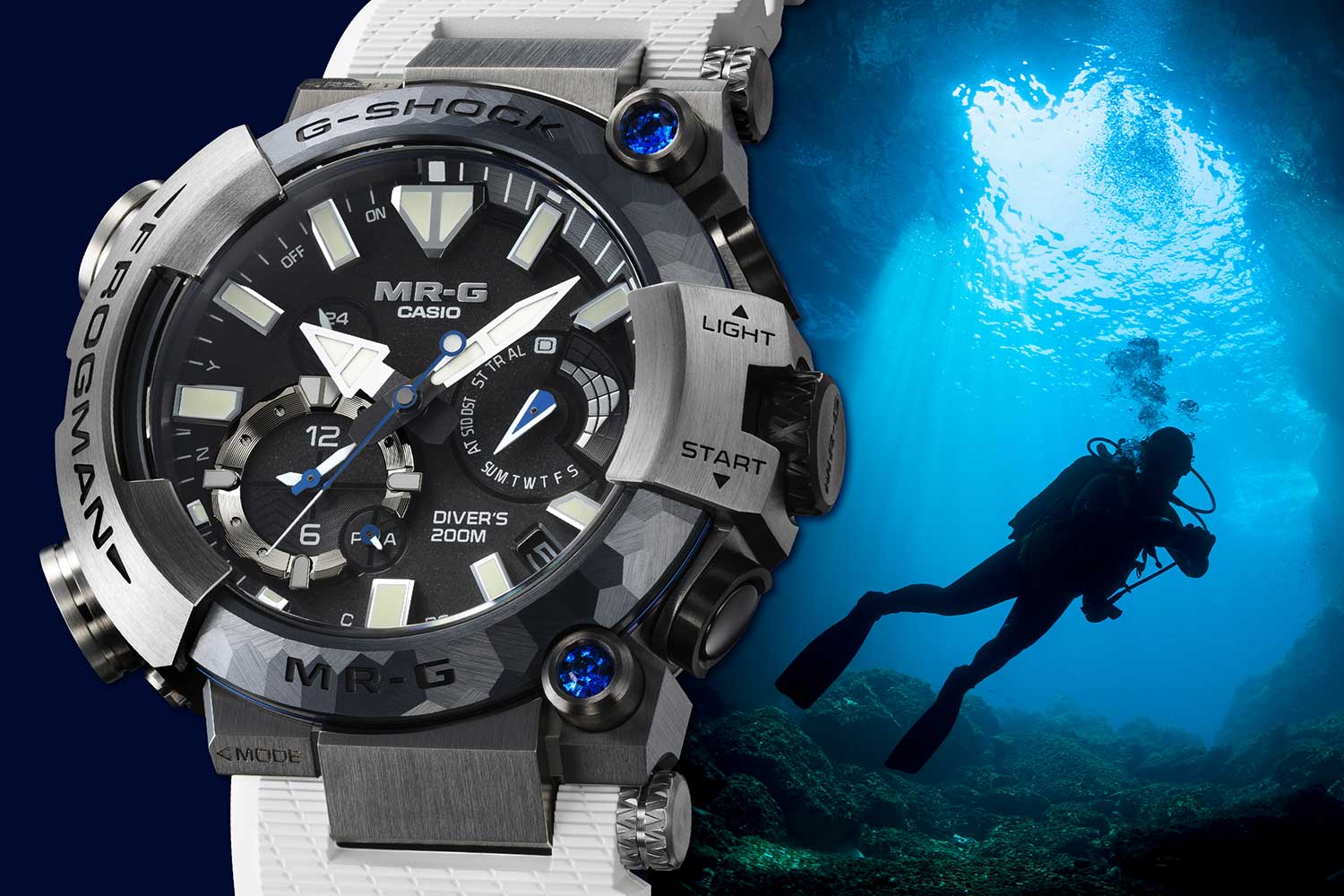
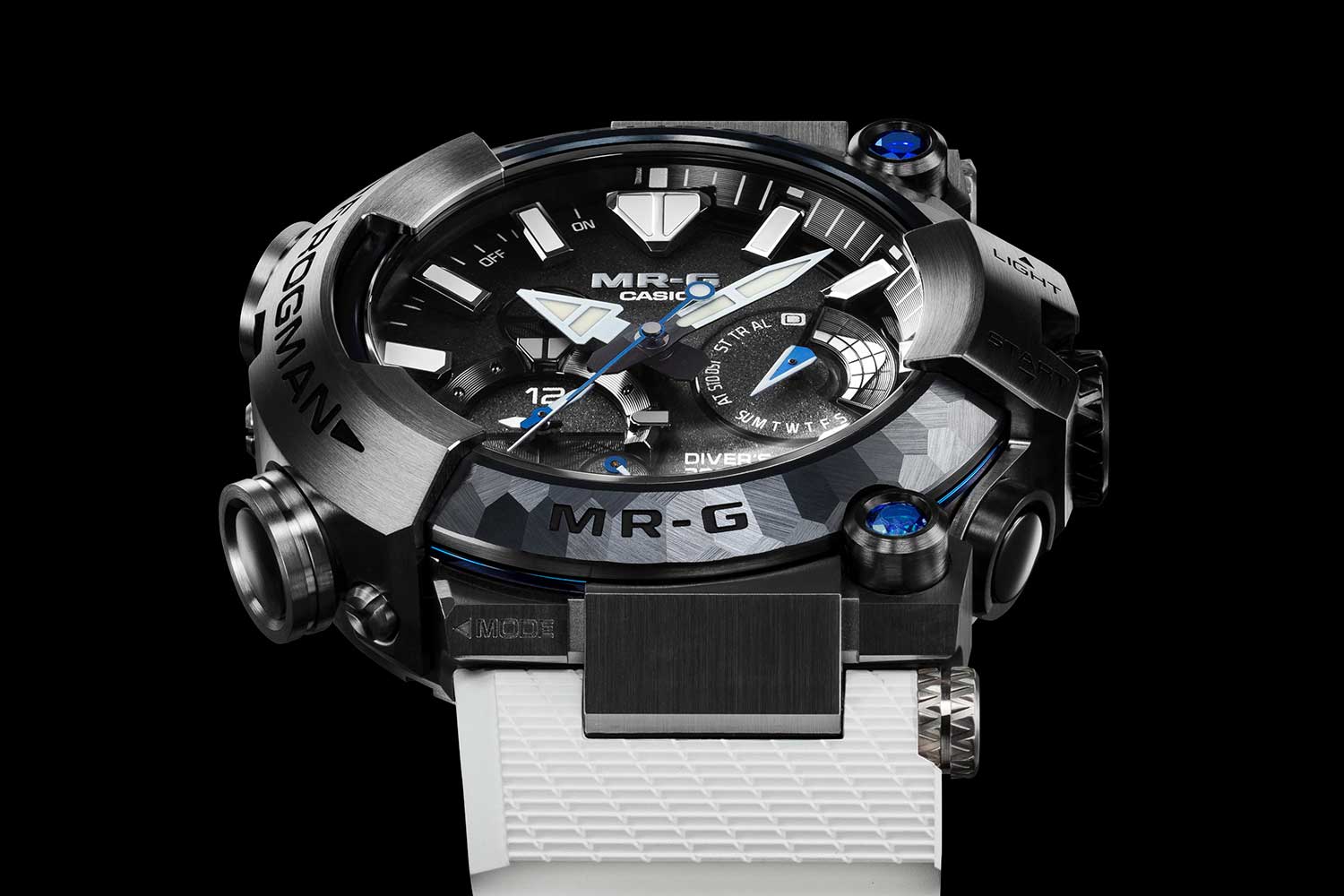
The MRG-BF1000EB-1A opens the sequence with a Frogman whose finishing takes inspiration from ice.
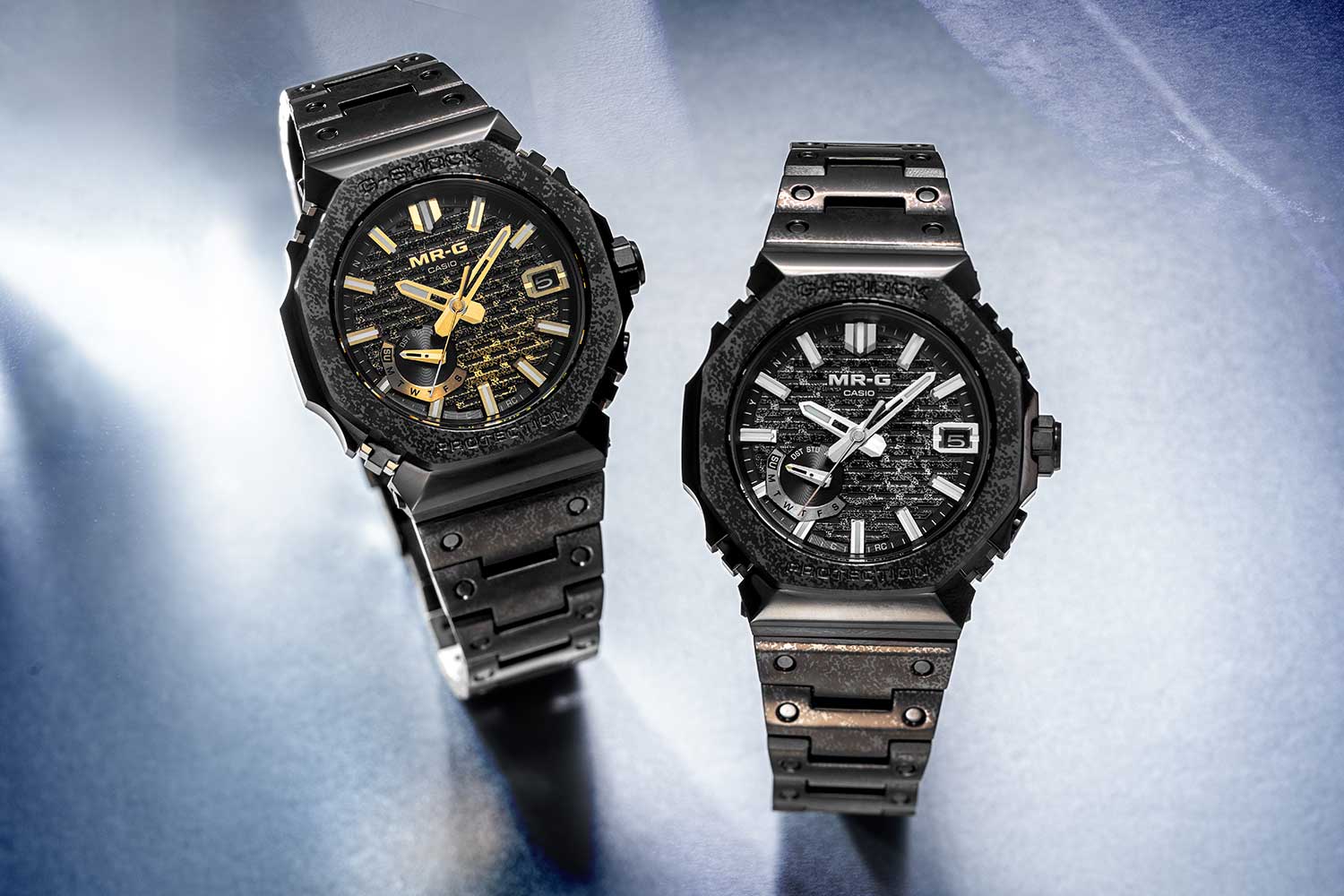
Two Haruka models follow, bringing metal-leaf dial craft together with microscopic laser processing.
The final chapter is the Blue Rose Project, anchored by the MRG-D5000 “Blue Sapphire” and its pursuit of sapphire crystal within a shock-resistant G-Shock concept.
It’s a fitting anniversary arc because MR-G has never been only about making G-Shock more expensive or more polished.
The line has repeatedly tested how far Casio can push a watch while keeping the core G-Shock promise intact.
From solar radio control to sapphire crystal
The MR-G timeline is best understood as a steady widening of what a tough metal G-Shock can be.
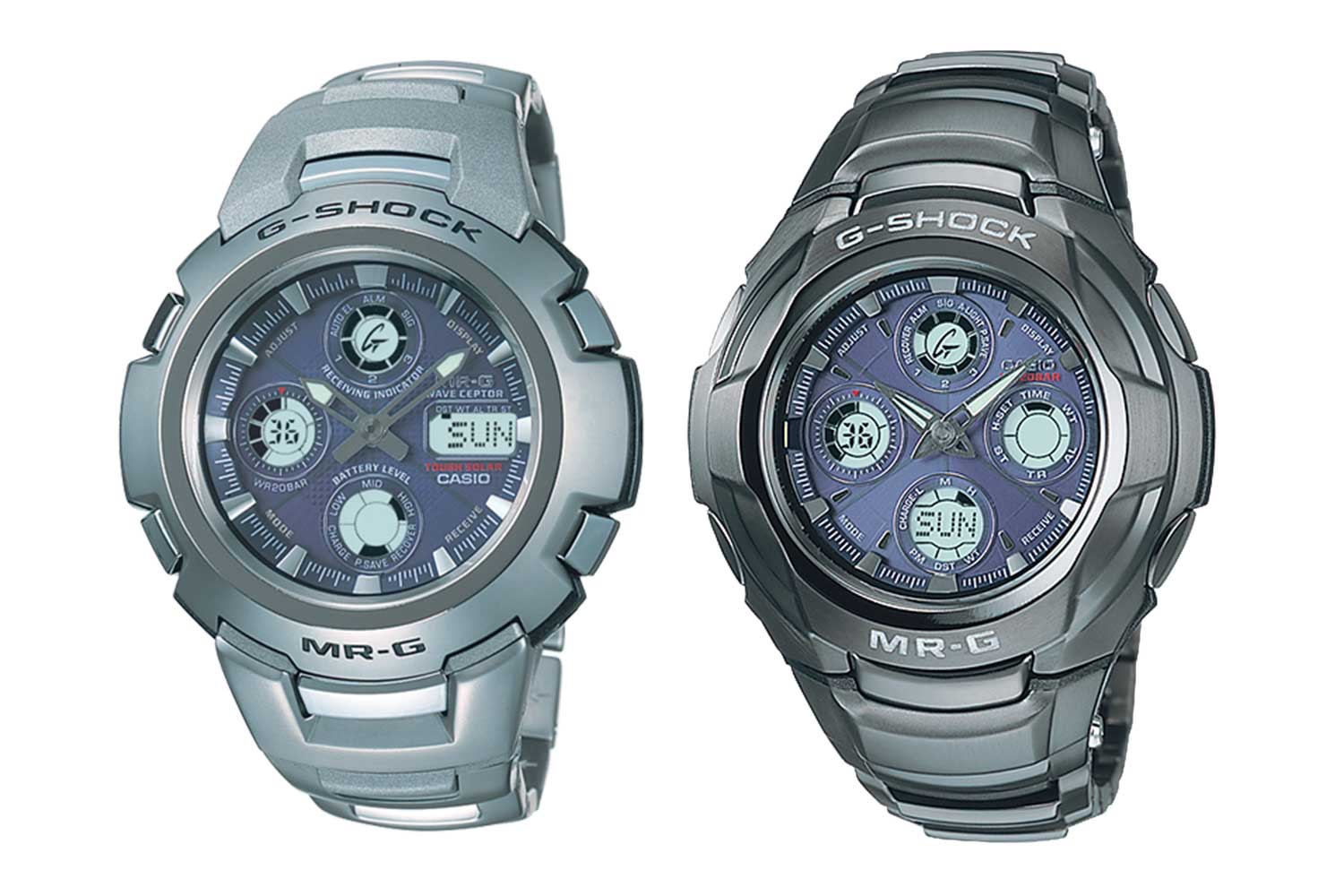
In 2003, the MRG-2000DJ-8A added solar-powered, radio-controlled timekeeping, followed in 2004 by the MRG-2100DJ-1A, the first MR-G to use DLC coating.
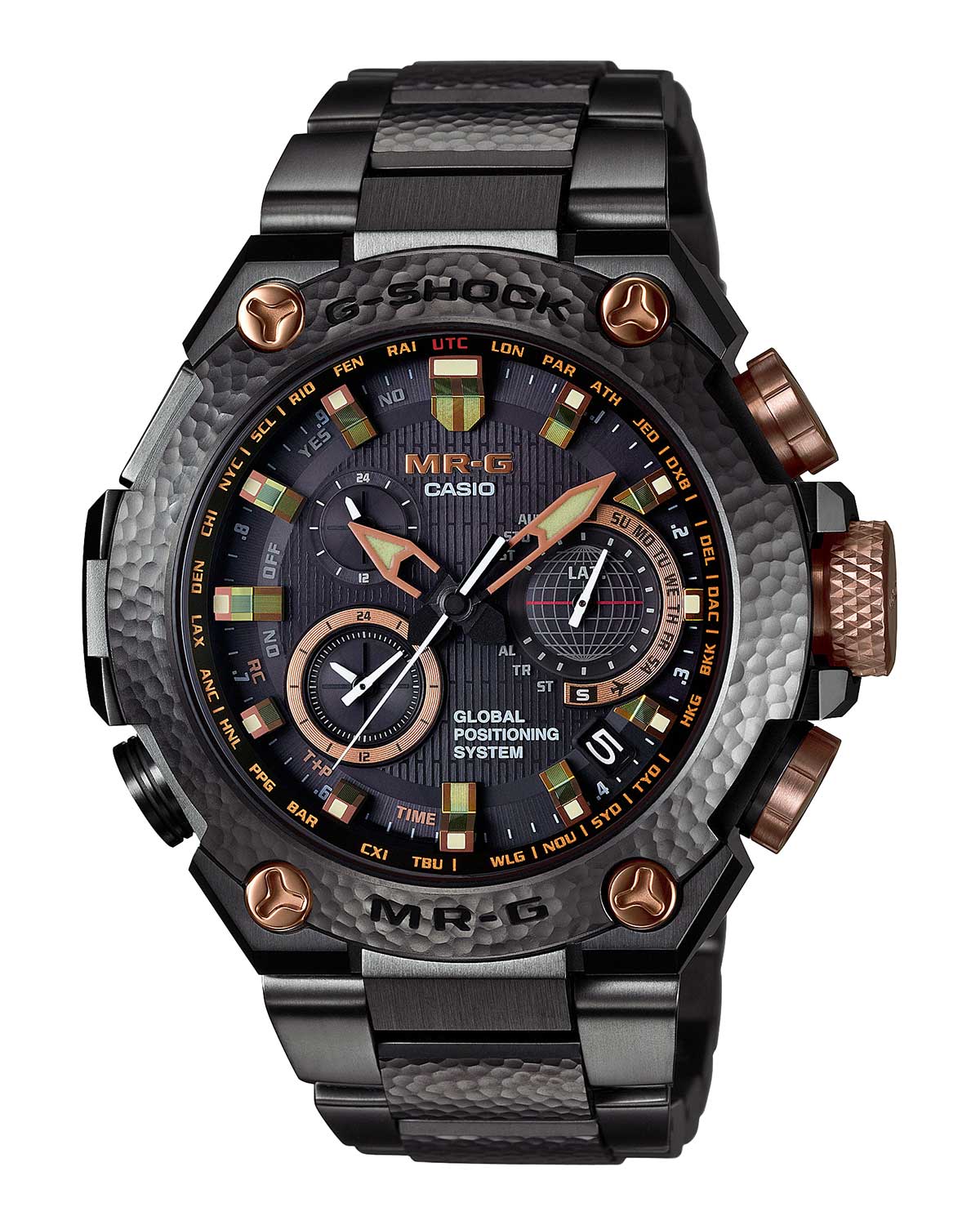
The MRG-G1000 of 2014 added GPS and radio reception, bringing the collection into a more global, travel-ready technical era.
More recent MR-G releases have leaned into Japanese craft, with references to tsuiki hammering, traditional armor and sword-making motifs.
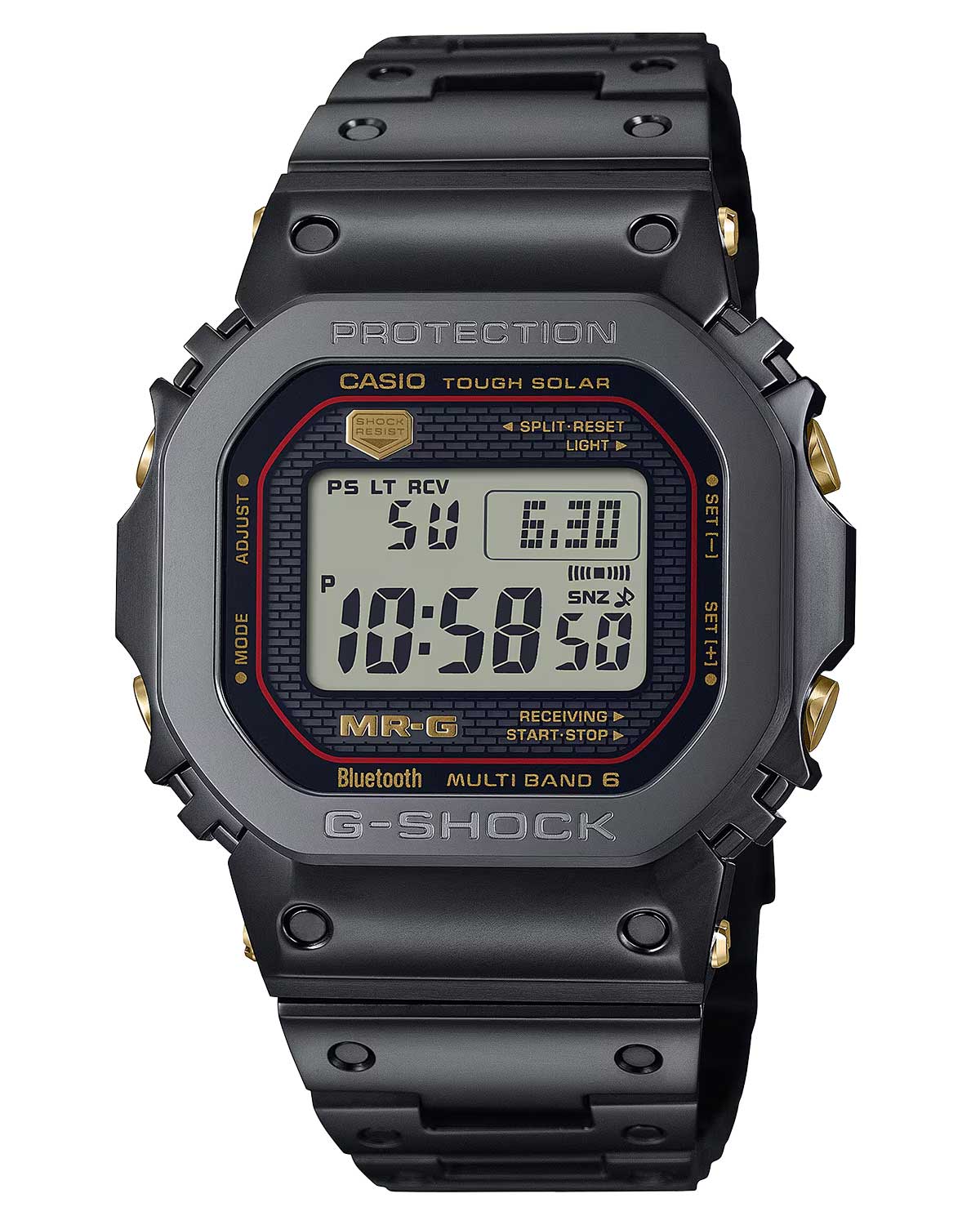
The MRG-B5000 in 2022 and MRG-B2100 in 2024 took two of G-Shock’s most recognizable forms and rebuilt them with MR-G’s multi-component metal construction and elevated finishing.
The Blue Rose Project sits at the outer edge of that progression.
Sapphire crystal is prized for hardness and clarity, but using it within a shock-resistant G-Shock concept is an especially demanding challenge because the material behaves very differently from resin or metal under impact.
Hamura, Yamagata and the craft of controlled toughness
The MR-G story is also a manufacturing story.
At Casio’s Hamura R&D Center in Tokyo, G-Shock concepts are put through a demanding validation process that includes 202 assessment tests for G-Shock-rated timepieces.
Specialized equipment recreates drop impacts, strikes cases and buttons from varied angles, and tests for vibration, centrifugal force and water resistance.
That level of testing matters because MR-G is expected to carry decorative finishing and advanced materials without weakening the practical toughness that defines G-Shock.
Assembly then moves to Yamagata Casio, the “mother factory” of G-Shock and the home of MR-G movement production.
Finished MR-G watches are assembled, adjusted and inspected on the Premium Production Line, where automation and skilled human judgment work side by side.
Yamagata also produces ultra-precise molds, minute resin components and analog movement parts using machinery developed in-house.
One example is the production of a rotor measuring just 1.1mm, a component that requires exact molding of resin and magnetic material.
Image-recognition systems help check the orientation and position of components too small for consistent inspection by the naked eye.
Details & Specifications
| Brand | Casio G-Shock |
|---|---|
| Collection | MR-G |
| Anniversary | 30th anniversary program in 2026 |
| First full-metal G-Shock | MRG-100, introduced in November 1996 |
| Key anniversary models | MRG-BF1000EB-1A, MRG-B2100HR Haruka models, MRG-D5000 “Blue Sapphire” |
| Blue Rose Project focus | Shock-resistant G-Shock construction using sapphire crystal |
| Testing | 202 assessment tests for G-Shock-rated timepieces at Casio’s Hamura R&D Center |
| Assembly | Yamagata Casio Premium Production Line |
At 30, MR-G feels less like a premium offshoot than the place where G-Shock tests its own limits.
The Blue Rose Project gives the anniversary a strong focal point, but the larger appeal is the continuity behind it, from the first metal case in 1996 to a sapphire experiment that still has to behave like a G-Shock.