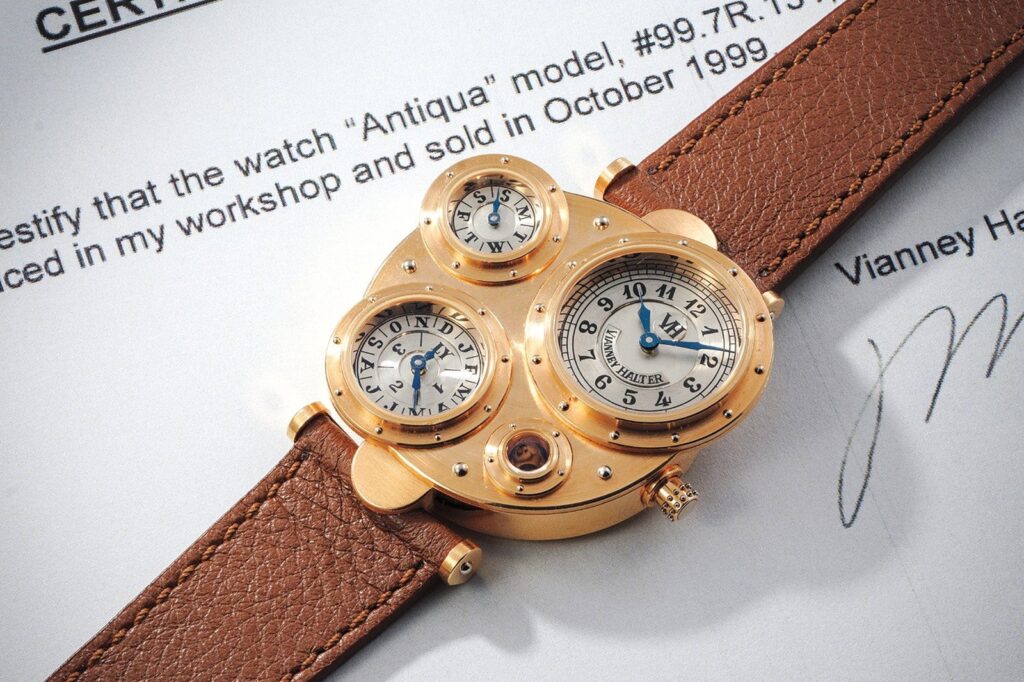
Some watches arrive early, and then there is the Vianney Halter Antiqua.
When it appeared at Baselworld in 1998, it looked less like a product launch than an object recovered from a future imagined by the 19th century. Nearly 30 years later, collectors have caught up with it, and one unique example has now sold for CHF 960,000.
At a glance
- Vianney Halter’s Antiqua has moved from cult independent watch to major collector touchstone.
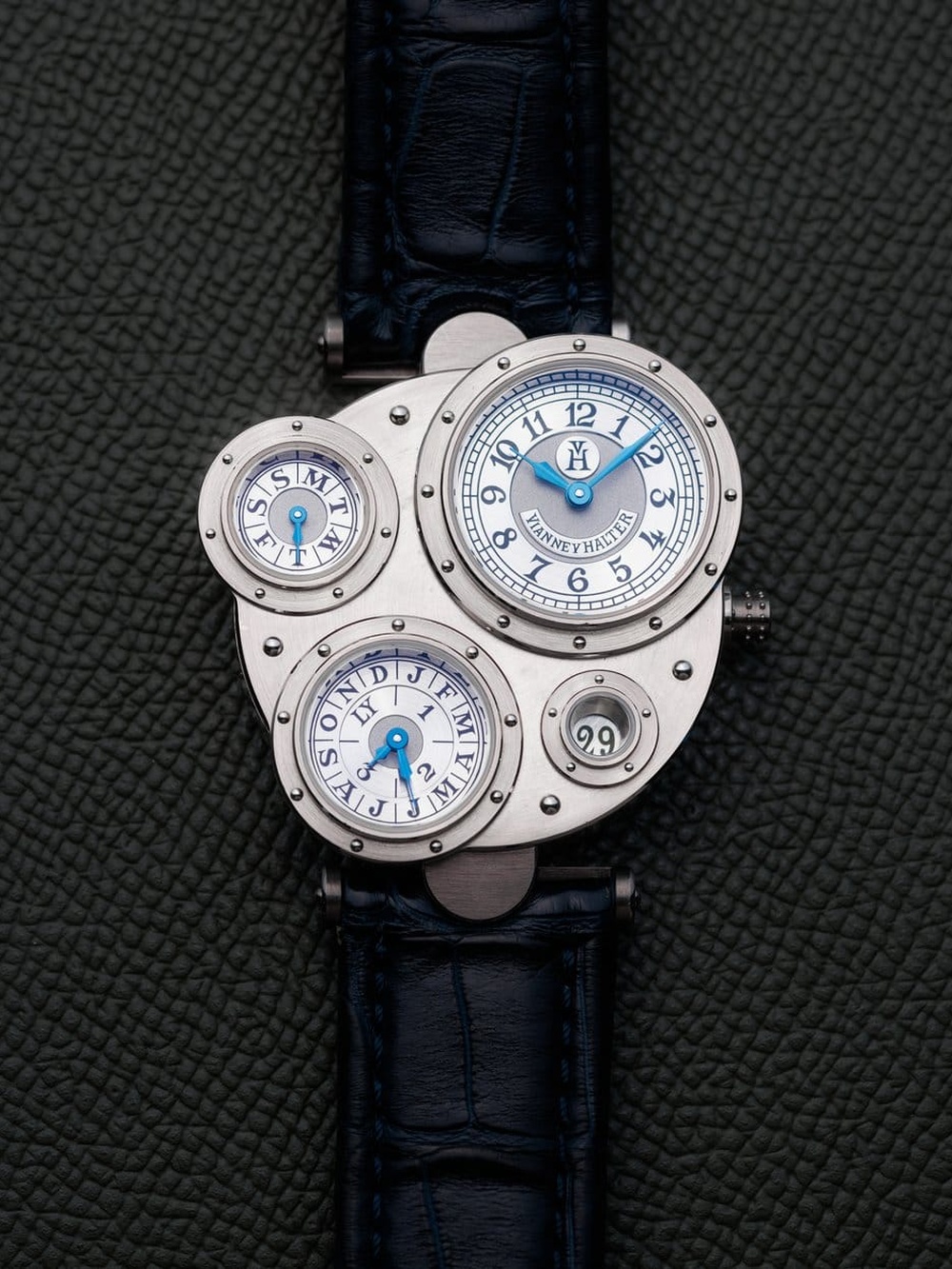
- The watch pairs a perpetual calendar with four riveted porthole dials, a complex case and Halter’s patented mysterious mass rotor.
- Only 110 Antiquas were made between 1999 and 2016, with a unique pink gold example selling at Marteau & Co for CHF 960,000 in June.
The watch that turned a workshop into a world
Before the Antiqua, Halter was known inside the trade rather than beyond it.
He had worked as an artisanal supplier for names including Audemars Piguet, Mauboussin, Jaquet Droz and Franck Muller, making parts with the kind of bench-level exactness that rarely becomes public mythology.
A slowdown in the previous year left him without work, so he built the watch he wanted to make for himself.
That single yellow gold prototype with platinum dials became his calling card at Baselworld in 1998.
Philippe Dufour was among the watchmakers who understood what he was seeing and offered Halter space on the AHCI booth.
By the end of the fair, two orders had been placed, and Halter had gone from skilled supplier to independent watchmaker with a production problem of his own making.
The Antiqua was not conceived as a revolt against traditional watchmaking, even if it looked nothing like the polite complication watches around it.
“I never went against the mainstream,” Halter has said. “I have always been following my own path, and I have no battle to run.”
Futur Antérieur on the wrist
Halter described the Antiqua through the idea of Futur Antérieur, roughly the future as seen from the past.
Its world is closer to Jules Verne, H.G. Wells, steam-powered flying machines and marine instruments than to late-1990s luxury watch design.
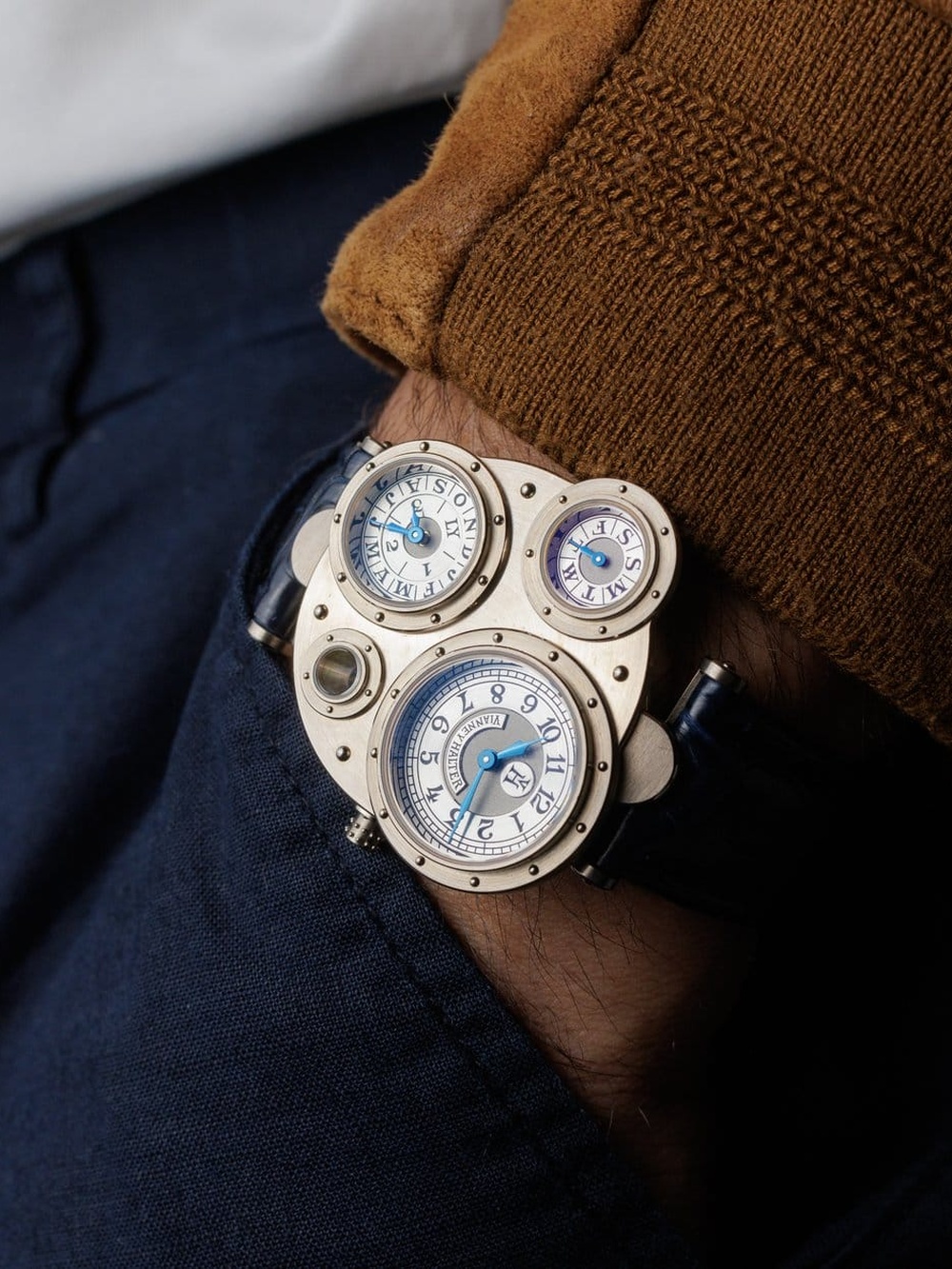
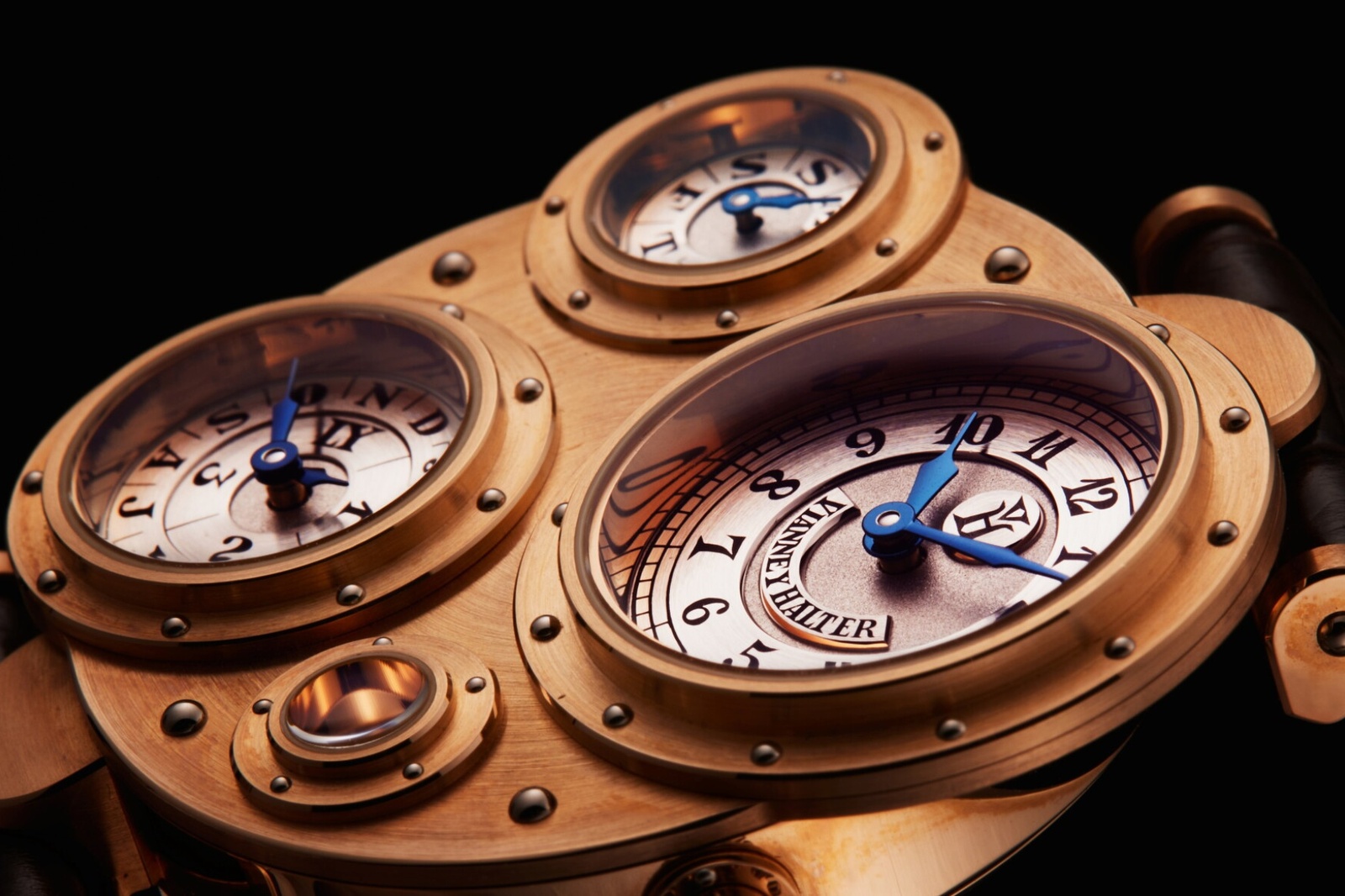
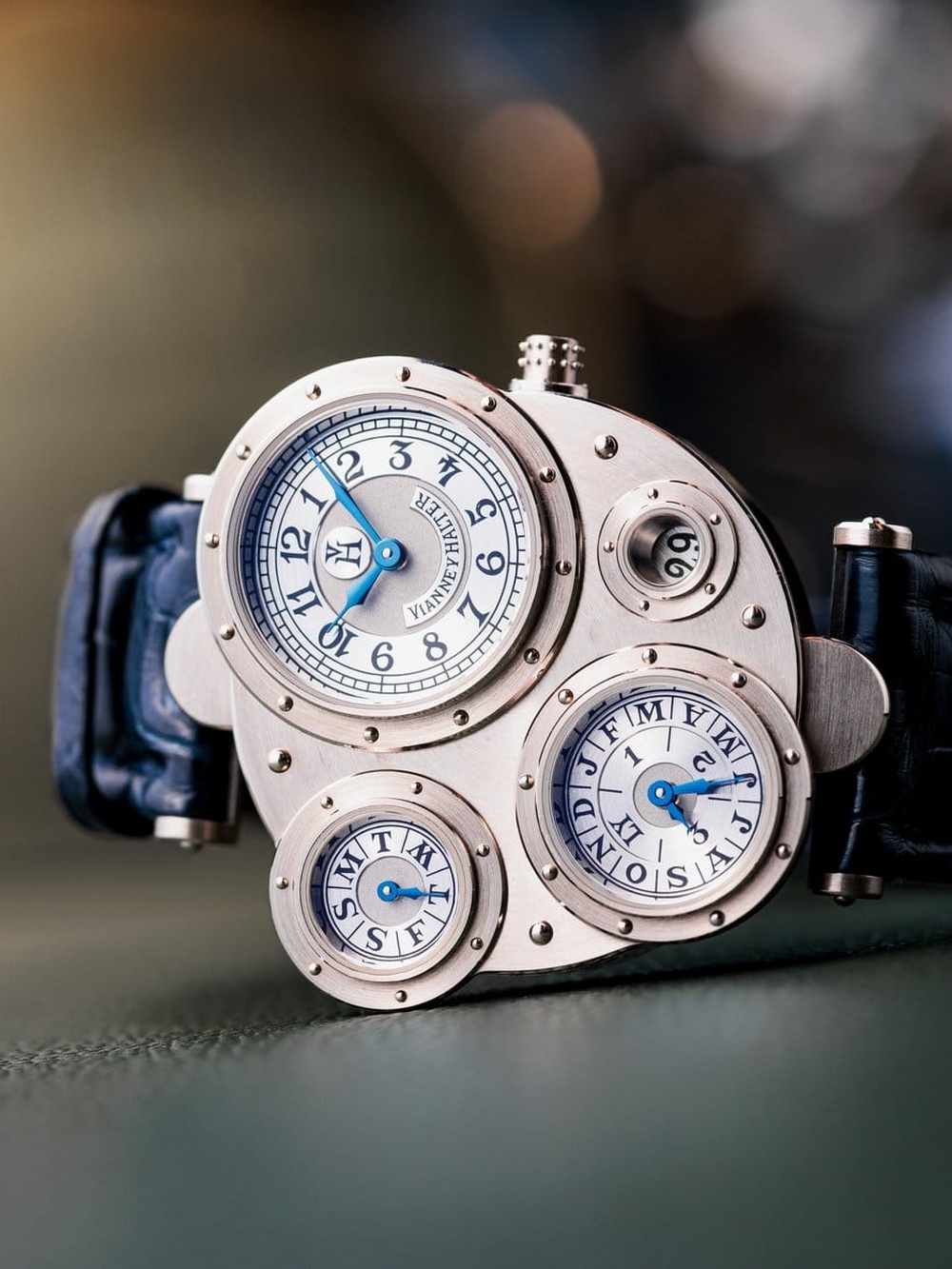
The case wears its construction openly, with riveted portholes of decreasing diameter carrying the hours and minutes, month and leap year, day, and date.
The dashboard logic has roots in steamboats, locomotives and Ferdinand Berthoud’s marine chronometers, while the dive-helmet character explains why the watch nearly carried the name Time Machine before becoming the Antiqua.
Halter has linked that fascination with steam to family memory, saying, “I believe I inherited my love for steam from my father, who used to be a locomotive fireman.”
The result is not nostalgic in the usual sense.
It feels like an alternative history object, a perpetual calendar from a civilisation that developed mechanics and imagination along a different track.
A perpetual calendar built the hard way
The Antiqua’s theatrical surface would matter far less without the work underneath it.
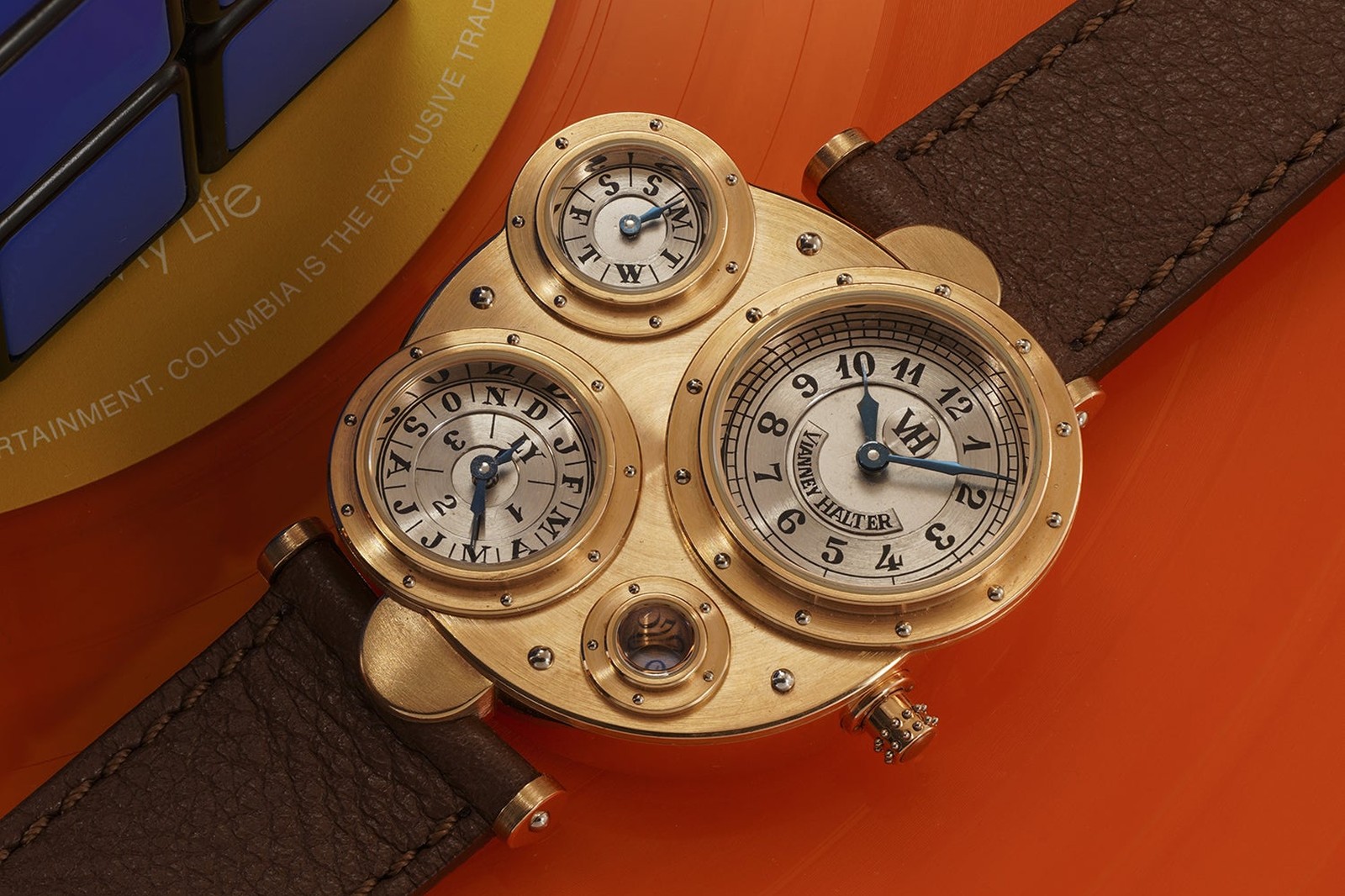
The VH198 calibre began with a Lemania 8810 base, which Halter fully reconditioned and rebuilt into a perpetual calendar.
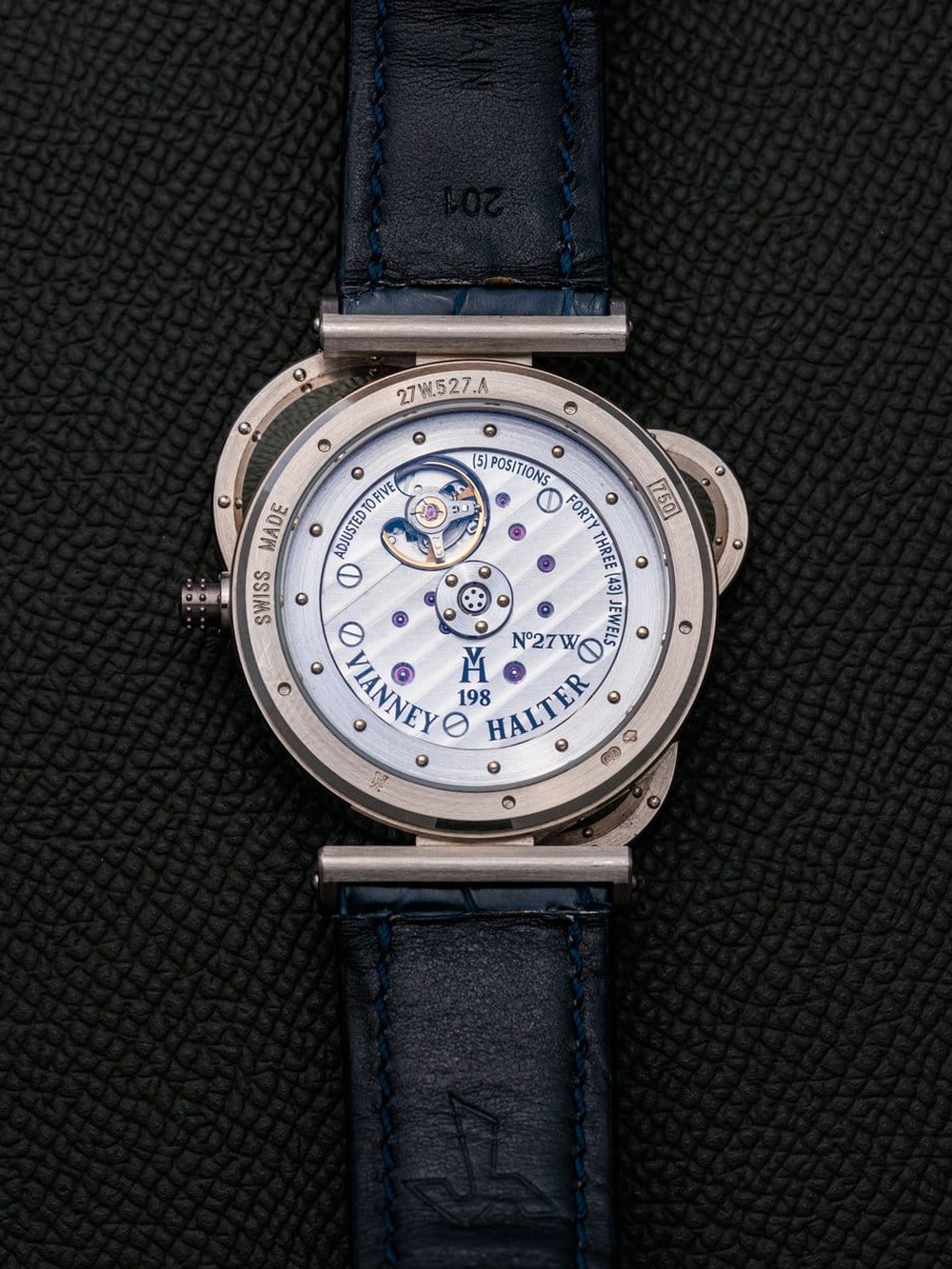
At the back, his patented mysterious mass rotor hides the connection between the winding mass and the movement, giving the impression of a manually wound watch.
The case alone contains nearly 130 parts, including 104 rivets that are refinished by hand and press-fitted through the bezels and case top.
Each precious metal dial is hand-engraved, and Halter has said making the Antiqua was an ascent comparable to climbing Everest.
For much of the watch’s life, he worked alone at the bench, producing the case, dials and calendar work in his own workshop.
He bought in only select elements including the sapphire, strap and escapement, along with the Lemania base that he then rebuilt.
Early dials credited Jeff Barnes, the American graphic designer who worked with Halter on the initial design before the two parted ways.
Even delivery had its own ritual, with each Antiqua supplied in a bespoke precious wood winding box tuned to run the calendar and stop upright so the watch could sit like a desk clock when off the wrist.
Details & Specifications
| Brand | Vianney Halter |
|---|---|
| Model | Antiqua |
| Production period | 1999 to 2016 |
| Total production | 110 examples |
| Case metals | White gold, rose gold, yellow gold and platinum |
| Case construction | Nearly 130 parts, including 104 hand-refinished rivets |
| Dial layout | Four riveted portholes for hours and minutes, month and leap year, day, and date |
| Dial work | Precious metal dials, hand-engraved |
| Movement | VH198 calibre based on a reconditioned and rebuilt Lemania 8810 |
| Complication | Perpetual calendar |
| Rotor | Patented mysterious mass rotor |
| Notable auction result | Unique pink gold example with matching pink dials sold at Marteau & Co for CHF 960,000 in June |
From connoisseur secret to independent watchmaking landmark
Between 1999 and 2016, Halter made 110 Antiquas across white gold, rose gold, yellow gold and platinum.
No two commissions were quite alike, which suited a watch that never behaved like a conventional series-produced luxury object.
For years, the Antiqua was admired by a narrow circle and misunderstood by many others.
It arrived before independent watchmaking became a confident collecting category, before today’s appetite for unusual case architecture, narrative-driven design and watchmakers with strong personal signatures.
Its recent auction performance is important, but not because it reduces the Antiqua to a financial story.
The deeper point is that the audience has changed.
Collectors now fluent in Urwerk, MB&F and younger independent makers can read Halter’s visual language in a way the late-1990s market largely could not.
The Antiqua did not invent independent watchmaking, and it was not alone in proving that a name on the dial could carry real creative authorship.
What it did was show that a single maker could take a serious classical complication and surround it with a complete private mythology, where portholes, rivets, marine chronometers and perpetual calendar mechanics belonged to the same imagined universe.
That idea feels natural now, but it was radical on the wrist in 1998.
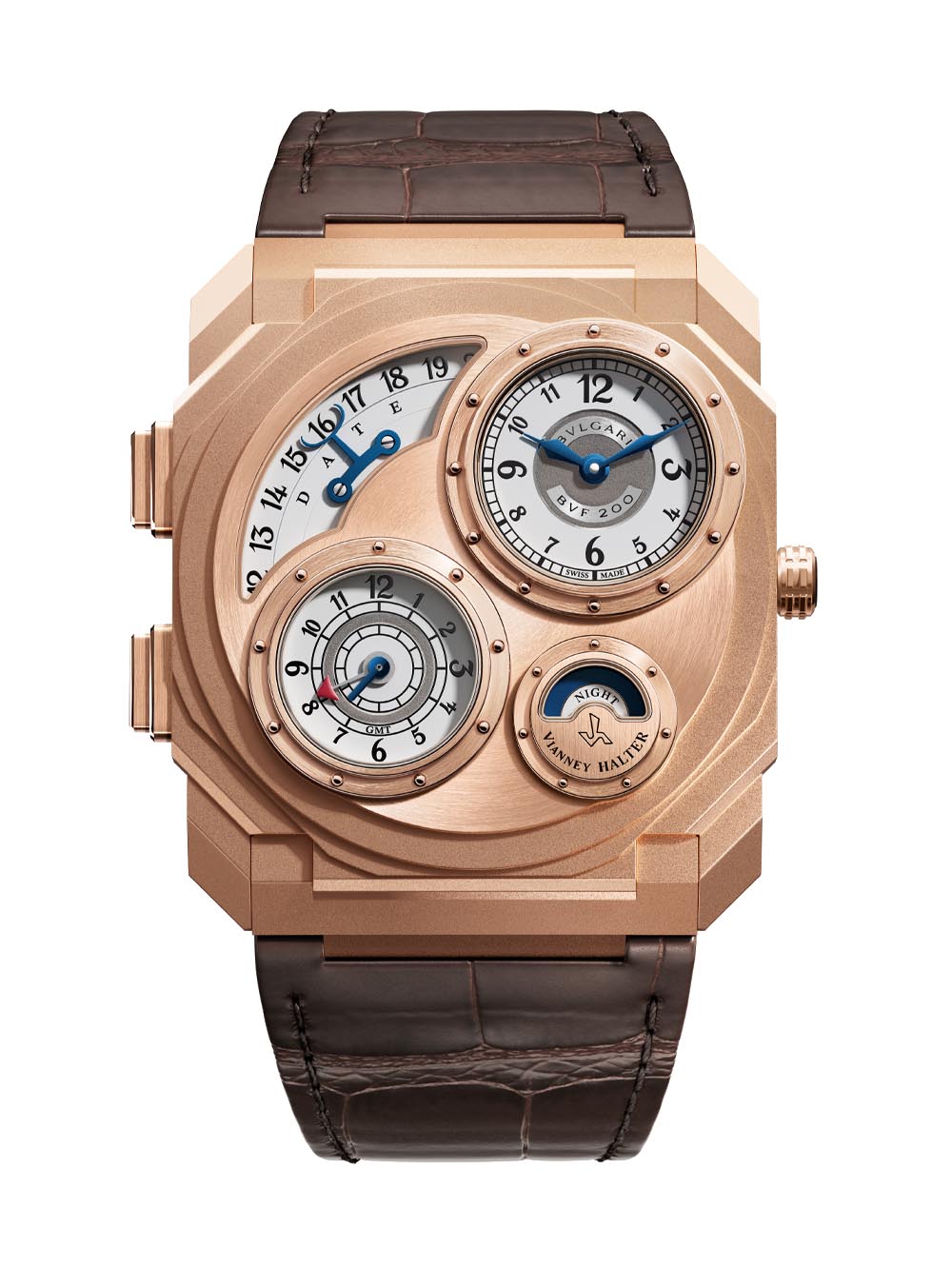
Halter’s recent visibility has extended beyond the Antiqua as well, with his name appearing alongside Bulgari on the Octo Finissimo Dual Time x Vianney Halter, a titanium or rose gold collaboration that marked the first time Bulgari placed another watchmaker’s name on the Octo.
The Antiqua remains the essential reference point, though.
It is the watch that made Halter’s inner world tangible, and the one that explains why independent watchmaking’s most interesting pieces are rarely just about mechanics.
Nearly three decades on, the Antiqua no longer looks stranded in the wrong era.
It looks like the era finally learned how to see it.