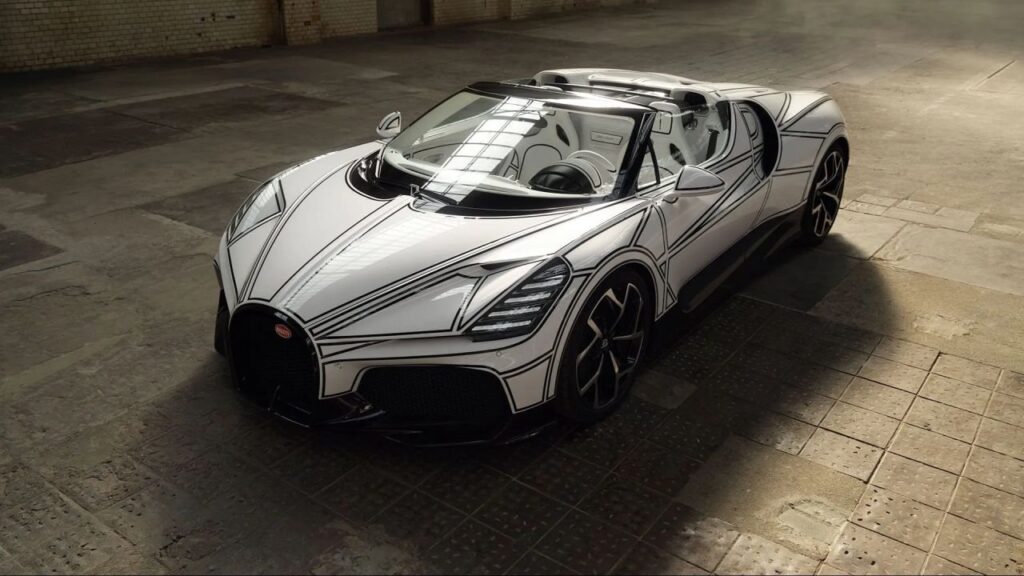
Bugatti has never been shy about treating the automobile as an object of craft, but the W16 Mistral Blanc Éternel pushes that idea into unusually delicate territory.
This one-off roadster brings real porcelain into a modern hypercar, using the material across exterior details, cabin touchpoints and even engine bay elements.
It’s a rare mix of technical theatre and old-world making, wrapped around the final Bugatti model to use the marque’s quad-turbo W16 engine.
At a glance
- Bugatti has created the one-off W16 Mistral Blanc Éternel with porcelain accents developed with KPM Berlin.
- The porcelain appears on the EB badges, fuel cap, engine bay detailing, gear selector, speaker grilles and armrests.
- The car is part of the W16 Mistral story, marking the closing chapter for Bugatti’s quad-turbo 8.0-litre W16 engine.
Porcelain returns to a Bugatti flagship
The Blanc Éternel revives a material Bugatti has explored before with Königliche Porzellan-Manufaktur Berlin, better known as KPM.
The two names previously worked together on a unique Veyron Grand Sport with porcelain detailing, a project that treated a hypercar less like a conventional performance machine and more like a mobile piece of applied art.
On the W16 Mistral Blanc Éternel, the approach feels more deeply embedded.
The porcelain isn’t limited to a discreet emblem or commemorative flourish, but appears across several areas that owners and observers will notice at different moments.
Outside, the EB badges and fuel cap carry the material, while further detailing appears within the engine bay.
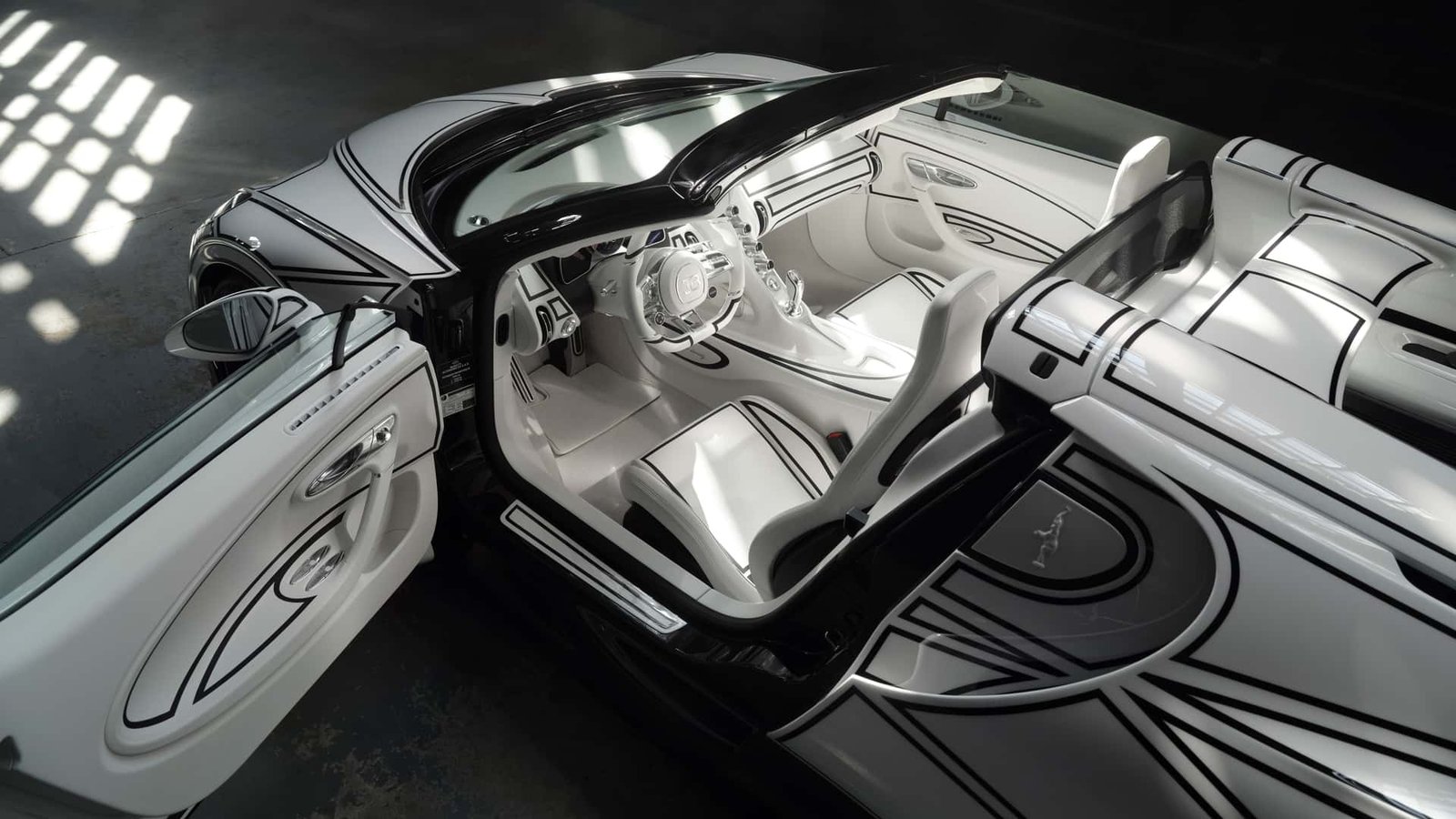
Inside, Bugatti uses porcelain for the gear selector, speaker grilles and armrests, placing the material directly into the tactile rhythm of the cabin.
A white-and-black scheme with a coachbuilt feel
The name Blanc Éternel sets the tone for the car’s visual identity.
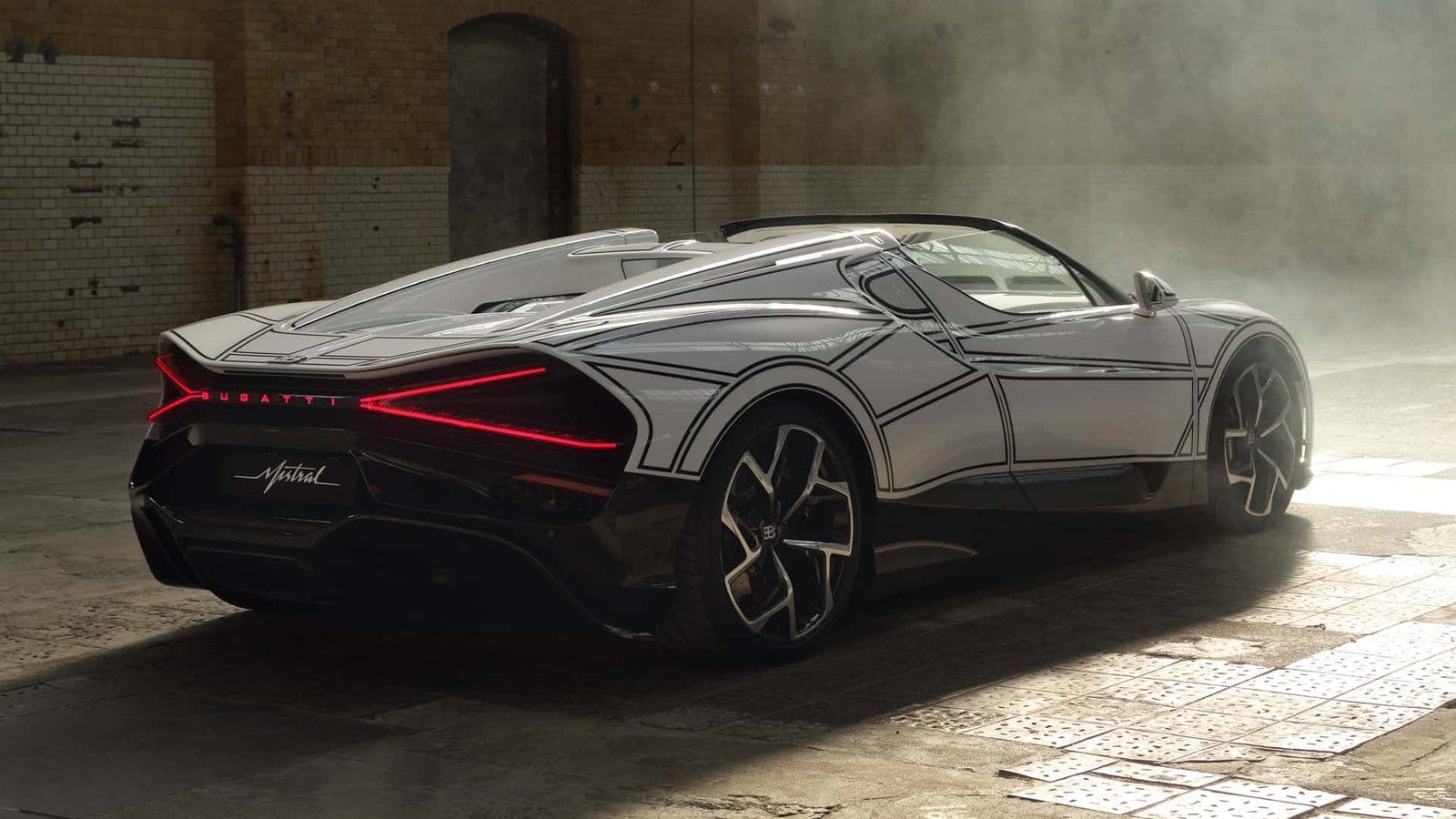
A clean white exterior dominates the composition, offset by precise black lines that trace the Mistral’s bodywork and emphasise its sculpted surfaces.
Rather than relying on a heavy colour contrast, the treatment works like linework on porcelain, sharpening the car’s proportions without overwhelming the shape.

That graphic theme continues inside the cabin, giving the project a more complete feel than a simple exterior commission.
It’s the kind of detail Bugatti collectors tend to value, not because it makes the car louder, but because it makes it more specific.
The W16’s final open-top chapter
The Mistral carries particular weight in Bugatti’s modern story because it is the final Bugatti powered by the company’s quad-turbo 8.0-litre W16 engine.
That engine has defined the brand’s modern era, from the Veyron through to the Chiron family and its most focused derivatives.
In the Blanc Éternel, the farewell to the W16 is framed through craftsmanship rather than pure numbers.
The result is a car that speaks to two Bugatti traditions at once, extreme engineering and highly controlled decorative work.
For collectors, that combination is likely the point.
This is not simply a special colourway, but a one-off interpretation of the Mistral that connects Bugatti’s current performance lineage with a much older European craft tradition.
Details & Specifications
| Brand | Bugatti |
|---|---|
| Model | W16 Mistral Blanc Éternel |
| Production | One-off |
| Engine | Quad-turbo 8.0-litre W16 |
| Key material detail | Real porcelain accents developed with KPM Berlin |
| Exterior details | Porcelain EB badges, fuel cap and engine bay elements |
| Interior details | Porcelain gear selector, speaker grilles and armrests |
| Exterior finish | White with black contour line detailing |
The Blanc Éternel is a reminder that Bugatti’s most interesting commissions often sit between performance, patronage and craft.
As the W16 era comes to a close, this porcelain-detailed Mistral gives the engine’s final roadster chapter an unexpectedly refined signature.