The Ford Escort was never meant to be exotic, and that’s exactly why it became so loved.
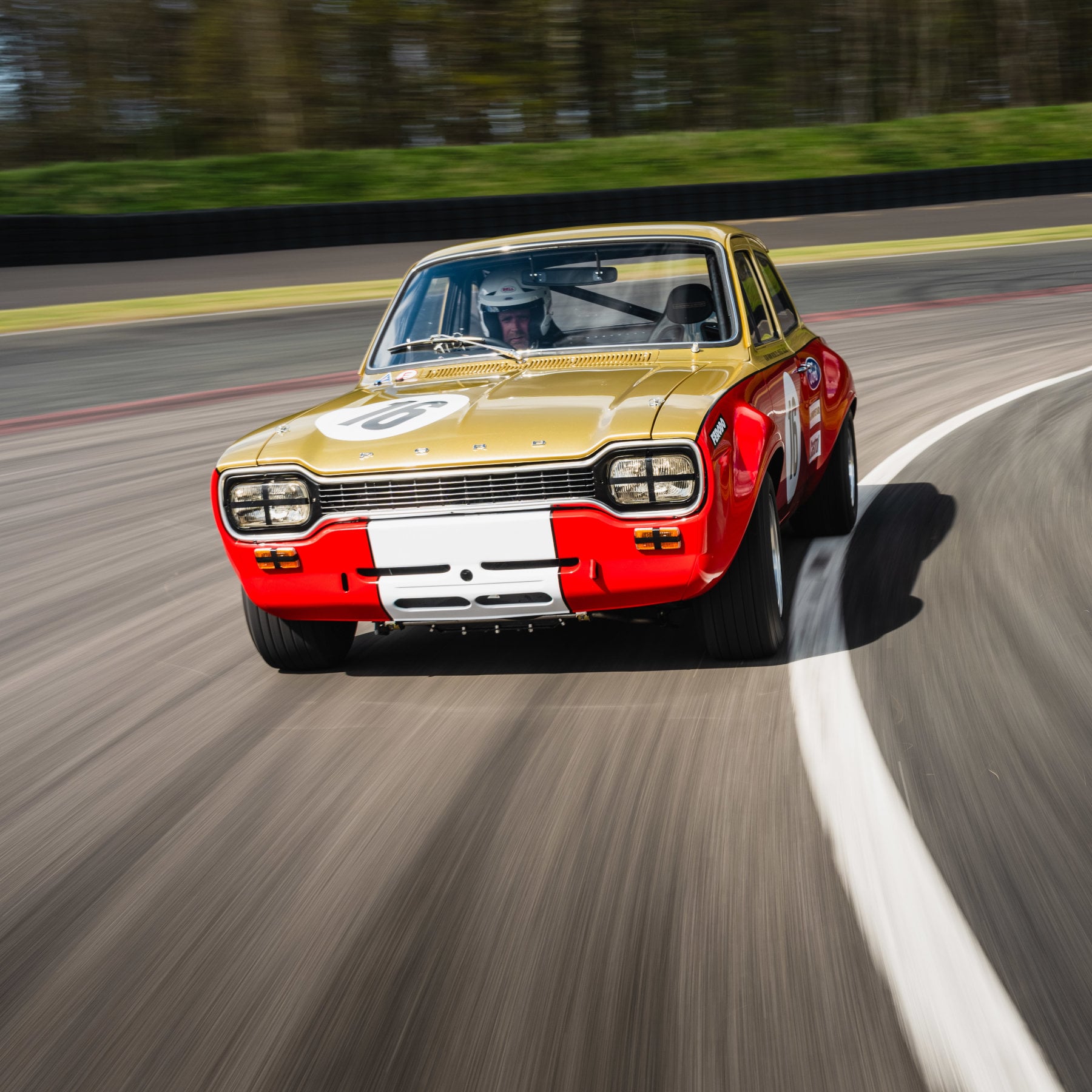
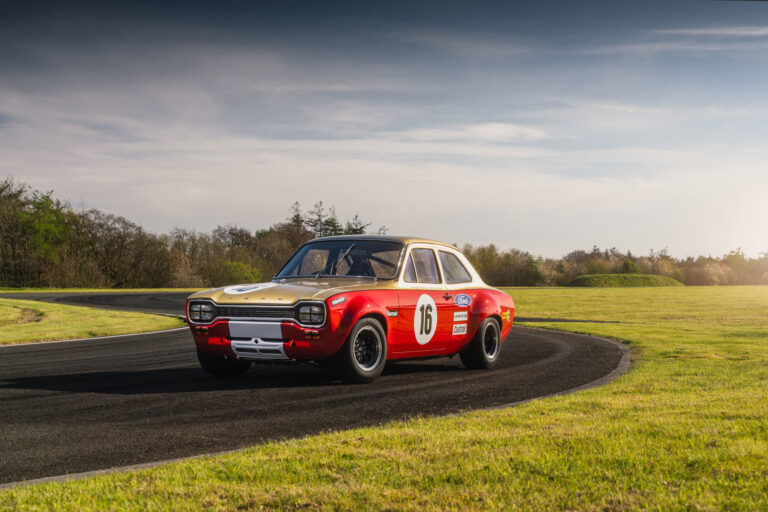
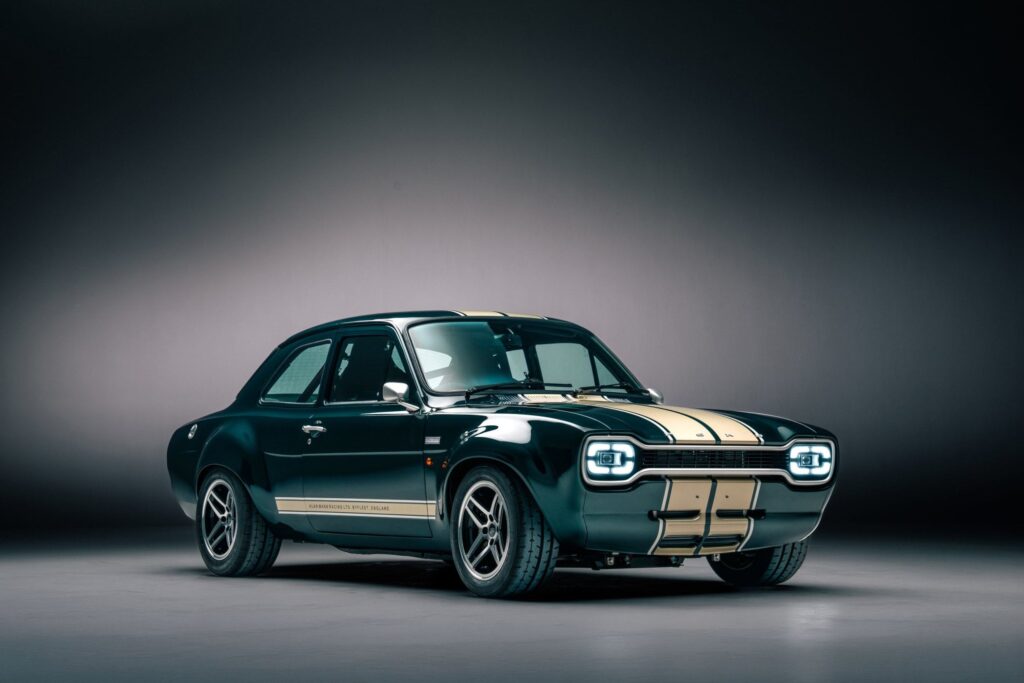
Boreham Motorworks has taken that familiar shape and rebuilt it with the kind of obsessive engineering usually reserved for low-volume supercars, creating a Ford-licensed MK1 RS that keeps the Escort’s visual charm but leaves the old family-car brief far behind.
It’s limited, expensive and unapologetically mechanical, with an optional 10,000rpm four-cylinder engine that gives this compact classic a very modern kind of madness.
At a glance
- Boreham Motorworks has unveiled the Ford-licensed MK1 RS, a road-focused reinterpretation of the first-generation Escort.
- The car uses carbon fibre bodywork, extensive lightweight materials and an optional 2.1-litre Ten-K engine revving to 10,000rpm.
- Production is limited to 150 cars, with pricing starting at €410,000 before options and taxes.
An Escort shape with serious intent
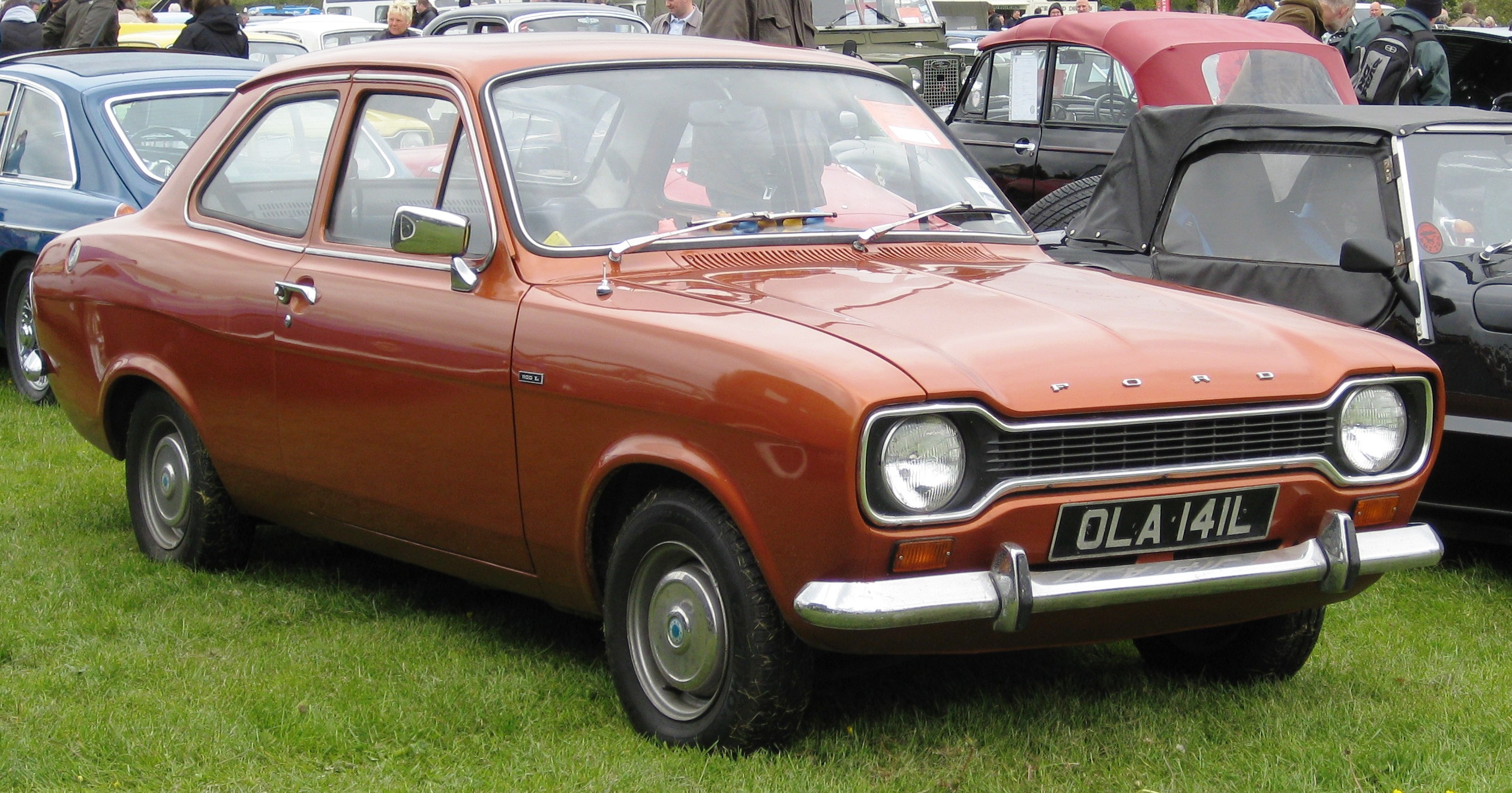
The original Ford Escort arrived in the late 1960s as a compact, affordable car built for ordinary buyers, but it quickly became far more than basic transport.
Across six generations, it became one of Britain’s defining small cars, helped by strong sales, approachable running costs and a competition career that made the Escort name feel much bigger than its dimensions.
The earliest Escorts still carry the strongest visual pull, particularly the first-generation cars with their soft Coke-bottle profile, slim glasshouse and unmistakable front-end treatment.
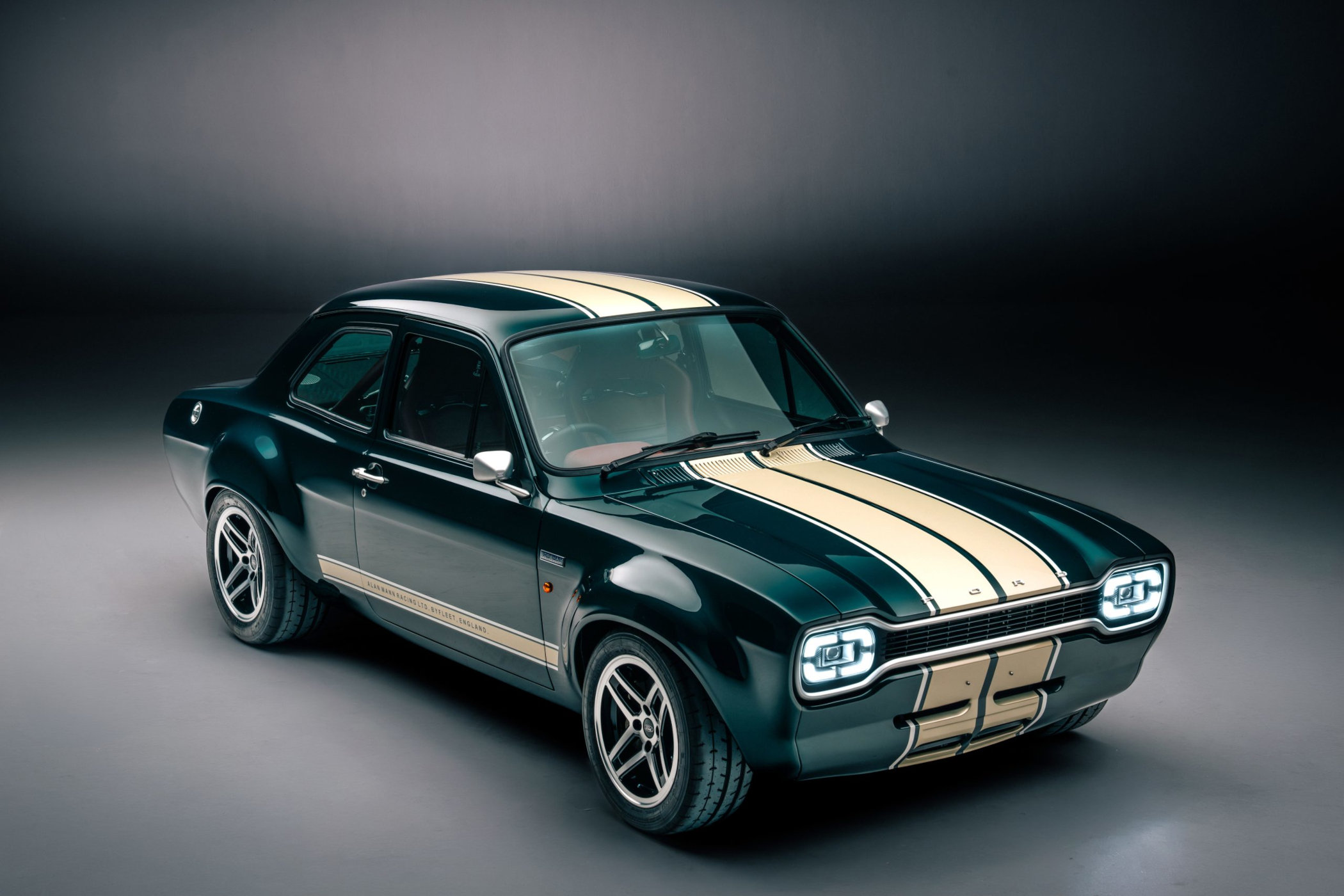
Boreham’s MK1 RS leans into that memory without simply preserving it.
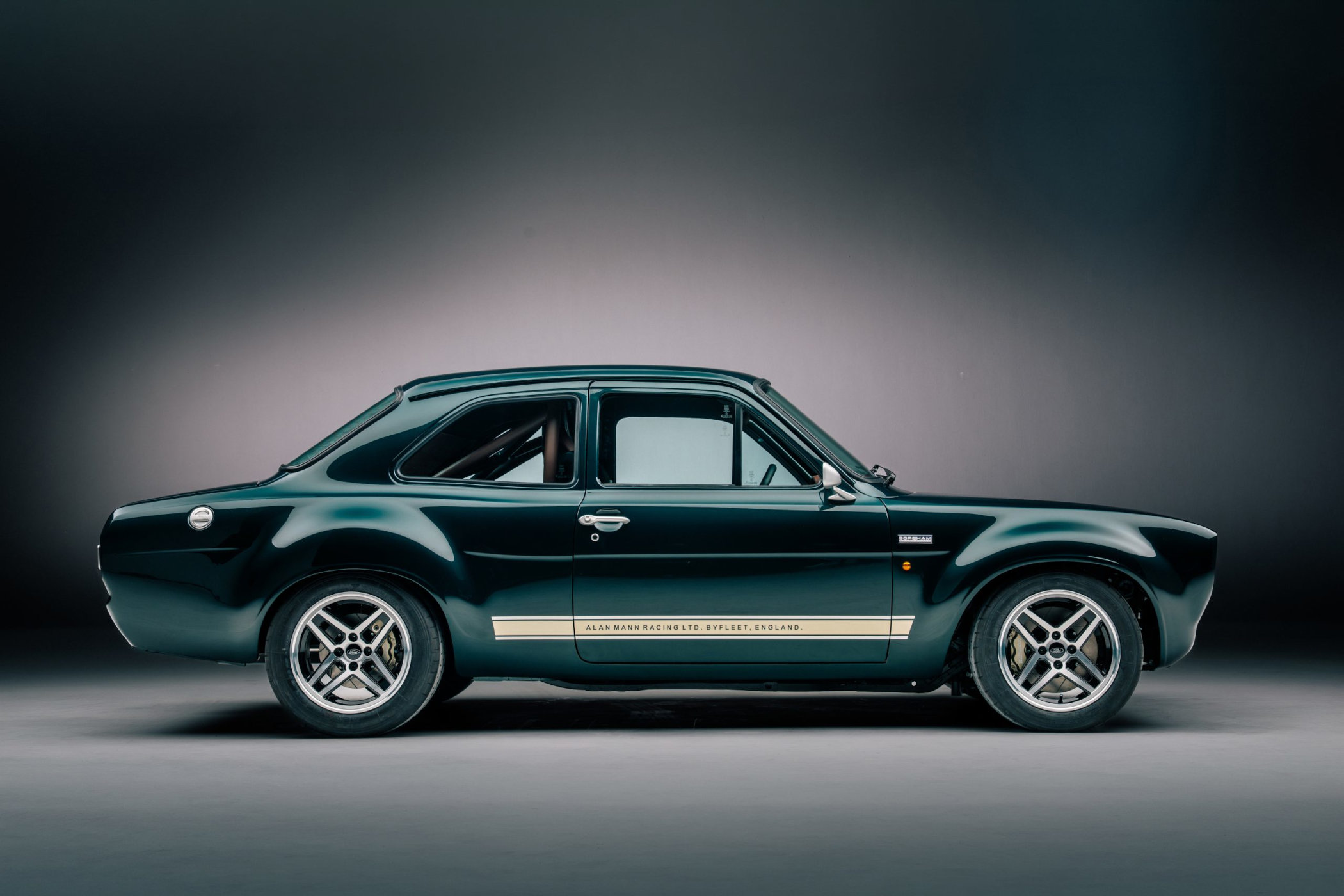
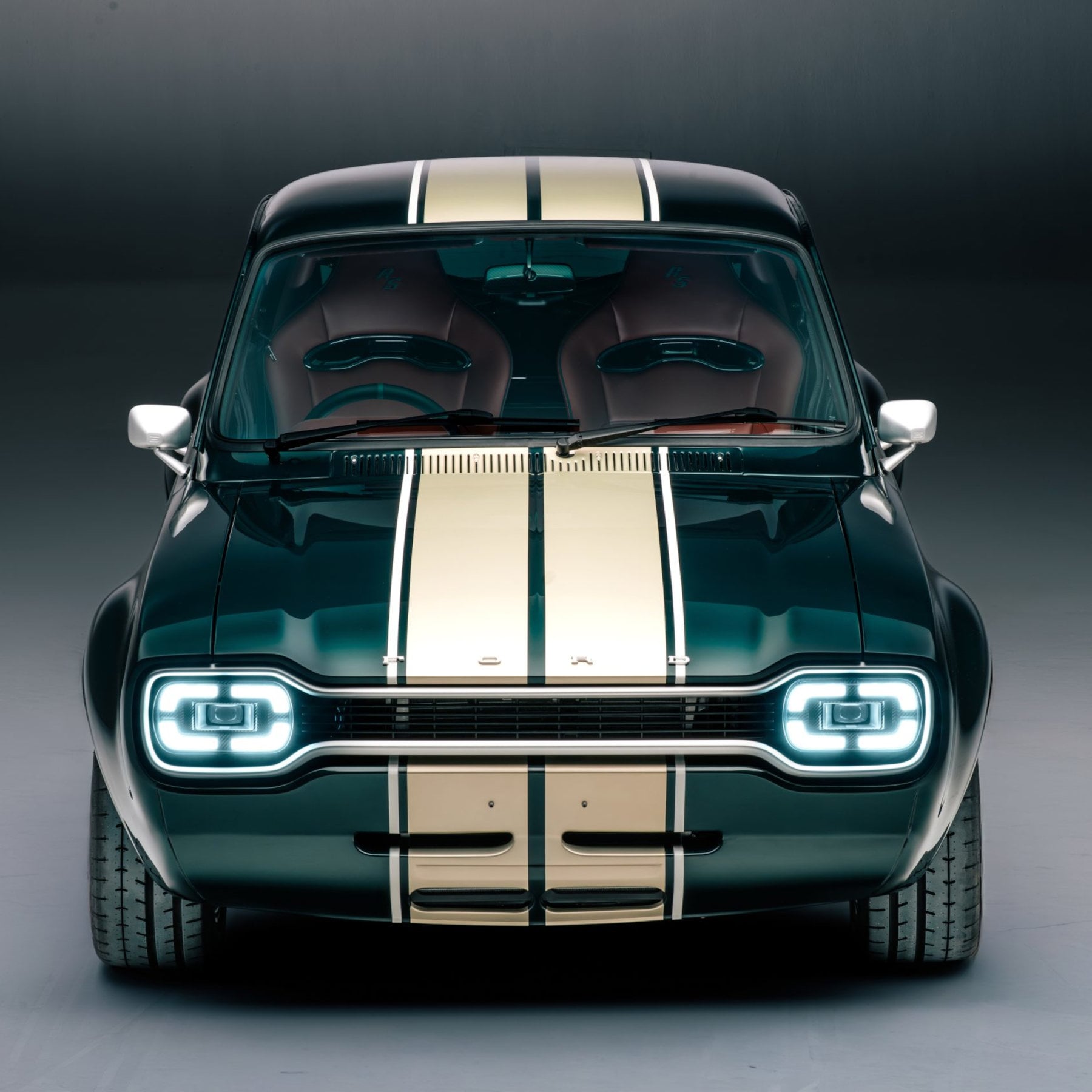
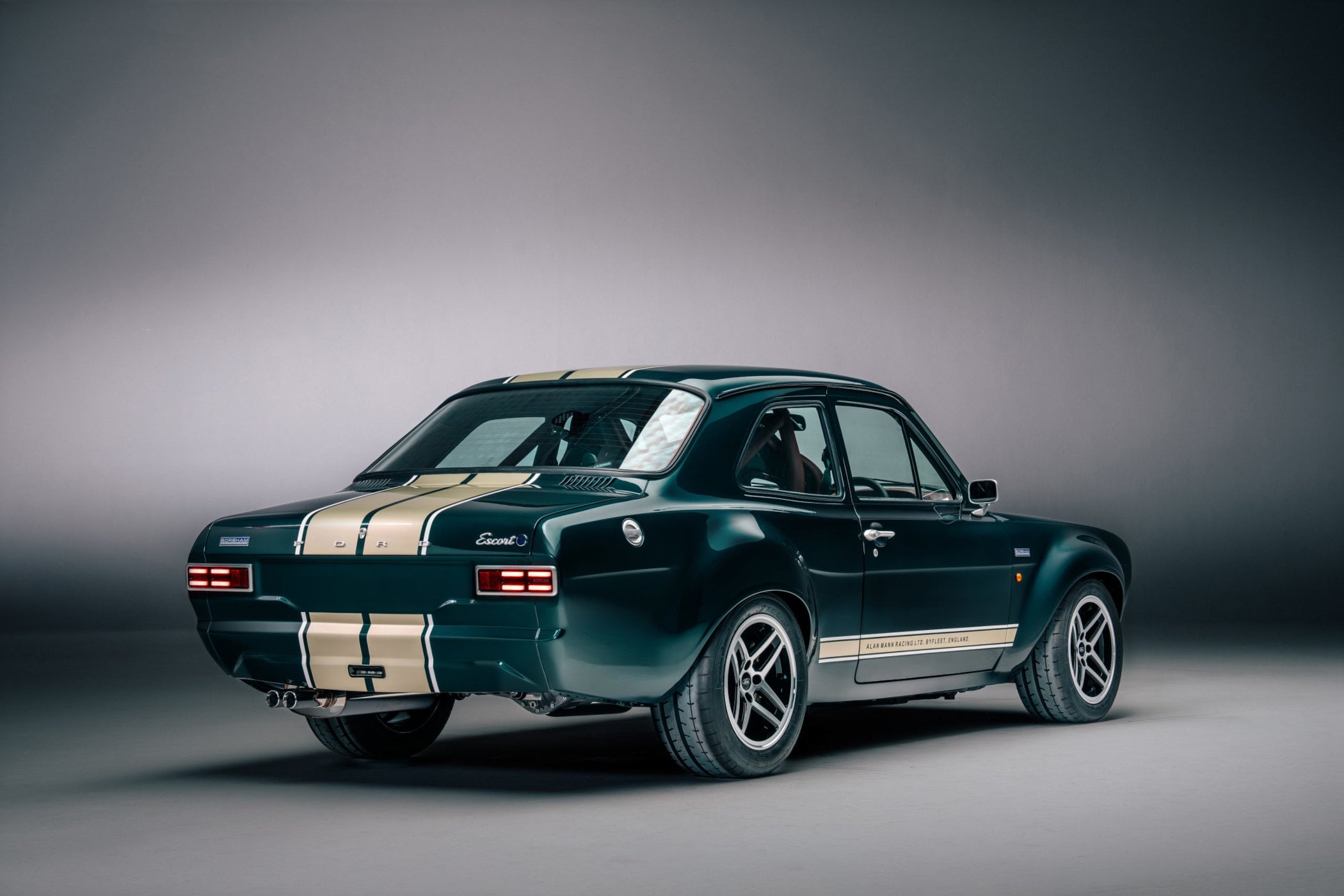
The stance is wider and more deliberate, the wheel arches are swollen, the familiar “Dog Bone” grille is now framed around LED lighting, and the classic double four-spoke wheels sit beneath a body that looks taut rather than nostalgic.
It’s recognisably an Escort, but it doesn’t look like a restored old car wearing expensive paint.
Carbon, aluminium and titanium under the skin
The MK1 RS follows Boreham’s earlier Alan Mann-inspired Escort project, but this car is intended for road use rather than as a pure continuation racer.
The wheelbase has been extended, the chassis has been stiffened, and many of the heavier steel components have been replaced with aluminium or titanium to keep mass under control.
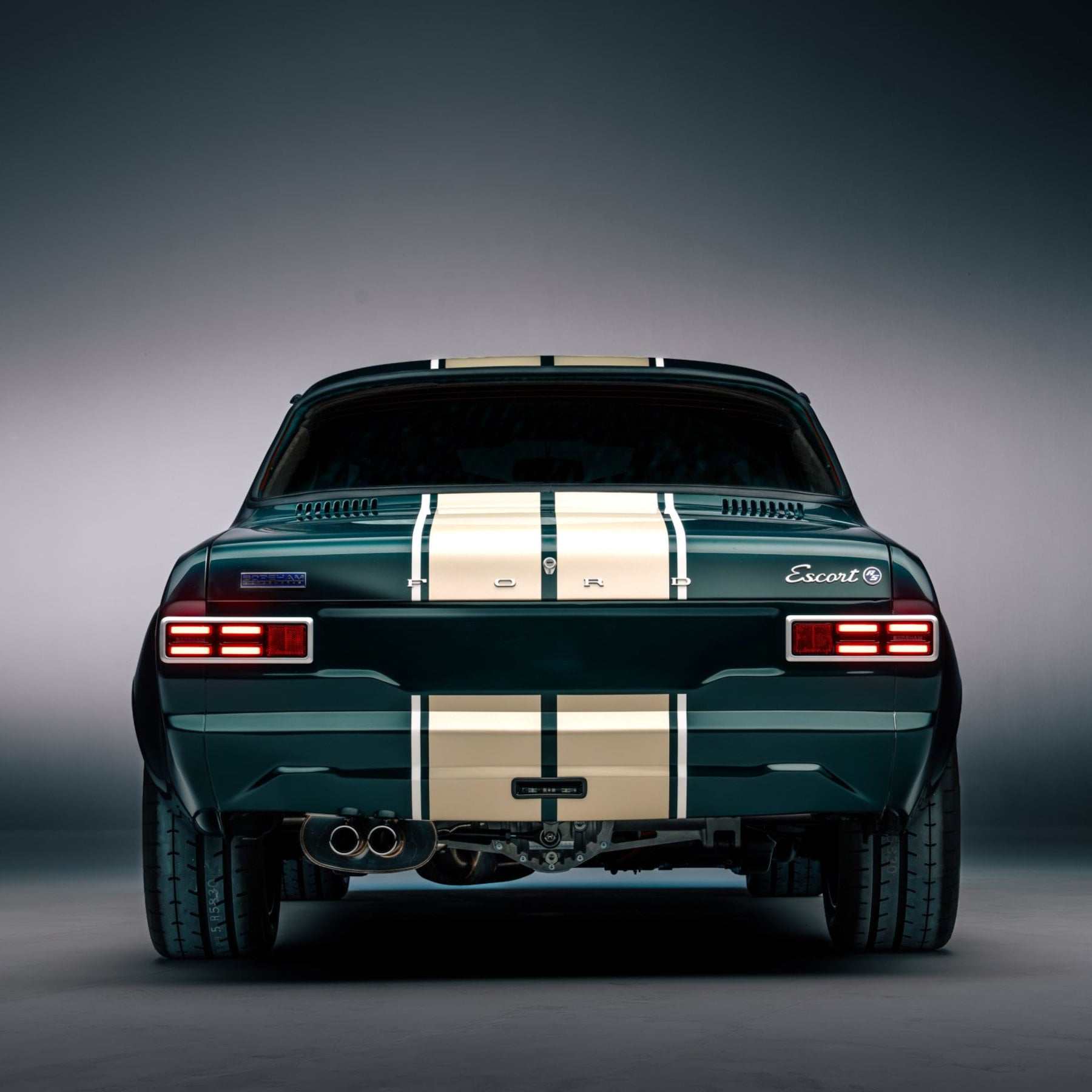
Parts of the body are formed in carbon fibre, with the finish and panel fit treated as central parts of the car’s appeal rather than background details.
Inside, Boreham has redesigned the cabin while keeping the spirit of the original dashboard and driving position intact.
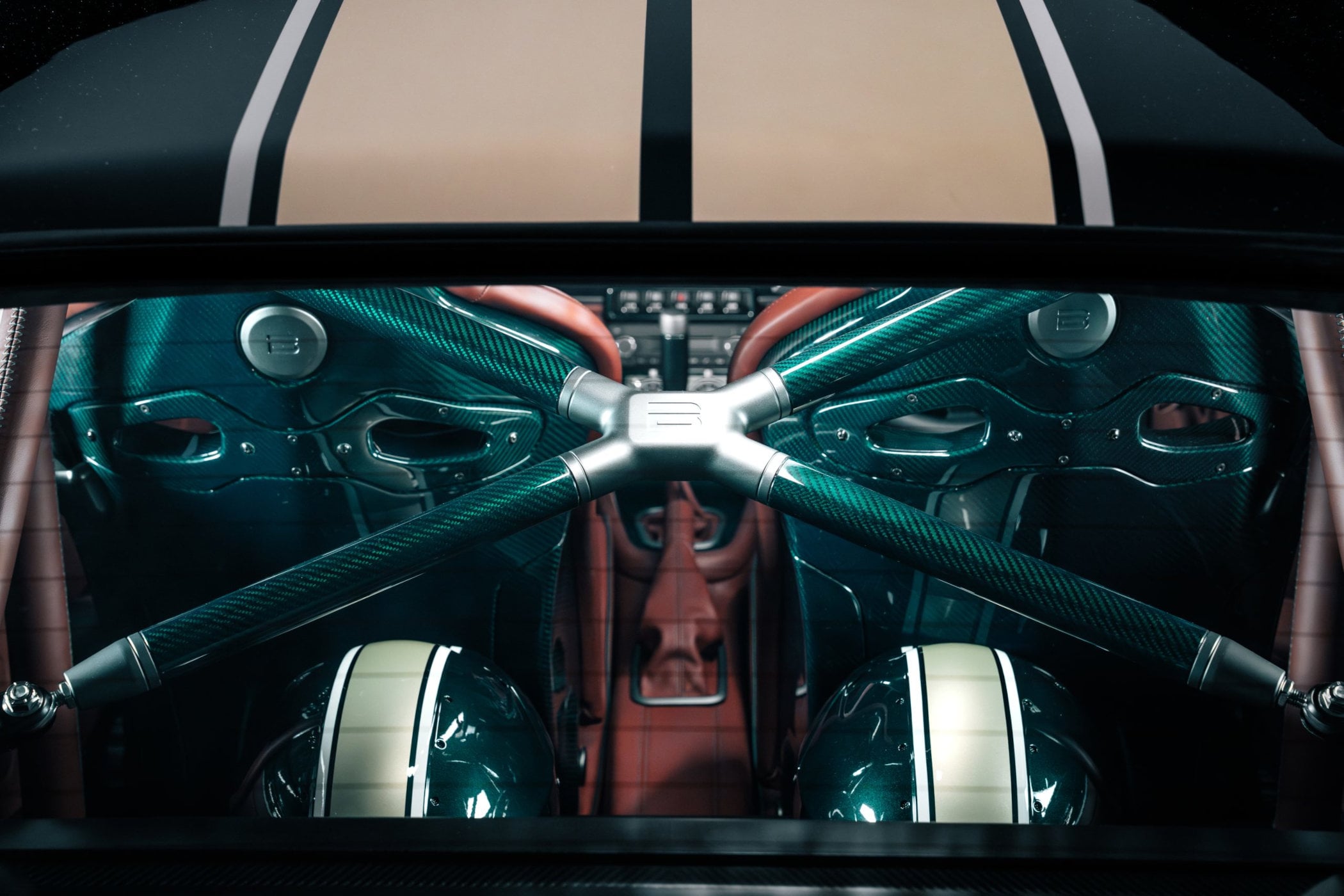
Leather, carbon fibre and aluminium feature throughout, with dashboard timers on the centre console and carbon-backed leather bucket seats giving the interior a functional motorsport flavour.
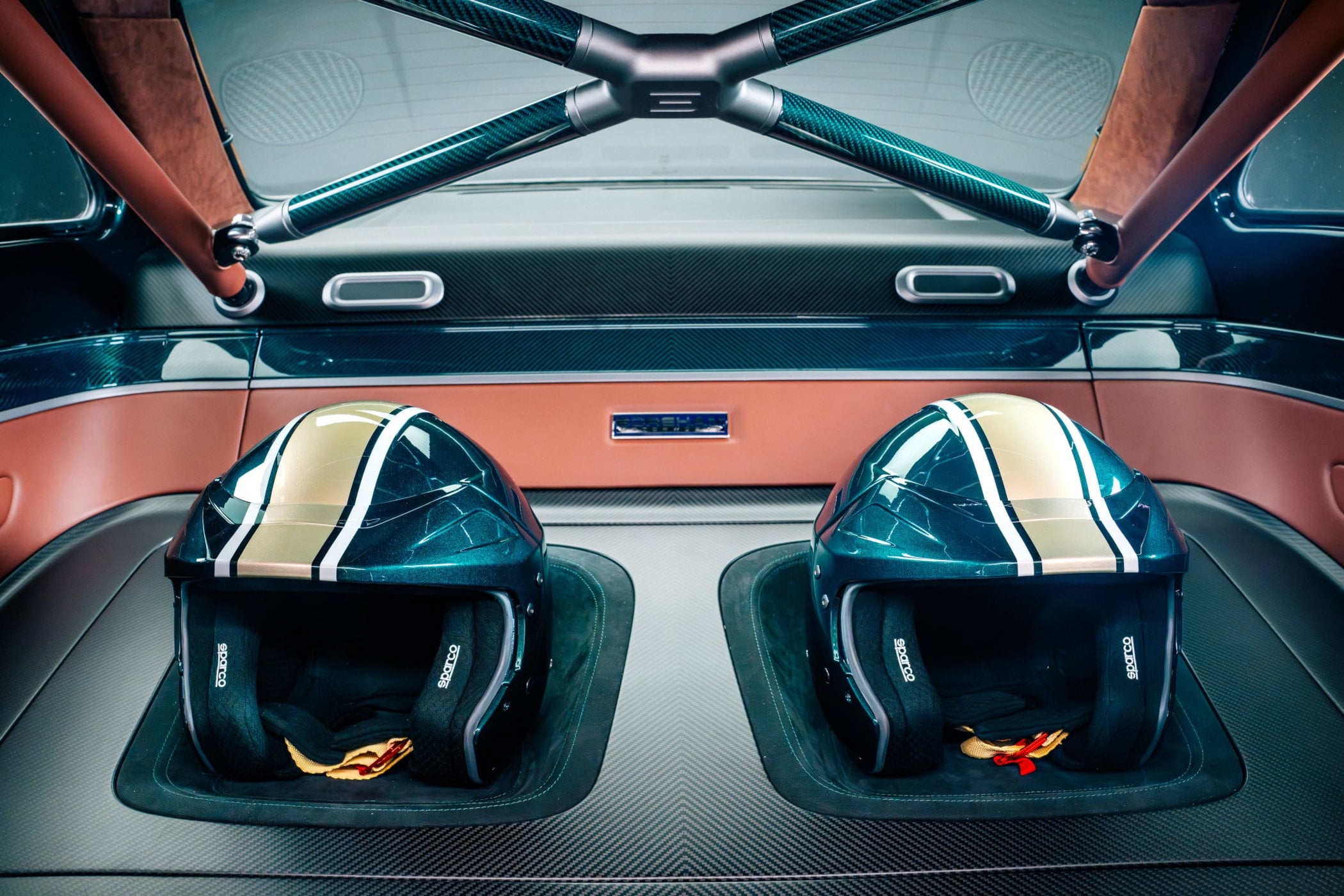
Behind the seats sits an X-shaped strut brace, while a moulded storage area underneath is designed to hold a pair of helmets.
The Ten-K engine is the headline act
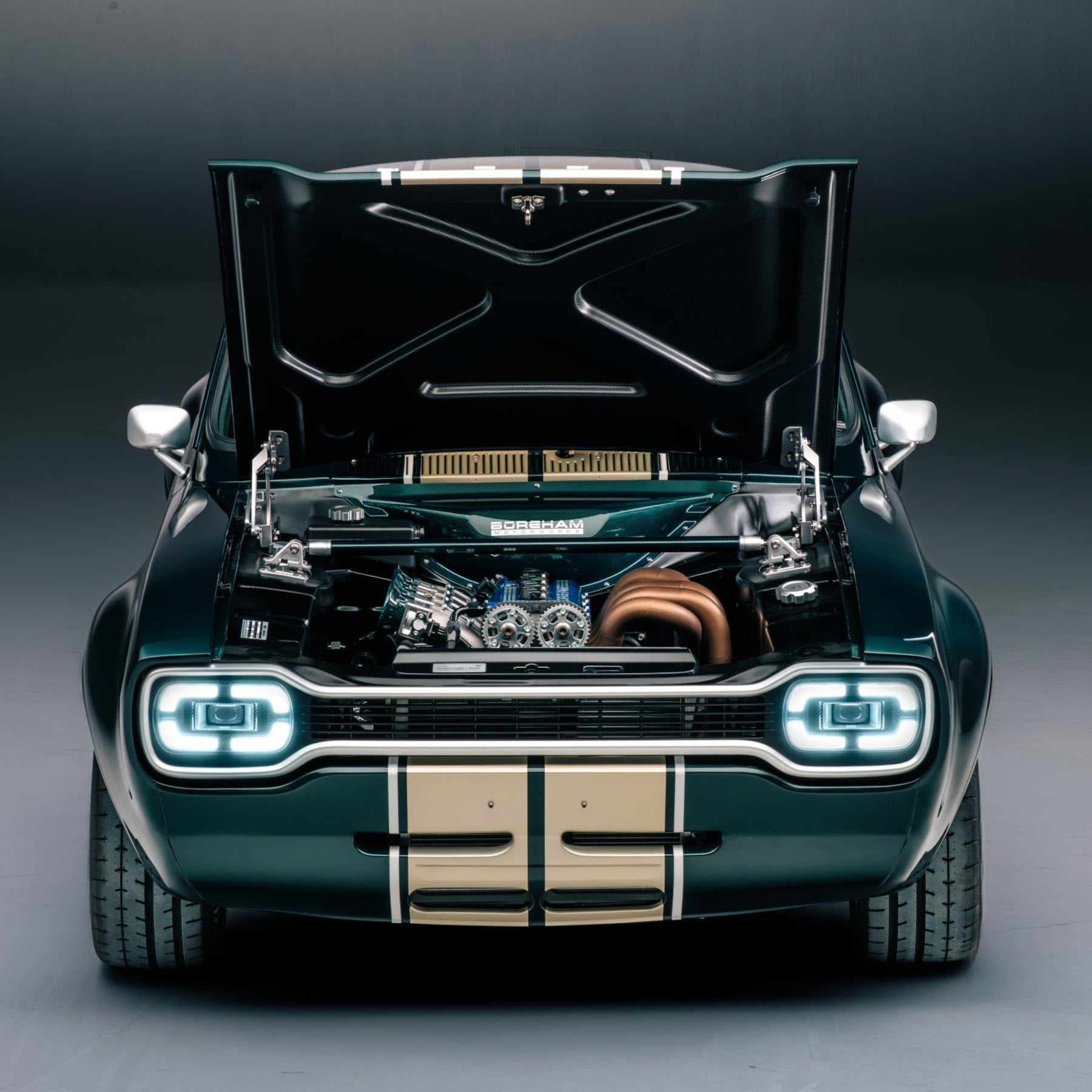
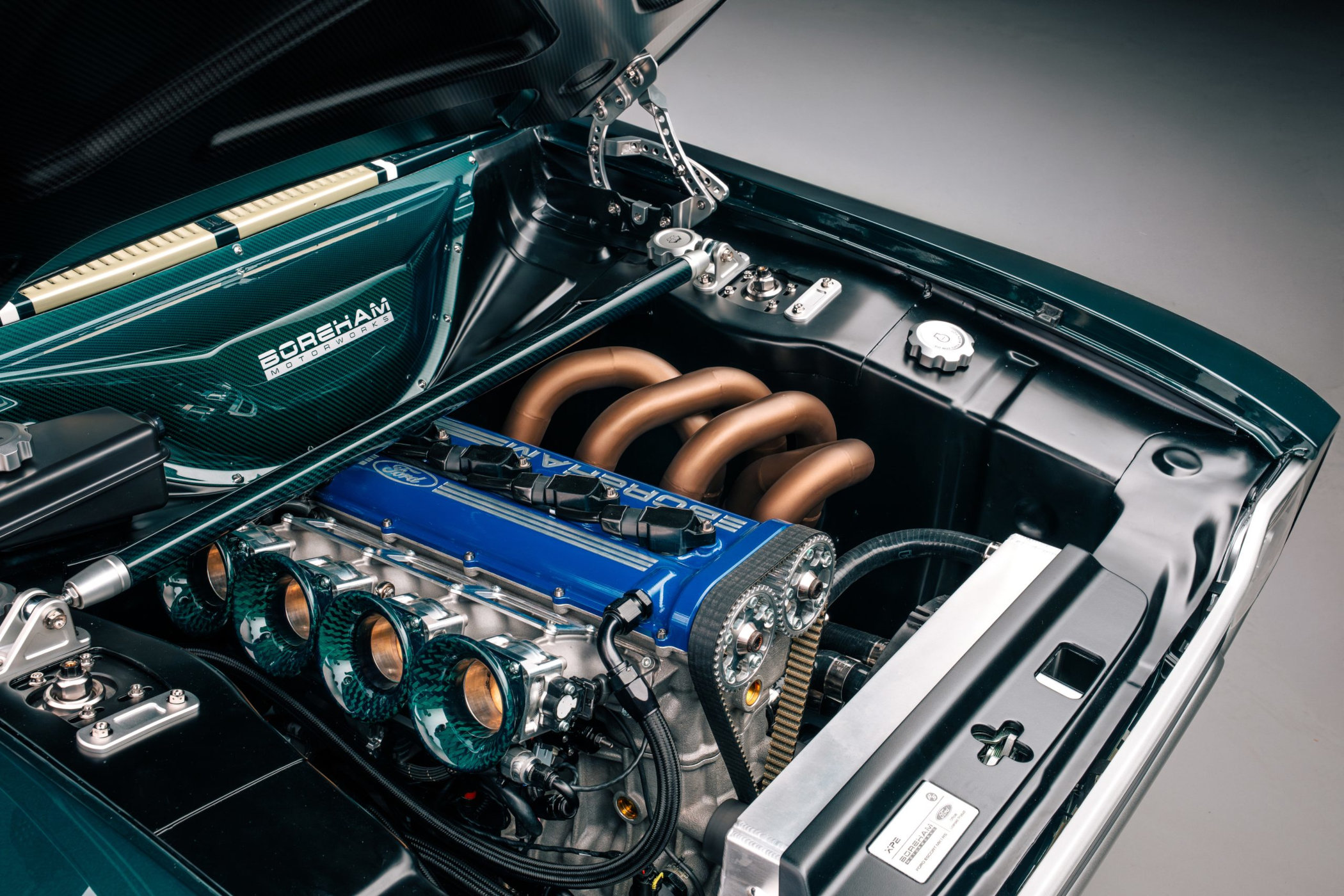
The most compelling version of the MK1 RS is fitted with Boreham’s Ten-K engine, a 2.1-litre twin-cam four-cylinder that earns its name with a 10,000rpm redline.
That figure is made possible through features including belt-driven camshafts, individual throttle bodies, a carbon-fibre airbox and extensive billet or forged internal components.
Output is rated at 330 horsepower, an extraordinary number in a car weighing less than 900 kilograms.
Power goes to the rear wheels through a close-ratio five-speed dog-leg manual gearbox by Holinger, keeping the experience pleasingly analogue.
The chassis hardware is similarly focused, with adjustable R53 dampers and struts among the standard equipment.
That combination of low weight, rear-wheel drive, manual shifting and high revs is likely to be the real reason collectors pay attention.
Details & Specifications
| Brand | Boreham Motorworks |
|---|---|
| Model | MK1 RS |
| Licence | Ford-licensed project |
| Body | Partly carbon fibre |
| Lightweight materials | Aluminium and titanium used to replace many heavier steel components |
| Engine option | Ten-K 2.1-litre twin-cam four-cylinder |
| Output | 330 horsepower with Ten-K engine |
| Redline | 10,000rpm with Ten-K engine |
| Induction and engine details | Individual throttle bodies, carbon-fibre airbox, billet or forged internal components |
| Transmission | Close-ratio five-speed dog-leg manual by Holinger |
| Drivetrain | Rear-wheel drive |
| Kerb weight | Less than 900kg |
| Suspension | Adjustable R53 dampers and struts |
| Production | 150 cars |
| Starting price | €410,000 before options and taxes |
A collector Escort without the usual nostalgia trap
The price will be the most divisive part of the MK1 RS, because €410,000 places this Escort-shaped machine in rarefied company.
That figure is before options and taxes, and the Ten-K engine is exactly the sort of box many buyers will find difficult not to tick.
Still, Boreham isn’t pitching this as a restored classic or a lightly modified weekend toy.
The MK1 RS is a limited-production, Ford-licensed restomod with bespoke engineering, modern materials and a driving brief built around involvement rather than comfort or status.
For Escort loyalists, it’s the familiar silhouette taken to an extreme that Ford itself never attempted for the road.
For collectors of modern analogue performance cars, it’s a compact, rear-driven manual machine with a very specific sense of character.
The original Escort earned affection by being simple, tough and accessible, while Boreham’s MK1 RS is none of those things in the everyday sense.
Yet the appeal is easy to understand, because it takes one of Britain’s most recognisable performance icons and gives it the weight, revs and craftsmanship to feel genuinely special rather than merely sentimental.