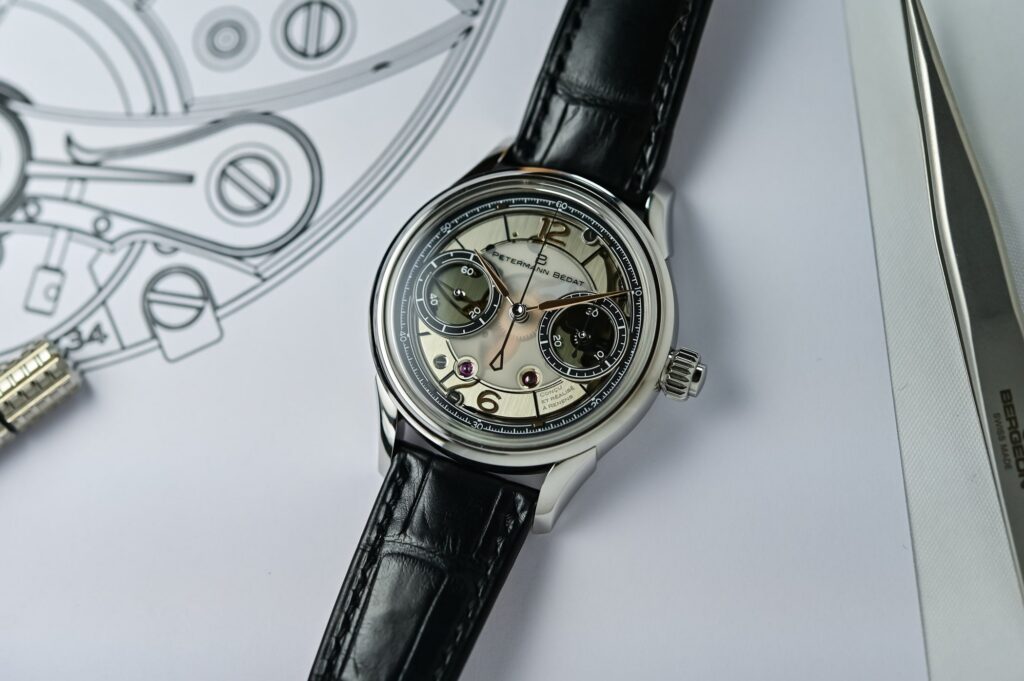
Petermann Bédat has moved quickly from promising independent name to one of the more closely watched small-scale makers in contemporary Swiss watchmaking.
The new Reference 2914 Monopusher Chronograph sharpens that trajectory with a watch that removes the split-seconds mechanism from the earlier 2941, but keeps the brand’s taste for classical architecture, visible mechanics and assertive hand-finishing.
It’s the duo’s first chronograph-only watch, and it arrives as a compact platinum limited edition aimed squarely at collectors who value movement architecture as much as dial presence.
At a glance
- Petermann Bédat has introduced the Reference 2914 Monopusher Chronograph, its first chronograph-only model.
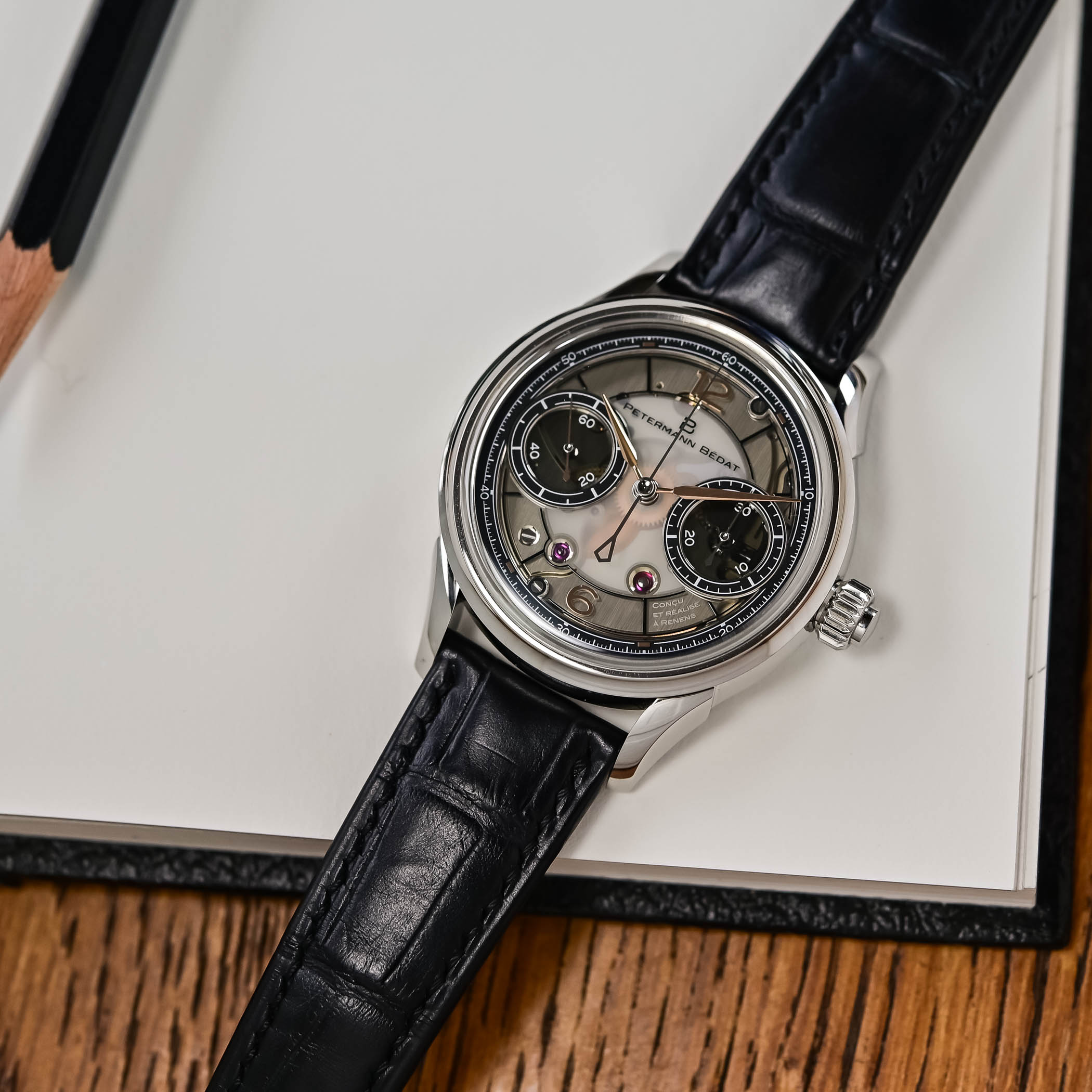
- The watch uses a hand-wound column-wheel monopusher calibre with horizontal clutch, jumping minutes and a semi-transparent sapphire dial.
- The platinum edition is limited to 20 pieces and priced at CHF 180,000 excluding taxes.
A tighter platinum case with a more focused brief
The Reference 2914 follows the Reference 2941 Split-Second Chronograph, but it isn’t simply a less complicated version of that watch.
By removing the rattrapante function, Petermann Bédat has created a cleaner chronograph proposition while preserving the theatrical movement layout that has become part of the brand’s identity.
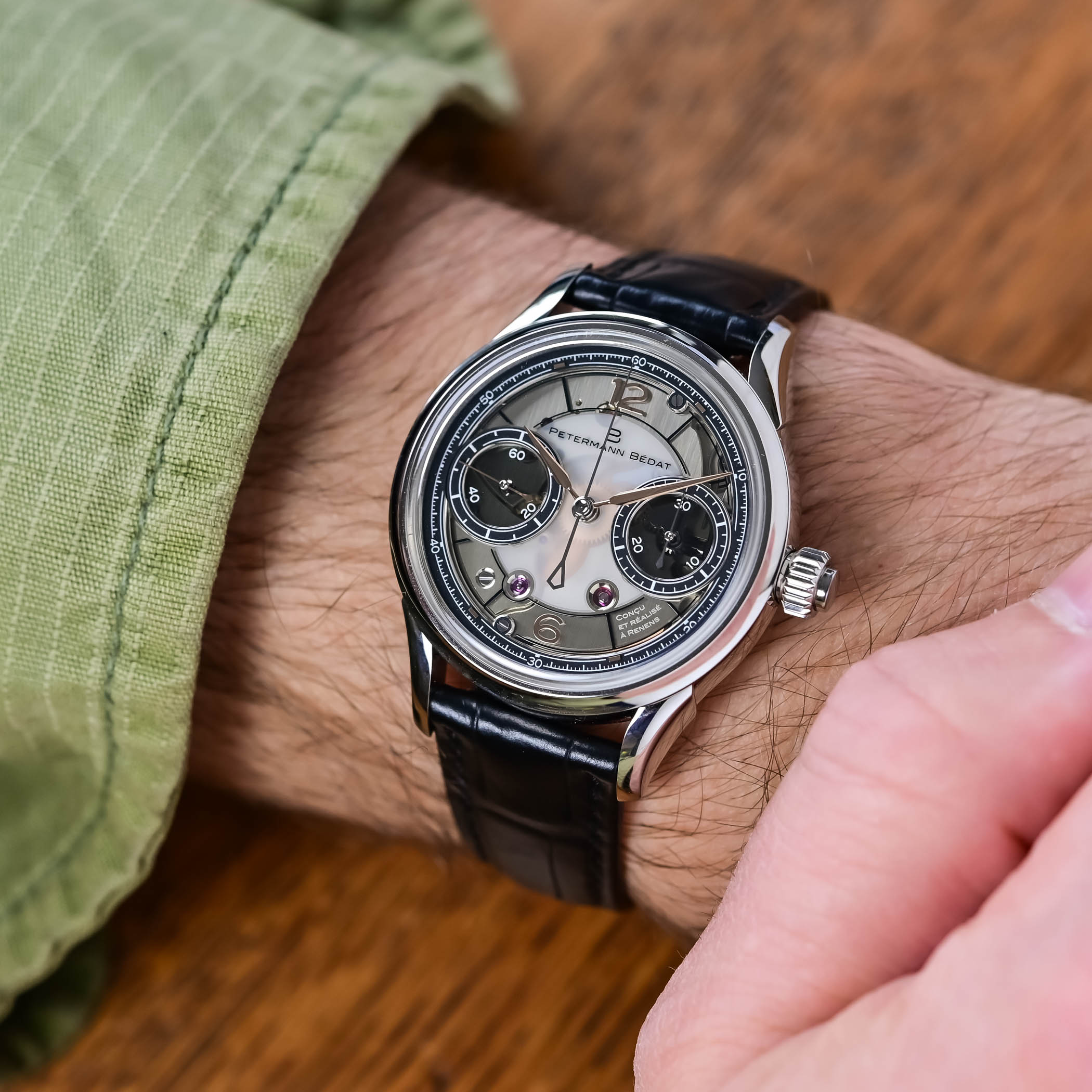
The platinum case measures 36.5mm across and 11.6mm thick, making it smaller than the 2941, which measured 38.6mm by 13mm.
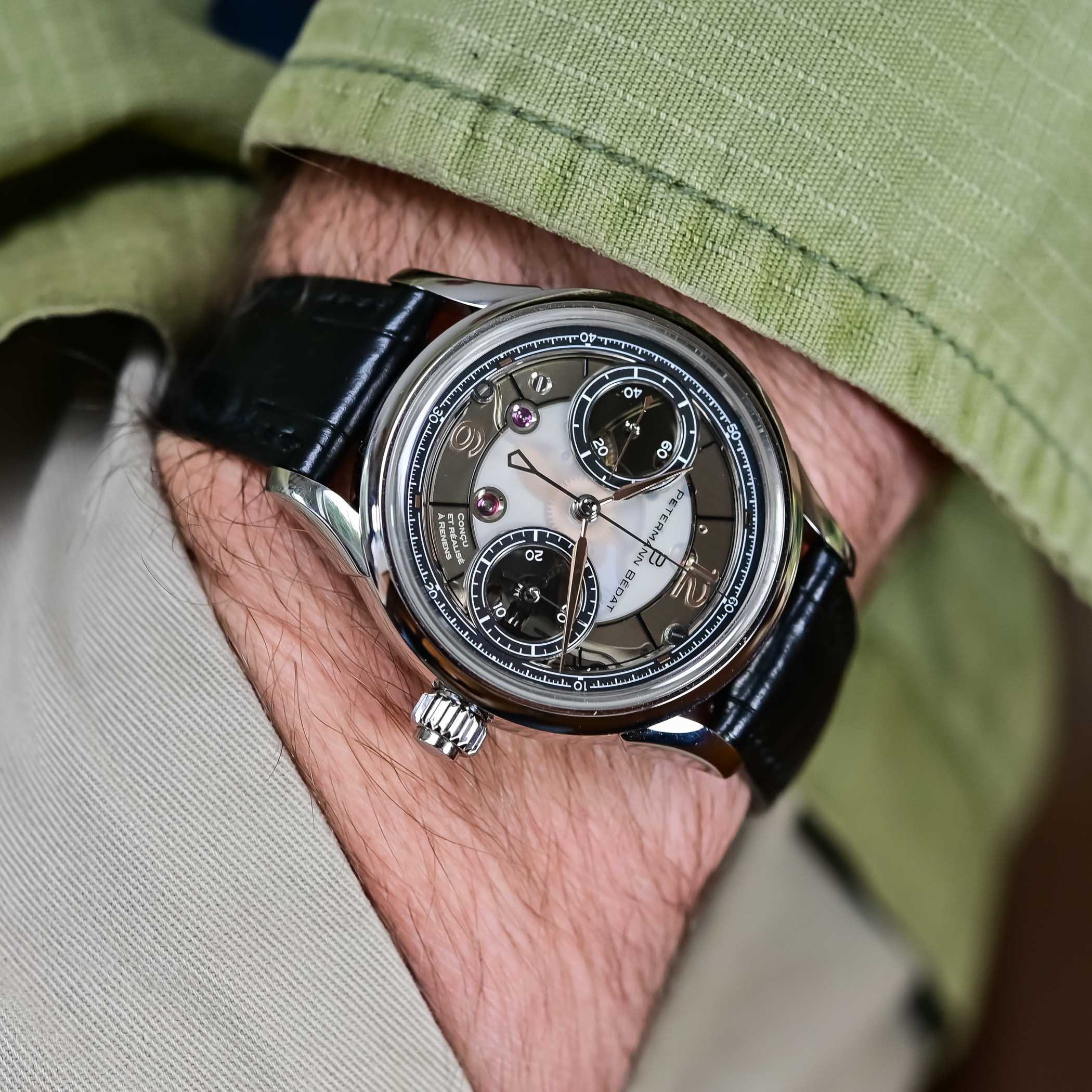
That shift matters because independent chronographs of this calibre can easily become showcase objects first and wearable watches second.
Here, the proportions suggest a more intimate kind of high horology, with soldered lugs, a polished concave bezel and a box-shaped sapphire crystal giving the case a distinctly traditional profile.
The back uses a snap-on construction for a cleaner appearance, a solution the brand has also used on the 1826 Time-Only for The Hour Glass.
A semi-transparent dial with real structure
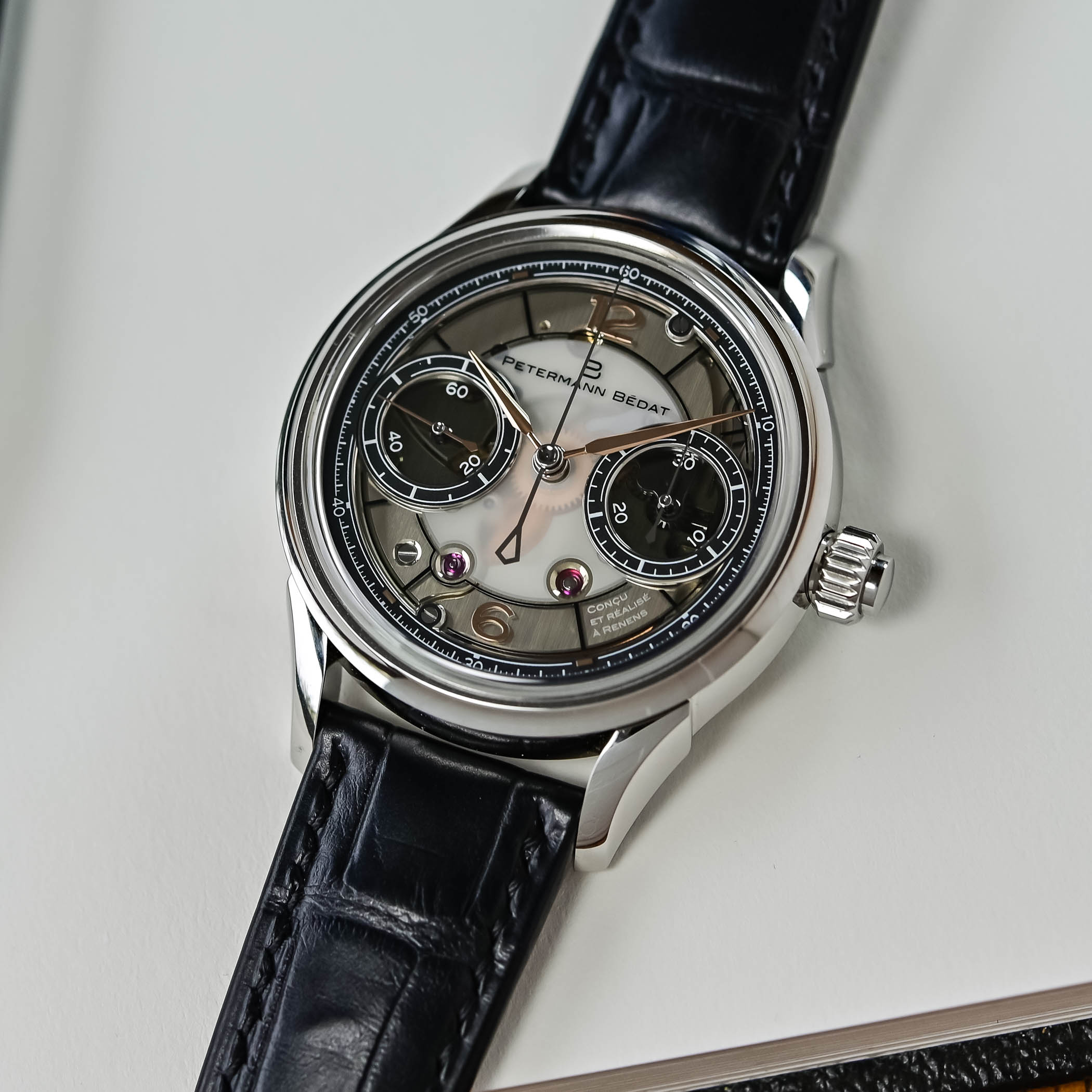
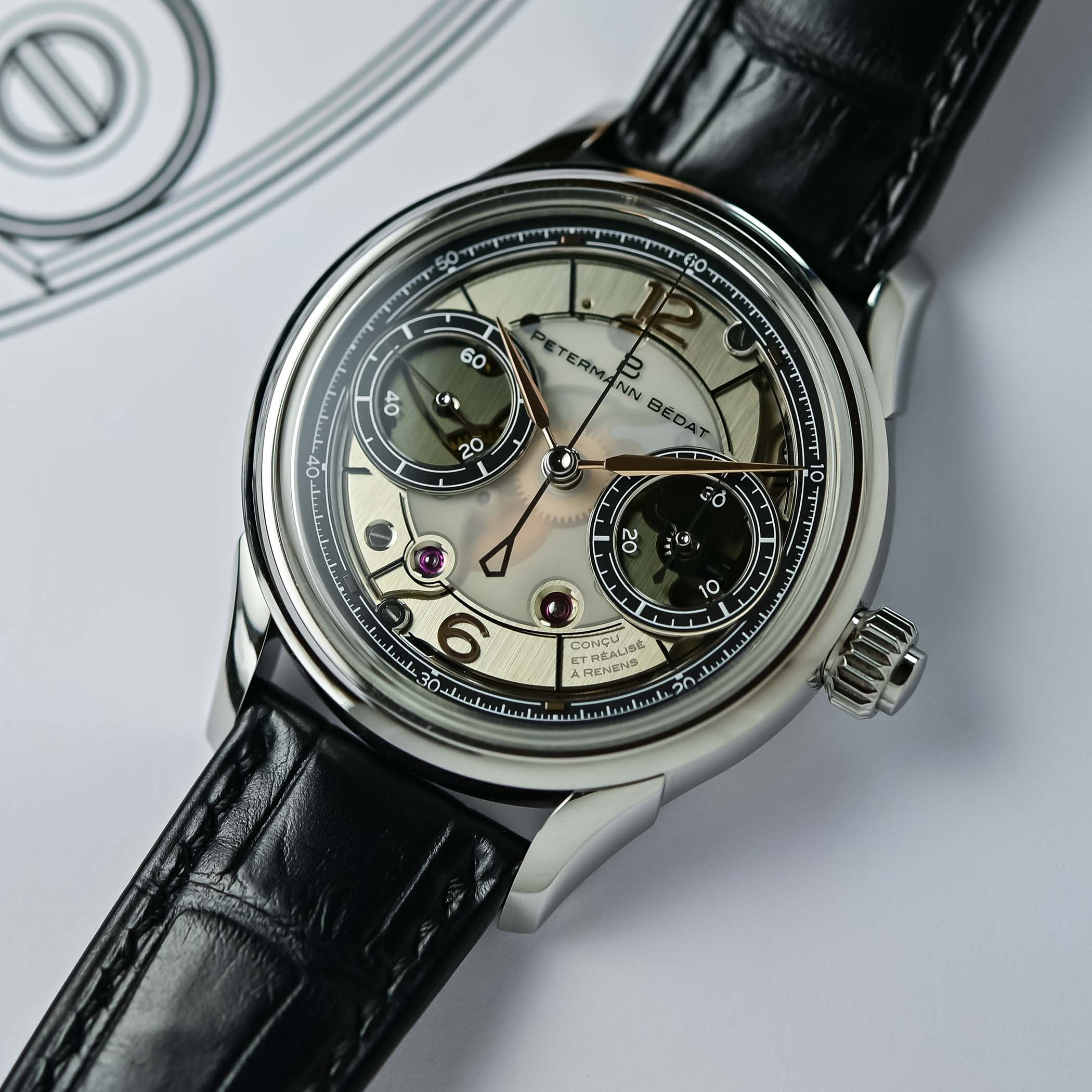
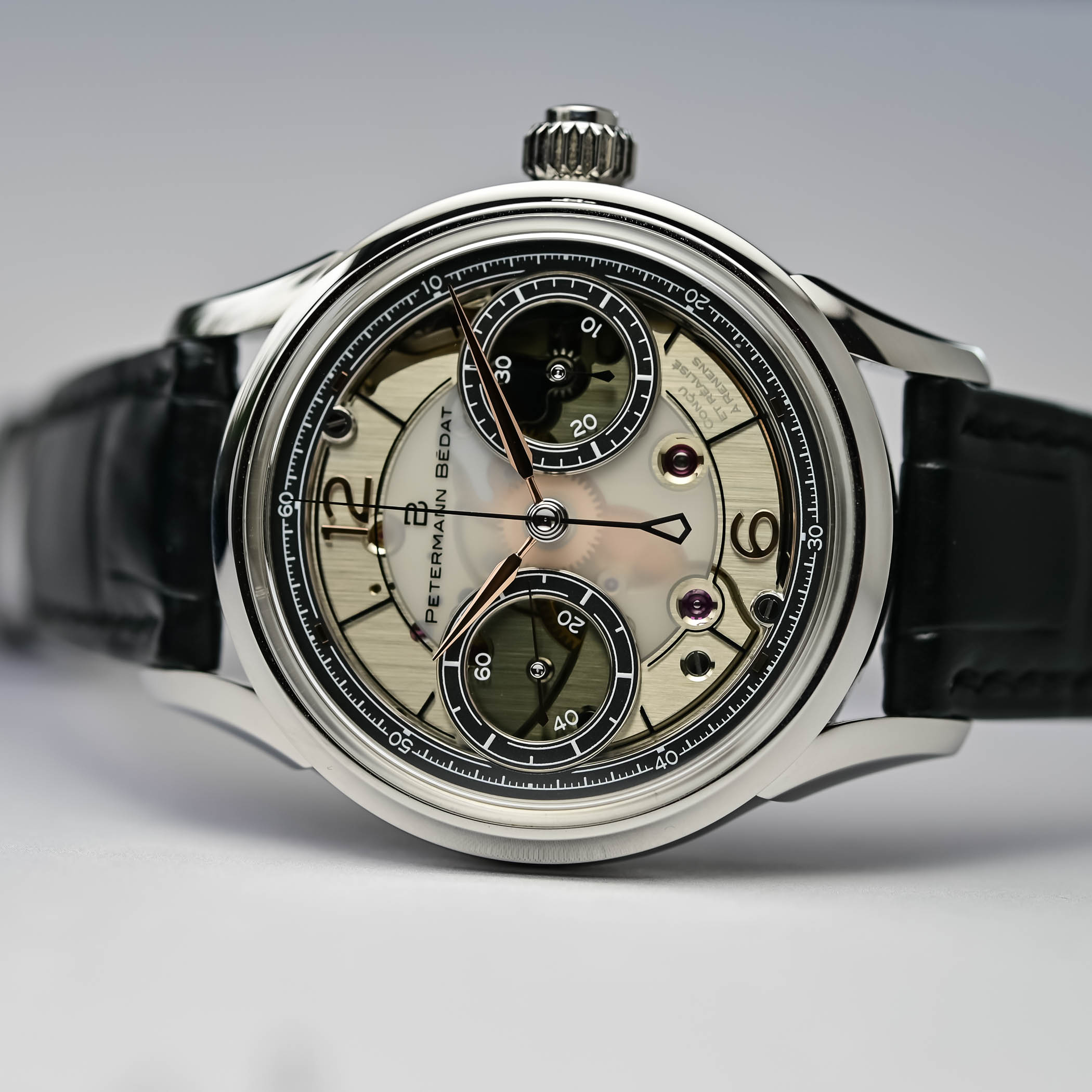
The dial keeps the semi-transparent sapphire concept seen on the 2941, but the execution is more layered.
Produced by Kari Voutilainen’s Comblémine, the sapphire dial uses laser engraving across the central section to create a semi-opaque effect over the warm German silver plates below.
It’s a clever balance, because the watch still lets the mechanics breathe without making legibility feel like an afterthought.
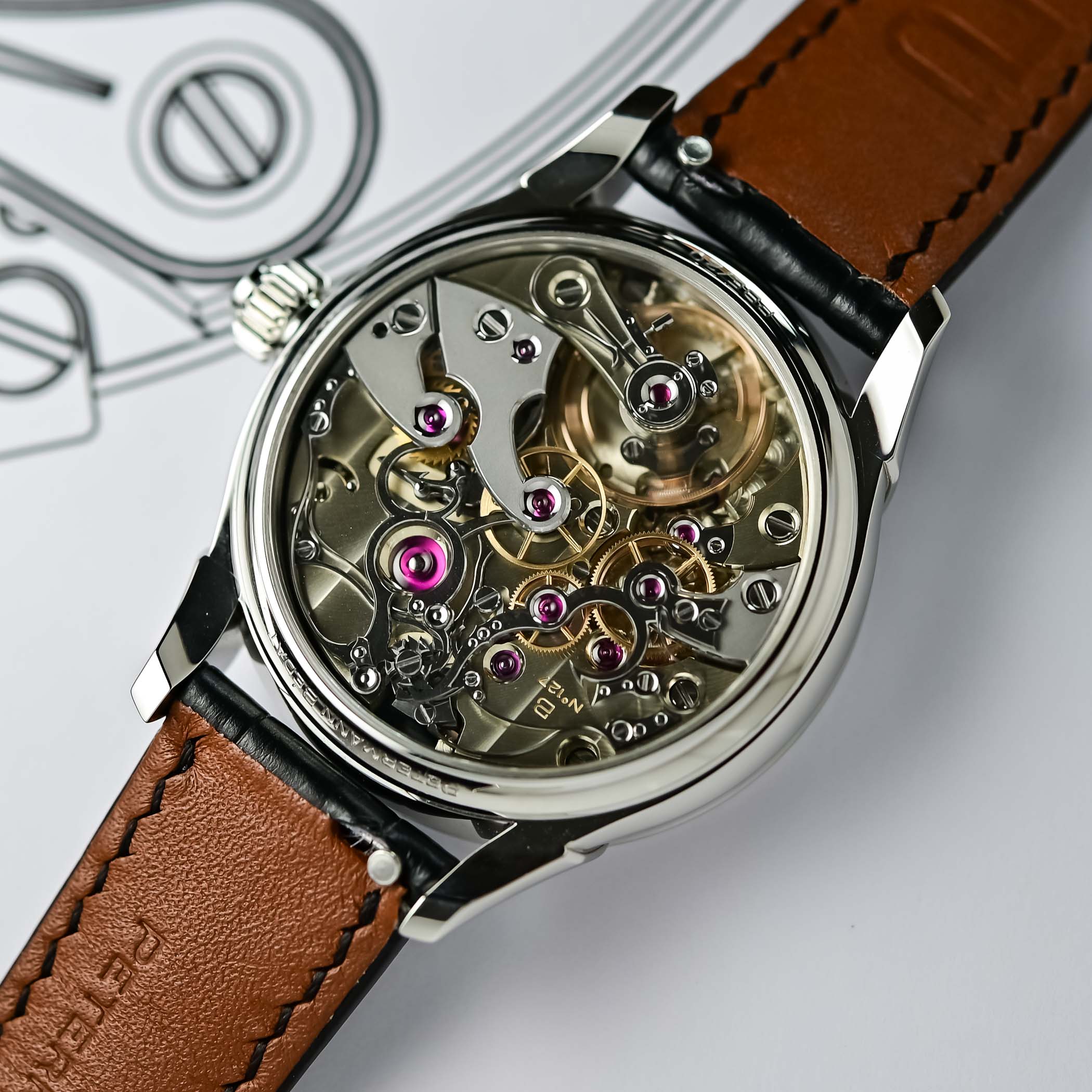
The layout has a sector-style display with applied gold numerals at 12 and 6 o’clock, smaller peripheral markers and black rings around the main dial and sub-dials for contrast.
The hands are hand-made from gold and stainless steel, with black-polished surfaces and bevels that strengthen the visual definition against the openworked backdrop.
Calibre 234 and the appeal of subtraction
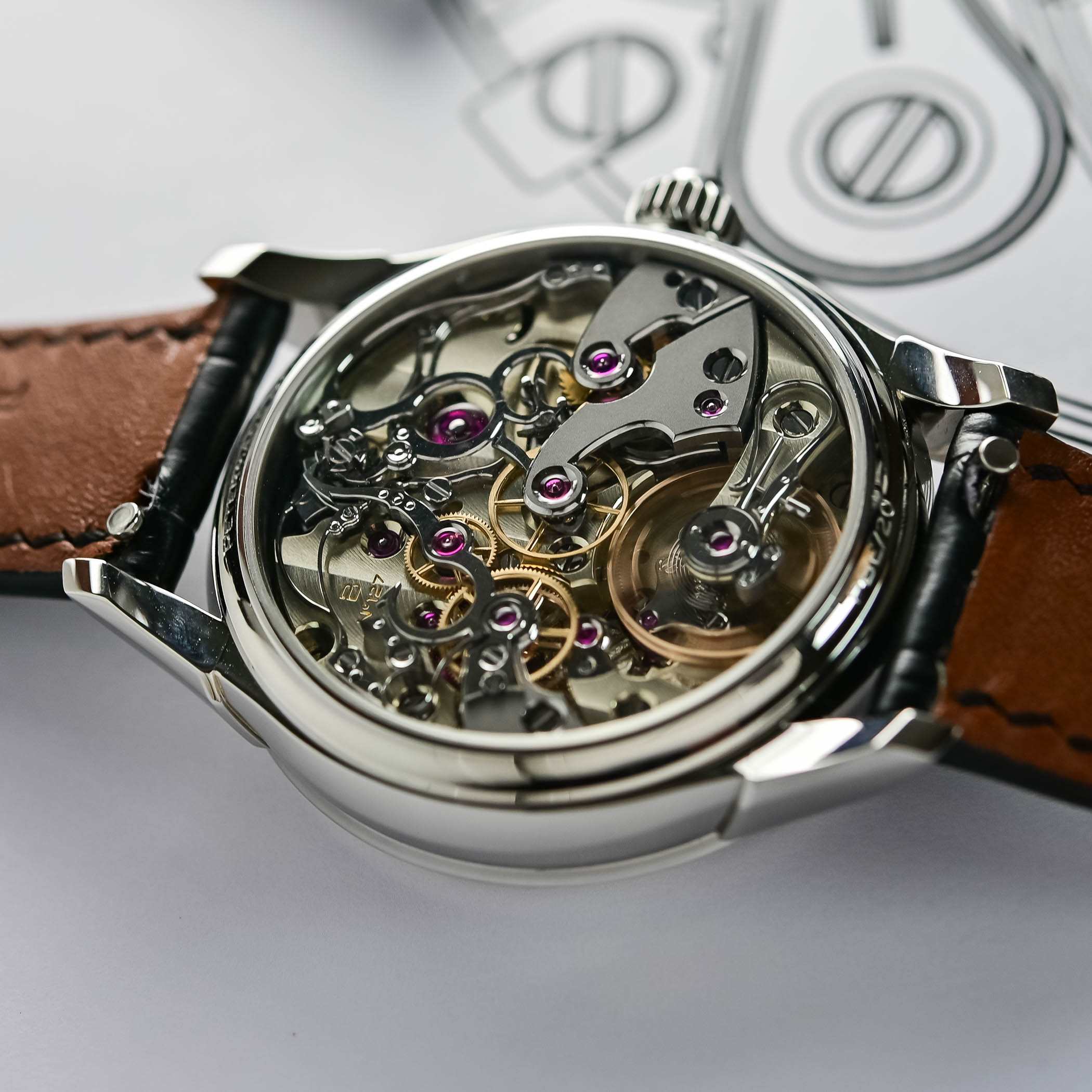
The hand-wound calibre 234 is derived from the calibre 202 used in the split-seconds chronograph, with the rattrapante mechanism removed and several updates made to the chronograph system.
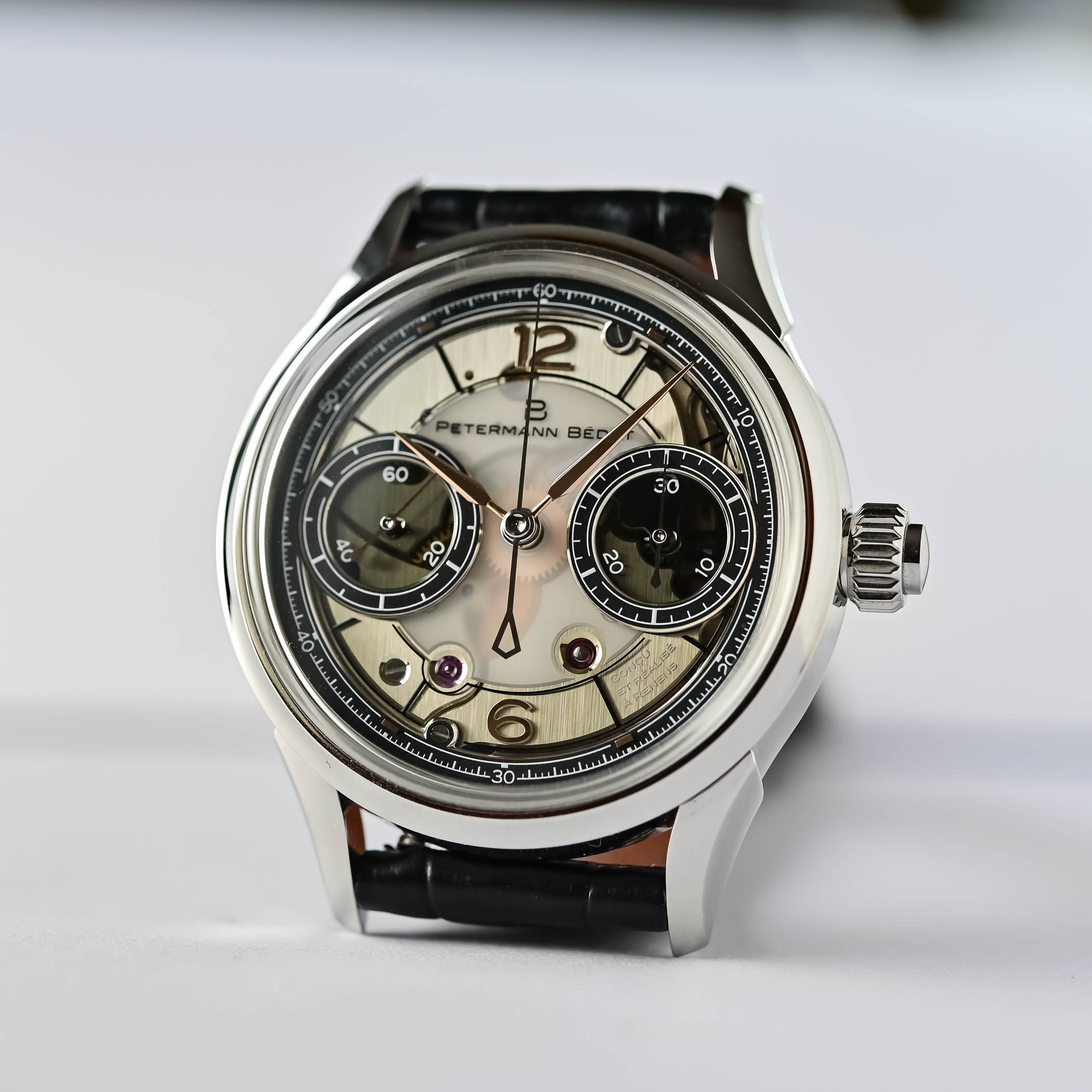
Petermann Bédat has modified the reset mechanism and the hook of the column wheel, while the going train has been redesigned with hand-bevelled solid gold wheels.
The movement remains a traditional column-wheel monopusher chronograph with a horizontal clutch, the kind of construction collectors often favour because the chronograph works are openly visible and mechanically expressive.
A jumping-minute mechanism allows elapsed minutes to be read instantaneously and precisely.
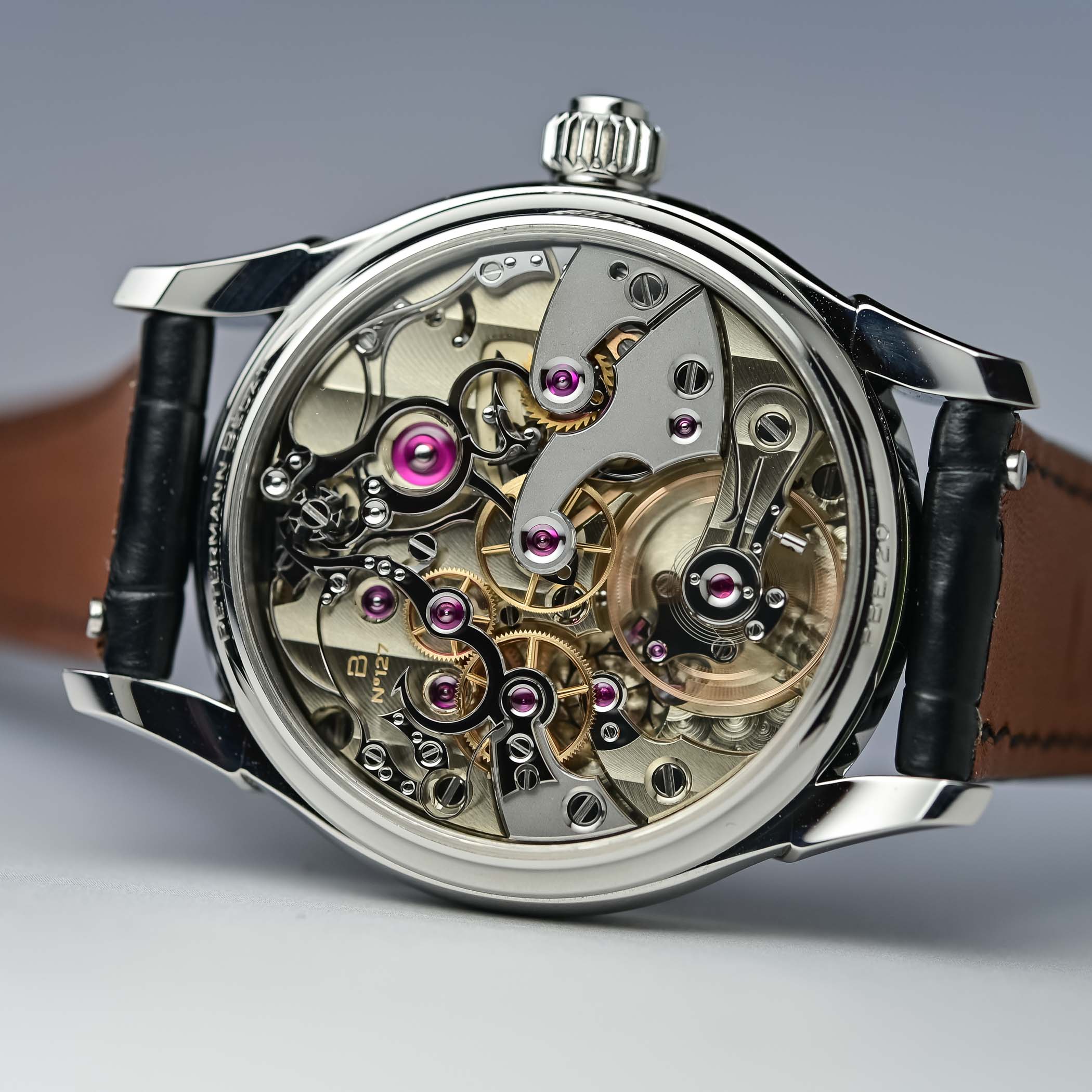
The large balance wheel is fitted with a Breguet hairspring and beats at 18,000 vibrations per hour, while power reserve is rated at 56 hours.
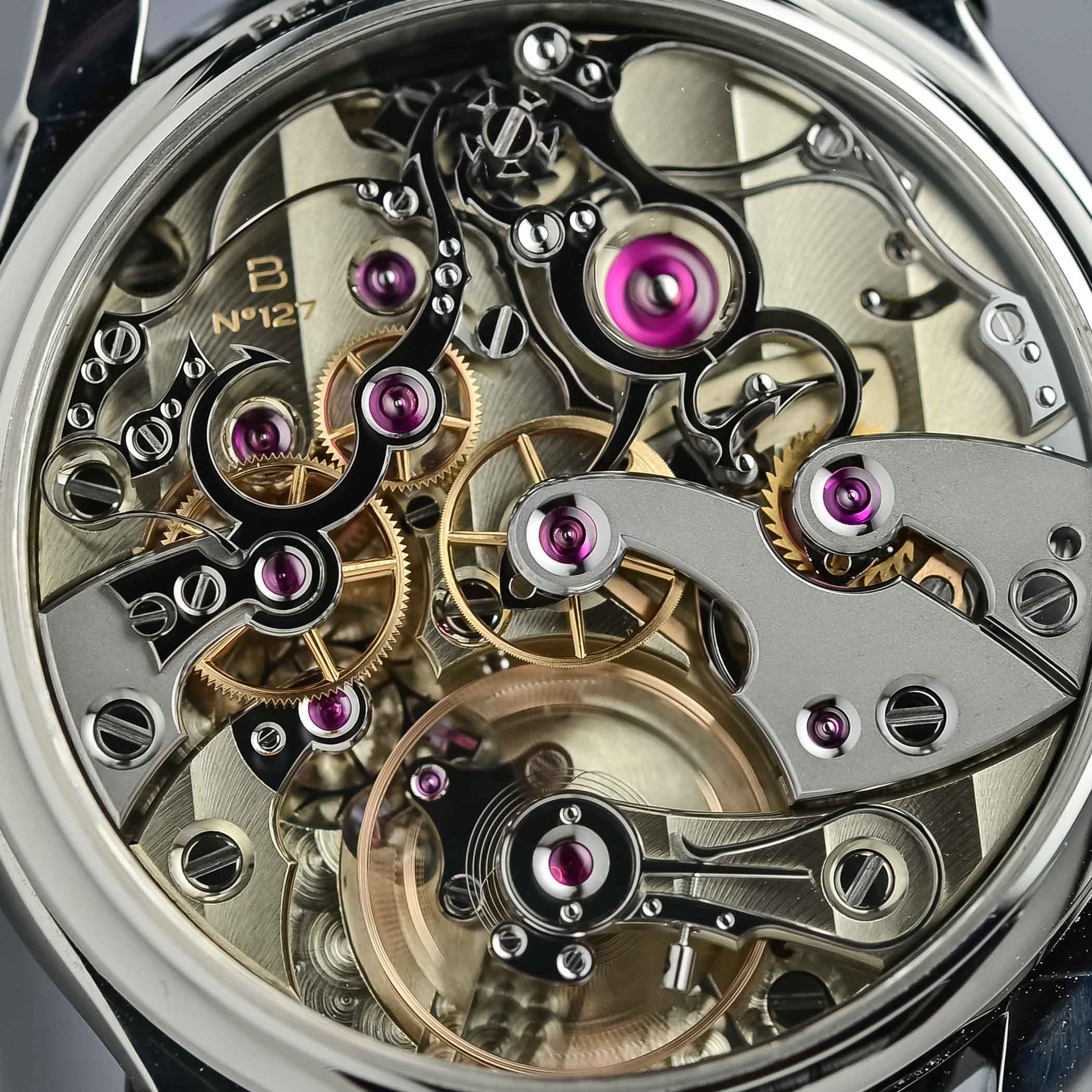
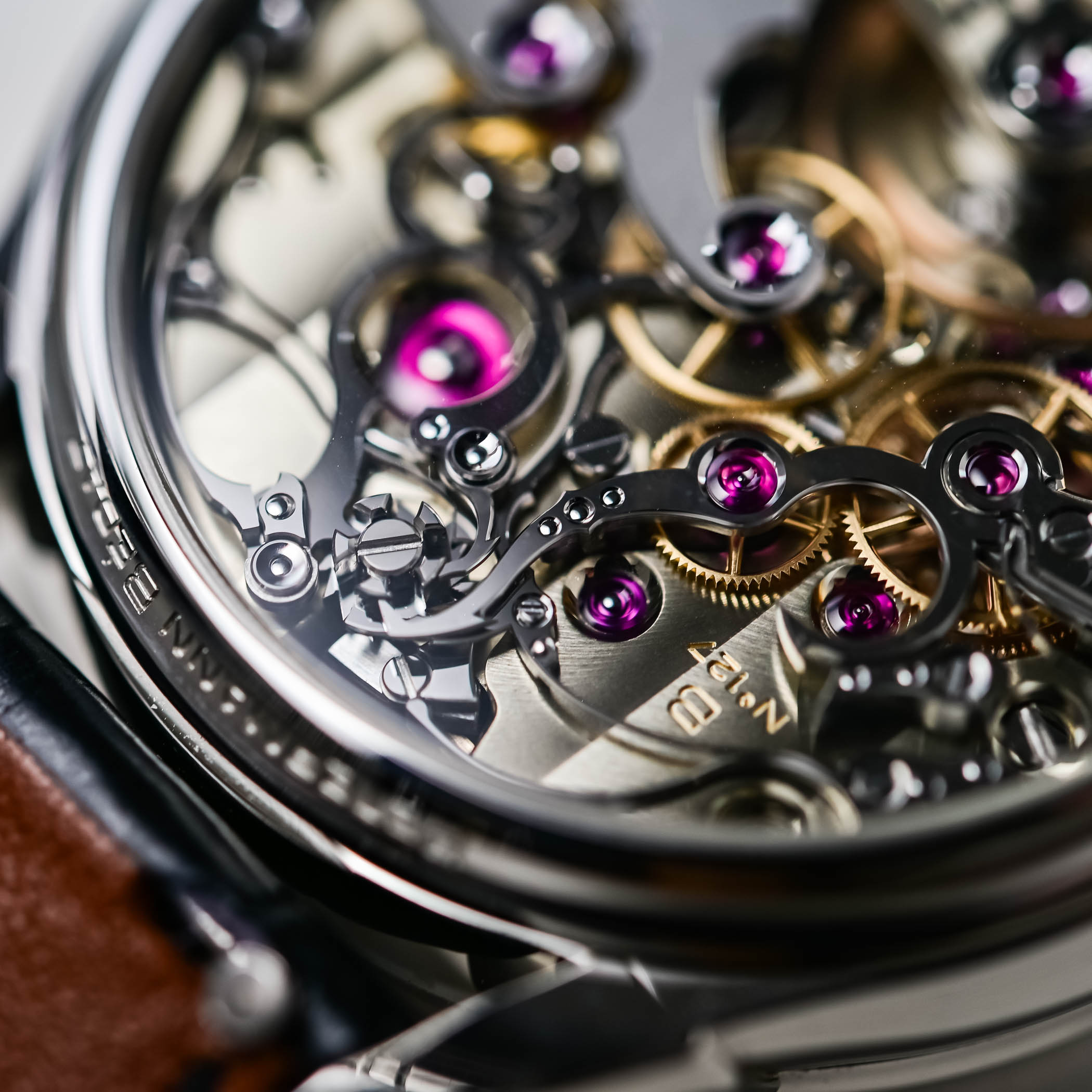
Through the exhibition caseback, the calibre shows the familiar Petermann Bédat language of shaped steel components, arrow-tailed forms, broad engraved Geneva stripes and large jewels.
It’s a movement built to reward slow looking, not just specification checking.
Details & Specifications
| Brand | Petermann Bédat |
|---|---|
| Model | Reference 2914 Monopusher Chronograph |
| Case size | 36.5mm diameter, 11.6mm thickness |
| Case material | Platinum |
| Crystal | Box-shaped sapphire crystal |
| Dial | Semi-transparent sapphire dial produced by Comblémine, with laser-engraved central section |
| Movement | Hand-wound calibre 234 |
| Chronograph architecture | Column-wheel monopusher chronograph with horizontal clutch |
| Additional chronograph detail | Jumping-minute mechanism |
| Frequency | 18,000 vibrations per hour |
| Hairspring | Breguet hairspring |
| Power reserve | 56 hours |
| Caseback | Snap-on exhibition caseback |
| Strap | Alligator strap with platinum pin buckle |
| Production | Limited edition of 20 pieces in platinum |
| Price | CHF 180,000 excluding taxes |
Price, rarity and the independent chronograph field
The Reference 2914 is limited to 20 pieces in platinum, with other materials expected to follow at a later stage.
It’s delivered on an alligator strap with a platinum pin buckle, and a 10-row metal bracelet is currently under development.
At CHF 180,000 excluding taxes, the watch sits in rare air, though that positioning is not surprising given the Reference 2941 Split-Second Chronograph was priced at CHF 243,000 in 2023.
Its closest natural context is the small group of hand-wound chronographs from high-end independent makers, including the Rexhep Rexhepi RRCHF Chronograph Flyback, the Grönefeld 1941 Grönograaf, Greubel Forsey’s Nano Foudroyante and discontinued pieces such as the Lang & Heyne Albert Chronograph and Voutilainen Chronograph Masterpiece.
That field is narrow, and that’s part of the point.
The Reference 2914 isn’t trying to make the independent chronograph more accessible in any broad sense, but it does make Petermann Bédat’s chronograph language more distilled, more compact and arguably more direct.
For collectors drawn to classical chronograph construction with a distinctly contemporary independent signature, this is likely to be one of the more compelling small-series releases of the moment.