Moritz Grossmann’s Benu 1878 is an anniversary watch with a very specific sense of place.
Created to mark both the bicentenary of Karl Moritz Grossmann’s birth and the 18th anniversary of the modern manufacture’s revival under Christine Hutter, the watch looks back to one of Glashütte’s defining institutions rather than simply adding a commemorative inscription.
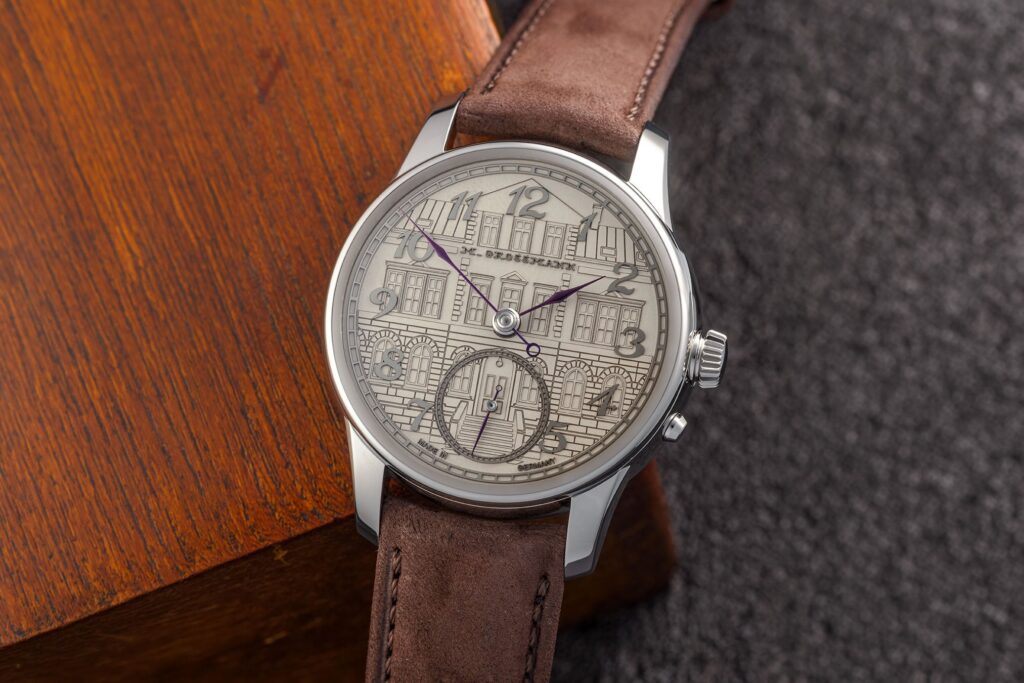
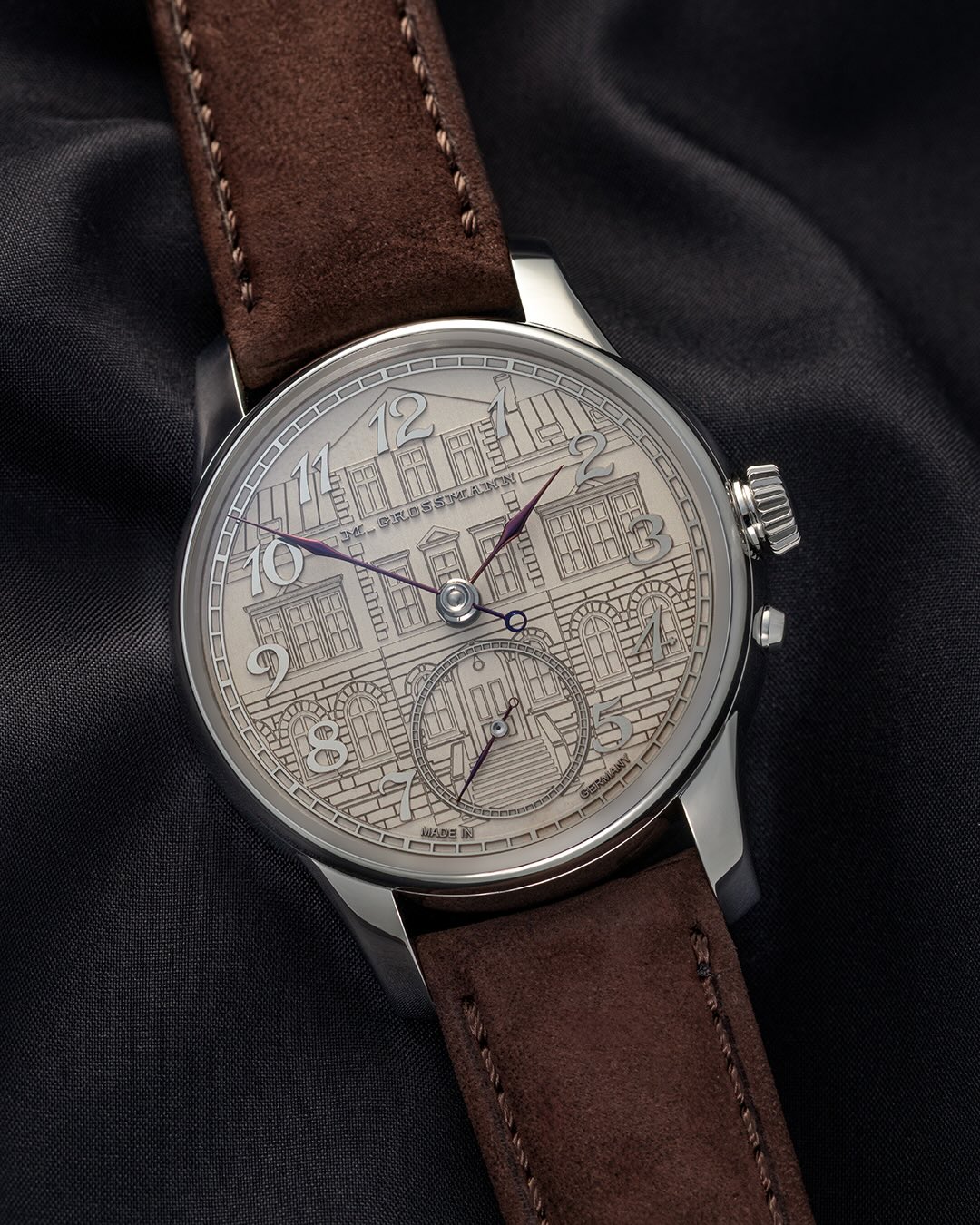
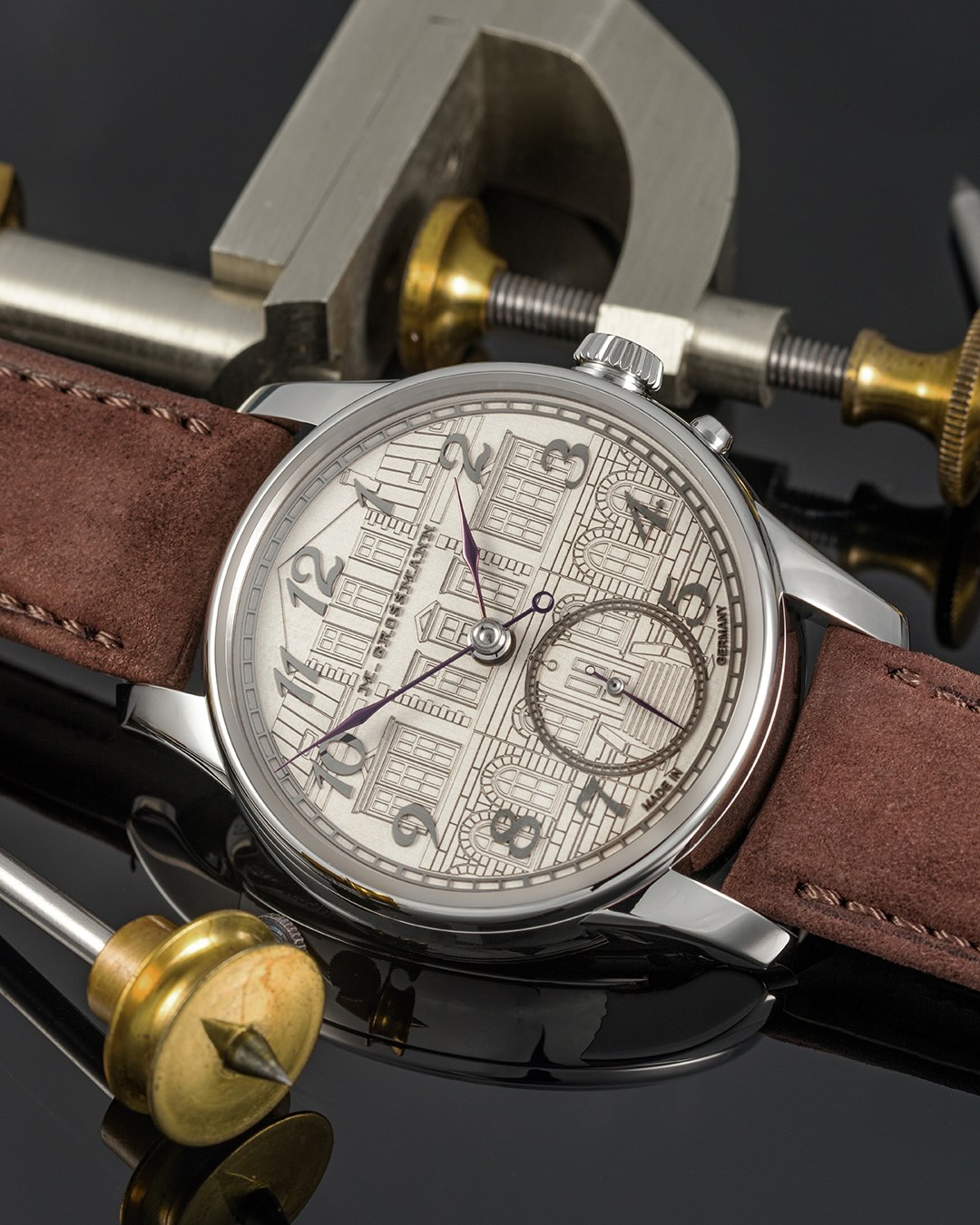
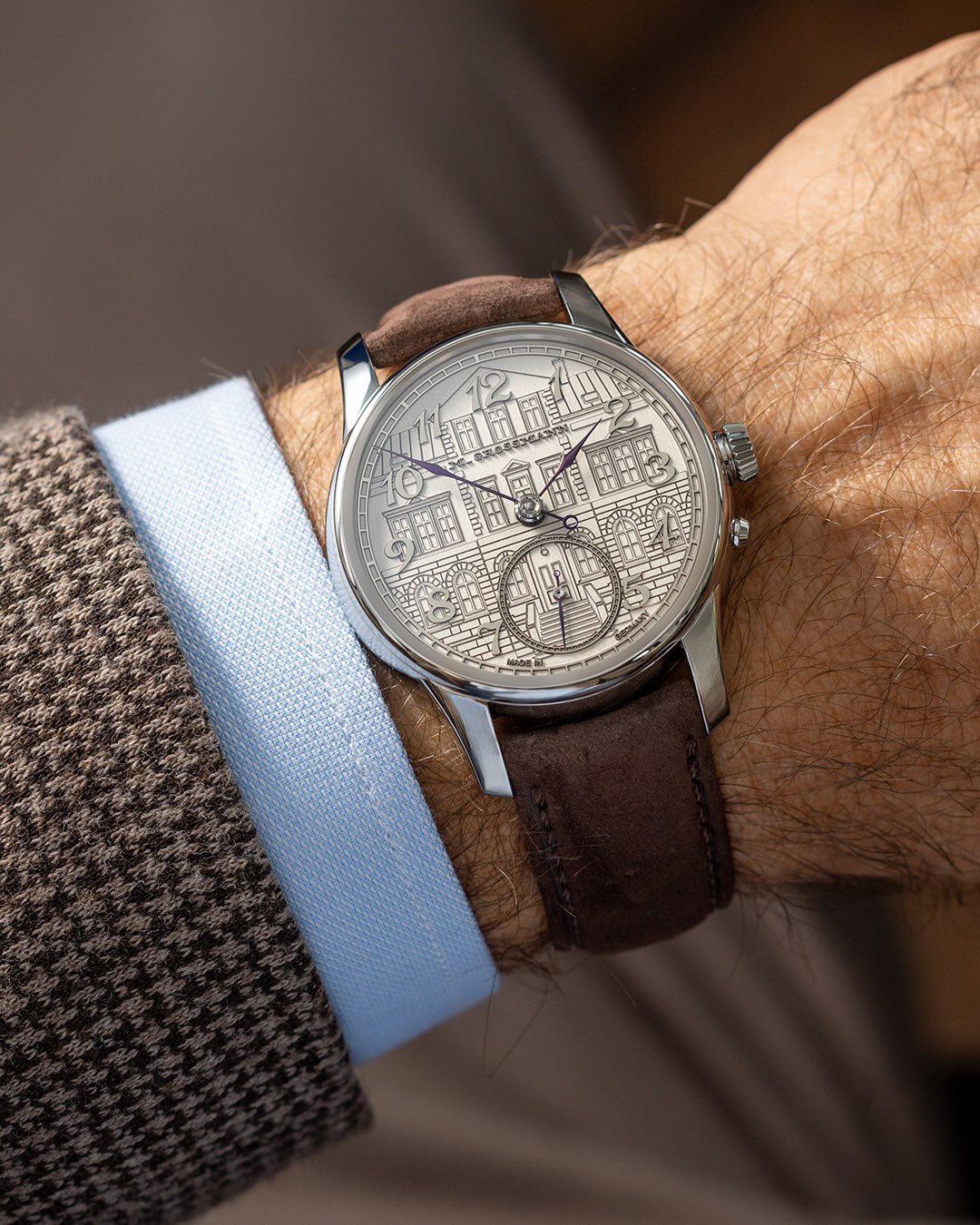
Its dial depicts the German School of Watchmaking, founded by Grossmann in 1878, turning a historically important building into the centrepiece of a limited stainless steel edition.
At a glance
- Moritz Grossmann has released the Benu 1878 as a 26-piece limited edition honouring Karl Moritz Grossmann and the revived brand’s 18th anniversary.
- The watch features a German silver dial with three-dimensional relief engraving of the German School of Watchmaking in Glashütte.
- It is powered by the in-house manual-winding calibre 100.1 and is priced at EUR 38,500 excluding tax.
A Glashütte landmark on the dial
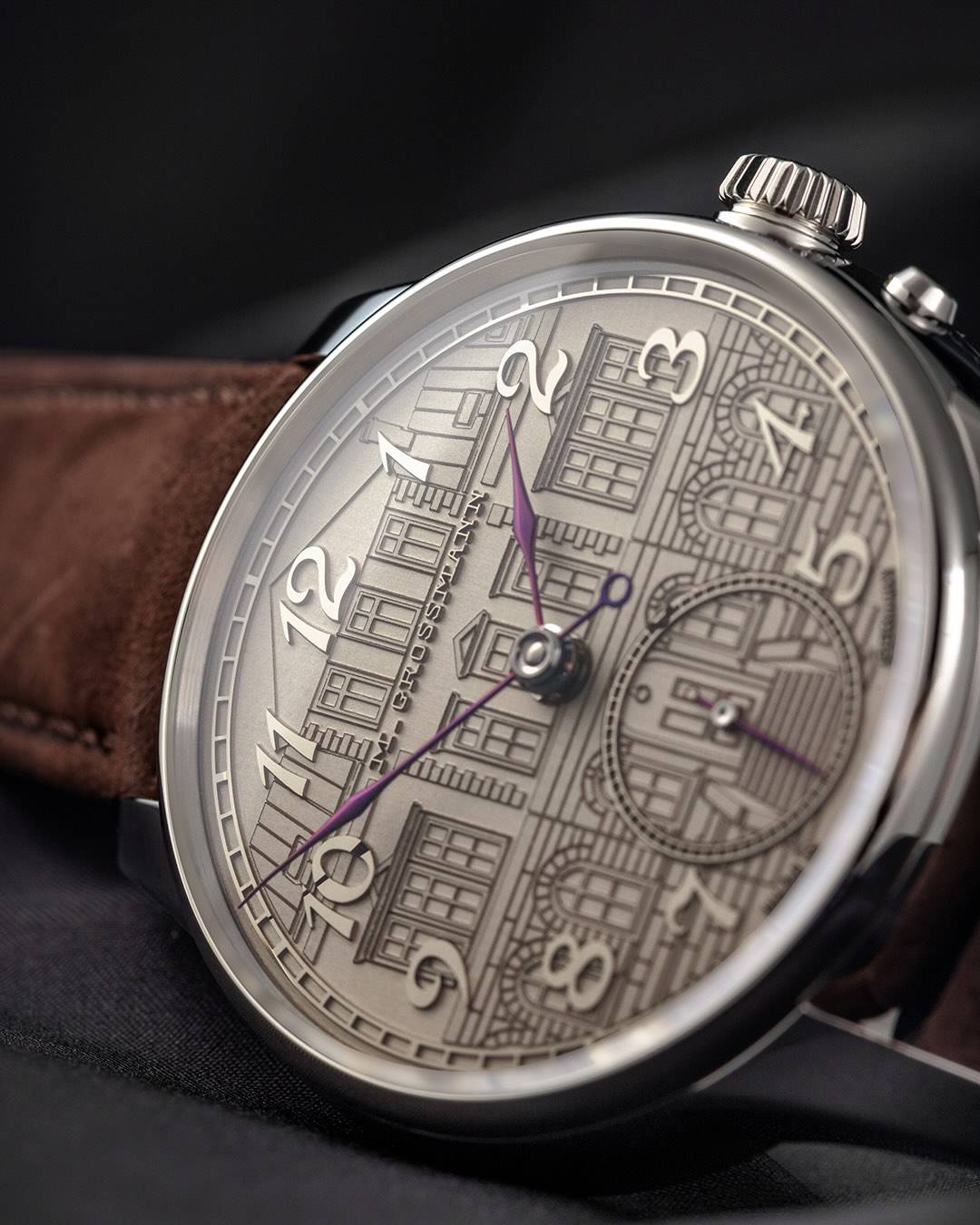
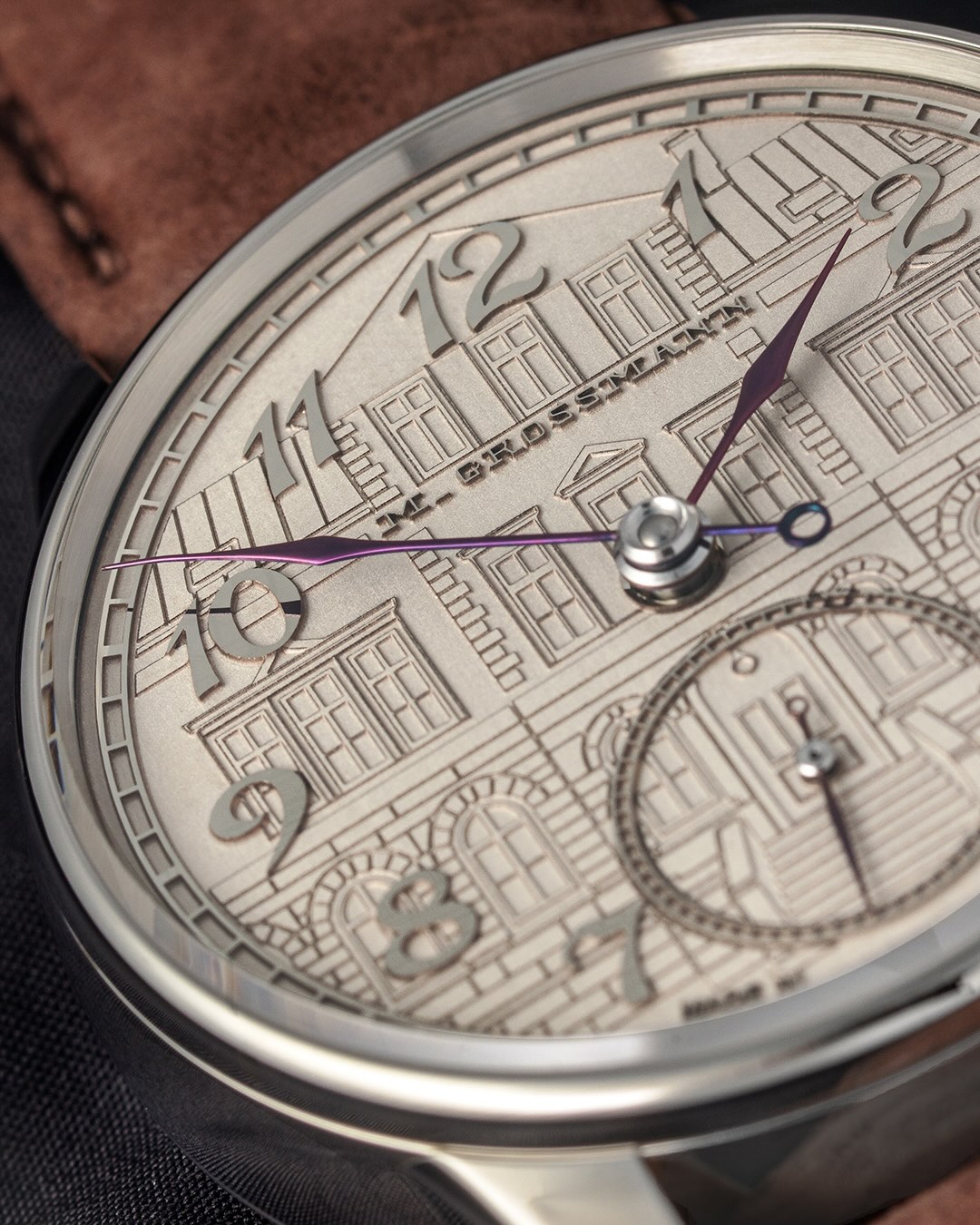
The Benu 1878’s defining feature is its engraved dial, crafted in German silver and worked in relief using a specialised three-dimensional technique.
The scene shows the main building of the German School of Watchmaking in Glashütte, an institution Grossmann founded in 1878 to pass on practical knowledge and strengthen the town’s watchmaking culture.
The building itself was constructed in the Historicist style, and its presence on the dial gives the watch a more architectural character than a conventional anniversary model.
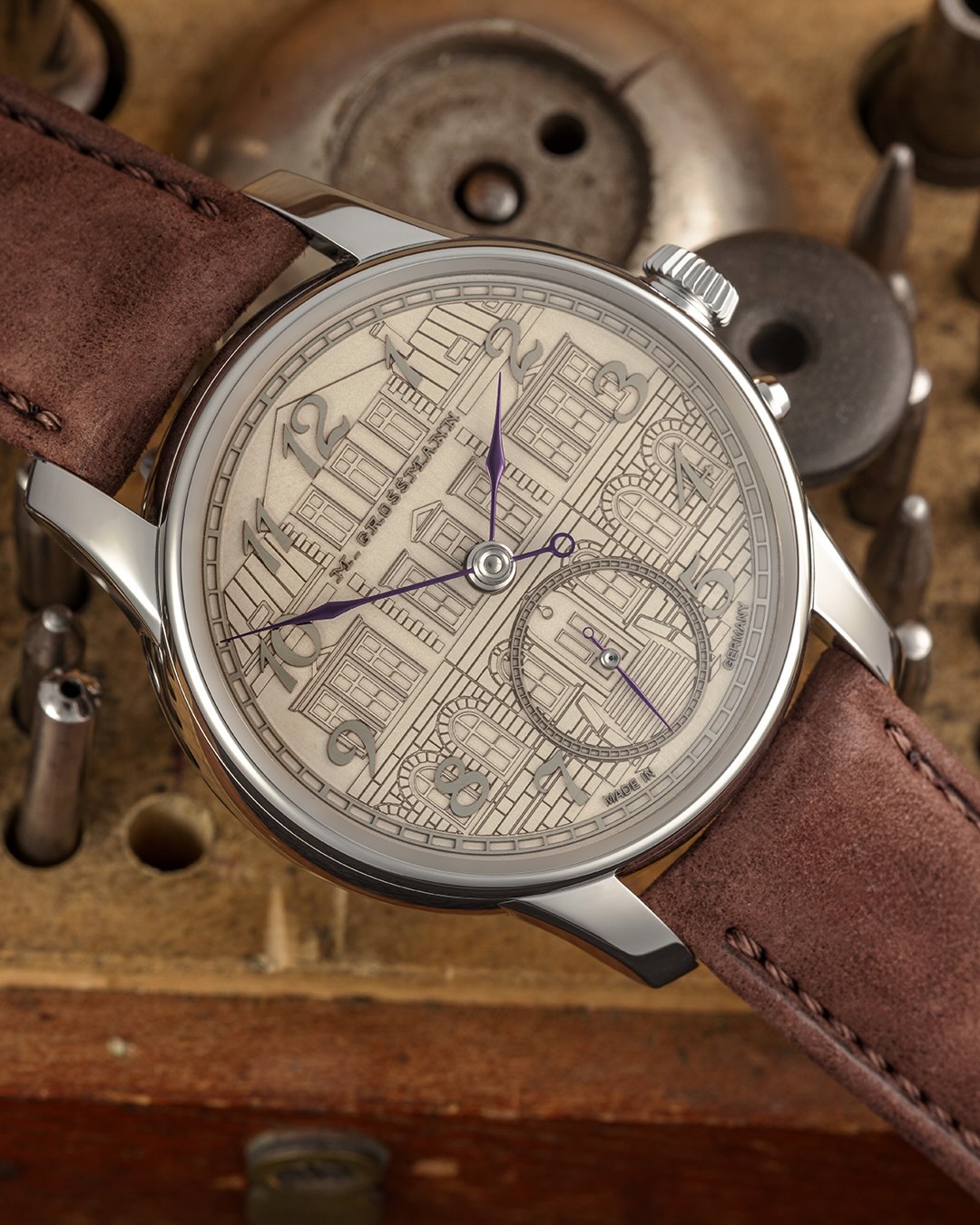
Moritz Grossmann keeps the time display restrained around the engraving, with a railway minutes track at the outer edge and a matching track around the small seconds at 6 o’clock.
The in-house lance-shaped hands are manually crafted from thermally annealed steel and finished in a brown-violet tone, giving the watch a warmer register than blued hands would have offered.
Karl Moritz Grossmann’s long shadow
Karl Moritz Grossmann was born in 1826 and became one of the founding figures of Glashütte’s watchmaking tradition.
Invited by his close friend Ferdinand Adolph Lange, he established his workshop in Glashütte in 1854, initially producing high-precision measuring instruments before working on astronomical pendulum clocks, marine chronometers and pocket watches.
The modern Moritz Grossmann name was revived on November 11, 2008, and Grossmann Uhren GmbH has since developed 15 original in-house calibres.
The Benu 1878 is described as the eighth anniversary piece dedicated to Grossmann, but it stands apart by focusing on his educational legacy rather than only his biography.
Calibre 100.1 and Grossmann finishing
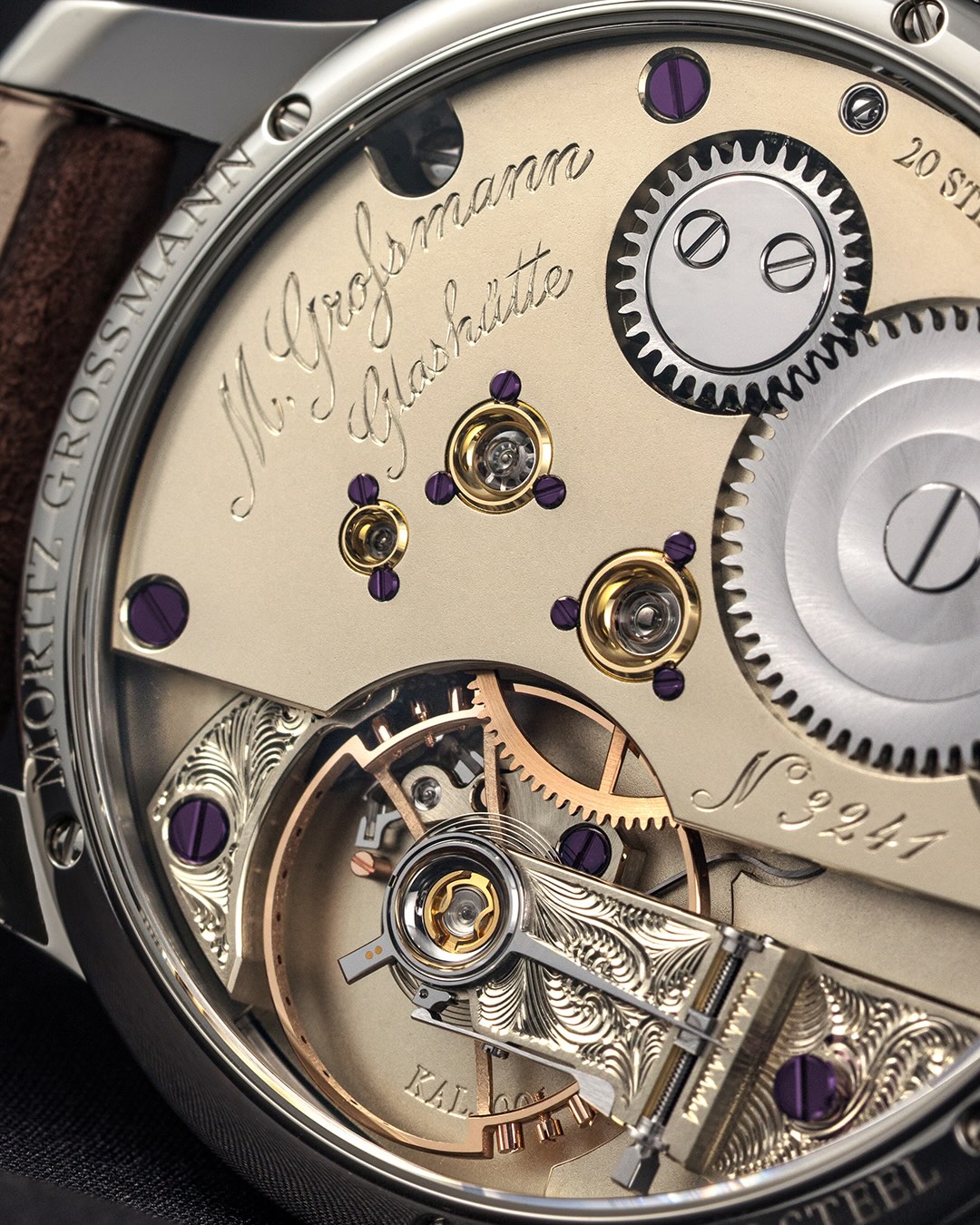
Inside the stainless steel case is the manual-winding manufacture calibre 100.1, a 198-part movement visible through a sapphire crystal caseback.
The movement includes the brand’s in-house Grossmann balance, which Moritz Grossmann describes as being designed for optimal aerodynamic efficiency.
Traditional Glashütte cues are central to the calibre’s appearance, including an untreated German silver pillar structure, white sapphire jewels set in gold chatons, annealed violet screws and a hand-grained two-thirds German silver bridge.
The German silver balance cock and escape wheel cock are hand-engraved with a floral pattern.
Running at a slow-beat frequency of 18,000 vibrations per hour, the calibre offers a power reserve of up to 42 hours from a single wind.
Details & Specifications
| Brand | Moritz Grossmann |
|---|---|
| Model | Benu 1878 |
| Edition | Limited to 26 pieces |
| Case size | 41mm diameter, 11.35mm thick |
| Case material | Stainless steel |
| Dial | German silver with three-dimensional relief engraving of the German School of Watchmaking |
| Hands | Manually crafted thermally annealed steel, brown-violet colour |
| Movement | Manual-winding manufacture calibre 100.1 |
| Parts | 198 |
| Frequency | 18,000vph |
| Power reserve | Up to 42 hours |
| Strap | Brown kudu leather strap |
| Buckle | Stainless steel prong buckle |
| Price | EUR 38,500 excluding tax |
The Benu 1878 is a watch for collectors drawn to Glashütte’s historical depth as much as to movement architecture.
Its appeal lies in the way it treats commemoration as craft, placing the school Grossmann founded directly on the dial while keeping the mechanics firmly within the Saxon tradition he helped shape.