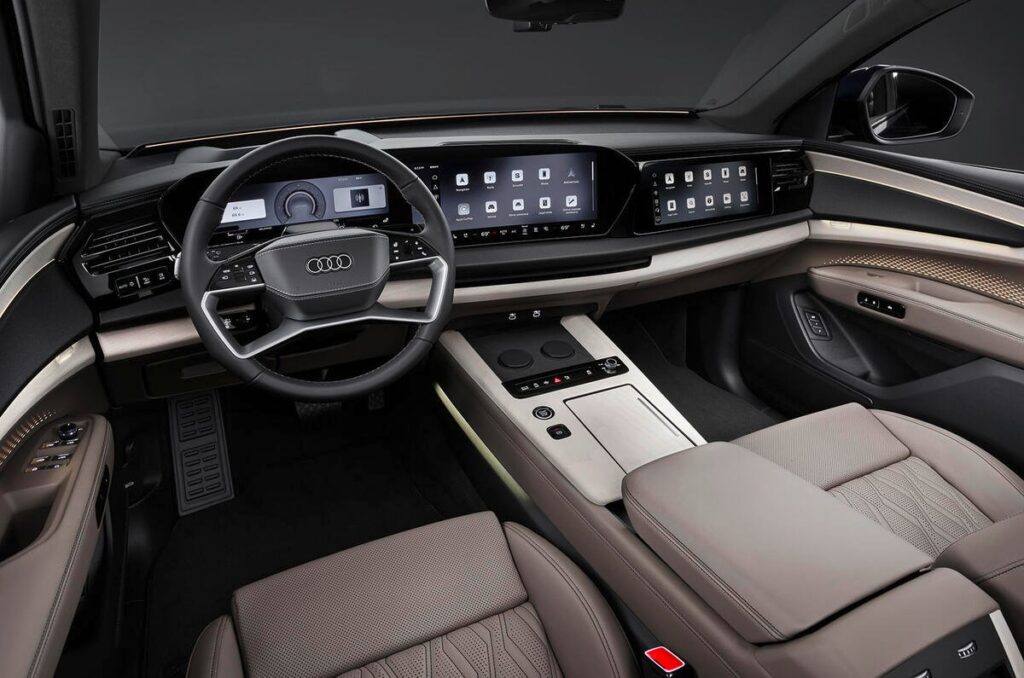
Audi appears to be exploring a more elegant compromise in the cabin control debate.
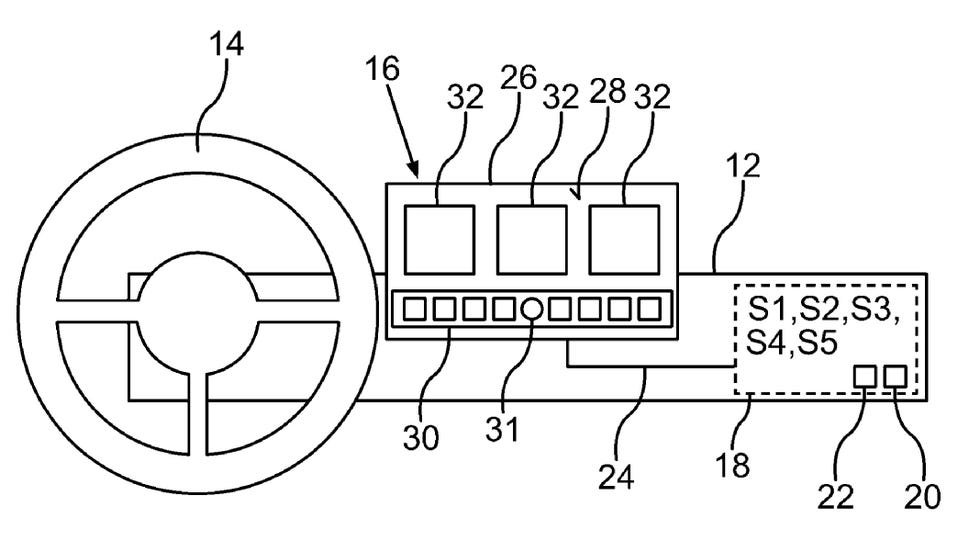
A patent filing describes a hidden, motorised switch bar that can sit behind the lower edge of a display and swing into position when needed, giving drivers physical controls without permanently crowding the dashboard.
It’s a small idea with a fairly big implication, especially as car interiors continue to shift toward screens while many drivers still prefer buttons for frequently used functions.
At a glance
- Audi has patented a deployable switch bar that could bring physical controls back to touchscreen-heavy interiors.
- The buttons remain hidden behind the lower edge of the display and swing out when activated, while the screen itself stays fixed.
- The system may be triggered at start-up, by voice command or through gestures, though a patent filing doesn’t confirm production plans.
A switch bar that hides below the display
The patent describes a row of controls positioned behind the lower edge of the car’s screen.
Rather than moving the display, the switch bar itself swings outward into a usable position when activated.
When the buttons are stowed away, the same functions can still be accessed through the touchscreen.
Crucially, the on-screen controls are arranged in the same order as the physical switches, which could make the system feel familiar whether the driver uses touch or hardware controls.
A cleaner cabin without losing tactile controls
The concept speaks directly to one of the biggest tensions in modern car interiors.
Touchscreens allow cleaner dashboards and flexible menus, but they can also bury simple functions behind layers of software.
A deployable control bar would let Audi keep a minimalist screen-led layout while giving drivers a more traditional interface when they want one.
It could also free up display space by moving commonly used functions off the screen when the physical controls are deployed.
How Audi could activate the controls
The patent outlines several possible ways to bring the switch bar into position.
It could deploy when the car starts, or it could be summoned through a voice command or gesture.
That flexibility is important because it would let different drivers use the cabin in different ways.
Someone who prefers a familiar row of switches could rely on the physical controls, while another driver could leave them hidden and use the touchscreen instead.
A patent, not a production promise
As with any patent, the idea should be treated as a sign of exploration rather than a confirmed feature for future Audi models.
Automakers regularly protect concepts that may never reach showrooms, and there are no confirmed production details attached to this system.
Still, the thinking behind it feels relevant.
The best modern cabins won’t necessarily choose between screens and buttons, and Audi’s hidden switch bar suggests one possible route toward giving drivers both without cluttering the interior.