Alfa Romeo is pushing against one of the defining habits of modern car interiors.
As dashboards become increasingly shaped around ever-larger displays, design boss Alejandro Mesonero-Romanos has made the case for a cabin where technology is present, useful and less visually dominant.
It’s a notable stance from a brand whose identity has long been tied to driver focus, proportion and emotional design rather than simply following the latest interior trend.
At a glance
- Alfa Romeo design boss Alejandro Mesonero-Romanos has criticised the industry’s move toward oversized infotainment screens.
- His preference is for technology that appears when needed and disappears when it isn’t.
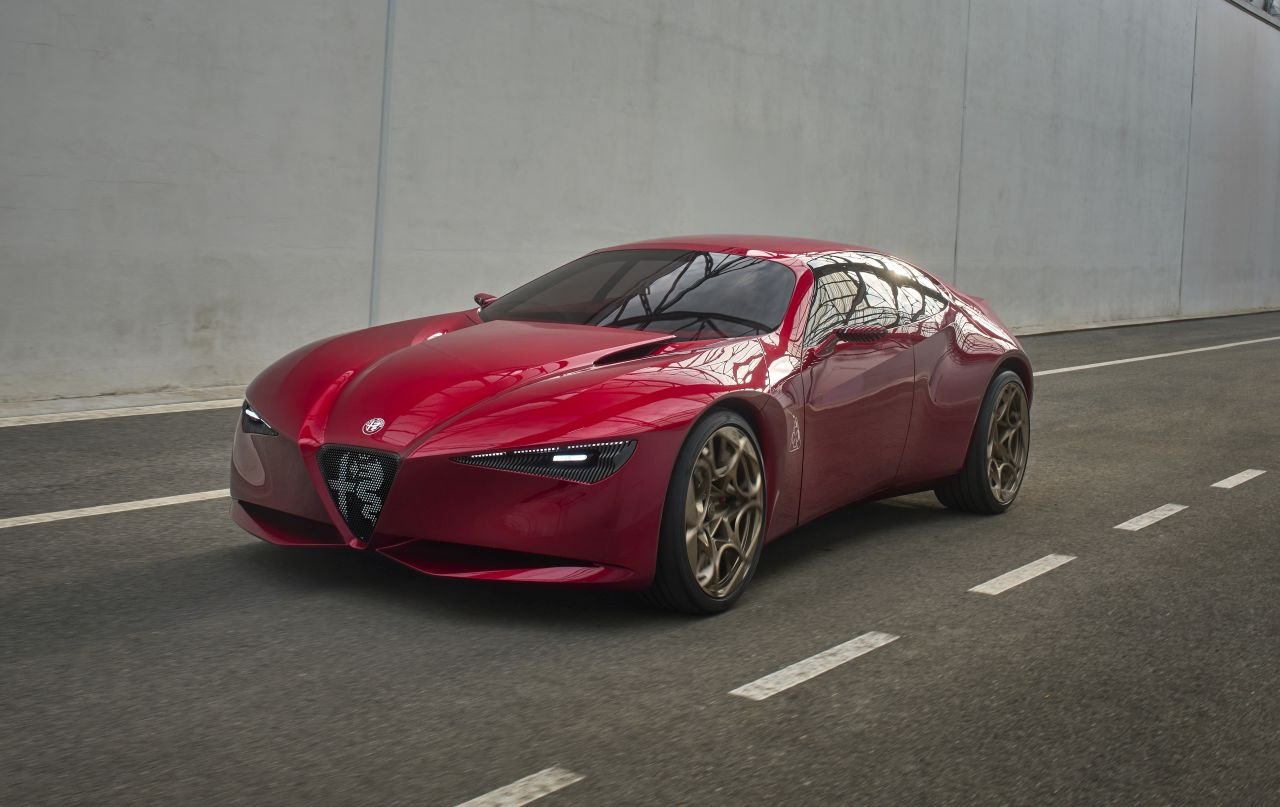
- The Alfa Romeo Cuorerosso concept, unveiled at the Paris Motor Show, points to a cleaner cabin direction.
A pushback against the screen-led dashboard
Mesonero-Romanos has argued that automakers should “get rid of the screens”, taking aim at the way large displays increasingly control the layout of a car interior.
His criticism is not really about rejecting technology outright.
It’s about proportion, longevity and whether the screen has become the starting point for cabin design rather than a tool that serves the person behind the wheel.
He has also questioned what he described as a “war of centimetres”, where brands compete to fit bigger displays into new models.
That race can look impressive in a showroom, but it comes with a problem that carmakers rarely discuss openly.
Digital hardware ages quickly, and a massive screen that feels advanced today can become a very visible reminder of yesterday’s technology.
The Cuorerosso concept points to a quieter interior
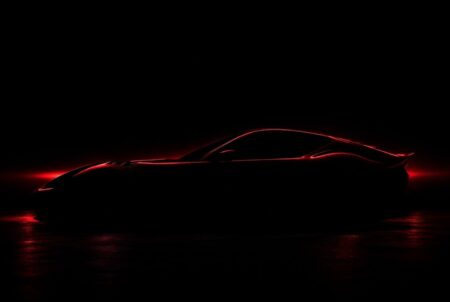
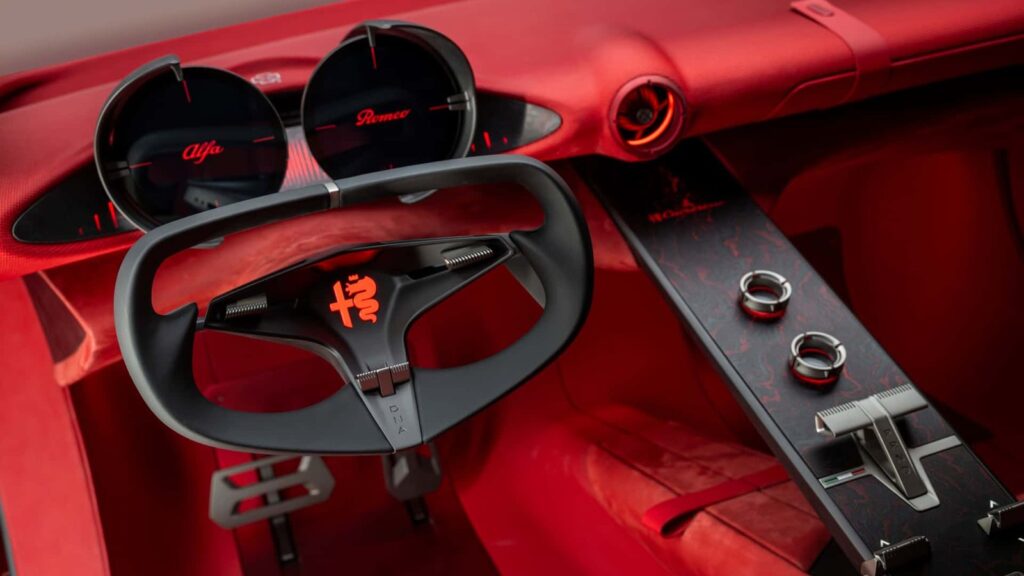
The Alfa Romeo Cuorerosso concept gives a useful indication of how this thinking could translate into design.
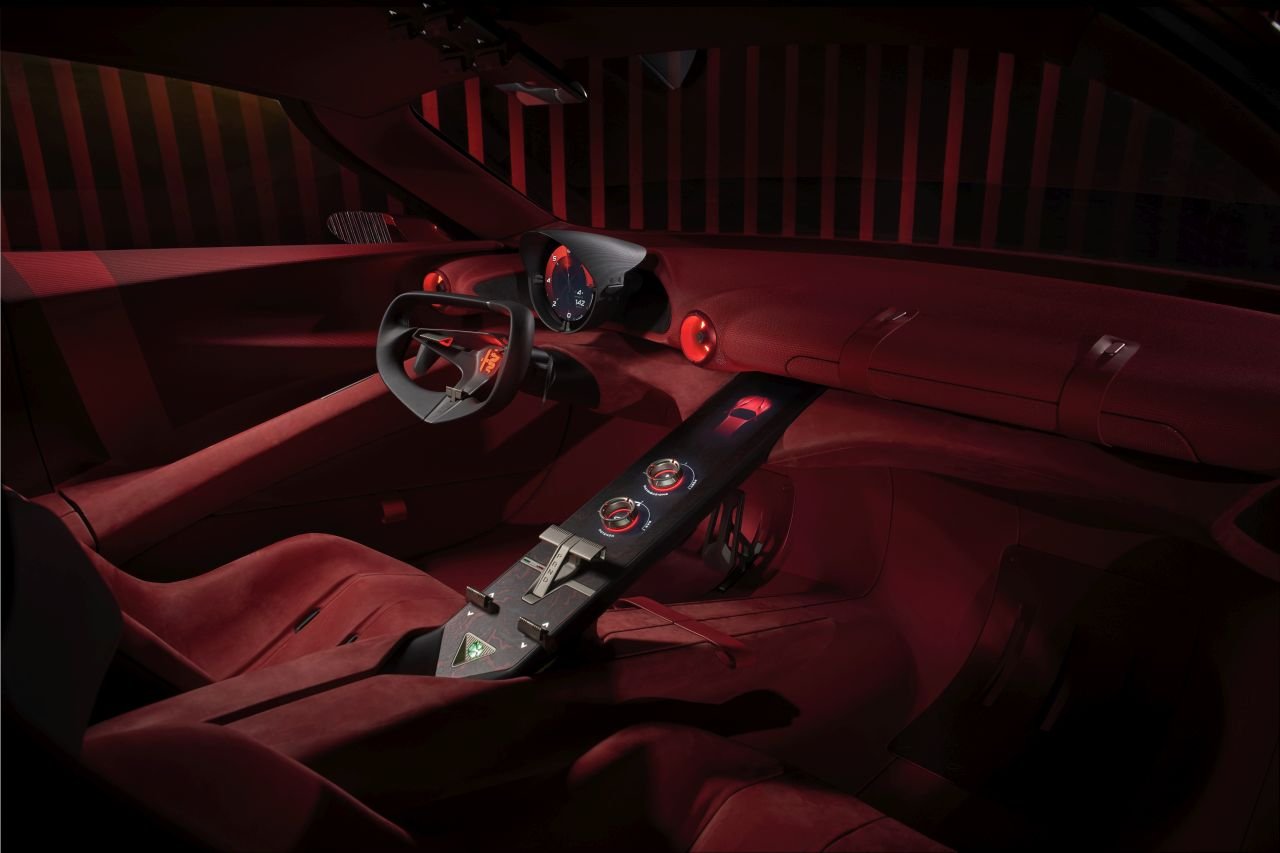
Unveiled at the Paris Motor Show, the fastback concept presents a cabin where technology doesn’t overpower the dashboard.
The idea is not to remove infotainment altogether, but to stop it from becoming the visual centre of the car at all times.
Mesonero-Romanos still sees a role for screens, though his preferred solution is more restrained.
A display should be available when the driver needs it, then hidden when it isn’t required.
Why restraint matters in a modern Alfa Romeo
For Alfa Romeo, this is more than a styling preference.
The brand’s best interiors have typically relied on a sense of driver orientation, clear instruments and a cockpit that feels shaped around movement rather than media consumption.
Oversized screens can flatten that character, turning very different cars into variations of the same glass-panel dashboard.
Mesonero-Romanos’ position suggests a desire to keep Alfa Romeo cabins more architectural and less dependent on a single piece of consumer technology.
That may appeal to drivers who want modern connectivity without feeling as if the whole car has been designed around an infotainment tablet.
A broader signal for car interior design
The industry’s screen-heavy direction has often been framed as inevitable, but Alfa Romeo’s view shows there’s still room for a different approach.
Physical design, hidden interfaces and calmer dashboards can all coexist with digital functions if the hierarchy is handled carefully.
The challenge is making that restraint feel intentional rather than under-equipped.
If Alfa Romeo can deliver the idea convincingly, it could give the brand a cabin identity that feels more durable than the current race for larger displays.
For drivers tired of dashboards dominated by glowing rectangles, Mesonero-Romanos’ argument will sound less like nostalgia and more like common sense.