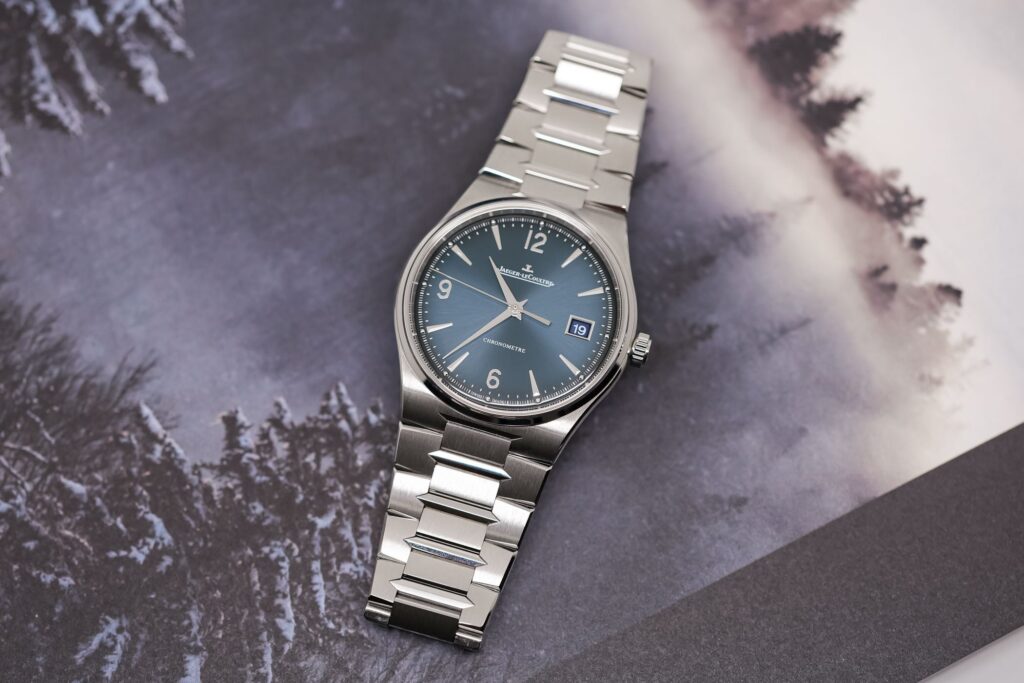
Jaeger-LeCoultre has entered the integrated-bracelet conversation with a watch that doesn’t try to shout over the room.
The Master Control Chronomètre Date takes familiar Master Control language and moves it into a slimmer, sportier format, placing the emphasis on proportion, bracelet execution and chronometer-rated mechanics rather than visual drama.
In a category crowded with angular bezels and heavily defined case shapes, that restraint is the point.
At a glance
- Jaeger-LeCoultre’s Master Control Chronomètre Date is the core time-and-date model in the brand’s integrated-bracelet Master Control Chronomètre collection.
- The watch measures 38mm by 8.4mm and uses the automatic Calibre 899 with COSC certification and Jaeger-LeCoultre’s High Precision Guarantee testing.
- The steel model is priced at EUR 14,700 or USD 14,200, while the 18k pink gold version is priced at EUR 54,500 or USD 52,500.
A Master Control shaped for the integrated-bracelet era
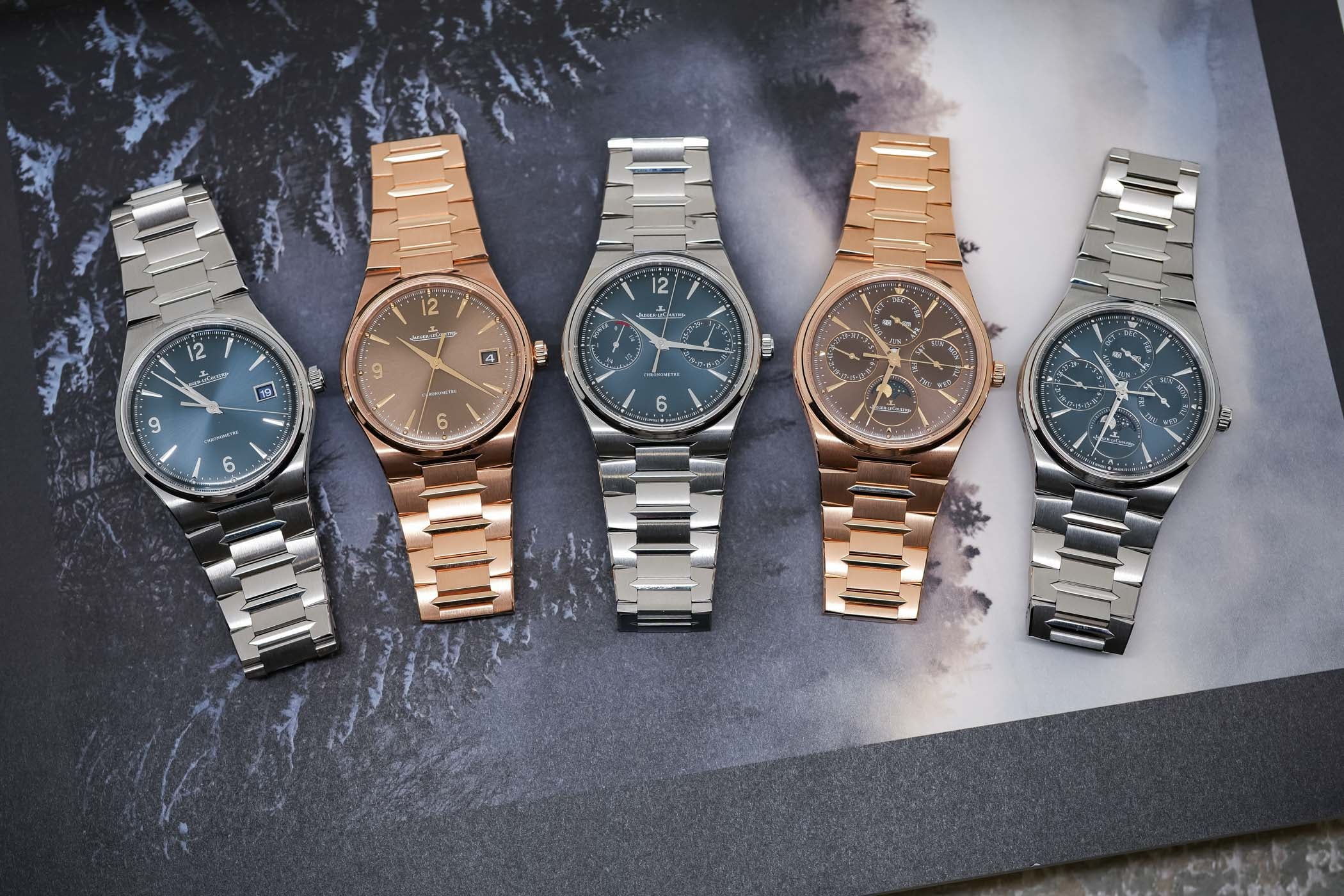
The Master Control Chronomètre collection arrived at Watches & Wonders 2026 as Jaeger-LeCoultre’s modern integrated-bracelet proposition.
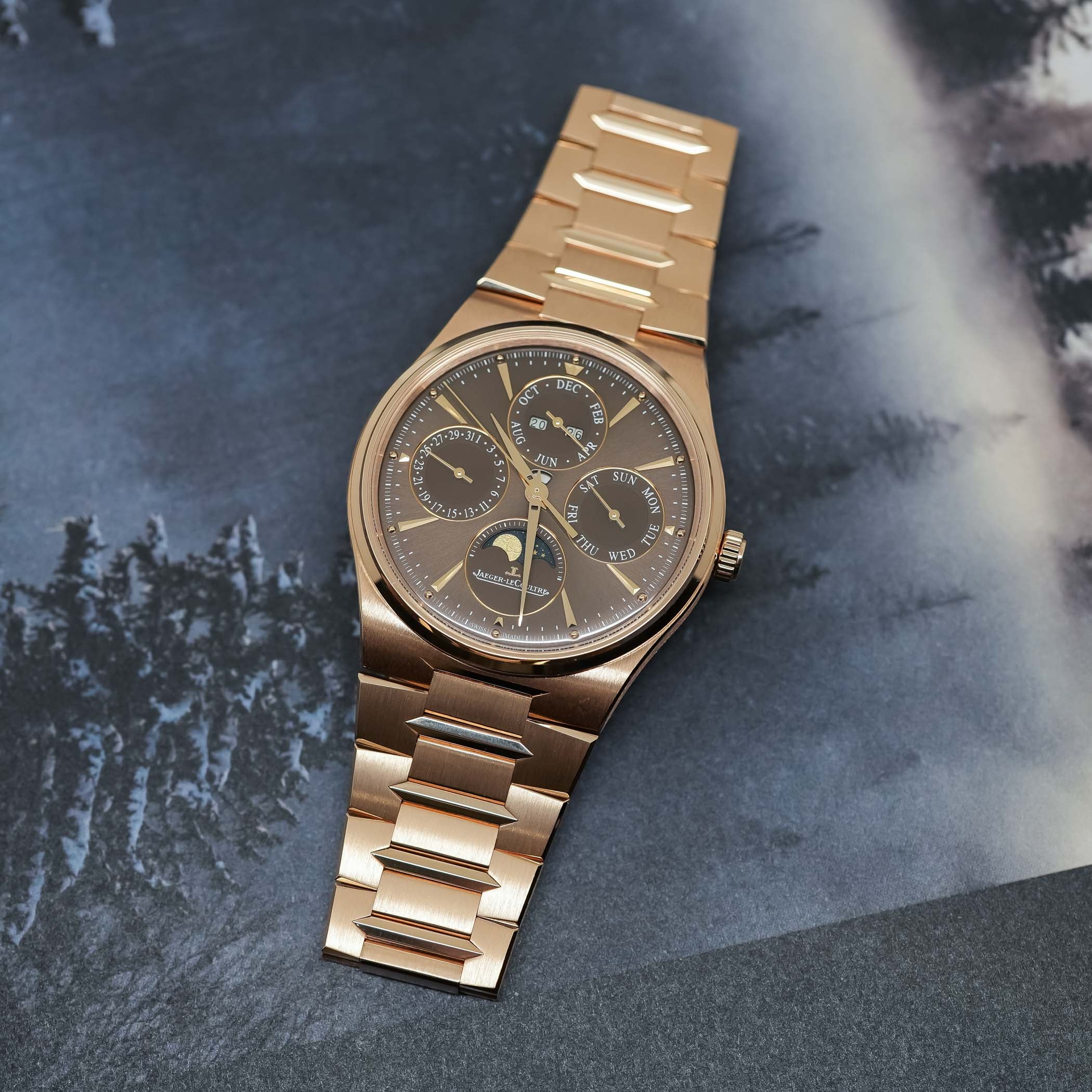
The wider line includes five references in steel or gold across three versions, with the Date joined by Power Reserve and Perpetual Calendar models.
The Date is the cleanest expression of the idea, because it keeps the format compact and the dial architecture close to the brand’s long-running Master Control vocabulary.
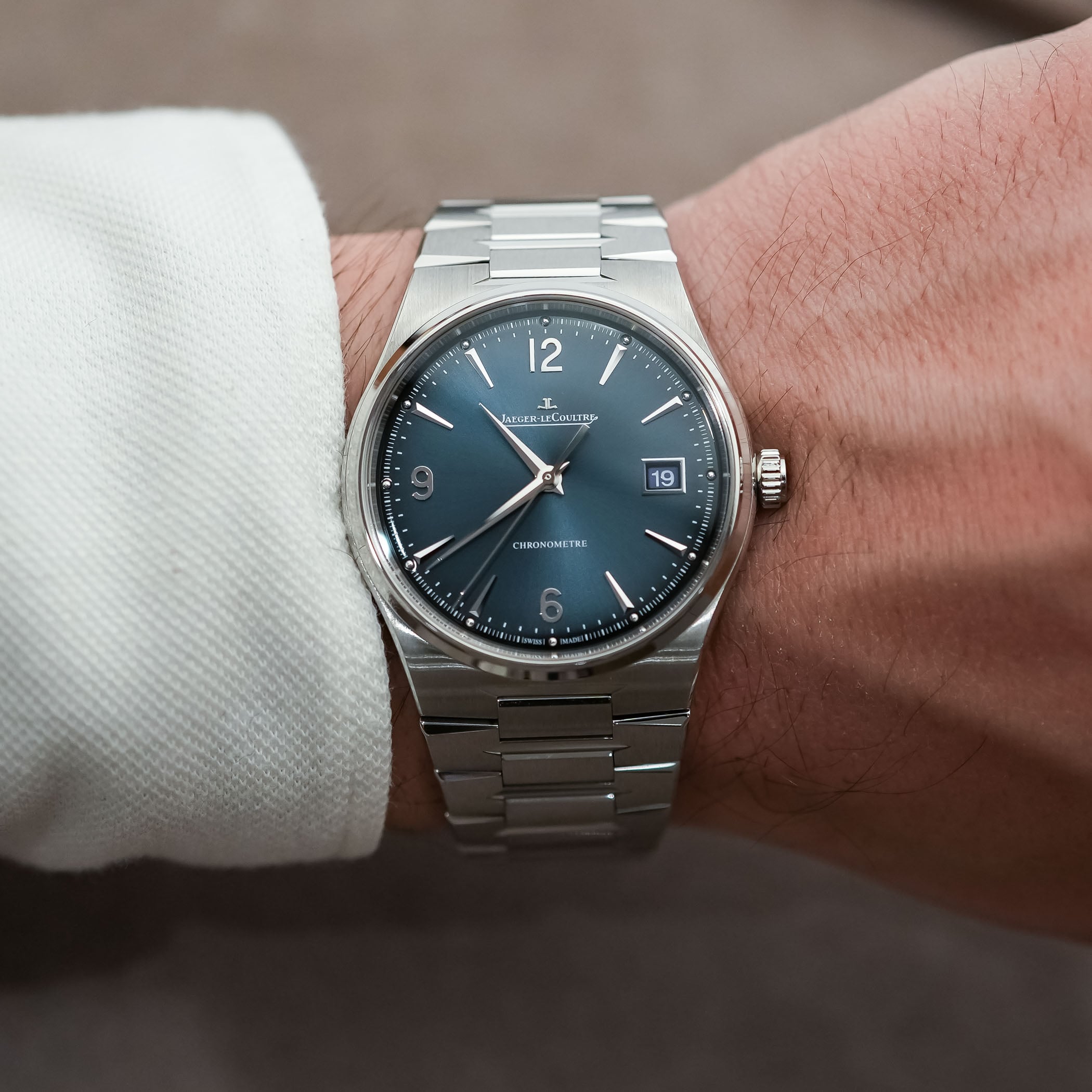
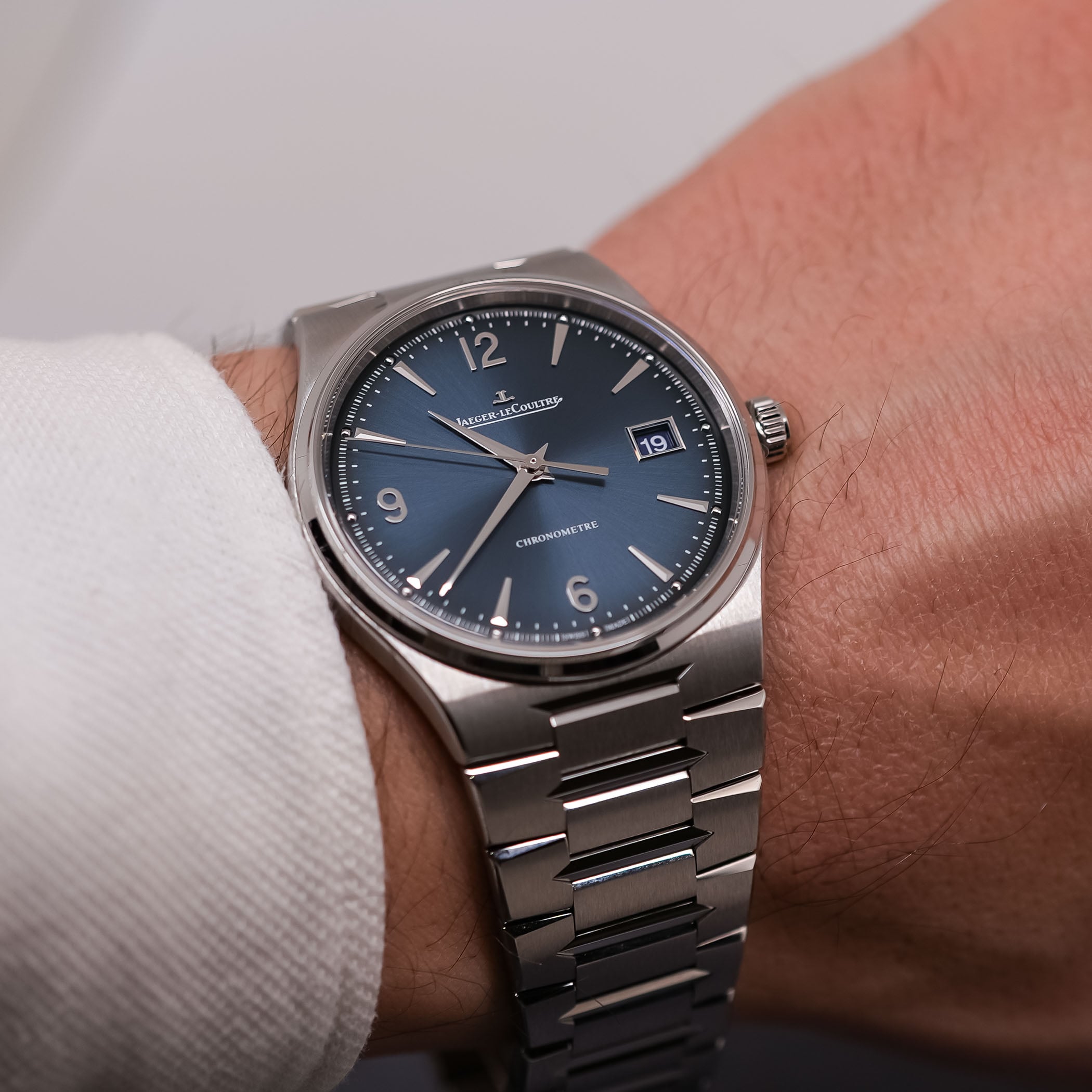
At 38mm in diameter, roughly 45mm lug-to-lug and 8.4mm thick, it sits in the dressier part of the integrated-bracelet category.
That thinness matters, because the watch is positioned between the formal Master Ultra-Thin family and the more robust Polaris range rather than as a pure sports watch.
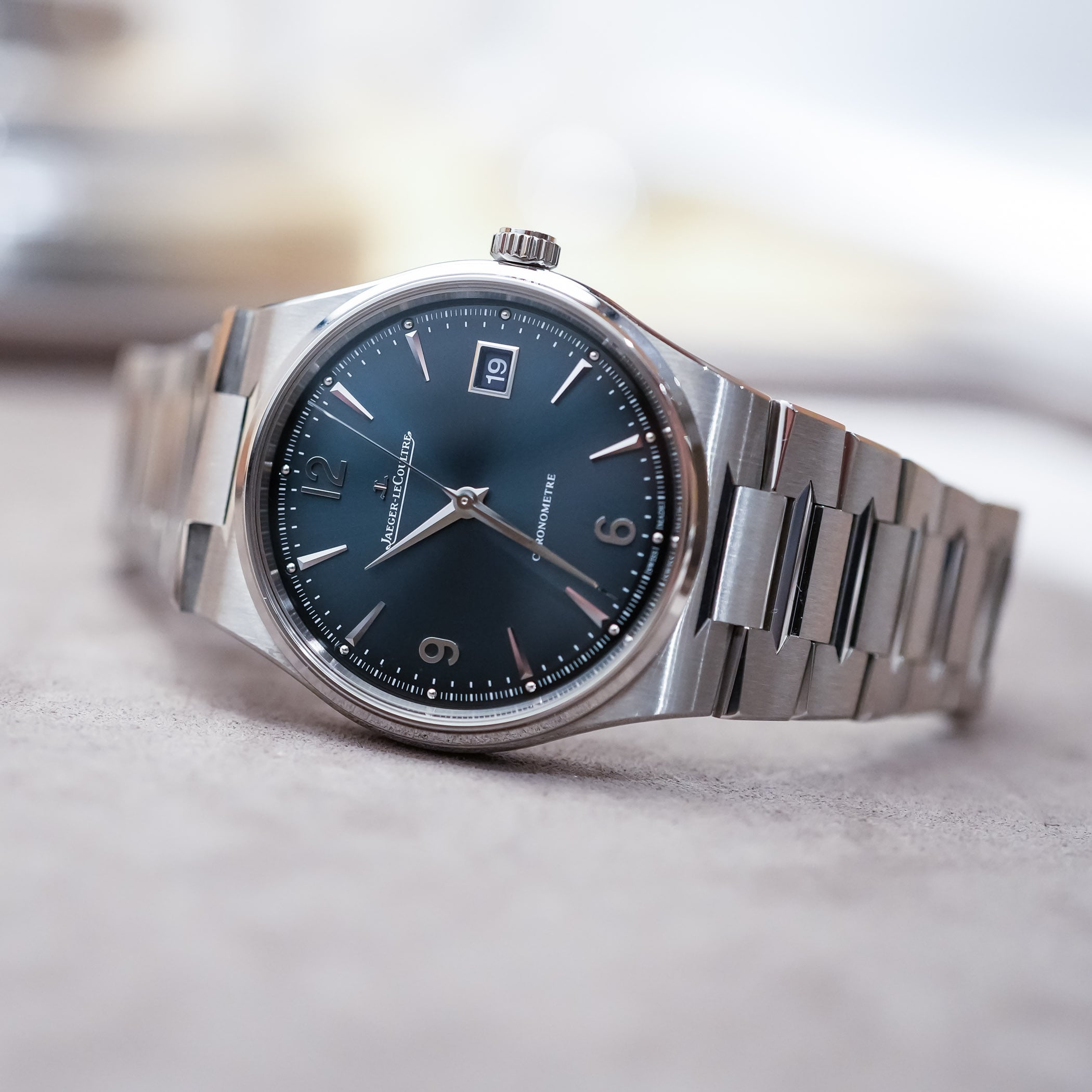
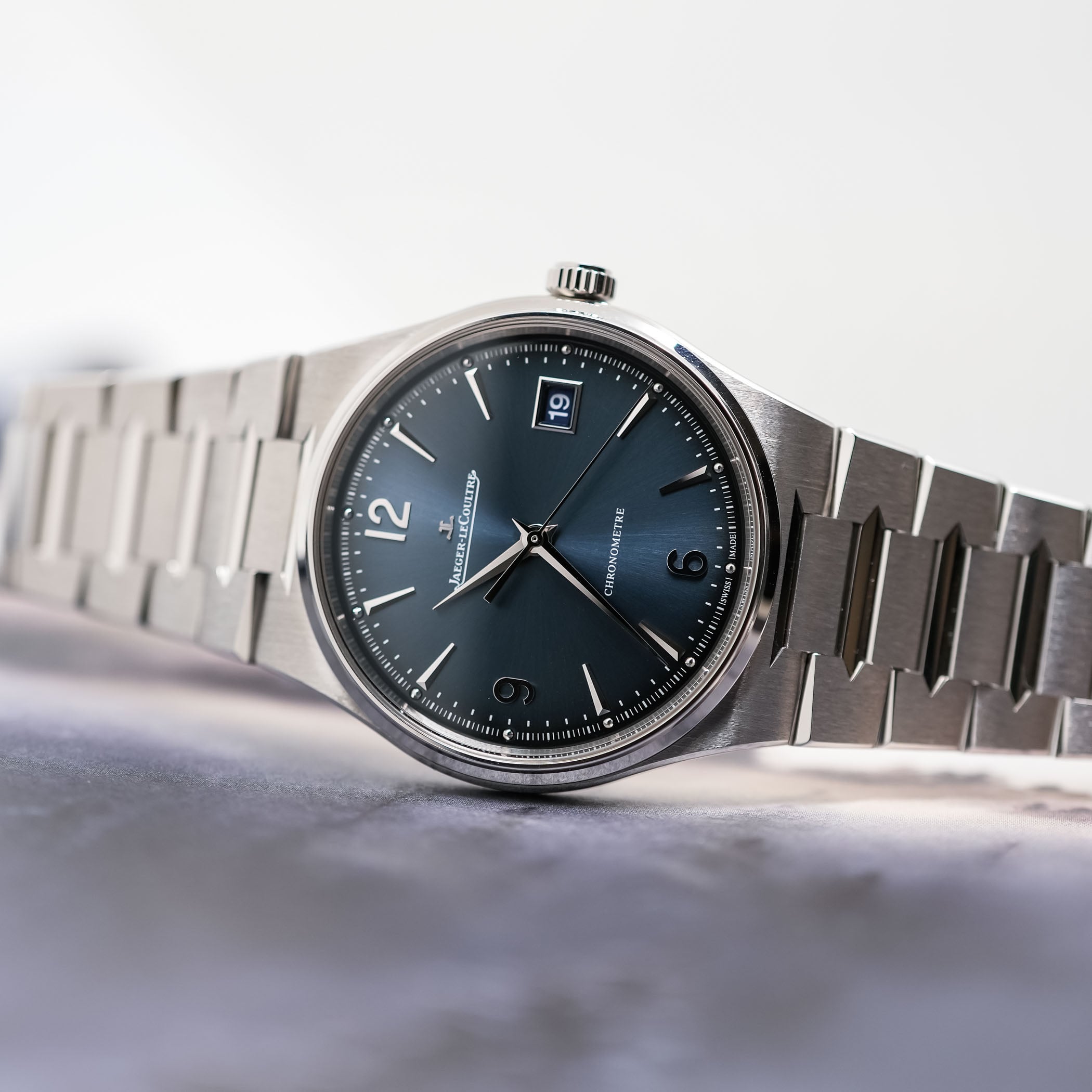
The case uses a round polished bezel rather than the faceted, screwed or notched bezels that often define this segment.
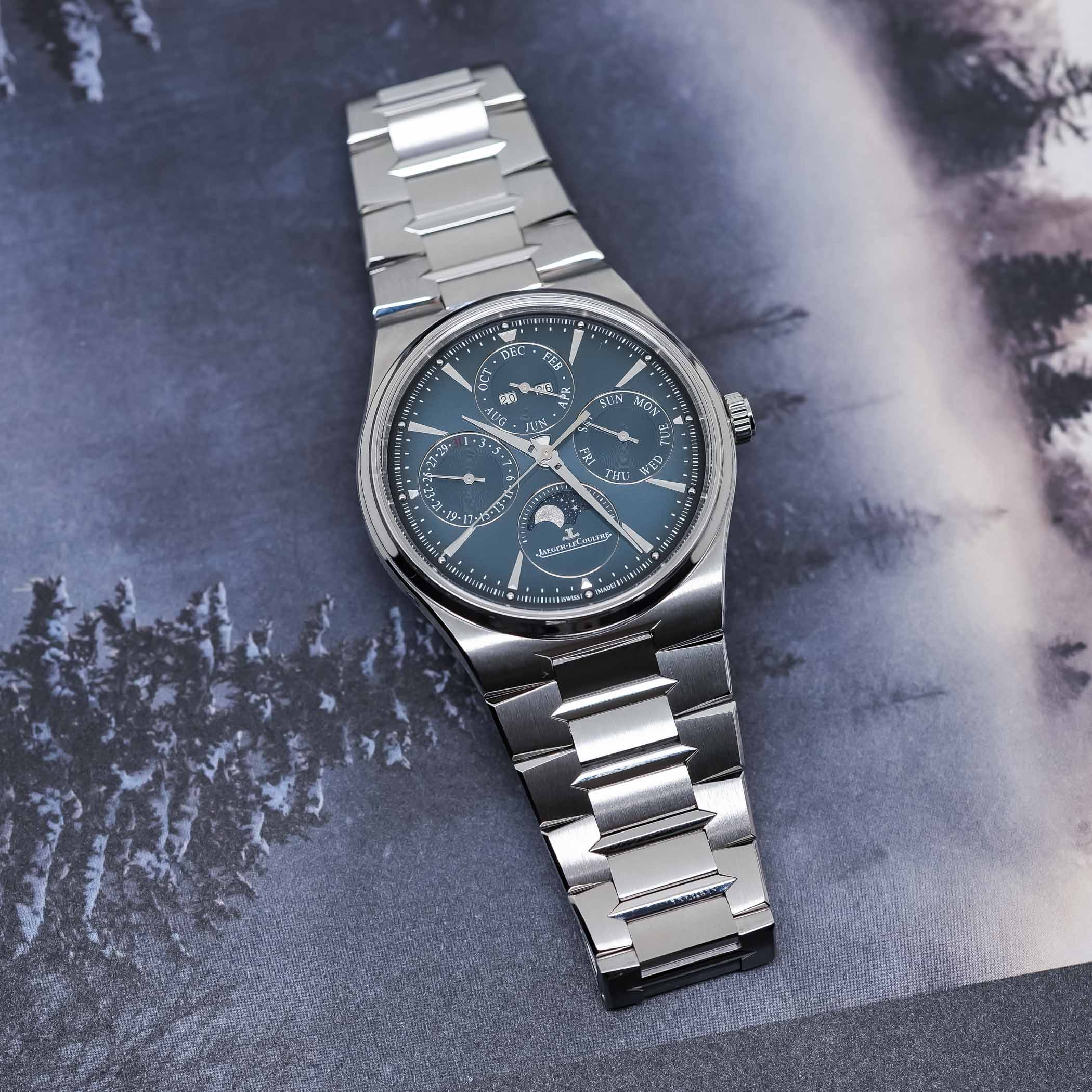
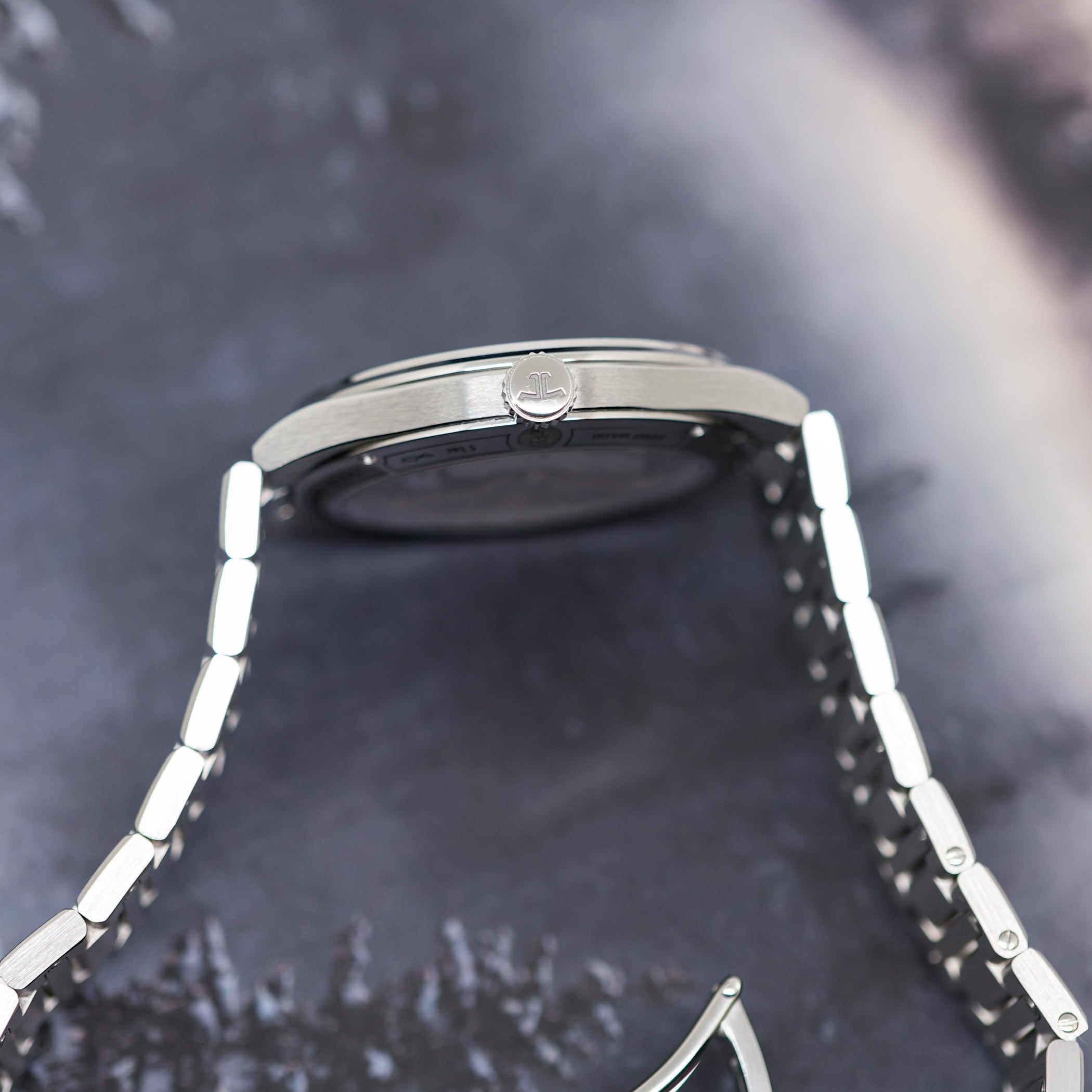
The barrel-shaped middle case brings the more contemporary note, with vertically brushed surfaces, polished edges and sapphire crystals front and back.
Water resistance is rated to 50 metres, with a classic push-pull crown.
The bracelet is the defining detail
The strongest design work is in the bracelet, where Jaeger-LeCoultre gives the watch much of its character without abandoning the quiet tone of the case.
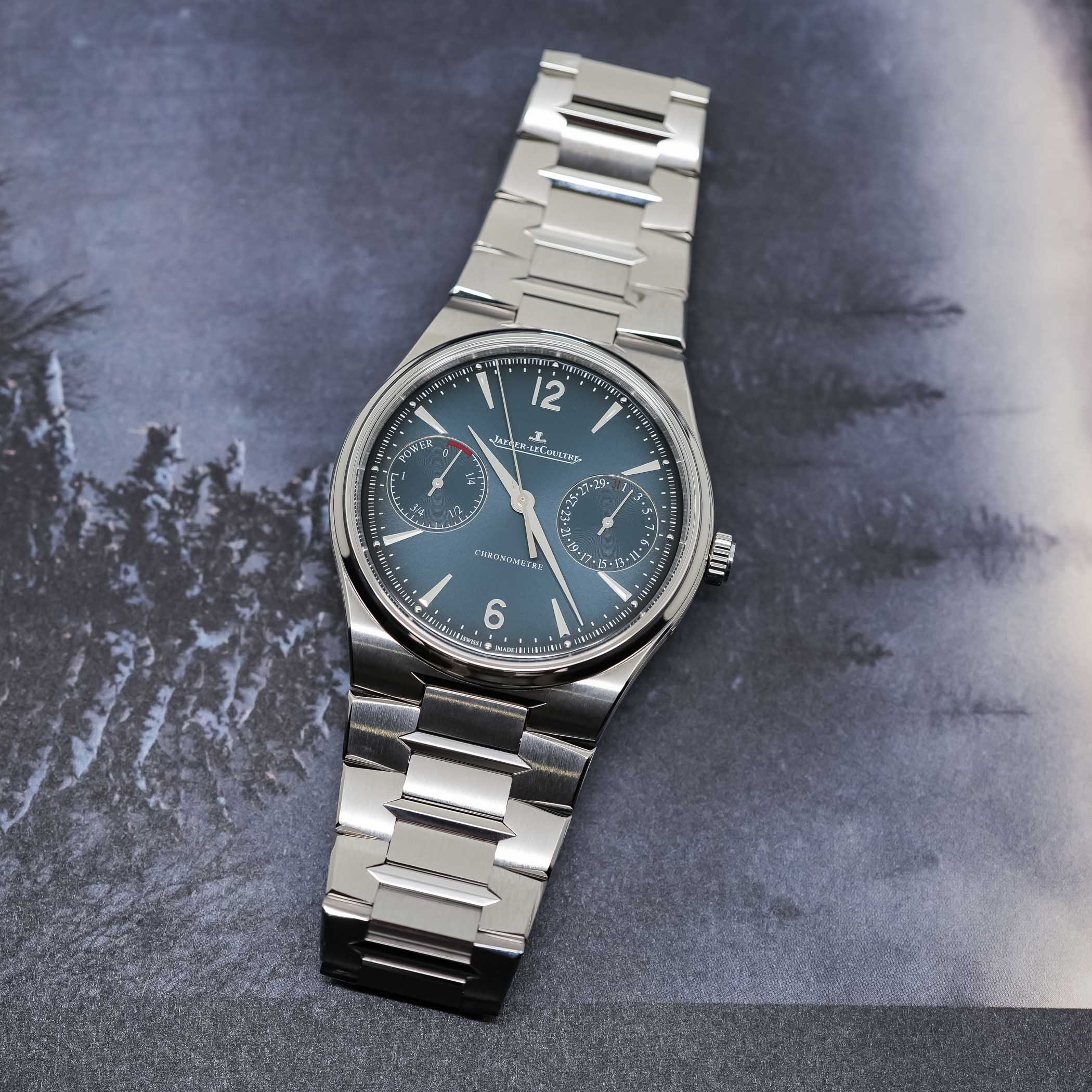
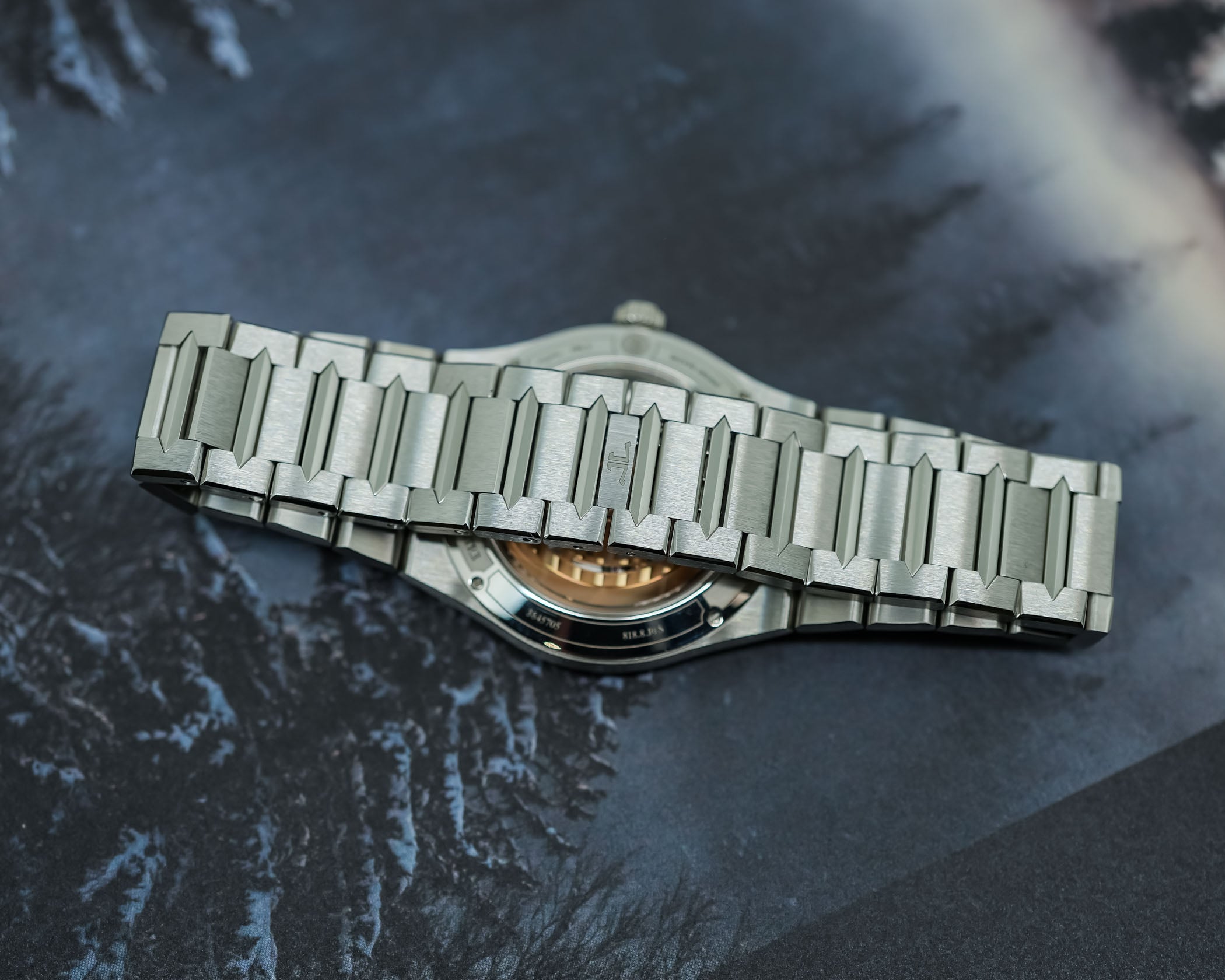
It’s a three-link integrated bracelet with flat vertical satin-brushed surfaces and polished bevels on the link edges, including the inner surfaces.
The connecting links are shaped like triangular prisms, a detail that echoes the Dauphine hands and faceted applied indexes used across Master Control designs.
This gives the bracelet more movement and complexity than the dial alone might suggest.
The clasp is a triple folding construction, and Jaeger-LeCoultre has indicated a winter/summer adjustment intended to give extra comfort in warmer conditions.
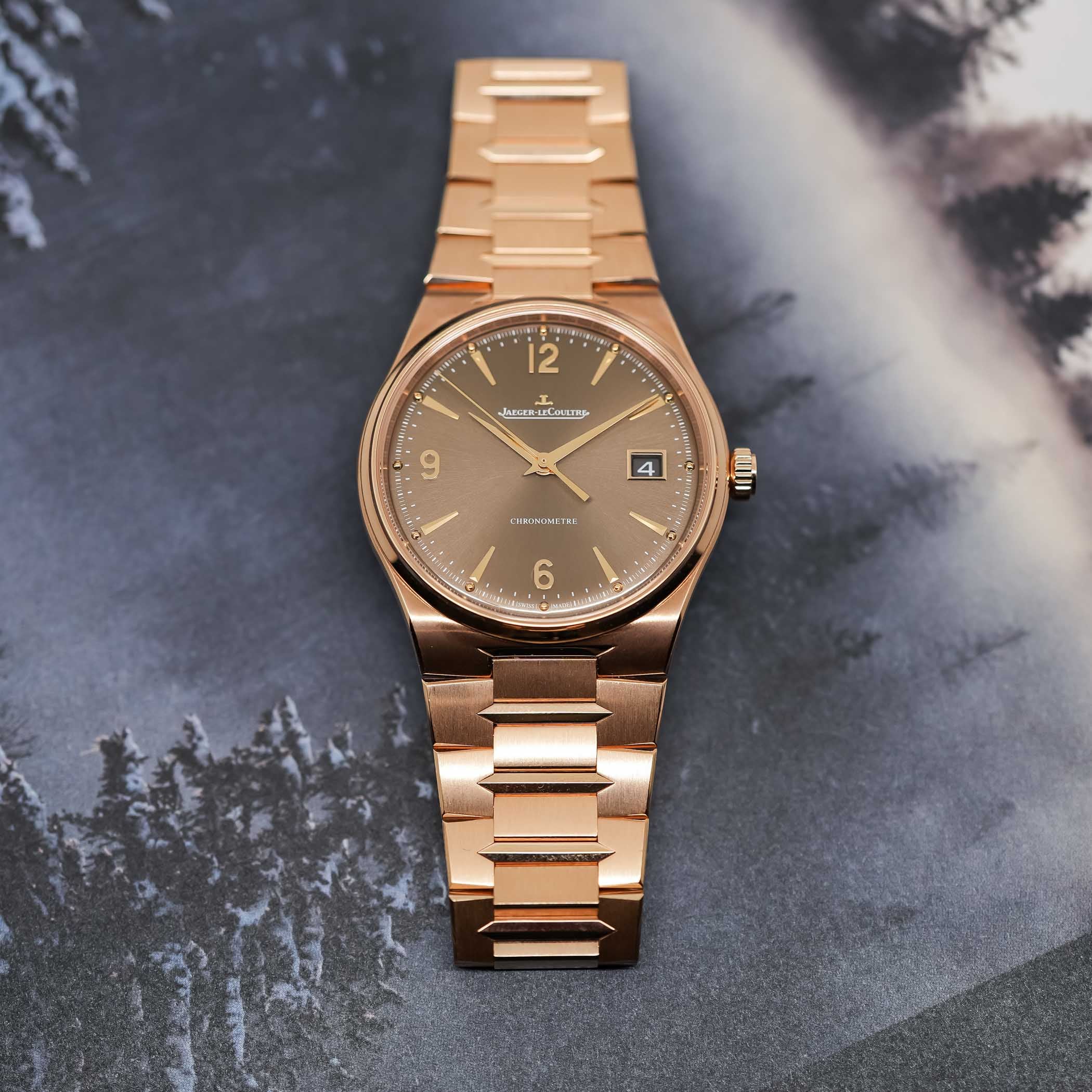
The steel version is paired with a muted grey-blue dial with a discreet gradient effect, while the 18k pink gold model uses a bronze-coloured dial.
Both dials are domed and sunray-brushed, with polished Dauphine hands, triangular faceted hour markers, polished Arabic numerals and a colour-matched date wheel.
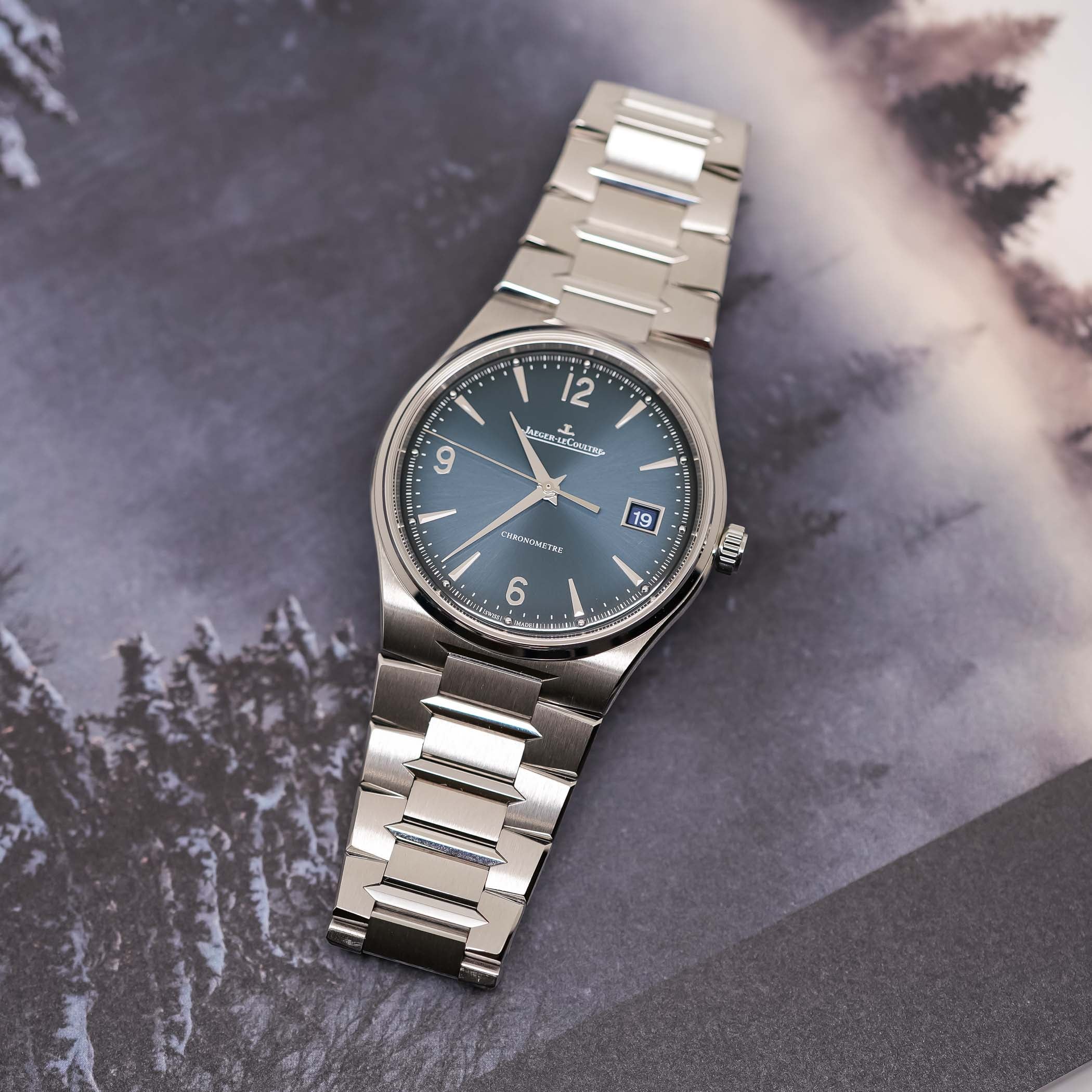
There’s no luminous material, which reinforces the watch’s dress-leaning personality but limits legibility in low light.
Calibre 899 and Jaeger-LeCoultre’s HPG testing
Inside the Master Control Chronomètre Date is Jaeger-LeCoultre’s automatic Calibre 899, a thin movement also used in watches such as the Master Ultra-Thin Date and Master Control Classic 36mm.
It runs at 4Hz and offers a 70-hour power reserve from a single barrel.
For this collection, the movement features redesigned bridges, including a slimmer balance cock, and is wound by an openworked 22k gold central rotor.
Finishing includes Geneva stripes, perlage and a polished 45-degree bevel around the main bridge.
The movement is COSC-certified, which suits the Chronomètre name and gives the watch a clearer technical proposition in a competitive field.
It also carries Jaeger-LeCoultre’s High Precision Guarantee, an internal certification that the maison presents as stricter than its traditional 1000-Hour Control.
The HPG process includes simulated wear over a three-day period, along with tests for shock resistance from 25G to 50G, altitude up to 1,004 metres, temperatures from 18°C to 35°C and multiple positions.
Jaeger-LeCoultre’s HPG standards also include finishing requirements, with at least eight haute horlogerie-level techniques cited, including Côtes de Genève, beveling, polished screws, circular graining, burnishing, circular smoothing, linear smoothing and sinked rubies.
Details & Specifications
| Brand | Jaeger-LeCoultre |
|---|---|
| Model | Master Control Chronomètre Date |
| Collection | Master Control Chronomètre |
| Case size | 38mm diameter, about 45mm lug-to-lug, 8.4mm thick |
| Case material | Stainless steel or 18k pink gold |
| Dial | Grey-blue gradient dial in steel, bronze-coloured dial in 18k pink gold |
| Movement | Automatic Jaeger-LeCoultre Calibre 899 |
| Frequency | 4Hz |
| Power reserve | 70 hours |
| Certification | COSC chronometer certification and Jaeger-LeCoultre High Precision Guarantee |
| Water resistance | 50 metres |
| Bracelet | Integrated three-link bracelet with triple folding clasp |
| Steel price | EUR 14,700 or USD 14,200 |
| Gold price | EUR 54,500 or USD 52,500 |
The steel Master Control Chronomètre Date sits close to watches such as the IWC Ingenieur, Chopard Alpine Eagle and Rolex Land-Dweller in both concept and pricing, but its appeal is narrower and more deliberate.
It’s for the buyer who wants the integrated-bracelet format without the visual force that often comes with it, and who sees Jaeger-LeCoultre’s strength in refinement rather than spectacle.
That may make it less instantly arresting than some rivals, but it also gives the watch a steadier character, one that fits the Master Control name more convincingly than a louder design ever could.