Luxury has spent decades perfecting scarcity, but artificial intelligence is arriving with the opposite promise.
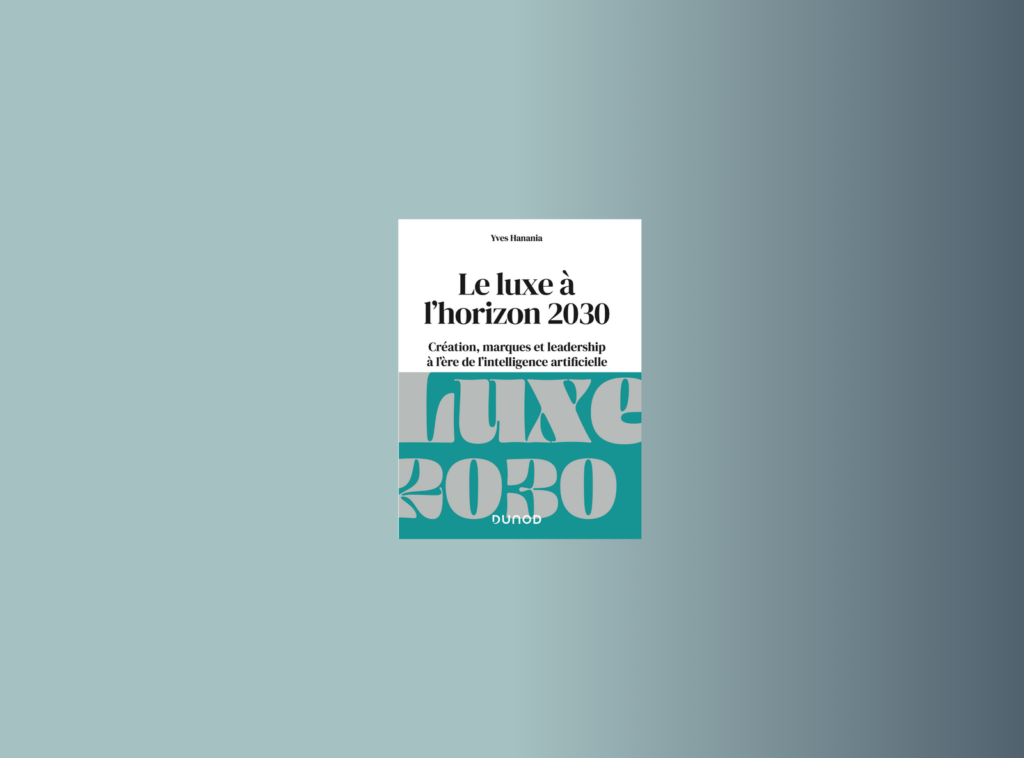
In Luxury 2030 – Creation, brands, and leadership in the age of artificial intelligence, strategist Yves Hanania examines what happens when prediction, personalisation and analysis become almost endlessly available to an industry built on restraint.
The book is not framed as a warning against technology so much as a question of discipline, with AI acting as a mirror for the strengths and weaknesses luxury houses already carry.
At a glance
- Yves Hanania’s third book, Luxury 2030, explores how artificial intelligence may reshape luxury strategy, creation and leadership.
- The central idea is the “abundance of intelligence”, a new condition that challenges a sector historically defined by rarity and desirability.
- Published by Dunod, the book is due in bookshops on 28 October 2026 at €24.00, with an English edition planned for early next year.
AI meets an industry built on scarcity
Hanania’s central tension is sharply drawn.
If AI makes it easier to analyse behaviour, forecast demand, generate messages and personalise interactions, then intelligence itself stops being scarce.
For luxury, that creates a strategic problem rather than a purely technical one.
More data does not automatically make a house more desirable, and more content does not necessarily make a brand more coherent.
Hanania argues that some luxury players have already risked weakening their own foundations by multiplying offers, products and communication to the point where coherence, rarity and desire become harder to protect.
AI did not invent that vulnerability, but it can accelerate it and make it more visible.
This is where Luxury 2030 feels especially relevant for executives, creative leaders and brand owners.
The question is not simply whether luxury should use AI, but where it should refuse abundance in order to preserve meaning.
The strategist behind Luxury 2030
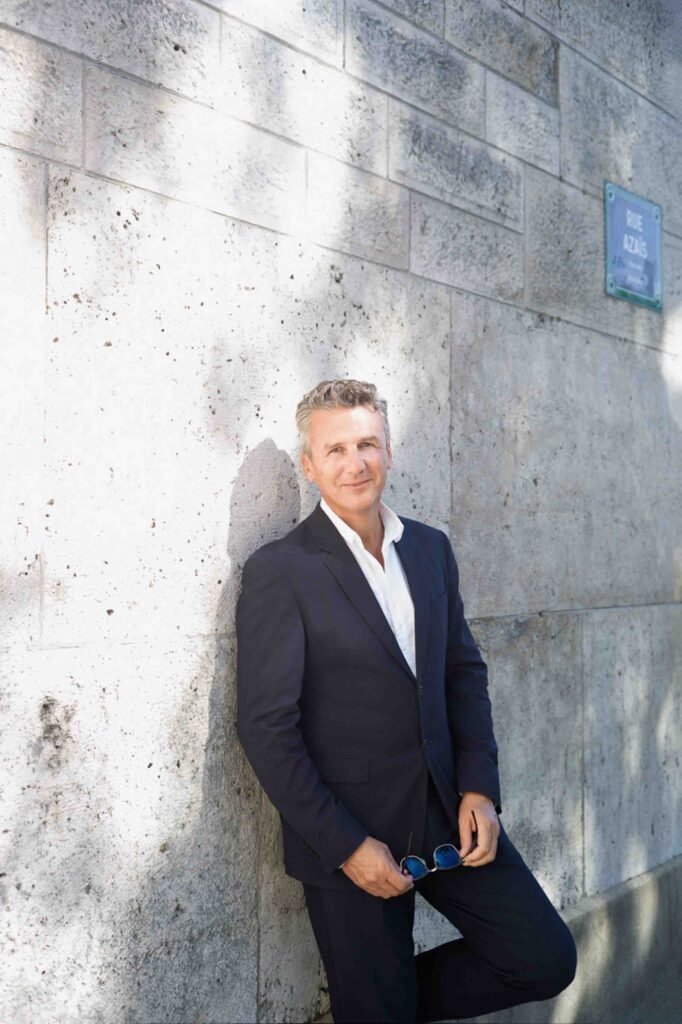
Hanania brings nearly two decades of experience in strategy and brand development across luxury, fashion, beauty and hospitality.
He founded the consulting firm Lighthouse and has worked with major players navigating brand growth, desirability and transformation.
His academic profile adds another layer to the book’s authority.
He holds an MBA from the Kellogg School of Management at Northwestern University, where he contributed to the creation of a course dedicated to luxury marketing.
He also lectures at the Indian School of Business and ESSEC Business School – IMHI.
Since 2025, Hanania has served as Operating Partner at Sia, with a focus on strategic transformations linked in particular to data and artificial intelligence in the luxury sector.
He is also one of the European ambassadors for the Maybach Ocean Club, an exclusive private club concept within the Mercedes-Maybach ecosystem.
Luxury 2030 follows two earlier books published by Dunod, Le luxe demain in 2019 and Le luxe contre-attaque in 2022.
Brands, desire and the geography of wealth
The book looks beyond AI as a tool and treats it as part of a wider reconfiguration of the luxury landscape.
Hanania examines recent case studies involving Chanel, Hermès, Kering, Richard Mille and the Comité Colbert, using them to explore how houses are responding to shifting client expectations and business models.
The backdrop is a luxury market no longer defined by a single geography of influence.
New centres of wealth, the rise of ultra-wealthy clients and changing ideas of desire are all reshaping how brands build relevance without surrendering their identity.
That makes the book timely for a sector still balancing global scale with the need to feel selective.
The most successful houses of the next decade may not be the ones that deploy the most technology, but the ones that know exactly where technology belongs.
In that sense, Hanania’s “abundance of intelligence” is less about automation than judgement.
When everyone can access sharper analytical tools, human choices around creation, curation and restraint become more valuable.
What luxury leaders may need to choose by 2030
Luxury 2030 closes with three scenarios for the end of the decade.
The connecting conviction is that future leadership in luxury will depend on the ability to decide what truly deserves to exist.
That phrase carries weight in an industry where overextension can be tempting.
More categories, more drops, more messages and more personalisation can all look like growth, but they can also weaken the emotional architecture that makes a house matter.
The book includes a foreword by Bénédicte Épinay, President of the Comité Colbert, and an afterword by Laurent Gardinier, President of Relais & Châteaux.
Those contributions place the discussion within a broader French and international luxury context, spanning maisons, hospitality and cultural influence.
At €24.00, Luxury 2030 is positioned less as a coffee-table object than as a working text for people thinking seriously about where the sector goes next.
Its appeal should extend to luxury executives, consultants, founders, investors and students trying to understand how desirability survives in an era of accelerating intelligence.
The strongest idea is also the simplest one.
AI may change how luxury operates, but it will also test whether brands still know what should remain rare.