Taiwan is compact enough to cross in a day, yet varied enough to keep a traveller busy for weeks.
Its appeal sits in the contrast between polished city life, high mountain landscapes, centuries-old temples and an evening food culture that feels wonderfully democratic.
For a first visit, these are the experiences that show the island at its most memorable.
At a glance
- Taiwan’s strongest travel experiences range from Taipei landmarks to alpine scenery, lakes, coastlines and historic villages.
- Standout highlights include Taipei 101, the National Palace Museum, Alishan Forest Railway, Sun Moon Lake, Jiufen and Taroko Gorge.
- Taroko Gorge access can change during ongoing recovery work after the April 2024 earthquake, so travellers should check current park notices before visiting.
Taipei landmarks to start the trip
Taipei is the most natural entry point into Taiwan, not just because of its transport links, but because the city distils so much of the island’s character into one energetic capital.
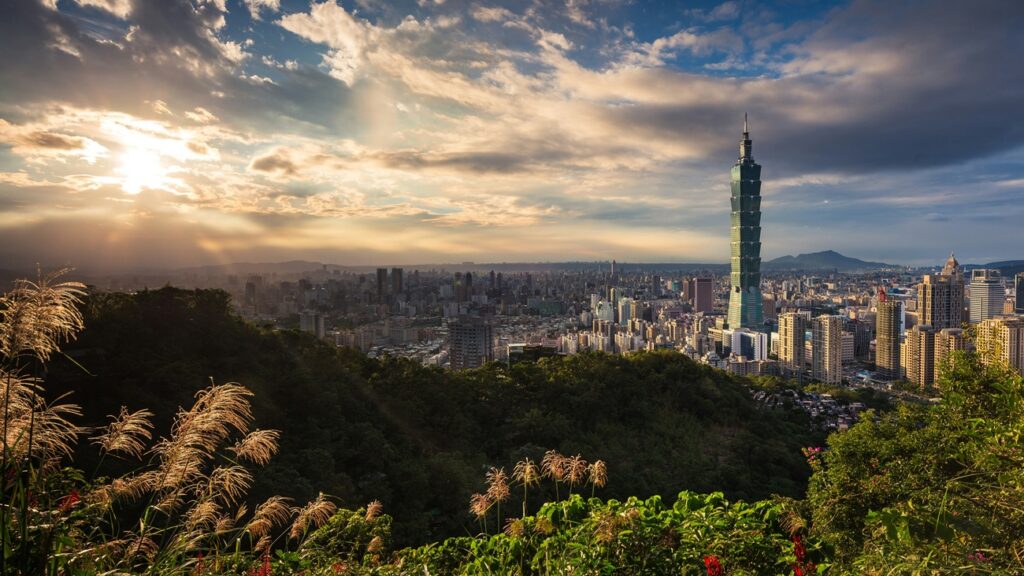
- 1. Ride up Taipei 101 for the city view. The 508 metre tower remains Taiwan’s defining contemporary landmark, with a form inspired by a Chinese pagoda and the sections of a bamboo stalk. Its observation decks give a clear sense of Taipei’s basin setting, framed by mountains and dense urban life.
- 2. Spend time with Taipei’s historic temples and neighbourhoods. Longshan Temple brings ornate architecture, incense-filled courtyards and a living religious culture into the heart of the city. Dadaocheng adds another layer, with old merchant streets, traditional shopfronts and a slower pace than the commercial districts nearby.
- 3. Visit Chiang Kai-shek Memorial Hall. The broad plaza, ceremonial architecture and formal gardens make it one of Taipei’s most recognisable civic spaces. It’s also a useful stop for travellers trying to understand the island’s layered twentieth-century history.
- 4. Make time for the National Palace Museum. This is one of the world’s great collections of Chinese imperial art, with ceramics, jade, bronze, painting, calligraphy and court objects gathered over centuries. The Jadeite Cabbage is the famous crowd-puller, but the real reward is the scale and depth of the collection, which makes several hours feel like a minimum rather than a luxury.
Mountains, lakes and the Pacific coast
Leave Taipei and Taiwan quickly becomes a mountain island, with steep terrain, forested slopes and roads that move between subtropical valleys and cooler highland air.
- 5. Ride the Alishan Forest Railway. Originally built to carry timber down from the mountains, the historic railway is now one of Taiwan’s most atmospheric journeys. The route winds through dense forest and dramatic mountain scenery, leading into a region known for ancient trees, cool air, sunrise views and high-mountain tea.
- 6. Stay overnight around Alishan. Alishan is at its best when the day-trip crowds thin and the forest takes on a quieter rhythm. Morning light over the mountains and clouds is the classic reward, especially for travellers who enjoy walking trails, small temples and landscapes that feel removed from city Taiwan.
- 7. Slow down at Sun Moon Lake. Set among forested mountains in central Taiwan, the lake takes its name from its distinctive shape, with one side associated with the sun and the other with a crescent moon. A boat ride, lakeside cycle route or journey on the Sun Moon Lake Ropeway gives the landscape several different moods, while Wenwu Temple adds a richly decorated architectural stop above the northern shore.
- 8. Explore Taroko Gorge and the east coast. Taroko Gorge is Taiwan’s most dramatic natural landmark, a marble canyon carved by the Liwu River through the Central Mountain Range. The wider east coast adds Pacific views, rugged cliffs, unusual rock formations, coastal villages and a less developed feel than the western side of the island.
Taroko suffered extensive damage during the April 2024 earthquake, and access to individual trails, roads and viewpoints can change as reconstruction continues.
Anyone planning a visit should check current official park notices and build flexibility into the itinerary.
Old streets, night markets and tea culture
Taiwan’s food and tea traditions are not an add-on to the trip, but one of the main reasons to go.
- 9. Wander through Jiufen in the late afternoon. This hillside former gold-mining village overlooks the northeastern coast and is known for steep lanes, red lanterns, teahouses and views across the mountains and sea. Jiufen Old Street can be busy, but arriving early or staying into the evening helps reveal the mood that makes the village so enduringly popular.
- 10. Eat your way through a night market. Night markets are among Taiwan’s most enjoyable social rituals, with Taipei’s Shilin Night Market and Raohe Street Night Market both strong introductions. Expect pepper buns, oyster omelettes, grilled seafood, beef noodle soup, bubble tea and, for the curious, stinky tofu.
For travellers who like edible souvenirs, Taiwan’s tea regions add another reason to linger beyond the big landmarks.
Alishan is known for high-mountain tea grown on surrounding slopes, while the Sun Moon Lake region is associated with locally produced black tea.
A good Taiwan itinerary doesn’t need to choose between city, culture, food and landscape.
The island’s real pleasure is how easily those experiences sit together, often within the same day, and how quickly a short trip begins to feel like only an introduction.