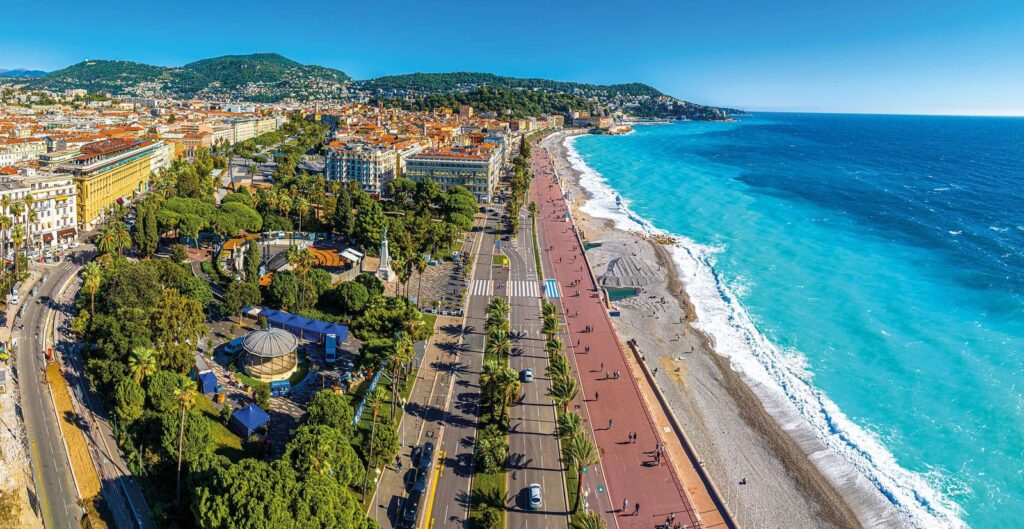
London to Nice has always carried a certain Riviera glamour, but for a particular group of travellers it’s less a holiday flight than a working corridor.
flytta is betting that this is where business aviation can become sharper, quieter and more efficient, especially for executives moving between London, Monaco and the Côte d’Azur.
The proposition is simple enough to understand and difficult to execute well: remove the friction of commercial aviation without asking every passenger to charter an entire aircraft.

At a glance
- flytta is positioning London to Nice as a private-terminal business aviation route for regular executive travel.
- The service uses a Pilatus PC-24 from London Blackbushe, with passengers arriving around 20 minutes before departure.
- It is aimed at travellers who want privacy, speed and consistency without the cost or excess of full private jet charter.
The short-haul route that works like an executive commute
The appeal of London to Nice lies in what sits at either end of the journey.
London brings the City, Mayfair and a dense concentration of finance, advisory and professional services, while Nice opens directly onto Monaco and the wider French Riviera.
For yacht owners, family office principals, fund managers and senior executives, the south of France can function as a second base rather than an occasional escape.

That changes the logic of the route.
A 90-minute flight is short enough to make full jet charter feel excessive for many travellers, yet the commercial airport experience can still consume hours and energy at both ends.
flytta’s case is that the real luxury here isn’t spectacle, but compression: less waiting, fewer handoffs and a calmer transition from car to cabin.
A private-terminal model without the full-charter commitment
The service operates from London Blackbushe, a private airfield rather than a major commercial airport.
Passengers are expected to arrive around 20 minutes before departure, meet a concierge and move through the process without the usual terminal choreography of queues, belts and crowded gates.
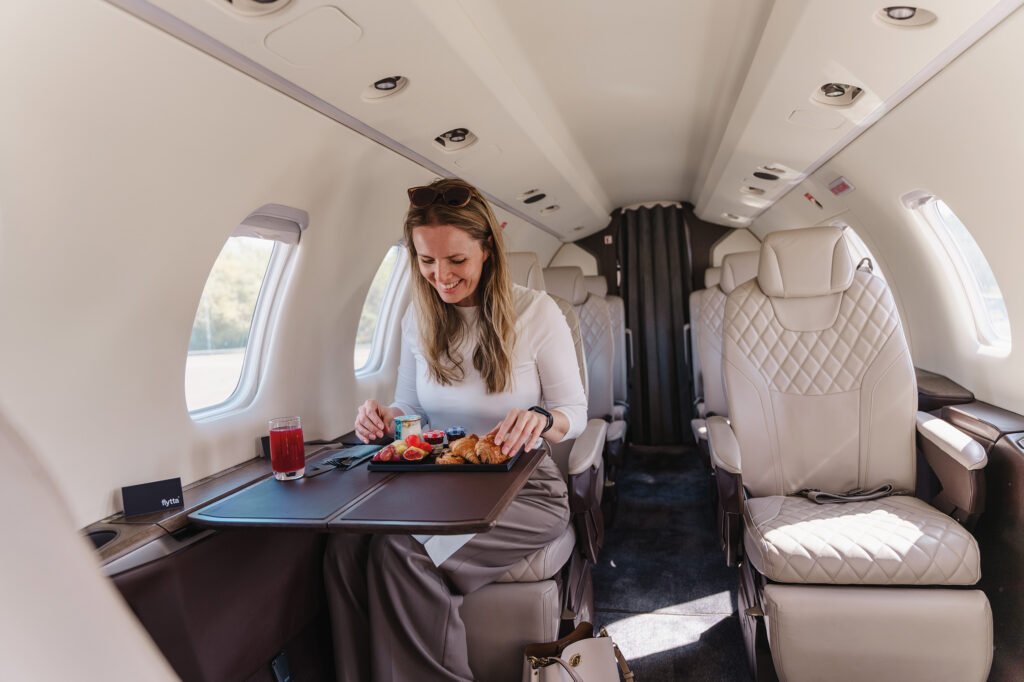
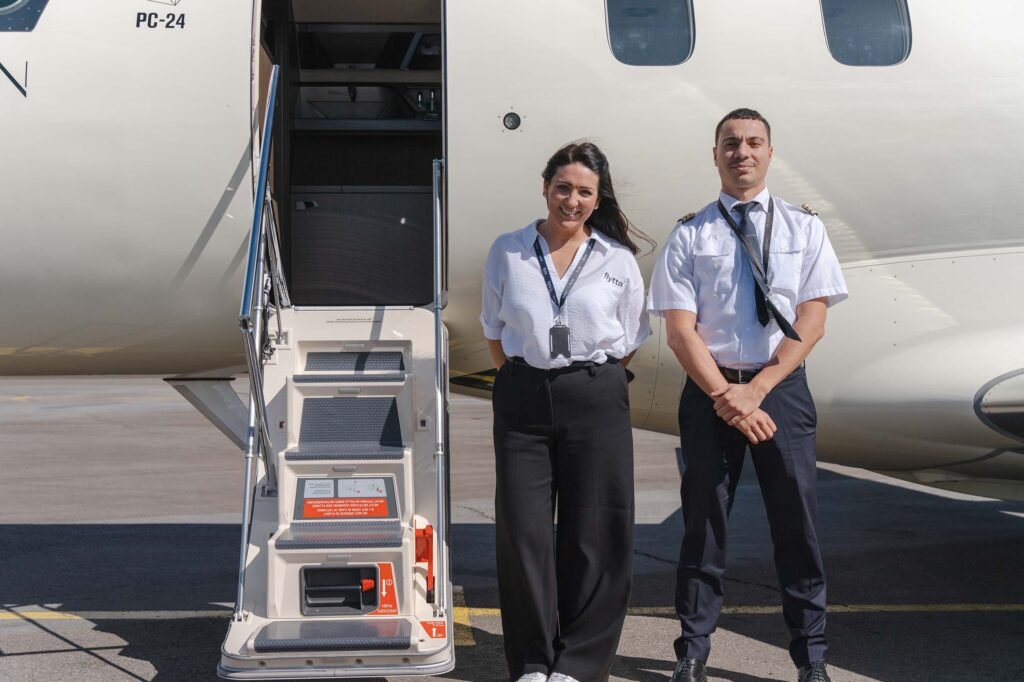
The aircraft is a Pilatus PC-24, the Swiss-built light jet known for its versatility, here noted with a BMW Designworks interior and an eight-passenger cabin.
That cabin size is important because it gives the service a private-aviation feel without replicating the economics of hiring an entire jet for a brief European sector.
flytta frames the difference in practical terms, with door-to-door journeys designed to save roughly two to three hours versus a conventional premium commercial trip.
For corporate travel teams, that shifts the discussion away from a wider seat and toward executive performance.
If a CFO or chief executive is flying to Monaco for a board meeting, the value may sit in arriving composed rather than simply arriving in a better cabin class.
Discretion as the new aviation luxury
The mood in high-end travel has moved away from visible performance and toward ease, privacy and control.
In aviation, that means fewer ceremonial gestures and more attention to what passengers never have to think about.
No one using this kind of service is looking for airport theatre.
The signals are quieter: a cabin of eight rather than hundreds, a concierge who knows the passenger, and luggage handled with speed rather than ceremony after landing.
That form of discretion isn’t about hiding from view so much as avoiding unnecessary exposure to noise, delays and generic processes.
It also suits the way many senior travellers now think about time.
The flight is no longer treated as a standalone event, but as one section of a journey that starts at the front door and ends at the meeting, yacht, residence or hotel.
Control, consistency and the harder parts of the journey
Business aviation still depends on variables no operator can fully remove, from weather and air traffic control to border formalities and ground handling.
The differentiator is how much of the experience can be controlled around those variables.
flytta’s model puts emphasis on concierge handling at both ends and direct partnerships with operators, rather than a looser brokerage-style approach.
That matters because the premium passenger rarely judges a journey only by the aircraft.
The car arrival, the handover, the cabin, the landing and the onward transfer all form one impression, and a weak link can make the whole experience feel ordinary.
Using Blackbushe also helps define the offer.
A smaller airfield can provide relationships, rhythm and predictability that larger commercial hubs struggle to match, particularly when the customer is buying calm as much as transport.
Details & Specifications
| Service | flytta London to Nice business aviation route |
|---|---|
| UK base | London Blackbushe |
| Destination corridor | Nice, with access to Monaco and the Côte d’Azur |
| Aircraft | Pilatus PC-24 |
| Cabin | Eight-passenger cabin |
| Interior note | BMW Designworks interior |
| Pre-departure arrival | Around 20 minutes before departure |
| Estimated time saving | Roughly two to three hours door to door versus conventional premium commercial travel |
| Target traveller | Executives, UHNW travellers, family office principals, fund managers and regular London-Riviera passengers |
The strength of London to Nice is that it doesn’t need to be dressed up as fantasy travel.
For the right passenger, it is a practical route with unusually high stakes for time, privacy and mental bandwidth.
flytta’s opportunity is to make private aviation feel less like an indulgence and more like a precise business tool, which may be exactly where the next chapter of the sector is heading.