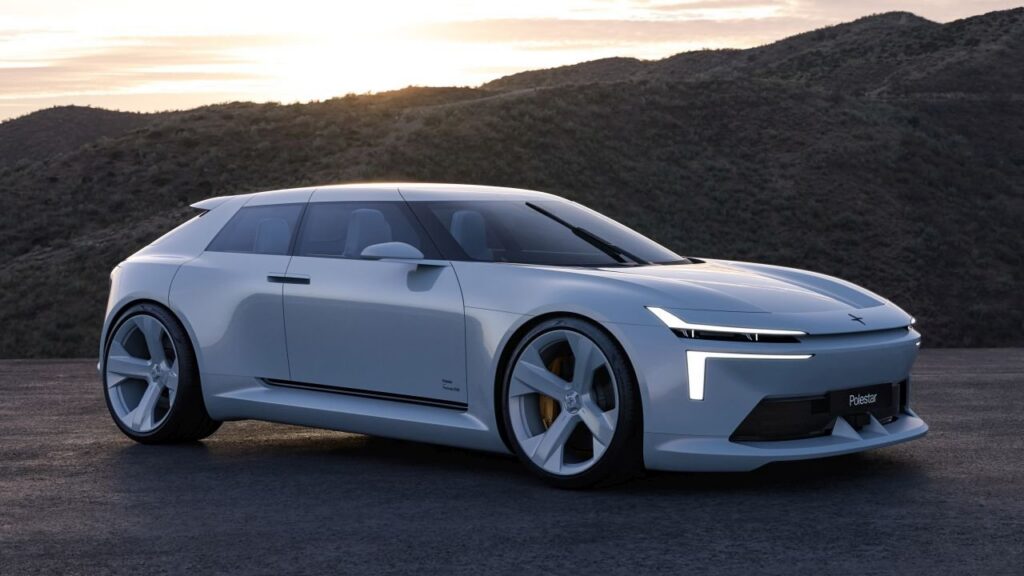
Polestar’s Formula 2030 concept is a clear signal of where the brand wants to take its next generation of electric cars.
The four-door hatchback keeps the company’s restrained Scandinavian approach, but pushes the proportions into something much more dramatic, with a body more than two metres wide, suicide doors and a sharply technical cabin.
At a glance
- Polestar has unveiled the Formula 2030, a futuristic four-door hatchback concept.
- The concept features suicide doors, a clamshell hood, Dual Blade headlights, 22-inch wheels and a minimalist digital cockpit.
- It previews upcoming Polestar 2 and 7 models, though technical details have not been disclosed.
A wider, sharper vision for Polestar
The Formula 2030 is expected to sit on a Geely platform, but visually it stays close to Polestar’s clean design language.
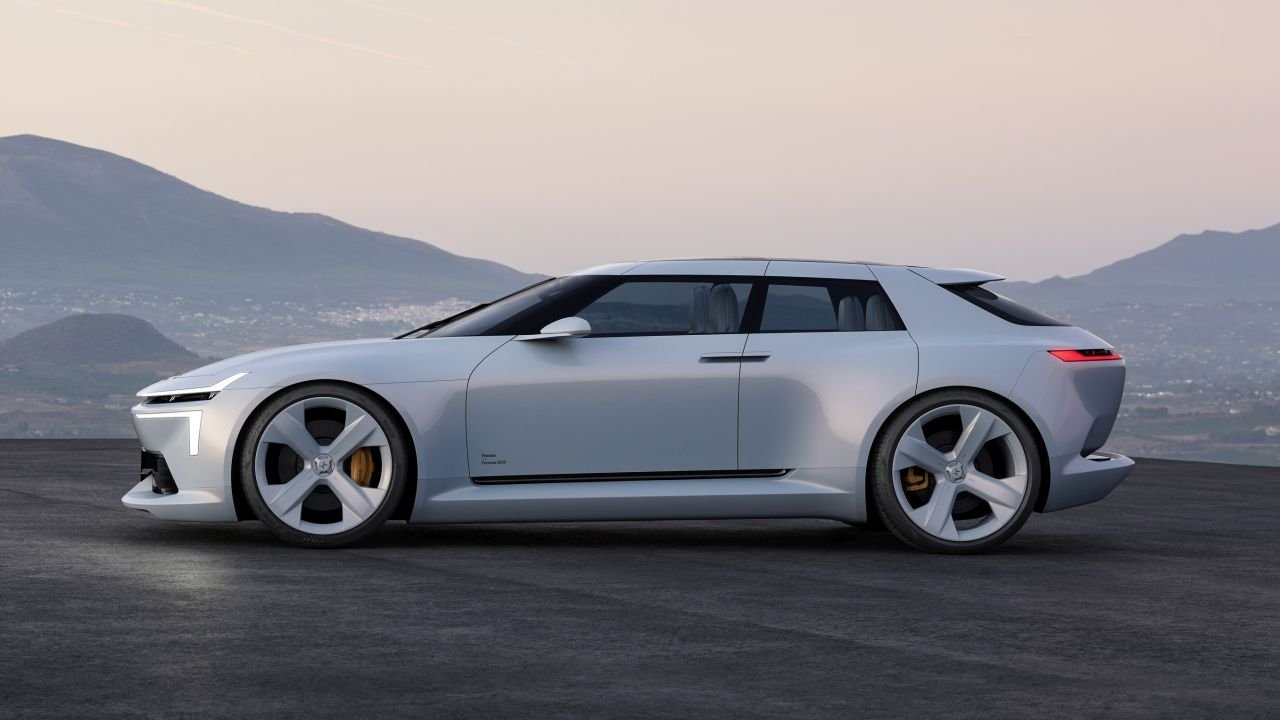
The front end is defined by a sharp nose, a clamshell hood and the brand’s Dual Blade headlights, giving the concept a crisp face rather than an overly decorative one.
A wraparound windshield stretches into the roofline and uses a single central wiper, a detail that reinforces the car’s concept status without overwhelming the exterior.
The stance is one of the most important parts of the design.
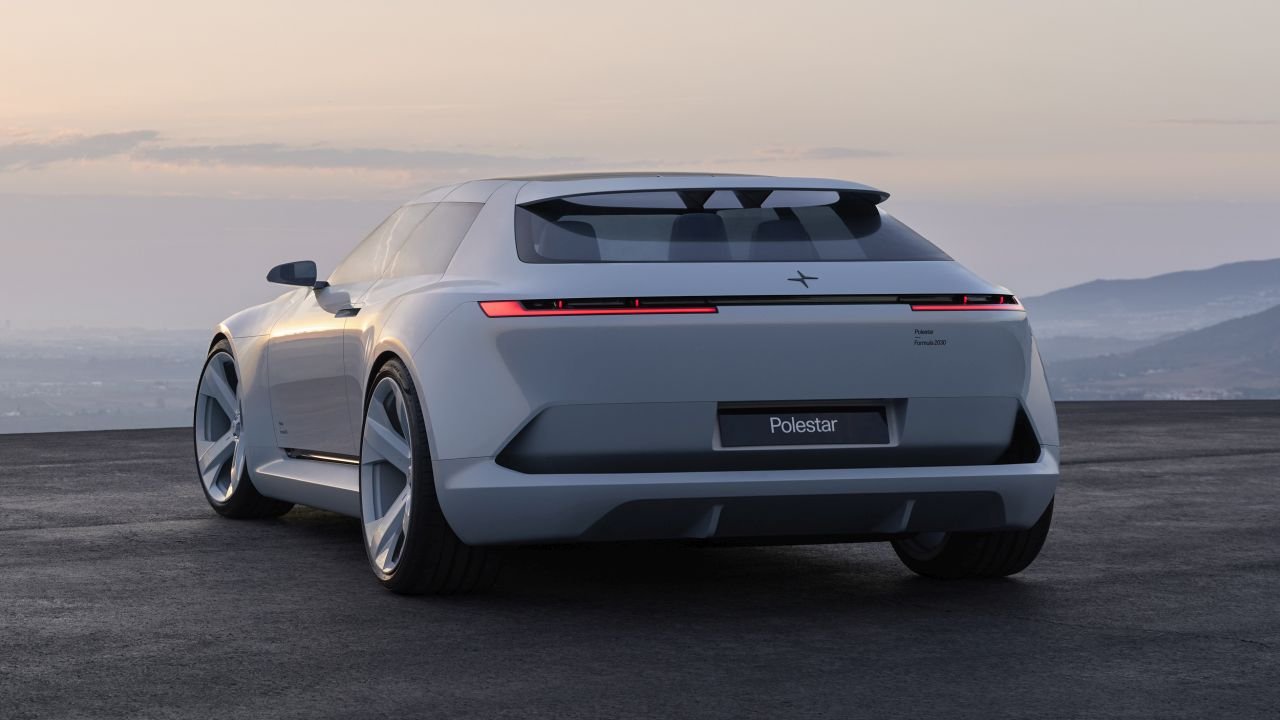
At more than two metres wide, the Formula 2030 has the footprint to make its flared arches and massive 22-inch wheels look intentional rather than ornamental.
Suicide doors and a fast rear profile
The suicide doors are the most theatrical element here, especially on a car that still presents itself as a hatchback rather than a low-slung sports car.
That choice gives the Formula 2030 a show-car flourish while keeping the silhouette practical enough to connect with future production thinking.
At the rear, Polestar has gone for a steeply raked windshield with a roof spoiler above it.
The rear fascia is clean and precise, with slim LED taillights that match the technical character of the front end.
A cockpit built around screens
Inside, the Formula 2030 follows the same minimalistic logic as the exterior.
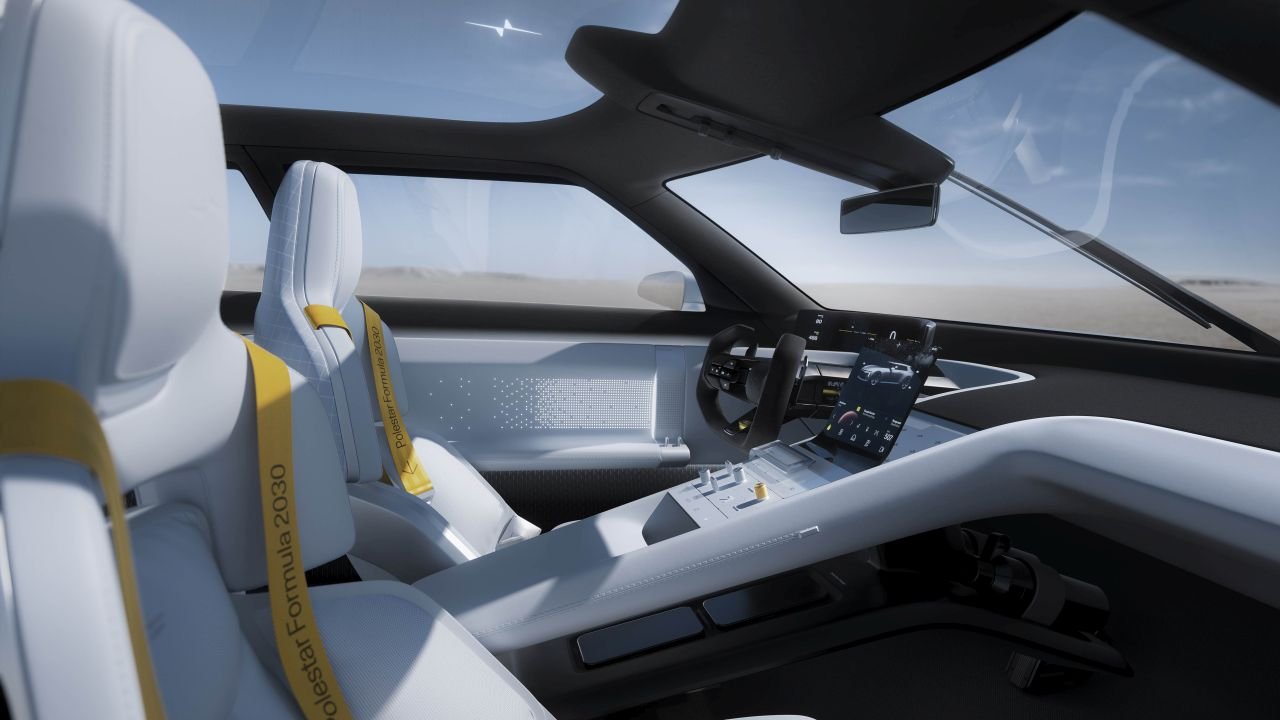
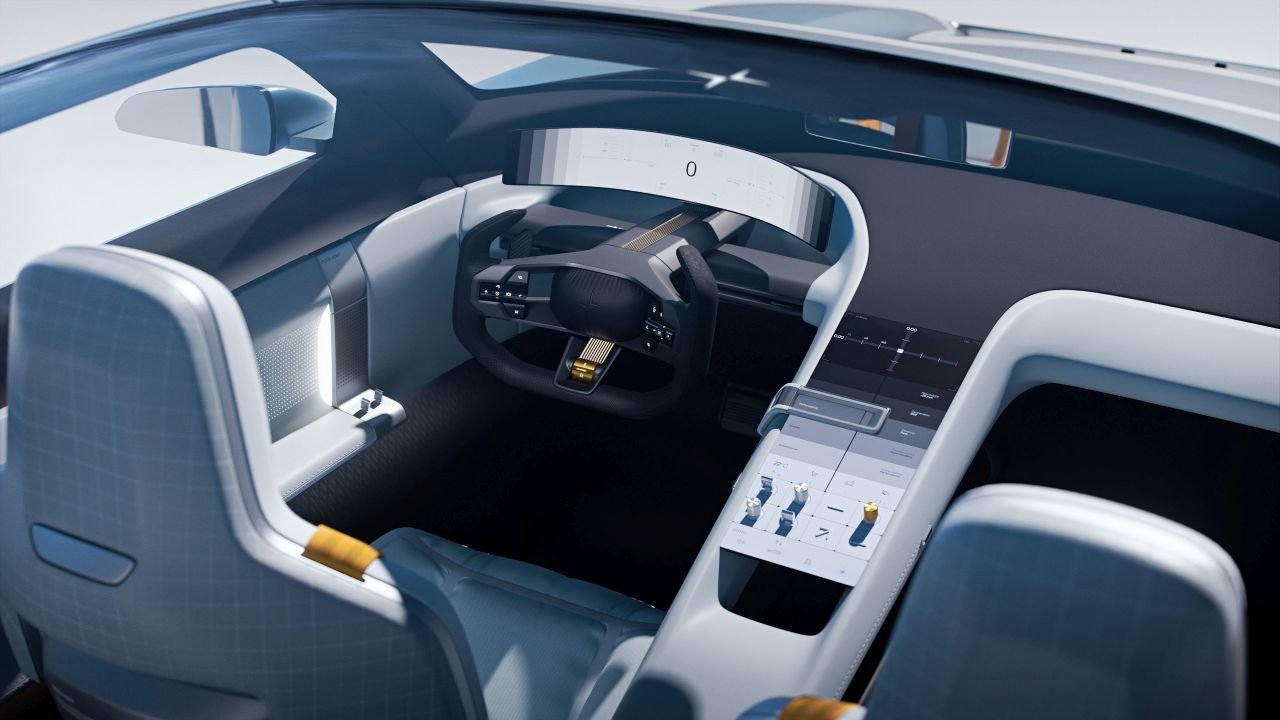
The front cockpit is divided by a large central spine that houses a 12.2-inch portrait touchscreen.
A 20-inch curved display sits directly in the driver’s line of sight, while a yoke-style steering wheel gives the concept a more experimental driving position.
It’s a cabin layout that prioritises a strong central architecture rather than simply placing large screens across a flat dashboard.
Details & Specifications
| Brand | Polestar |
|---|---|
| Concept | Formula 2030 |
| Body style | Four-door hatchback concept |
| Platform | Expected to be based on a Geely platform |
| Width | More than 2 metres |
| Exterior features | Clamshell hood, Dual Blade headlights, wraparound windshield, single central wiper, suicide doors, roof spoiler |
| Wheels | 22-inch wheels |
| Driver display | 20-inch curved display |
| Central screen | 12.2-inch portrait touchscreen |
| Steering | Yoke-style steering wheel |
| Previewed models | Upcoming Polestar 2 and Polestar 7 models |
Polestar has not disclosed technical details for the Formula 2030, so its importance sits in the design message rather than performance figures.
As a preview of future Polestar 2 and 7 models, it points to a more assertive era for the brand, one that keeps the minimalism but gives it a wider stance and a sharper edge.